Showing posts with label mg historical. Show all posts

Sunday, January 11, 2015

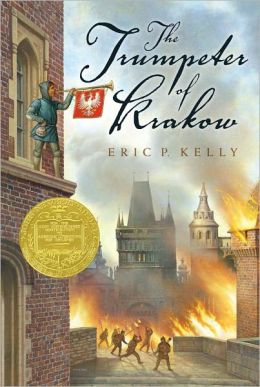
Revisiting The Trumpeter of Krakow (1928)

The Trumpeter of Krakow. Eric P. Kelly. 1928. Simon & Schuster. 208 pages. [Source: Library]

It was in late July of the year 1461 that the sun rose one morning red and fiery as if ushering in midsummer's hottest day. His rays fell upon the old city of Krakow and the roads leading up to it, along which rolled and rocked a very caravan of peasants' wagons. 

In the summer of 2011, I read and reviewed Eric P. Kelly's The Trumpeter of Krakow. I remember really enjoying it though I found it plot-driven instead of character driven. Because I had good memories of reading it, I thought I would reread it for Hope Is the Word's Newbery Through the Decades. Unfortunately, I didn't end up enjoying it as much as I did the first time.

I'm not sure if this was because I wasn't in the right mood for this one. Or if it was because since I knew how it ended there just wasn't enough to keep me reading.

The first time I read it: action, mystery, suspense, what will happen next?!

The second time I read it: this is boring, so boring, when will I get to the good part?

I was surprised by my own reaction this time since in my review, I wrote "There is never a dull moment in The Trumpeter of Krakow" and "The novel is exciting."
 

© 2015 SukaYuka.com of SukaYuka's Book Reviews

Tuesday, December 2, 2014

My Friend the Enemy (2014)

My Friend the Enemy. Dan Smith. 2014. Scholastic. 288 pages. [Source: Review copy]

I really enjoyed reading Dan Smith's My Friend the Enemy. Give me a book set during this time period--World War II--and I'll most likely be eager to read it. This one happens to be set in England during the war! (It being set in England is an added bonus for me! Two reasons for me to be excited to pick it up!) I found My Friend the Enemy to be a quick read, and a compelling one. The premise is simple enough. Two twelve-year-olds, Peter and Kim, find a 'souvenir' in the woods after a German plane crashes near their village.

These two have just met. Kim isn't like any other girl he's known before. She dresses and acts differently. There is something about her that he's drawn to. I think they bring out the best in each other, in some ways, and I think together they are more likely to get into trouble! Kim is new to the community/village. Her parents wanted her to be safer, and they have sent her to live with an aunt. But she's seen more than Peter, perhaps, when it comes to the effect of the war. Her brother is a soldier. His father is a soldier. These two can relate well to one another. So. Back to the souvenir. These two break curfew and risk everyone's wrath by going where they technically have no business going at all. They go first to the scene of the crash, crawl into the plane itself, and then go exploring in the surrounding woods. What they find in the woods that night changes everything. For they find a near-dying German soldier, one of the plane's crew. He is--in German, of course--pleading for help, begging for mercy.

Before, if you'd asked either one, they most likely would have said Germans are the enemy, show no mercy, they're evil, they're killing monsters. But things change when they have 'the enemy' right in front of their eyes. He is young. He looks to be a teenager. To Kim's eyes, she's seeing someone just like her brother. He is not only young, but he's also weak and helpless. He is obviously in pain and very scared. They decide the right thing to do is to show him mercy, to treat him as they would want others--strangers--to treat his dad and her brother if their positions were reversed. They choose kindness. They give him water. They take him to a hiding place. They give him food and a blanket. Not right away, of course. They weren't walking around carrying provisions or anything. What they both struggle with in the next few days/weeks is keeping the secret. Is it right what they've done? They don't feel it is wrong to be merciful, of course, but is it wrong to lie and steal to cover up everything? They struggle with the ethics of it. In their minds, they see it as being a choice between life and death. They feel certain that soldiers would kill him, show no mercy or grace. (They are assuming this, of course. And adult readers might question their assumption.) But great risk and sacrifice is involved in keeping that secret, and it doesn't get any easier at all. It sounded good and right initially, but, what if the war lasts years?! How are they really going to pull this off? What will happen to Erik, the soldier? What will happen to them?! What is best for everyone?

Readers get to know Peter and Kim very well. And, to some extent, readers get to know Erik as well. Though perhaps limited since Kim and Peter don't speak much German, and Erik doesn't speak much English. Readers spend more time with Peter and his mother than with Kim and her aunt. Readers also get acquainted with the community, meeting various people. It has just enough detail to establish the setting. It isn't weighed down tediously by description. The plot moves quickly, and there is plenty of action.

I loved this one.
All those Germans we heard about on the wireless were different. They were not men, they were faceless, helmeted and armed, marching across places I knew the names of but had never seen. France, Norway, Africa. They were airplanes dogfighting over the English channel; they were bombers casting a shadow over our cities. They were the enemy. Our German was different. He was a real person. He was here, he had a face, and he was in trouble. (121)

© 2014 SukaYuka.com of SukaYuka's Book Reviews

Tuesday, November 18, 2014

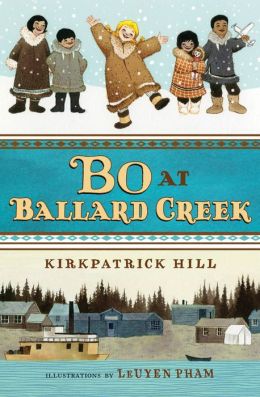
Bo at Ballard Creek (2013)

Bo at Ballard Creek. Kirkpatrick Hill. Illustrated by LeUyen Pham. 2013. Henry Holt. 288 pages. [Source: Library]

I loved Bo at Ballard Creek. Did I love, love, love it? I'm not sure. Time will tell. I certainly loved many things about it.

I loved the setting, that it's historical fiction, set in Alaska, set in a small mining town, in the 1920s. I loved the perspective, Bo, the heroine is young adopted girl. For most of the book, she's too young to attend school. So perhaps in the four to six range throughout the book. Readers meet Bo, her two fathers Jack Jackson and Arvid Ivorsen. (One is black. One is Swedish.) Readers meet the whole community: other miners and former miners mostly men, of course, all ages and ethnicities; Eskimo families, and the dance-hall girls. I loved the narration and the amount of detail. I love that the book covers a whole year, if not a little more. So readers see the community in detail throughout the year. One gets a real sense of what was like on a day-to-day, week-to-week, month-to-month basis. On ordinary days. On special days. Special days being not just holidays, but, also days where airplanes stop and land, the days when supplies arrive. I love the vignettes of the whole town. I loved the strong sense of family and community in this one. It just felt right from cover to cover. I also loved the illustrations. I'll be honest. It was seeing LeUyen Pham's name that made me pick this one up. That being said, I may have loved her illustrations. But I also LOVED the text itself.

If the book lacks anything, however, it may be a strong plot. Think Little House In the Big Woods. The chapters are strong in description and characterization and little happenings. I loved it. I did. I loved meeting Bo. I loved some of the relationships in the book.

© 2014 SukaYuka.com of SukaYuka's Book Reviews

Tuesday, November 11, 2014

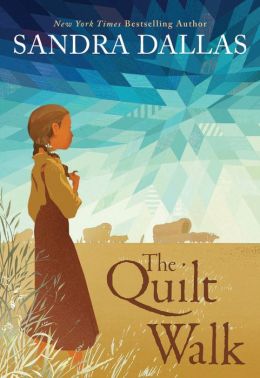
The Quilt Walk (2012)

The Quilt Walk. Sandra Dallas. 2012. Sleeping Bear Press. 215 pages. [Source: Library]

I enjoy historical fiction. I do. And I enjoy a good pioneer story. The Quilt Walk is a middle grade pioneer story. It was satisfying for what it was.

Emmy Blue and her mom and dad are traveling with a wagon train to Golden, Colorado. Her aunt and uncle are also going. Her dad and uncle are the ones who really, really, really want to go. Her aunt and mom, well, they'd have been happy spending the rest of their lives right where they were. Her mom is more outwardly accepting of this change. Her aunt complains plenty. There are things she's sad about, things she's hopeful about.

The focus is on the journey for the most part. Readers meet several other characters traveling in the wagon train. Emmy and her mom make new friends. Emmy makes one friend close to her own age. Emmy makes several friends who are older than her. One woman is newly married. One woman has three children under the age of four. Every person has a story of their own. What will Emmy's story be?

Based on the title alone, one can suppose that her story has to do with a quilt. At the start of the journey, Emmy hates quilting. She does. Not that she's ever properly given it a go. She knows that her mom loves, loves, loves to quilt. Loves getting together with other ladies to quilt. But Emmy sees it as tedious and boring. But. Her grandmother gives her blocks to quilt together to make a quilt top for her doll. Blocks to piece together on the journey, on the trip. And her mom expects her to do just that. To piece this quilt together some each day. And Emmy does. And by the end, she might have begun to change her mind about quilting. At least a little bit.

© 2014 SukaYuka.com of SukaYuka's Book Reviews

Friday, November 7, 2014

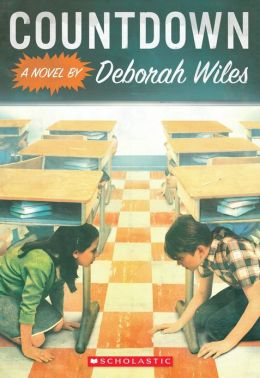
Reread #45 Countdown

Countdown by Deborah Wiles. 2010. May 2010. Scholastic. 400 pages. [Source: Review copy]

I first read and reviewed Deborah Wiles' Countdown in 2010. I loved, loved, loved this documentary novel. If you love historical fiction, or, if you love coming of age stories, you should consider reading this one. It's a great read.

1962. October 1962. The world waits. Will there be war? Can the situation in Cuba be resolved peaceably? Or is this the beginning of the end?

Franny Chapman is the heroine of Countdown. She's eleven. She feels like she's invisible. She feels persecuted. Her sister assures her these feelings are completely normal. Franny herself isn't too sure. Franny struggles with issues big and small in this novel. Of course, there is the shared experience of worrying about the Cuban Missile Crisis. (Franny knows that everyone--adults and kids alike--is worried about this.) But of a more personal nature, Franny is struggling with several things. First, her forever-best-friend, Margie, is acting strange, different. Franny wonders if the two will be able to stay friends. It's more than just drifting apart. Margie seems to suddenly hate her. Second, Franny is worried about Uncle Otts (is he her great-uncle?). He's getting older. His mind isn't always great at distinguishing between past and present. The threat of war isn't helping matters any. He has his own way of reacting to threats and dangers. And to Franny, those ways are just EMBARRASSING, extremely embarrassing. Third, Franny finds herself in love with the boy next door. (His name is Chris. Many girls find themselves in love with Chris).

Readers see Franny at home, at school, at play. I loved meeting Franny and her family. I loved how the novel was put into context through the format itself. This documentary novel is packed with images, photographs, quotes, lyrics. (Everything from photographs of JFK and other world leaders, other politicians, other leaders to Miss America, to images from the Civil Rights movement, to a cover of a Nancy Drew novel.) So while Countdown is a novel, it also serves as a scrapbook. (You can see some of what the book looks like on the author's blog.) I think this one does a good job of capturing a time, a place in American history. It is rich in detail. (For example, I loved hearing about the wonder, the novelty of McDonald's hamburgers--for Franny and her family.)

Quotes:
Jo Ellen has the world's best 45-rpm record collection. Since I can remember, I've sprawled across her big bed when she's in her room doing homework or talking on the phone to her girlfriends, and Jo Ellen has let me play her records, as long as I don't get fingerprints on them or let the needle scratch them. I'm not allowed to touch her albums, but the 45s she lets me rifle through to my heart's content.
I've memorized the geography of every one of those records. "Johnny Angel" has a yellow label, "Twistin' the Night Away" has a tiny scratch at the beginning edge, and "Runaway," which is my current favorite, by my favorite singer, Del Shannon, has a heart drawn on the label--by me. Jo Ellen doesn't know this yet. (75-76)
 My first concrete remembrance of church is going to revival with Miss Mattie in Halleluia, Mississippi. I like revival. It's entertaining. I know almost every hymn in the Methodist hymnal by heart, every verse, and I can play most of them on the piano.
Revival lasts two weeks, so we go every night to church, and every night there is tarnation preaching and seventeen verses of "Just As I Am," until someone walks up to the altar to be saved.
Trouble is, Halleluia is a small town, and most everybody in church has already been saved. So unless somebody new shows up, or an older kid is pushed into the aisle by his mother, we just sing and sing that hymn, until my grandmother stands up and ambles in her square shoes up the aisle with a half-exasperated look on her face, and gets saved once again. Mostly she is saving all of us, and she knows we know it. (130)
"Nobody's the favorite, Franny," she says. "Of course you're important. Just because they don't broadcast it--"
"You're not around enough to notice," I interrupt, standing up straight. "You're all grown up, you're in college--you have loads of friends--you even have new friends! You can do whatever you want."
"That's certainly not true," says Jo Ellen.
I sigh. "I just want to skip all these years in between and go off to college like you, only I want to live in the dorms like Lannie does."
"This, too, shall pass. You don't know how lucky you are, Franny. You go to a good school, your dad's an officer in the military, you eat, shop, play wherever you choose, you can go to any college you want when you grow up. You've got it made. You're privileged."
I toss the tissue in the trash. "I'm invisible around here. I could disappear for days and nobody would miss me."
Now it's Jo Ellen's turn to sigh. "Franny, you're eleven. That's the problem in a nutshell." She pulls an envelope out of her purse. "Everybody feels persecuted when they're eleven. It will pass." (85)

© 2014 SukaYuka.com of SukaYuka's Book Reviews

Tuesday, November 4, 2014

Dead in the Water (2014)

Dead in the Water. (World War II #2) Chris Lynch. 2014. Scholastic. 188 pages. [Source: Review copy]

Dead in the Water is a companion book to the Right Fight. Both books are new 2014 releases. Both books feature baseball-loving heroes. In The Right Fight, readers meet oh-so-briefly two brothers: Hank and Theo.

The book opens with both brothers ready to join the Navy. However, only Hank ends up serving in the Navy. Their parents feel strongly that Theo should serve his country elsewhere. If both sons were stationed on the same ship, and it went down, they'd be devastated. That is their reasoning, for better or worse. So Theo enlists in the Army Air Service. This book barely mentions Theo again after the boys ship out. (We do get one letter from Theo, I believe.) This is Hank's story. (Will Theo get his own story later?)

Hank is assigned to the USS Yorktown, an aircraft carrier sailing in the Pacific. He is an airedale. The book chronicles his time on ship and off. He makes a few friends among the pilots. He makes one good friend among the mess attendants. He becomes close to a mess attendant named Bradford who played in the Negro League. He is a much better ball player than Hank, this is very hard for Hank to admit, and I'm not sure he ever does. But Bradford teaches or coaches him, and the two bond over the love of the game. Readers can also discern that life isn't easy for Bradford, that prejudice is a problem.

There is plenty of action in this one. If you know what happened to the real USS Yorktown, you can guess how this ends.

I liked this one. I think both books do a good job of balancing characterization with action. I feel Hank was fully developed. It was easy for me to care not only for Hank but for his whole family. I especially liked his sister, Susie.

© 2014 SukaYuka.com of SukaYuka's Book Reviews

Thursday, October 30, 2014

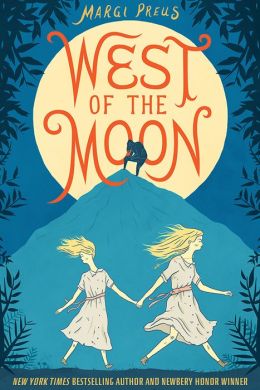
West of the Moon (2014)

West of the Moon. Margi Preus. 2014. Abrams. 224 pages. [Source: Library]

I enjoyed reading Margi Preus' West of the Moon. Astri and her younger sister, Greta, have been left in the care of their aunt and uncle. Their father has gone to America. If all goes well, he will send for them. But their aunt and uncle aren't thrilled to have two additional mouths to feed, to put it kindly. The novel opens with the aunt selling Astri to a stranger, a goat farmer. Her time as his servant is unpleasant, horrible in fact. But she's planning an escape. Not just an escape, but a rescue mission too. She is planning on escaping, rescuing her sister, and somehow, someway, making it to America to find their father. Ambitious, yes, very much so. But Astri is resilient, strong, and determined.

The novel is titled West of the Moon. Throughout the book, Astri makes comparisons between her own life--her own miserable life--and fairy tales or folk tales. The one she uses most often is East of the Sun and West of the Moon. But there are other references as well.

West of the Moon is a historical coming of age story. It is a tale of survival. Astri is many things, as I've mentioned, but she's not perfect. Throughout the entire book, Astri is put into difficult situations, and sometimes a choice is required of her. Choices that will ultimately have consequences. Astri's decisions give readers something to think about perhaps.

© 2014 SukaYuka.com of SukaYuka's Book Reviews

Tuesday, October 21, 2014

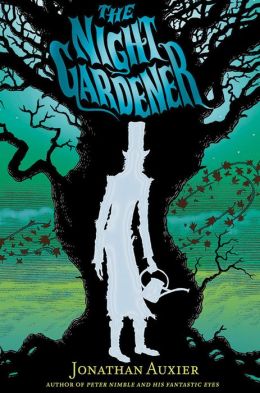
The Night Gardener (2014)

The Night Gardener. Jonathan Auxier. 2014. Abrams. 350 pages. [Source: Library]

I loved, loved, LOVED Jonathan Auxier's The Night Gardener. It may just be my favorite new book published in 2014. I loved so many things about it: the atmospheric setting, the creepy world-building, the storytelling, the writing, and the characterization. (Yes, those overlap, I imagine.) I could just say that I loved all the elements of this one; that I loved it absolutely from cover to cover. (Which does more justice for the book?)

Here's how the story opens. I'm curious if it will grab you like it did me!
The calendar said early March, but the smell in the air said late October. A crisp sun shone over Cellar Hollow, melting the final bits of ice from the bare trees. Steam rose from the soil like a phantom, carrying with it a whisper of autumn smoke that had been lying dormant in the frosty underground. Squinting through the trees, you could just make out the winding path that ran from the village all the way to the woods in the south. People seldom traveled in that direction, but on this March-morning-that-felt-like-October, a horse and cart rattled down the road. It was a fish cart with a broken back wheel and no fish. Riding atop the bench were two children, a girl and a boy, both with striking red hair. The girl was named Molly, and the boy, her brother, was Kip. And they were riding to their deaths. This, at least, was what Molly had been told by no fewer than a dozen people as they traveled from farm to farm in search of the Windsor estate.
I loved Molly and Kip. It wasn't that either protagonist was perfect. It was that I felt both were oh-so-human. These two do find the Windsor estate. And they do manage to stay on as help. Even though they don't necessarily receive wages--just room and board. This country estate is...well, I don't want to spoil it. But the people who warned them to stay away from the estate, from the sour woods, well they had good intentions. The book is creepy in all the right ways. It is a WONDERFUL read if you love rich, detailed storytelling.

I also loved Hester Kettle. She is the old woman--Kip thought she was a witch at first glance--who tells them the directions to the estate. She also proves to be a friend and kindred spirit. She is, like Molly, a story-teller.
Hester touched the button, "Funny things, wishes. You can't hold'em in your hand, and yet just one could unmake the world." She looked up at Molly. (214)
"You asked me for a story; now you call it a lie." She folded her arms. "So tell me, then: What marks the difference between the two?"
Agitated as she was, Molly couldn't help but consider the question. It was something she had asked herself in one form or another many times in her life. Still, Molly could tell the difference between the two as easily as she could tell hot from cold--a lie put a sting in her throat that made the words catch. It had been some time, however, since she had felt that sting. "A lie hurts people," she finally answered. "A story helps 'em."
"True enough! But helps them do what?" She wagged a finger. "That's the real question..." (214)
I loved the story. I loved the pacing. It was a great read!!! Definitely recommended!

© 2014 SukaYuka.com of SukaYuka's Book Reviews

Tuesday, October 14, 2014

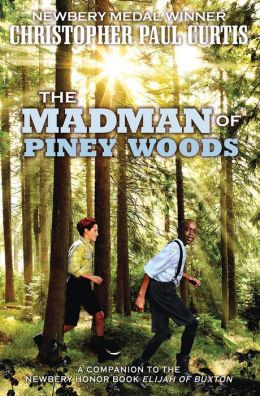
Madman of Piney Woods (2014)

The Madman of Piney Woods. Christopher Paul Curtis. 2014. Scholastic. 384 pages. [Source: Review copy] 

In Christopher Paul Curtis' latest novel, readers meet two young boys, one white (Irish), one black. One boy, Benji Alston dreams of being a reporter. He wants to be a great reporter, to write compelling stories. All of his chapters contain one or more of his imagined headlines. The other boy, Alvin "Red" Stockard, dreams of a better home life. You see, Red lives with his father and grandmother, his maternal grandmother. And she can be a bit too much to take. He doesn't even know if it is possible to be on her good side! She seems to always, always be after him about something. And it gets physical. His father is sympathetic, but, kind-hearted. How can he throw his mother-in-law out of his house? Even if she does get her cane after his son? Even if he disagrees with her on most things most of the time? These two boys live in different towns. But Benji's new apprentice-type job as a reporter for a newspaper brings him to Chatham regularly. And once these two boys meet, well, they become close friends.

For better or worse, this book isn't so much about WHAT happens as it is about characters and setting and atmosphere. If you happen to like or love Red and Benji, then you're in for a treat. The two alternate chapters. It isn't easy to summarize what happens and what the book is about. You can summarize a chapter here and there, but, it doesn't really do the book justice.

The Madman of Piney Woods is set in Buxton, Canada--the same locale as his earlier novel Elijah of Buxton. The Madman of Piney Woods, however, is set forty years after the events of Elijah of Buxton. It introduces readers to a new generation of residents. (I do not believe it is essential to have read Elijah of Buxton in order to enjoy The Madman of Piney Woods. I don't. I think Elijah of Buxton is a wonderful novel, and, personally I enjoyed it more than The Madman of Piney Woods. But The Madman of Piney Woods is great all on its own.)
© 2014 SukaYuka.com of SukaYuka's Book Reviews

Tuesday, September 30, 2014

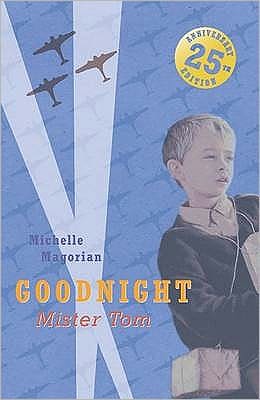
Good Night, Mr. Tom (1981)

Goodnight, Mr. Tom. Michelle Magorian. 1981. HarperCollins. 320 pages. [Source: Library]

 "Yes," said Tom bluntly, on opening the front door. "What d'you want?"
A harassed middle-aged woman in a green coat and felt hat stood on his step. He glanced at the armband on her sleeve. She gave him an awkward smile.
"I'm the Billeting Officer for this area," she bagan.
"Oh yes, and what's that got to do wi' me?"
She flushed slightly. "Well, Mr., Mr..."
"Oakley. Thomas Oakley."
"Ah, thank you, Mr Oakley." She paused and took a deep breath. "Mr Oakley with the declaration of war imminent..."
Tom waved his hand. "I knows all that. Git to the point. What d'you want?" He noticed a small boy at her side.
"It's him I've come about," she said. "I'm on my way to your village hall with the others."

 Read this book. Read it. At the very least, you should consider watching the movie adaptation. I doubt you regret meeting Willie Beech and Tom Oakley.

Goodnight Mister Tom is set during the early months of World War II. For the most part, it is set in the English countryside. William (Willie) Beech is one of many children being evacuated to the country for safety reasons. Willie has been assigned to a widower, Tom Oakley. Willie isn't quite sure what to think about his new home? Everything in the country seems to surprise him including Tom's dog, Sammy. Tom isn't quite sure what to think about Willie either. He's a bit puzzled because Willie does act a bit off. It's not just the fact that he's never been out of the city. Willie doesn't know how to read or write even though he's almost nine. (He also wets the bed.)

Tom soon learns enough to get him good and angry. Willie arrives essentially with nothing but the clothes he has on. But his mom has included a belt with a note on how and when to use it on her son. Tom soon sees the evidence of abuse for himself.

It was oh-so-easy to care for the characters, especially Tom and Willie. As Willie spends time in the country, it is in many ways his first taste of safety and freedom. And love and kindness. And stability. And friendship. I loved seeing Tom with Willie. I loved his patience and firmness. I loved his kindness and encouragement. I loved seeing Tom work with Willie on his writing and reading. I loved seeing them read together every day. I loved seeing Tom encourage Willie with his drawing.

Willie also finds friends his own age. His best, best friend is a Jewish boy named Zach. Plenty of time is spent with Willie and Zach and their other friends and/or classmates.

The novel is both intense and ultimately satisfying. It it intense for multiple reasons. I expected it to be intense because of the war. And it was. I wasn't necessarily expecting it to be intense for psychological reasons. The novel is ultimately satisfying, but, don't expect sweet scene after sweet scene. The sweetness is found in friendship and hope, but, there are some bitter shocks as well. 

I loved this one. I did. I loved, loved, loved the characters. I am so glad I read this one.

© 2014 SukaYuka.com of SukaYuka's Book Reviews

Monday, September 22, 2014

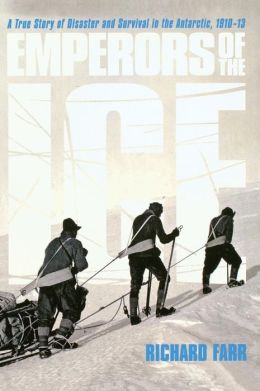
Emperors of the Ice

Emperors of the Ice. Richard Farr. 2008. FSG. [Source: Review copy]

I have mixed feelings on Emperors of the Ice: A True Story of Disaster and Survival in the Antarctic, 1910-13. On the one hand, it is a fictional memoir based on an actual memoir. Much research was done to write this one. Perhaps just as much research as if it was a traditional nonfiction book. The author's love of the subject was evident throughout. The book is told primarily if not exclusively through the eyes of one of the men on the expedition, Apsley Cherry-Garrard. The exception being the few places where readers learn what happened to other members of the expedition. On the other hand, was it absolutely necessary to fictionalize a memoir in order to tell the story? I think there were things to be gained by such a decision, and, perhaps a few things lost.

Aside from the fact that this one doesn't really quite fit in as fiction or nonfiction, Emperors of the Ice was an interesting read. It was not quite as depressing as you might expect. I've read more depressing books on this subject certainly. The focus of this book is more on science and exploration than on the race to be first to the South Pole. This book argues that it was never about being first or being best. This book tells the basic story, but, it includes plenty of details. For example, I learned that one of the teams--science teams--went to the Antarctic to study emperor penguins. Their goal was to learn about the penguins and their eggs. It wasn't exactly learning by observation. Cherry was part of that team. I learned quite a few things.

© 2014 SukaYuka.com of SukaYuka's Book Reviews

Tuesday, August 26, 2014

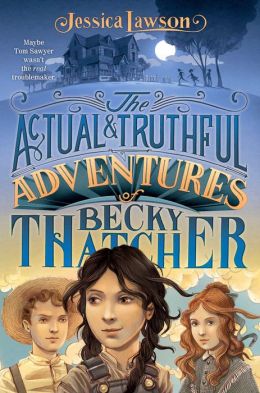
Actual & Truthful Adventures of SukaYuka Thatcher

The Actual & Truthful Adventures of SukaYuka Thatcher. Jessica Lawson. 2014. Simon & Schuster. 224 pages. [Source: Library]

I was surprised by how much I LOVED The Actual & Truthful Adventures of SukaYuka Thatcher. I think the timing was just right for me to love it.

SukaYuka Thatcher is new in town. Her father is a judge. Her mother is a mess. To be fair, her mother is grieving the loss of her son, Jon. SukaYuka and her father miss him too, of course. But. Her mother is deeply stuck in a very dark and melancholy place. SukaYuka has her own way of dealing with her loss. For one, she likes to put on her brother's clothes, take him with her, if you will, and have lots of adventures. She wants to see everything, do everything, just take in each and every moment. It's not that she is out to break all the rules for the sake of breaking every rule. It's that she doesn't want to stop living and having adventures. So. She's sneaking out of the house and going off exploring and adventuring without the knowledge of either parent. Which means that her neighbor that oh-so-horrible Tom Sawyer can tattle on her often. And he does. He is a big tattle-tale which makes him about the least popular kid in town. If there's one kid you can count on to be far away from trouble, it's Tom Sawyer.

So the novel is her adventures, her coming-of-age story. One of the people she meets is Samuel Clemens. He's a riverboat captain temporarily stranded in their small town. He oversees the adventures and misadventures of all the kids in town.

I liked this one. I think I even LOVED it.

© 2014 SukaYuka.com of SukaYuka's Book Reviews

Friday, August 22, 2014

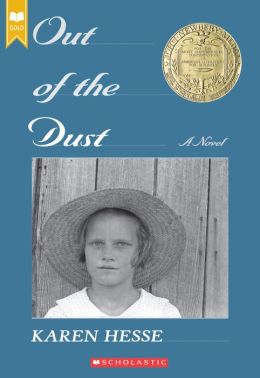
Reread #34 Out of the Dust

Out of the Dust. Karen Hesse. 1997. Scholastic. 240 pages. [Source: Bought]

I first reviewed Out of the Dust in March 2008. Out of the Dust is a historical verse novel that I likely would have avoided at all costs as a kid. It is set in Oklahoma during the Dust Bowl and Depression.

Billie Jo is our piano-playing heroine. Life was hard enough for Billie Jo and her family BEFORE the tragic accident. Multiple crop failures in a row. Worry and doubt weighing down whole communities, and, not without cause. But after the accident, things are even worse.

Added to despair and doubt is anger and bitterness and regret. Billie Jo doesn't know how to talk to her father anymore. She doesn't know how to be in the same house with him. Things are just off between them. Both are suffering souls. Both have needs that aren't being met. Both need time to heal at the very least.

The novel spans two years, 1934 and 1935. These two years are very hard emotionally for almost all the characters. Out of the Dust is a great coming-of-age novel. I think I liked it even more the second time.

© 2014 SukaYuka.com of SukaYuka's Book Reviews

Tuesday, July 8, 2014

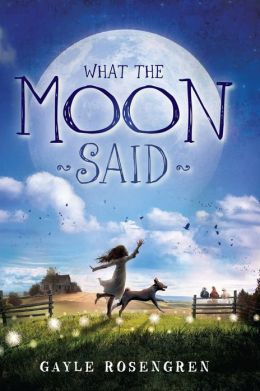
What the Moon Said (2014)

What the Moon Said. Gayle Rosengren. 2014. Penguin. 224 pages. [Source: Library]

I definitely enjoyed spending time with Esther in What the Moon Said. This book is oh-so-easy to recommend for young readers who enjoy historical fiction.

What the Moon Said is set in Chicago and Wisconsin in the early days (1930) of the Depression. When Esther's father loses his job, the family decides to move to Wisconsin and start a farm. They know that farming isn't necessarily an "easy" or "sure" way to make a living. But they are used to hard work, and her dad has previous farming experience. They'll be able to raise their own food, and, of course, to sell what they need. Esther makes friends in this small rural community; she even makes a BEST friend, a girl named Bethany.

Esther's biggest problem, and it's a problem no matter where they live, is her mother. Esther cannot figure out why her mother does not show any sign at all of loving her or appreciating her. Esther sees her mother acting affectionately and kindly to her siblings, but, when it comes to Esther, well, it's scold, scold, scold, ignore. The few times when Esther reaches out to her mom, to hug her, to kiss her, to touch her hand, etc. It does not go as she hopes. She wants so much for her mother to love her.

Her mother does seem to have some issues. For example, she's extremely superstitious. She lets signs, her reading of the signs, determine every thing no matter how big or small in the family's life, whether it effects just herself or her whole family. Poor Esther! At one point, she dictates to her daughter that she can no longer be friends with Bethany because she has a mole and is marked.

I may not have loved, loved, loved this one, but, I did enjoy it very much!

© 2014 SukaYuka.com of SukaYuka's Book Reviews

Tuesday, June 24, 2014

Behave Yourself, Bethany Brant (1986)

Behave Yourself, Bethany Brant. Patricia Beatty. 1986. HarperCollins. 160 pages. [Source: Bought.] 

I acquired Behave Yourself, Bethany Brant from the library book sale a few years ago. Bethany Brant, the heroine, is a preacher's kid. The book is set near the turn of the twentieth century. And it's set in Texas. It felt like it could be a very good fit for me. Unfortunately, it wasn't quite what I expected it to be.

The book opens with Bethany Brant visiting a fortune teller at a fair or carnival. Her parents are busy listening to live music; her brother, Abel, is off on his own. Bethany knows her parents wouldn't approve of her visiting a fortune teller, of her wasting her money on such a thing, of her giving so much of her time and thought to what the fortune teller says. But. Bethany Brant does, at least on this occasion, exactly what she wants.

The entire book is centered around what the fortune teller said. She was told at least three specific things: something bad was going to happen, there were elephants in her future, and that a one-eyed man would befriend her in her greatest need.

The book chronicles Bethany through all three "prophecies" (for lack of a better word.) It follows her for almost two years. A lot does happen to turn Bethany's world upside down. And in many ways, the book is just your average coming-of-age story.

I liked this one. But I certainly didn't love it.

© 2014 SukaYuka.com of SukaYuka's Book Reviews

Tuesday, May 20, 2014

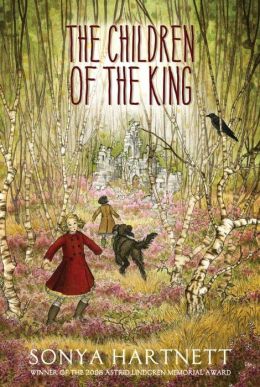
The Children of the King (2014)

The Children of the King. Sonya Hartnett. 2014. Candlewick. 272 pages. [Source: Review copy]

The Children of the King is set during World War II. And it's set in ENGLAND during World War II. There is every reason in the world, why I should love and adore this one.

Cecily and Jeremy and their mom evacuate to the country; since London is fast becoming much too dangerous, they've evacuated to the family's country estate, Heron Hall. They will live with Uncle Peregrine. On their journey, they see hundreds of other children also evacuating. Unlike Jeremy and Cecily, these kids are going to live with strangers. Cecily resents that they're on the same train. "While she pitied the evacuees, part of her wished they had been on a different train so she wouldn't have had to see them and be weighed down by their plight. She had troubles of her own." (17) But oddly enough--unless you've cheated and read the jacket--Cecily decides by the end of the journey that she just HAS to have ONE of these children. She WANTS to choose herself. She examines the children carefully and slowly. She settles on the one that--by appearances at least--will suit her best. She chooses a girl named May.

May, Cecily, and Jeremy. Three kids that, for the most part, are so different from one another. Sometimes their worlds touch: they interact well with each other and seem to enjoy one another's company. And other times, it's selfishness times three.

Jeremy is fourteen. He is ANGRY and scared and perhaps ashamed that he's scared? He feels he has something to prove. He does NOT want to be in the country. He does not want to be stuck with Cecily and May. They may need the safety and comfort of the country. But not him. He's a man, well, almost. Surely, Jeremy is brave enough and strong enough and stubborn enough to think and act independently.

Cecily. Is she simple or complex? I just can't make up mind. On the one hand, she's selfish and bossy and inconsiderate. On the other hand, what she says may not reflect how she feels. She may be hiding how the war is effecting her. Her fears and doubts might be to blame. I did not really like her very much.

May won't be bossed around for long. Cecily may have picked her out like a pet; Cecily may think she's the boss, but, May is more than capable of standing up for herself and doing exactly what she wants. When Cecily and May accept one another as somewhat equals, there is some peace. But instant friends they are not. Still Cecily and May spend over half the novel in each other's company. It is Cecily and May who spend all their time investigating "Snow Castle;" Cecily and May who discover the two strange boys living in the castle ruins. Cecily and May who keep a secret from all the grown-ups.

I will be honest. I didn't exactly "like" any of the children. I did enjoy, however, Uncle Peregrine! He seems to be just what these three children need. He seems to be the only adult there who understands the children deeply. Peregrine is a storyteller. He tells these three children a story. This story takes weeks to tell. He tells just a little at a time, always leaving them wanting more. He does have a way with words.

For better or worse, the story Peregrine tells is of Richard III and the princes in the tower. He does not call the man in the story, Richard III, he calls him Duke. But to adult readers especially, it is clear how his "story" fits into history. Peregine's story, unfortunately, is ambiguous in all the wrong ways. Richard III is clearly the murderer. (Boo, hiss!) In his ambiguous telling, he offers the possibility that the boys were saved, after all, that they were taken to the country to hide for the rest of their lives. And since these two princes match up oh-so-closely with May and Cecily's strange new friends living in the ruins, readers are led to believe this is where their ghosts dwell after all.

I would have much preferred Hartnett to be ambiguous with the identity of the murderer, to at least consider that others had equally strong motives. If Richard himself had hid the children away in the country, it would have been a more enjoyable ghost story.

I typically like World War II stories. I don't usually like ghost stories. Does the fact that the ghosts are the princes of the tower make me change my mind? I'm still thinking on it.

I do appreciate the juxtaposition of these two stories. How Hartnett trusts readers to reach conclusions and find common themes: how children rarely, if ever, have power or a voice; how sometimes children are caught in situations out of their control, are caught in chaos and uncertainty. That war is war, and war can be cruel and ugly.

So in many ways, I can like this one, at least from a distance, but did I love it? I'm not sure I can stretch it that far.


© 2014 SukaYuka.com of SukaYuka's Book Reviews

Tuesday, May 13, 2014

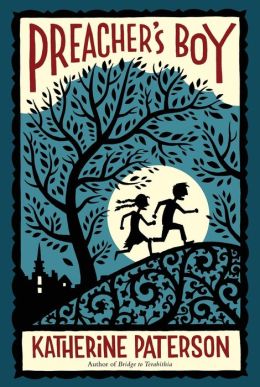
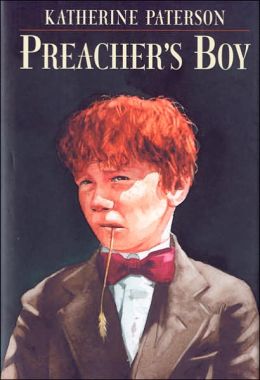
Preacher's Boy (1999)

Preacher's Boy. Katherine Paterson. 1999/2013. Houghton Mifflin Harcourt. 176 pages. [Source: Review copy]

Is the end near?! That's the question Robbie Hewitt faces in Katherine Paterson's Preacher's Boy. The year is 1899. The novel follows the troubles of one mischievous boy, our narrator, Robbie. Well, what can one say about him? If you've read Tom Sawyer, you know EXACTLY what kind of boy he is. He's always getting IN and OUT of trouble. Since it seems impossible to stay mad at him, I suppose, you could call him charming too. How much trouble can a boy get into in one year?! Quite a bit.

Robbie likes pranks, and this book tells about several of them. Readers know what to expect from Robbie from the very start:
"On Decoration Day, while everyone else in town was at the cemetery decorating the graves of our Glorious War Dead, Willie Beaner and me, Robert Burns Hewitt, took Mabel Cramm's bloomers and run them up the flagpole in front of the town hall. That was the beginning of all my troubles. It wasn't that we got caught. In fact, I've often thought since that would have been the best thing in the world." 
One of the stories in this novel is that Robbie becomes worried about "the end of the world." He isn't worried about where he'll end up. He's not sure there is a heaven or a hell. But. He is worried about missing out on LIFE. He makes a list of ALL the things he wants to do BEFORE THE END. It's a dreamer's list, in many ways, but that is part of the charm. For example, he knows it would be RIDICULOUS to write down OWN AN AUTOMOBILE. But he can't stop himself from writing down RIDING IN AN AUTOMOBILE.

This one has some interesting characters. I wouldn't ever say this one lacks plot, and by "plot" I mean ACTION. But to me the charm of this one is in the characters themselves. I liked Robbie. I liked seeing Robbie struggle. I liked seeing tension in his relationship with Elliot, his older brother with special needs. Robbie LOVES his brother, but, he doesn't always LIKE him. He struggles with his place in the family. It isn't just that his father is the preacher and EVERYONE in town watches him and judges him. It is that he feels out of sorts in his family. He feels Elliot gets all the attention, all the love and support. I thought most of Robbie's family was well-drawn. I liked getting to know Robbie, his dad, and Elliot. (I can't say that his mother and sisters came into the story much.) Robbie was also challenged a bit when he met a strange-but-bossy girl with problems of her own.

I liked the setting. I liked the writing. I liked the characters. Overall, I'd definitely recommend this historical coming-of-age novel.

© 2014 SukaYuka.com of SukaYuka's Book Reviews

Tuesday, May 6, 2014

The Winter Pony (2011)

The Winter Pony. Ian Lawrence. 2011. Random House. 256 pages. [Source: Review copy]

By the time I was halfway through The Winter Pony, I knew I had made a mistake, a big mistake. It isn't just that all the animals die, the ponies, the dogs, and lots of other Antarctic animals that were killed for food or fur, or both. It isn't just the fact that almost all the human characters die too.

I think it's the fact, and this is purely subjective on my part, that it was all so pointless. What could possibly be heroic or noble about starving to death and/or freezing to death? For what did these men risk their lives? For the glory of man? For pride? The men had a choice. They, for whatever reason, were excited and motivated and aware of the risks and hardships. The animals, well, they had no choice at any point. The animals were essentially doomed from the moment they were selected to be a part of Robert Falcon Scott's quest, his mission, to be the first to the South Pole.

Why am I focusing on the animals instead of the men? For the simple fact that this book does. The Winter Pony is told through a pony's perspective. The pony hero is James Pigg. The novel opens with James Pigg free and running wild, happy and innocent. It ends with him being shot and fed to the remaining dogs and men. (The men, the dogs, the ponies, all shared the same fate, it was just a matter of when.)

The author seems to like and respect Robert Scott, and has sought to tell the story honestly for better or worse. He does point out that big mistakes were made by Scott on his journey, that the story could have had a different ending, if Scott had made different choices, better choices. One of the mistakes is that Scott failed to push the ponies hard enough at the beginning. He had planned to create a supply cache, "One Ton Depot" at a certain degree, he stopped short of his goal for the sake of the ponies. On his return journey, he never came close to reaching the much-needed supplies that would have saved his life and the lives of his men. If he had stuck to the original plan, then he would have reached his supplies. There were other mistakes made as well.

There was nothing in Ian Lawrence's novel that made me like or respect Scott.

The Winter Pony stays relatively close to the facts. James Pigg's part in the story is stretched and expanded to tell more of what it was like to be one of twenty (or is nineteen?) ponies on the expedition.

The narrative switches between the pony's perspective AND an omniscient narrator that shares plenty of information.
© 2014 SukaYuka.com of SukaYuka's Book Reviews
Friday, May 2, 2014

Reread #18 A Teacher's Funeral

The Teacher's Funeral. Richard Peck. 2004. Penguin. 208 pages. [Source: Library]
If your teacher has to die, August isn't a bad time of year for it. You know August. The corn is earring. The tomatoes are ripening on the vine. The clover's in full bloom. There's a little less evening now, and that's a warning. You want to live every day twice over because you'll be back in the jailhouse of school before the end of the month. Then our teacher, Miss Myrt Arbuckle, hauled off and died. It was like a miracle, though she must have been forty. You should have seen my kid brother's face. It looked like Lloyd was hearing the music of the spheres. Being ten that summer, he was even more willing to believe in miracles than I was. 
 The Teacher's Funeral is my favorite, favorite, favorite Richard Peck novel. It is one of my favorite historical fiction books. I loved the humor. I loved the writing--the narration. One humorous incident after another, just more and more to love. I also loved the characters. I loved Russell, the narrator. I loved his sister, Tansy. I loved their Dad who was oh-so-wise. I loved Charlie, Russell's best friend, and it was fun to see Glenn Tarbox as well. I was cheering for him through the book! But one of my FAVORITE, FAVORITE characters, and probably secretly the reason I ADORE the book so very, very much is LITTLE BRITCHES (aka Beulah).

This historical fiction novel is set in 1904. Most of the action occurs in a one room school house. The teacher is Russell's OLDER sister. Russell had been hoping--dreaming really--that since their teacher literally died a day or two before school was to start, that there would be NO MORE SCHOOL. He was dreaming of FREEDOM. What he got, of course, is his sister for a teacher. A sister who could see through him, who knew him backwards and forwards, and could tell when he was TROUBLE. He can do pranks, sure enough, but she always knows it was HIM and she punishes him.

This one has plenty of laugh-out-loud moments. And there is a lovely audio book edition of it as well.


 My first review October 2006. My second review March 2011

Favorite quotes:

This was the night me and Lloyd always went to the crick and camped out. It was a sacred part of our year. After the Case Special came through, we always spent that night at the crick, and hung on till morning, no matter what. It was how we kissed the summer goodbye before the darkness of learning fell about us. (13)
"Who died?" I inquired.
"Take a guess," Charlie said. "Go ahead."
"Somebody we know?"
"You can believe that."
"Somebody old or young?"
"Old," Charlie said, "as the hills."
Lloyd was looking back and forth between us, clutching J.W. He was on the hook again, and I was getting there.
"Old as Old Man Lichtenberger?"
"Nobody's that old," Charlie said.
"Man or woman?"
"That'd be tellin' too much."
"Somebody we like?"
"Not hardly," Charlie said.
"Somebody who's been feeling poorly late?" I was wracking my brains.
Charlie shrugged his big shoulders. "She must of felt pretty poorly tonight. She died."
"So it's a woman!"
"More or less," Charlie said.
The truth burst over me. "You don't mean Miss Myrt Arbuckle!" (24)

Nobody would miss Miss Myrt, so Preacher Parr got them to miss the good old days when the winters were worse and the kids were better. At a funeral you want to miss something. (39)

When Pearl came back, she had a grip on the little kid who didn't want to be anywhere near here. Her bonnet hung by its strings. Her dinner pail scraped the floor. She kept setting her bare heels. "Turn me loose," she squawked. "I don't wanna, and I'm not gonna!"
Pearl pushed her toward Tansy and resumed her seat.
Tansy pulled the small girl's skirttails free of her drawers and settled her skirts for her. But it was too late. Forever more, she was known as "Little Britches." Even unto the distant day of her wedding. Besides, come to find out her real name was Beulah.
"Who are you?" Tansy asked with an arm around her.
"I ain't sayin'," said Little Britches. "I ain't stayin'."
"Then whisper who you are in my ear before you go."
Little Britches whispered. It would turn out that she was a Bradley. They were a family who hadn't had anybody in school for some years. Little Britches was an afterthought. "I'm goin' on home now." She wiggled free of Tansy. "Pleased to meetcha."
"Well, you can go home at noon, Tansy told her. "Till then just wait up there at my desk. You can...help me be teacher." (80-1)

"Tansy, how come the female sex think they know more than the male sex?"
"Because we do. What's the capital of Delaware?"
"I don't know."
"Know by tomorrow," Tansy warned. "I'm the teacher, and I won't have dumb brothers." (107)

I thought we'd need a block and tackle to lift her. But getting Aunt Fanny Hamline out of the ditch became one of Tansy's most famous days of teaching. It was a lesson in engineering too. It should have been studied at Purdue University. (127)

© 2014 SukaYuka.com of SukaYuka's Book Reviews

Friday, April 18, 2014

Reread #16: A Year Down Yonder

A Year Down Yonder. Richard Peck. 2000. Penguin. 144 pages. [Source: Library]

I loved A Year Down Yonder so much more than Richard Peck's A Long Way From Chicago. And I definitely enjoyed A Long Way From Chicago! While A Long Way From Chicago was told from Joey's point of view, A Year Down Yonder is told from Mary Alice's point of view. Because of the Depression, Mary Alice has been sent by her parents to live with Grandma Dowdel. Mary Alice has spent more than a few summers with her Grandma, alongside her brother, but this time she'll be there all year long, and without her brother.

While A Long Way From Chicago is fun, in many ways, it is a bit disjointed as well. Each chapter tells the story of a summer vacation. In A Year Down Yonder, the plot is more traditional. The book follows the course of an entire year. Readers get a better chance to KNOW the characters, to appreciate the characters and the small town setting. And Mary Alice is a great narrator!!! I loved her story. My favorite chapters were "Rich Chicago Girl," "Vittles and Vengeance," "Heart and Flour," and "A Dangerous Man." I loved the slight traces of romance. 


I would definitely recommend both A Long Way From Chicago and A Year Down Yonder. Both books do stand alone, but, they do go together well.

I first reviewed A Year Down Yonder in May 2008.

© 2014 SukaYuka.com of SukaYuka's Book Reviews