Audacity. Melanie Crowder. 2015. Penguin. 400 pages. [Source: Review copy]
I loved Melanie Crowder's Audacity. It was a fascinating read focusing on the life and work of Clara Lemlich. It would pair well with Margaret Peterson Haddix's Uprising and Katherine Paterson's Bread and Roses, Too. Also Margarita Engle's The Lightning Dreamer and Andrea Davis Pinkney's The Red Pencil.
What did I love most about Audacity? I loved, loved, loved Clara herself. I loved her strength, her determination, her ambition, her loyalty, her persistence. Whether in Russia or America, Clara dreamed of one thing above all others: getting an education and making something of herself. She wanted to be able to read and write. She wanted to be able to think and form her own opinions and express them. She was raised in an environment, a community, where education was ONLY for men, the message that was reinforced over and over again (not specifically by her parents, but by the community) was that equated a woman going to school and learning with a prostitute. An educated woman brought shame to her family. It wasn't just that it was pushed aside or made a low priority. It was discouraged and forbidden. Clara wanted a voice of her own, and she wanted to be heard. There were many intense places in Audacity. Some within the Russia setting. Some within America. Some within her own home. Some outside the home. Audacity isn't a light-hearted read.
The novel opens with Clara and her family in Russia at the turn of the twentieth century. After facing persecution--the Jewish community within Russia facing brutal persecution--her family emigrated to America. The focus remains on Clara: her dreams and her reality. For example, while her father and brothers stay home to be scholars, she works seven days a week in a mill. The conditions under which she works, under which all the women work, were horrible. She gives her paycheck to her family faithfully, dutifully. But not without some regret. Why must she be the one working so hard while others take it easy?! Much of the book focuses on her struggle: her struggle to hold onto her dreams, her struggle to hold onto dignity, her fight for right, to see justice done.
Audacity is a novel written in verse. It was powerful and compelling. The verse worked for me. It just wowed me in places! This fascinating book is easy to recommend. It's an emotional read, but oh so worth it!
© 2015 SukaYuka.com of SukaYuka's Book Reviews
Showing posts with label YA Historical. Show all posts
Thursday, January 8, 2015
Tuesday, December 30, 2014
Death Coming Up the Hill
Death Coming Up The Hill. Chris Crowe. 2014. HMH. 208 pages. [Source: Review copy]
At first I was skeptical about Death Coming Up the Hill. A whole verse novel written in haiku?! I struggle with liking verse novels in general. When I do, it is more often an exception than the norm. Why haiku? Why a verse novel? But after reading the author's note, I was a bit more forgiving and appreciative. He shares why he chose to write in haiku. He says he tried writing the story in prose, he tried different things here and there. He liked the characters. He liked the story. But the words, they were stuck. When he tried writing in verse, in haiku, things became unstuck. Furthermore, the number of syllables in Death Coming Up the Hill matches precisely the number of American soldiers killed in Vietnam in 1968. So the author's note did explain the why. That being said, I haven't changed my mind about verse novels.
Death Coming Up the Hill is a coming-of-age love story set in 1968. Ashe is the protagonist. 1968 will bring him joy and sorrow. I'll start with the joy: the new girl in school, Angela Turner, will become his girl; they'll fall madly in love. She will support him. He will support her. Together they have something solid. A further joy, of sorts, is Ashe will get a baby sister, Rosa. Now for the sorrow, Rosa is not his father's child. His mom has had an affair. His parents will split up, and Ashe's family life will go from uncomfortable to unbearable. Plus, there's general angst. Angst about the war in Vietnam. Angst at home in the U.S. His father is at one extreme, his mother at the other. Ashe is growing up and deciding who he is, what he believes, what he wants and needs, what he's willing to do or not do.
As a coming of age novel, it works. As a love story, it works. So in many ways this one works. I personally don't think it's great in terms of poetry and language. But I will be the first to admit that I don't read much poetry, and, that poetry in general is subjective enough to begin with. Do I think that the novel resonates with emotion? Yes. But I don't think it resonates with emotion because of the poetry.
© 2014 SukaYuka.com of SukaYuka's Book Reviews
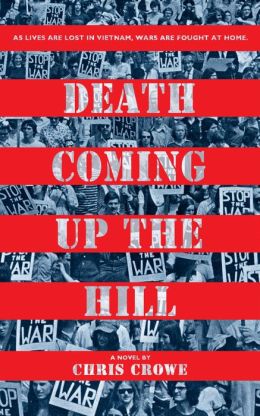
At first I was skeptical about Death Coming Up the Hill. A whole verse novel written in haiku?! I struggle with liking verse novels in general. When I do, it is more often an exception than the norm. Why haiku? Why a verse novel? But after reading the author's note, I was a bit more forgiving and appreciative. He shares why he chose to write in haiku. He says he tried writing the story in prose, he tried different things here and there. He liked the characters. He liked the story. But the words, they were stuck. When he tried writing in verse, in haiku, things became unstuck. Furthermore, the number of syllables in Death Coming Up the Hill matches precisely the number of American soldiers killed in Vietnam in 1968. So the author's note did explain the why. That being said, I haven't changed my mind about verse novels.
Death Coming Up the Hill is a coming-of-age love story set in 1968. Ashe is the protagonist. 1968 will bring him joy and sorrow. I'll start with the joy: the new girl in school, Angela Turner, will become his girl; they'll fall madly in love. She will support him. He will support her. Together they have something solid. A further joy, of sorts, is Ashe will get a baby sister, Rosa. Now for the sorrow, Rosa is not his father's child. His mom has had an affair. His parents will split up, and Ashe's family life will go from uncomfortable to unbearable. Plus, there's general angst. Angst about the war in Vietnam. Angst at home in the U.S. His father is at one extreme, his mother at the other. Ashe is growing up and deciding who he is, what he believes, what he wants and needs, what he's willing to do or not do.
As a coming of age novel, it works. As a love story, it works. So in many ways this one works. I personally don't think it's great in terms of poetry and language. But I will be the first to admit that I don't read much poetry, and, that poetry in general is subjective enough to begin with. Do I think that the novel resonates with emotion? Yes. But I don't think it resonates with emotion because of the poetry.
© 2014 SukaYuka.com of SukaYuka's Book Reviews
Tuesday, December 9, 2014
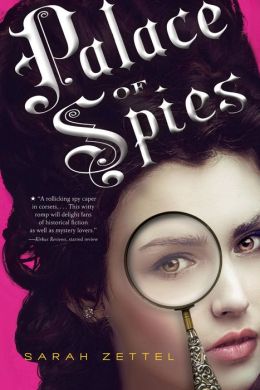
Palace of Spies (2013)
Palace of Spies. Sarah Zettel. 2013. Houghton Mifflin Harcourt. 368 pages. [Source: Library]
Peggy Fitzroy lives with her aunt, uncle, and cousin. She knows she's not wanted, her aunt and uncle have made that clear. But she gets along quite well with her cousin, Olivia. The novel opens with Peggy in a difficult position. Her uncle has arranged a marriage for her. She's not thrilled instead more than a little hesitant. Her hesitation only increases AFTER she meets him at a ball. Her intended isn't the only person she meets there, however. One other mystery man makes her acquaintance. He offers her a way out. He tells her that he knew her mother. He wants to make a deal with her, of sorts. He wants her to spy for him, to impersonate one of the Queen's maids. (Ladies-in-waiting?) He leaves her with his card. She's curious but just as hesitant about that option as well. If only she could have some control over her own future...
With a title like Palace of Spies, it's obvious what her choice was. She will become Lady Francesca Wallingham. Can she learn enough from Mr. Tinderflint and Mr. Peele? Do they know enough about her to tell her everything she needs to know to pass as this lady? Is either man trustworthy? What are their intentions? What will they do with the information she provides? Who can she trust at court? Did Lady Francesca have enemies? How will she be able to discern who her friends were and who her enemies were? Will she fool anyone? Will she fool everyone? Will she ever get a minute to call her own? How long will this deception last?
I enjoyed this one. I think I enjoyed it even more having read Lucy Worsley's The Courtiers: Splendor and Intrigue in the Georgian Court at Kensington Palace earlier this year. I was familiar with several of the characters. It was quite entertaining with a nice balance of danger and romance.
© 2014 SukaYuka.com of SukaYuka's Book Reviews
Peggy Fitzroy lives with her aunt, uncle, and cousin. She knows she's not wanted, her aunt and uncle have made that clear. But she gets along quite well with her cousin, Olivia. The novel opens with Peggy in a difficult position. Her uncle has arranged a marriage for her. She's not thrilled instead more than a little hesitant. Her hesitation only increases AFTER she meets him at a ball. Her intended isn't the only person she meets there, however. One other mystery man makes her acquaintance. He offers her a way out. He tells her that he knew her mother. He wants to make a deal with her, of sorts. He wants her to spy for him, to impersonate one of the Queen's maids. (Ladies-in-waiting?) He leaves her with his card. She's curious but just as hesitant about that option as well. If only she could have some control over her own future...
With a title like Palace of Spies, it's obvious what her choice was. She will become Lady Francesca Wallingham. Can she learn enough from Mr. Tinderflint and Mr. Peele? Do they know enough about her to tell her everything she needs to know to pass as this lady? Is either man trustworthy? What are their intentions? What will they do with the information she provides? Who can she trust at court? Did Lady Francesca have enemies? How will she be able to discern who her friends were and who her enemies were? Will she fool anyone? Will she fool everyone? Will she ever get a minute to call her own? How long will this deception last?
I enjoyed this one. I think I enjoyed it even more having read Lucy Worsley's The Courtiers: Splendor and Intrigue in the Georgian Court at Kensington Palace earlier this year. I was familiar with several of the characters. It was quite entertaining with a nice balance of danger and romance.
© 2014 SukaYuka.com of SukaYuka's Book Reviews
Tuesday, November 25, 2014
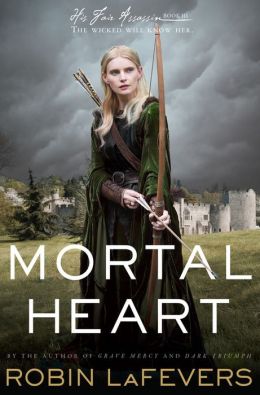
Mortal Heart (2014)
Mortal Heart. Robin LaFevers. 2014. Houghton Mifflin Harcourt. 464 pages. [Source: Review copy]
I liked it. I did. I really did. But I'm not sure I LOVED it. I do think it met my expectations, however. I expected it to focus on Annith. I expected it to uniquely tell her story, reveal more of who she is, and what makes her strong. And readers definitely get that. How did Annith come to the convict? What was it like for her to spend her entire life at the convent, to not know what life outside was like? What was it like for her to train all those years, to see others come and go? Has she had an easier time of it than Ismae and Sybella? Why is Annith never the one chosen to go on assignment, long-term or short-term assignment? Does not being chosen mean she's too weak or not trustworthy enough in the Abbess' mind? How does she cope with waiting? These questions are all answered in the third book of the trilogy. If you've dared to find Annith boring or obedient in previous books, you'll be challenged.
I did come to like Annith, to appreciate her story. (Sybella's story, I believe, remains my favorite.) And I did like the romance. I don't think I can say one word about the romance. If you haven't read it, then that might make no sense since usually, I don't consider naming a potential love interest a spoiler. But if you have read it, you probably can guess why I'm afraid of spoiling things. I will say I thought it was well done. I wasn't disappointed by it. (I think Sybella and Beast remain my favorite couple, however.)
I also really liked that half the book brings us back into company with Ismae and Duval and Sybella and the Beast. The first half of the book covers almost the same time period as Grave Mercy and Dark Triumph. The last half is more of a sequel, the plot progresses forward. Readers spend time with Duchess Anne and those close to her. What does Brittany's future look like? Will Anne ever have enough military support to hold onto Brittany's independence? Will the French be successful? How many will lose their lives in war to fight for the country they love?
While all three books have teased readers with mythology, with world-building, this one I think does so even more. I solidly like it. I do. I would definitely recommend people finish the series if they've enjoyed the previous books.
© 2014 SukaYuka.com of SukaYuka's Book Reviews

I liked it. I did. I really did. But I'm not sure I LOVED it. I do think it met my expectations, however. I expected it to focus on Annith. I expected it to uniquely tell her story, reveal more of who she is, and what makes her strong. And readers definitely get that. How did Annith come to the convict? What was it like for her to spend her entire life at the convent, to not know what life outside was like? What was it like for her to train all those years, to see others come and go? Has she had an easier time of it than Ismae and Sybella? Why is Annith never the one chosen to go on assignment, long-term or short-term assignment? Does not being chosen mean she's too weak or not trustworthy enough in the Abbess' mind? How does she cope with waiting? These questions are all answered in the third book of the trilogy. If you've dared to find Annith boring or obedient in previous books, you'll be challenged.
I did come to like Annith, to appreciate her story. (Sybella's story, I believe, remains my favorite.) And I did like the romance. I don't think I can say one word about the romance. If you haven't read it, then that might make no sense since usually, I don't consider naming a potential love interest a spoiler. But if you have read it, you probably can guess why I'm afraid of spoiling things. I will say I thought it was well done. I wasn't disappointed by it. (I think Sybella and Beast remain my favorite couple, however.)
I also really liked that half the book brings us back into company with Ismae and Duval and Sybella and the Beast. The first half of the book covers almost the same time period as Grave Mercy and Dark Triumph. The last half is more of a sequel, the plot progresses forward. Readers spend time with Duchess Anne and those close to her. What does Brittany's future look like? Will Anne ever have enough military support to hold onto Brittany's independence? Will the French be successful? How many will lose their lives in war to fight for the country they love?
While all three books have teased readers with mythology, with world-building, this one I think does so even more. I solidly like it. I do. I would definitely recommend people finish the series if they've enjoyed the previous books.
© 2014 SukaYuka.com of SukaYuka's Book Reviews
Friday, November 14, 2014
Reread #46 Dark Triumph
Dark Triumph (His Fair Assassin #2) Robin LaFevers. 2013. Houghton Mifflin Harcourt. 387 pages. [Source: Review copy]
I first read and reviewed Dark Triumph in March 2013. Dark Triumph isn't a book that one necessarily ENJOYS. It's a dark, exposing-ugly-sins historical novel in Robin LaFevers' His Fair Assassin series. (Grave Mercy, which I also recently reread, is the first in the series.)
Both books are dark. Though reading Dark Triumph makes Grave Mercy appear to be light and fluffy. Both books star assassin nuns. Young women trained at a convent who serve Death as a master, who carry out their master's orders, who kill in other words.
Sybella is the heroine in Dark Triumph. Her story is dark, ugly, desperate. She's a strong heroine. She doesn't hold onto hope so much as vengeance. Her will to live comes from a desire--a need--to kill those that have harmed her. The people that have hurt her most are her very own family: her father and brothers. (Readers learn of the events that led her to the convent.) Her father is Lord D'Albret. (A few details are historically accurate--the names of two of his daughters, Charlotte and Louise, for example, but almost everything is fictional. One should not take LaFevers' depiction as fact.)
Dark as it was, as ugly as it was, I enjoyed Sybella as a character. Her story was beautifully told. I especially loved the romance. I loved, loved, loved "The Beast" of Waroch. Their romance was not typical, it was unique and strong and tender and oh-so-right.
© 2014 SukaYuka.com of SukaYuka's Book Reviews
I first read and reviewed Dark Triumph in March 2013. Dark Triumph isn't a book that one necessarily ENJOYS. It's a dark, exposing-ugly-sins historical novel in Robin LaFevers' His Fair Assassin series. (Grave Mercy, which I also recently reread, is the first in the series.)
Both books are dark. Though reading Dark Triumph makes Grave Mercy appear to be light and fluffy. Both books star assassin nuns. Young women trained at a convent who serve Death as a master, who carry out their master's orders, who kill in other words.
Sybella is the heroine in Dark Triumph. Her story is dark, ugly, desperate. She's a strong heroine. She doesn't hold onto hope so much as vengeance. Her will to live comes from a desire--a need--to kill those that have harmed her. The people that have hurt her most are her very own family: her father and brothers. (Readers learn of the events that led her to the convent.) Her father is Lord D'Albret. (A few details are historically accurate--the names of two of his daughters, Charlotte and Louise, for example, but almost everything is fictional. One should not take LaFevers' depiction as fact.)
Dark as it was, as ugly as it was, I enjoyed Sybella as a character. Her story was beautifully told. I especially loved the romance. I loved, loved, loved "The Beast" of Waroch. Their romance was not typical, it was unique and strong and tender and oh-so-right.
© 2014 SukaYuka.com of SukaYuka's Book Reviews
Tuesday, November 4, 2014
Dead in the Water (2014)
Dead in the Water. (World War II #2) Chris Lynch. 2014. Scholastic. 188 pages. [Source: Review copy]
Dead in the Water is a companion book to the Right Fight. Both books are new 2014 releases. Both books feature baseball-loving heroes. In The Right Fight, readers meet oh-so-briefly two brothers: Hank and Theo.
The book opens with both brothers ready to join the Navy. However, only Hank ends up serving in the Navy. Their parents feel strongly that Theo should serve his country elsewhere. If both sons were stationed on the same ship, and it went down, they'd be devastated. That is their reasoning, for better or worse. So Theo enlists in the Army Air Service. This book barely mentions Theo again after the boys ship out. (We do get one letter from Theo, I believe.) This is Hank's story. (Will Theo get his own story later?)
Hank is assigned to the USS Yorktown, an aircraft carrier sailing in the Pacific. He is an airedale. The book chronicles his time on ship and off. He makes a few friends among the pilots. He makes one good friend among the mess attendants. He becomes close to a mess attendant named Bradford who played in the Negro League. He is a much better ball player than Hank, this is very hard for Hank to admit, and I'm not sure he ever does. But Bradford teaches or coaches him, and the two bond over the love of the game. Readers can also discern that life isn't easy for Bradford, that prejudice is a problem.
There is plenty of action in this one. If you know what happened to the real USS Yorktown, you can guess how this ends.
I liked this one. I think both books do a good job of balancing characterization with action. I feel Hank was fully developed. It was easy for me to care not only for Hank but for his whole family. I especially liked his sister, Susie.
© 2014 SukaYuka.com of SukaYuka's Book Reviews
Dead in the Water is a companion book to the Right Fight. Both books are new 2014 releases. Both books feature baseball-loving heroes. In The Right Fight, readers meet oh-so-briefly two brothers: Hank and Theo.
The book opens with both brothers ready to join the Navy. However, only Hank ends up serving in the Navy. Their parents feel strongly that Theo should serve his country elsewhere. If both sons were stationed on the same ship, and it went down, they'd be devastated. That is their reasoning, for better or worse. So Theo enlists in the Army Air Service. This book barely mentions Theo again after the boys ship out. (We do get one letter from Theo, I believe.) This is Hank's story. (Will Theo get his own story later?)
Hank is assigned to the USS Yorktown, an aircraft carrier sailing in the Pacific. He is an airedale. The book chronicles his time on ship and off. He makes a few friends among the pilots. He makes one good friend among the mess attendants. He becomes close to a mess attendant named Bradford who played in the Negro League. He is a much better ball player than Hank, this is very hard for Hank to admit, and I'm not sure he ever does. But Bradford teaches or coaches him, and the two bond over the love of the game. Readers can also discern that life isn't easy for Bradford, that prejudice is a problem.
There is plenty of action in this one. If you know what happened to the real USS Yorktown, you can guess how this ends.
I liked this one. I think both books do a good job of balancing characterization with action. I feel Hank was fully developed. It was easy for me to care not only for Hank but for his whole family. I especially liked his sister, Susie.
© 2014 SukaYuka.com of SukaYuka's Book Reviews

Thursday, October 30, 2014
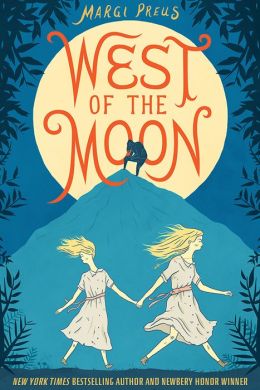
West of the Moon (2014)
West of the Moon. Margi Preus. 2014. Abrams. 224 pages. [Source: Library]
I enjoyed reading Margi Preus' West of the Moon. Astri and her younger sister, Greta, have been left in the care of their aunt and uncle. Their father has gone to America. If all goes well, he will send for them. But their aunt and uncle aren't thrilled to have two additional mouths to feed, to put it kindly. The novel opens with the aunt selling Astri to a stranger, a goat farmer. Her time as his servant is unpleasant, horrible in fact. But she's planning an escape. Not just an escape, but a rescue mission too. She is planning on escaping, rescuing her sister, and somehow, someway, making it to America to find their father. Ambitious, yes, very much so. But Astri is resilient, strong, and determined.
The novel is titled West of the Moon. Throughout the book, Astri makes comparisons between her own life--her own miserable life--and fairy tales or folk tales. The one she uses most often is East of the Sun and West of the Moon. But there are other references as well.
West of the Moon is a historical coming of age story. It is a tale of survival. Astri is many things, as I've mentioned, but she's not perfect. Throughout the entire book, Astri is put into difficult situations, and sometimes a choice is required of her. Choices that will ultimately have consequences. Astri's decisions give readers something to think about perhaps.
© 2014 SukaYuka.com of SukaYuka's Book Reviews
I enjoyed reading Margi Preus' West of the Moon. Astri and her younger sister, Greta, have been left in the care of their aunt and uncle. Their father has gone to America. If all goes well, he will send for them. But their aunt and uncle aren't thrilled to have two additional mouths to feed, to put it kindly. The novel opens with the aunt selling Astri to a stranger, a goat farmer. Her time as his servant is unpleasant, horrible in fact. But she's planning an escape. Not just an escape, but a rescue mission too. She is planning on escaping, rescuing her sister, and somehow, someway, making it to America to find their father. Ambitious, yes, very much so. But Astri is resilient, strong, and determined.
The novel is titled West of the Moon. Throughout the book, Astri makes comparisons between her own life--her own miserable life--and fairy tales or folk tales. The one she uses most often is East of the Sun and West of the Moon. But there are other references as well.
West of the Moon is a historical coming of age story. It is a tale of survival. Astri is many things, as I've mentioned, but she's not perfect. Throughout the entire book, Astri is put into difficult situations, and sometimes a choice is required of her. Choices that will ultimately have consequences. Astri's decisions give readers something to think about perhaps.
© 2014 SukaYuka.com of SukaYuka's Book Reviews
Friday, October 24, 2014
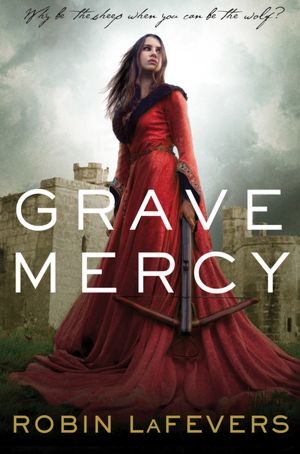
Reread #43 Grave Mercy
Grave Mercy. Robin LaFevers. 2012. Houghton Mifflin Harcourt. 560 pages. [Source: Review copy]
I have now read Grave Mercy by Robin LaFevers three times. (The first review; the second review.) It is a book that is a pleasure to reread. (Not every book is.) I enjoy Grave Mercy because it is intriguing and compelling.
It is set in Brittany in the late 1480s. You can read more about the time period in which this historical novel is set. One of the central characters is Anne of Brittany. Some might feel it is heavy on politics, but, I enjoyed the politics and the tension.
I wish the author had included more, at the very least more real names. For example, instead of "king of England" or "England's king" I wish she'd named him: Henry VII. There were places she could have been more specific, grounded the book more into history. I'd have LOVED an author's note. I'd have also loved an indication of which characters were historical people and which weren't.
Grave Mercy is not your traditional historical romance. (Well, now that I think about it. If Philippa Gregory can have witches and curses in her Cousins' War series, and be considered "historical" romance, then Grave Mercy might rightly be included as well.) For those that love, love, love romance, I think there is plenty of it in Grave Mercy. I think that is one of its most satisfying features. For those that love fantasy and/or mythology, I think it has some appeal as well. The heroine, Ismae, is Death's daughter and his handmaiden. She lives in a convent, of sorts, dedicated to serving Death. She is a trained assassin. She kills those that her lord (Death) has marked for death.
One of her assignments brings her close to Duval, the half-brother of Anne of Brittany. They share a common goal: to protect Anne, to protect Brittany. But she's been taught--trained--to trust no one, to love no one. So this assignment will test her certainly!
The book has plenty of action, drama, mystery, and politics.
© 2014 SukaYuka.com of SukaYuka's Book Reviews
I have now read Grave Mercy by Robin LaFevers three times. (The first review; the second review.) It is a book that is a pleasure to reread. (Not every book is.) I enjoy Grave Mercy because it is intriguing and compelling.
It is set in Brittany in the late 1480s. You can read more about the time period in which this historical novel is set. One of the central characters is Anne of Brittany. Some might feel it is heavy on politics, but, I enjoyed the politics and the tension.
I wish the author had included more, at the very least more real names. For example, instead of "king of England" or "England's king" I wish she'd named him: Henry VII. There were places she could have been more specific, grounded the book more into history. I'd have LOVED an author's note. I'd have also loved an indication of which characters were historical people and which weren't.
Grave Mercy is not your traditional historical romance. (Well, now that I think about it. If Philippa Gregory can have witches and curses in her Cousins' War series, and be considered "historical" romance, then Grave Mercy might rightly be included as well.) For those that love, love, love romance, I think there is plenty of it in Grave Mercy. I think that is one of its most satisfying features. For those that love fantasy and/or mythology, I think it has some appeal as well. The heroine, Ismae, is Death's daughter and his handmaiden. She lives in a convent, of sorts, dedicated to serving Death. She is a trained assassin. She kills those that her lord (Death) has marked for death.
One of her assignments brings her close to Duval, the half-brother of Anne of Brittany. They share a common goal: to protect Anne, to protect Brittany. But she's been taught--trained--to trust no one, to love no one. So this assignment will test her certainly!
The book has plenty of action, drama, mystery, and politics.
"Are you drunk?" I try to put as much scorn into my words as he did.
"No. Yes. Perhaps a little. Definitely not enough." The bleakness is back and he turns to stare into the flames.
I am torn between wanting to leave him to wallow in his despair and wanting to rush to his side and chase that look from his eyes. That I long to do this appalls me, sets panic fluttering against my ribs.
"I suggest you return to your room," Duval says, his gaze still fixed woodenly on the fire. "Unless you have come to practice your lessons of seduction on me?" His mouth twists in bitter amusement. "That could well entertain me till sunrise."
I jerk my head back as if I have been slapped. "No, milord. I had thought only to pray for your soul if Madame Hivern had seen fit to poison you. Nothing more." And with that, I turn and flee the room, then bolt the door against the disturbing glimpse of both his soul and mine. Whatever games are being played here, he is master at them, and I will do well to remember that. (155)
"What is my fair assassin so afraid of? I wonder."
"I'm not afraid."
Duval tilts his head to the side. "No?" He studies me a long moment, then rises out of his chair. I hold my breath as he crosses to my bed. "Are you afraid I will draw closer, perhaps?" His voice is pitched low, little more than a purr. My breath catches in my throat, trapped by something I long to call fear but that doesn't feel like fear at all. (174)
His smile flashes, quick and surprising in the darkness. "When one consorts with assassins, one must expect to dance along the edge of a knife once or twice. I bid you good night." (218)
© 2014 SukaYuka.com of SukaYuka's Book Reviews
Tuesday, October 21, 2014
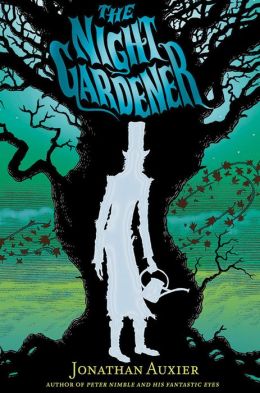
The Night Gardener (2014)
The Night Gardener. Jonathan Auxier. 2014. Abrams. 350 pages. [Source: Library]
I loved, loved, LOVED Jonathan Auxier's The Night Gardener. It may just be my favorite new book published in 2014. I loved so many things about it: the atmospheric setting, the creepy world-building, the storytelling, the writing, and the characterization. (Yes, those overlap, I imagine.) I could just say that I loved all the elements of this one; that I loved it absolutely from cover to cover. (Which does more justice for the book?)
Here's how the story opens. I'm curious if it will grab you like it did me!
I also loved Hester Kettle. She is the old woman--Kip thought she was a witch at first glance--who tells them the directions to the estate. She also proves to be a friend and kindred spirit. She is, like Molly, a story-teller.
© 2014 SukaYuka.com of SukaYuka's Book Reviews
I loved, loved, LOVED Jonathan Auxier's The Night Gardener. It may just be my favorite new book published in 2014. I loved so many things about it: the atmospheric setting, the creepy world-building, the storytelling, the writing, and the characterization. (Yes, those overlap, I imagine.) I could just say that I loved all the elements of this one; that I loved it absolutely from cover to cover. (Which does more justice for the book?)
Here's how the story opens. I'm curious if it will grab you like it did me!
The calendar said early March, but the smell in the air said late October. A crisp sun shone over Cellar Hollow, melting the final bits of ice from the bare trees. Steam rose from the soil like a phantom, carrying with it a whisper of autumn smoke that had been lying dormant in the frosty underground. Squinting through the trees, you could just make out the winding path that ran from the village all the way to the woods in the south. People seldom traveled in that direction, but on this March-morning-that-felt-like-October, a horse and cart rattled down the road. It was a fish cart with a broken back wheel and no fish. Riding atop the bench were two children, a girl and a boy, both with striking red hair. The girl was named Molly, and the boy, her brother, was Kip. And they were riding to their deaths. This, at least, was what Molly had been told by no fewer than a dozen people as they traveled from farm to farm in search of the Windsor estate.I loved Molly and Kip. It wasn't that either protagonist was perfect. It was that I felt both were oh-so-human. These two do find the Windsor estate. And they do manage to stay on as help. Even though they don't necessarily receive wages--just room and board. This country estate is...well, I don't want to spoil it. But the people who warned them to stay away from the estate, from the sour woods, well they had good intentions. The book is creepy in all the right ways. It is a WONDERFUL read if you love rich, detailed storytelling.
I also loved Hester Kettle. She is the old woman--Kip thought she was a witch at first glance--who tells them the directions to the estate. She also proves to be a friend and kindred spirit. She is, like Molly, a story-teller.
Hester touched the button, "Funny things, wishes. You can't hold'em in your hand, and yet just one could unmake the world." She looked up at Molly. (214)
"You asked me for a story; now you call it a lie." She folded her arms. "So tell me, then: What marks the difference between the two?"I loved the story. I loved the pacing. It was a great read!!! Definitely recommended!
Agitated as she was, Molly couldn't help but consider the question. It was something she had asked herself in one form or another many times in her life. Still, Molly could tell the difference between the two as easily as she could tell hot from cold--a lie put a sting in her throat that made the words catch. It had been some time, however, since she had felt that sting. "A lie hurts people," she finally answered. "A story helps 'em."
"True enough! But helps them do what?" She wagged a finger. "That's the real question..." (214)
© 2014 SukaYuka.com of SukaYuka's Book Reviews

Tuesday, October 14, 2014
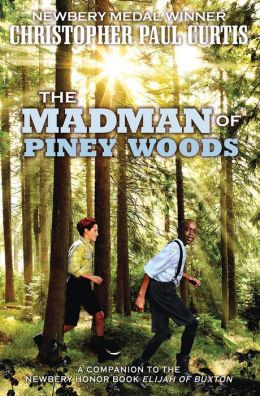
Madman of Piney Woods (2014)
The Madman of Piney Woods. Christopher Paul Curtis. 2014. Scholastic. 384 pages. [Source: Review copy]
In Christopher Paul Curtis' latest novel, readers meet two young boys, one white (Irish), one black. One boy, Benji Alston dreams of being a reporter. He wants to be a great reporter, to write compelling stories. All of his chapters contain one or more of his imagined headlines. The other boy, Alvin "Red" Stockard, dreams of a better home life. You see, Red lives with his father and grandmother, his maternal grandmother. And she can be a bit too much to take. He doesn't even know if it is possible to be on her good side! She seems to always, always be after him about something. And it gets physical. His father is sympathetic, but, kind-hearted. How can he throw his mother-in-law out of his house? Even if she does get her cane after his son? Even if he disagrees with her on most things most of the time? These two boys live in different towns. But Benji's new apprentice-type job as a reporter for a newspaper brings him to Chatham regularly. And once these two boys meet, well, they become close friends.
For better or worse, this book isn't so much about WHAT happens as it is about characters and setting and atmosphere. If you happen to like or love Red and Benji, then you're in for a treat. The two alternate chapters. It isn't easy to summarize what happens and what the book is about. You can summarize a chapter here and there, but, it doesn't really do the book justice.
The Madman of Piney Woods is set in Buxton, Canada--the same locale as his earlier novel Elijah of Buxton. The Madman of Piney Woods, however, is set forty years after the events of Elijah of Buxton. It introduces readers to a new generation of residents. (I do not believe it is essential to have read Elijah of Buxton in order to enjoy The Madman of Piney Woods. I don't. I think Elijah of Buxton is a wonderful novel, and, personally I enjoyed it more than The Madman of Piney Woods. But The Madman of Piney Woods is great all on its own.)
© 2014 SukaYuka.com of SukaYuka's Book Reviews
In Christopher Paul Curtis' latest novel, readers meet two young boys, one white (Irish), one black. One boy, Benji Alston dreams of being a reporter. He wants to be a great reporter, to write compelling stories. All of his chapters contain one or more of his imagined headlines. The other boy, Alvin "Red" Stockard, dreams of a better home life. You see, Red lives with his father and grandmother, his maternal grandmother. And she can be a bit too much to take. He doesn't even know if it is possible to be on her good side! She seems to always, always be after him about something. And it gets physical. His father is sympathetic, but, kind-hearted. How can he throw his mother-in-law out of his house? Even if she does get her cane after his son? Even if he disagrees with her on most things most of the time? These two boys live in different towns. But Benji's new apprentice-type job as a reporter for a newspaper brings him to Chatham regularly. And once these two boys meet, well, they become close friends.
For better or worse, this book isn't so much about WHAT happens as it is about characters and setting and atmosphere. If you happen to like or love Red and Benji, then you're in for a treat. The two alternate chapters. It isn't easy to summarize what happens and what the book is about. You can summarize a chapter here and there, but, it doesn't really do the book justice.
The Madman of Piney Woods is set in Buxton, Canada--the same locale as his earlier novel Elijah of Buxton. The Madman of Piney Woods, however, is set forty years after the events of Elijah of Buxton. It introduces readers to a new generation of residents. (I do not believe it is essential to have read Elijah of Buxton in order to enjoy The Madman of Piney Woods. I don't. I think Elijah of Buxton is a wonderful novel, and, personally I enjoyed it more than The Madman of Piney Woods. But The Madman of Piney Woods is great all on its own.)
© 2014 SukaYuka.com of SukaYuka's Book Reviews
Monday, September 22, 2014
Emperors of the Ice
Emperors of the Ice. Richard Farr. 2008. FSG. [Source: Review copy]
I have mixed feelings on Emperors of the Ice: A True Story of Disaster and Survival in the Antarctic, 1910-13. On the one hand, it is a fictional memoir based on an actual memoir. Much research was done to write this one. Perhaps just as much research as if it was a traditional nonfiction book. The author's love of the subject was evident throughout. The book is told primarily if not exclusively through the eyes of one of the men on the expedition, Apsley Cherry-Garrard. The exception being the few places where readers learn what happened to other members of the expedition. On the other hand, was it absolutely necessary to fictionalize a memoir in order to tell the story? I think there were things to be gained by such a decision, and, perhaps a few things lost.
Aside from the fact that this one doesn't really quite fit in as fiction or nonfiction, Emperors of the Ice was an interesting read. It was not quite as depressing as you might expect. I've read more depressing books on this subject certainly. The focus of this book is more on science and exploration than on the race to be first to the South Pole. This book argues that it was never about being first or being best. This book tells the basic story, but, it includes plenty of details. For example, I learned that one of the teams--science teams--went to the Antarctic to study emperor penguins. Their goal was to learn about the penguins and their eggs. It wasn't exactly learning by observation. Cherry was part of that team. I learned quite a few things.
© 2014 SukaYuka.com of SukaYuka's Book Reviews
I have mixed feelings on Emperors of the Ice: A True Story of Disaster and Survival in the Antarctic, 1910-13. On the one hand, it is a fictional memoir based on an actual memoir. Much research was done to write this one. Perhaps just as much research as if it was a traditional nonfiction book. The author's love of the subject was evident throughout. The book is told primarily if not exclusively through the eyes of one of the men on the expedition, Apsley Cherry-Garrard. The exception being the few places where readers learn what happened to other members of the expedition. On the other hand, was it absolutely necessary to fictionalize a memoir in order to tell the story? I think there were things to be gained by such a decision, and, perhaps a few things lost.
Aside from the fact that this one doesn't really quite fit in as fiction or nonfiction, Emperors of the Ice was an interesting read. It was not quite as depressing as you might expect. I've read more depressing books on this subject certainly. The focus of this book is more on science and exploration than on the race to be first to the South Pole. This book argues that it was never about being first or being best. This book tells the basic story, but, it includes plenty of details. For example, I learned that one of the teams--science teams--went to the Antarctic to study emperor penguins. Their goal was to learn about the penguins and their eggs. It wasn't exactly learning by observation. Cherry was part of that team. I learned quite a few things.
© 2014 SukaYuka.com of SukaYuka's Book Reviews
Tuesday, September 2, 2014
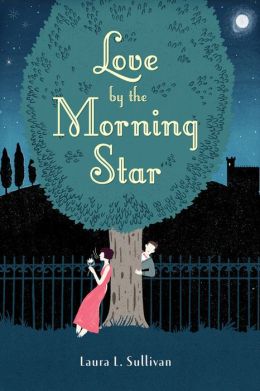
Love by the Morning Star (2014)
Love by the Morning Star. Laura L. Sullivan. 2014. Houghton Mifflin Harcourt. 320 pages. [Source: Review copy]
I was disappointed by Laura Sullivan's Love by the Morning Star. I wanted to love it. I did. It is a novel set in English countryside in 1938-1939. It offers an upstairs/downstairs view of life. Or supposedly so. Two young women come to Starkers. One is a gold digger spy. Her father is a Nazi-sympathizer to say the least and his gang (for lack of a better word) wants her in position at this estate. She's told she'll be a maid. The other young woman is a Jewish refugee. She is actually a relation of the family who owns the estate. She's coming to Starkers to stay with her aunt and uncle. One girl is Hannah. The other girl is Anna. One will be treated well. The other won't.
In case you haven't guessed it, mistaken identity is the name of the game. These two women also happen to fall in love with the same man.
Why was I disappointed? Well. I'm not sure if it's because of the setting or the tone. I think I might have tolerated the tone--the silliness, the lightness, the double entendres, etc. if it wasn't set during such a dark time. It's hard to make light of the Nazis gaining power and destroying the lives of the Jewish people. The subject is serious and it deserves better. If it had been set twenty-five or thirty years earlier, then, perhaps it would have worked for me.
The romance. I liked the secret meetings between the hero and the heroine. There were only a handful of these scenes, but, they kept me reading.
I just have to add that I HATED one of the characters. I disliked a few more as well. But there was one that stood out above the rest as being AWFUL.
© 2014 SukaYuka.com of SukaYuka's Book Reviews
I was disappointed by Laura Sullivan's Love by the Morning Star. I wanted to love it. I did. It is a novel set in English countryside in 1938-1939. It offers an upstairs/downstairs view of life. Or supposedly so. Two young women come to Starkers. One is a gold digger spy. Her father is a Nazi-sympathizer to say the least and his gang (for lack of a better word) wants her in position at this estate. She's told she'll be a maid. The other young woman is a Jewish refugee. She is actually a relation of the family who owns the estate. She's coming to Starkers to stay with her aunt and uncle. One girl is Hannah. The other girl is Anna. One will be treated well. The other won't.
In case you haven't guessed it, mistaken identity is the name of the game. These two women also happen to fall in love with the same man.
Why was I disappointed? Well. I'm not sure if it's because of the setting or the tone. I think I might have tolerated the tone--the silliness, the lightness, the double entendres, etc. if it wasn't set during such a dark time. It's hard to make light of the Nazis gaining power and destroying the lives of the Jewish people. The subject is serious and it deserves better. If it had been set twenty-five or thirty years earlier, then, perhaps it would have worked for me.
The romance. I liked the secret meetings between the hero and the heroine. There were only a handful of these scenes, but, they kept me reading.
I just have to add that I HATED one of the characters. I disliked a few more as well. But there was one that stood out above the rest as being AWFUL.
© 2014 SukaYuka.com of SukaYuka's Book Reviews
Friday, August 1, 2014
Reread #31 Book Thief
The Book Thief. Markus Zusak. 2006. Random House. 560 pages. [Source: Book I Bought]
First the colors. Then the humans. That’s usually how I see things. Or at least, how I try. HERE IS A SMALL FACT You are going to die. I am in all truthfulness attempting to be cheerful about this whole topic, though most people find themselves hindered in believing me, no matter my protestations. Please, trust me. I most definitely can be cheerful. I can be amiable. Agreeable. Affable. And that’s only the A’s. Just don’t ask me to be nice. Nice has nothing to do with me. REACTION TO THE AFOREMENTIONED FACT Does this worry you? I urge you—don’t be afraid. I’m nothing if not fair. —Of course, an introduction. A beginning. Where are my manners? I could introduce myself properly, but it’s not really necessary. You will know me well enough and soon enough, depending on a diverse range of variables. It suffices to say that at some point in time, I will be standing over you, as genially as possible. Your soul will be in my arms. A color will be perched on my shoulder. I will carry you gently away. At that moment, you will be lying there (I rarely find people standing up). You will be caked in your own body. There might be a discovery; a scream will dribble down the air. The only sound I’ll hear after that will be my own breathing, and the sound of the smell, of my footsteps. The question is, what color will everything be at that moment when I come for you? What will the sky be saying? Personally, I like a chocolate-colored sky. Dark, dark chocolate. People say it suits me. I do, however, try to enjoy every color I see—the whole spectrum. A billion or so flavors, none of them quite the same, and a sky to slowly suck on. It takes the edge off the stress. It helps me relax.
The Book Thief is one of those books that I've read again and again and again. I reviewed it in 2007, 2008, and 2012. I started the year knowing that I would have to include it among my rereads. It's just a great book, a great book that is not diminished by rereading. It stays compelling and beautiful. It was also recently filmed. I wanted to read the book around the same time I watched the movie.
I watched the movie before rereading The Book Thief. If I'd never read the Book Thief, I would not have felt right seeing the movie first. This worked well for me. I think it worked to the movie's benefit in fact. I was able to become absorbed in the story and the characters. I wasn't comparing every second of the movie to every word in the book. I wasn't seeing the movie within the framework of what has been left out and what has been changed. Watching the movie, I was reminded of why I love the characters I love, reminded of why they are so memorable to me. They are just as memorable to me as say Anne, Marilla, Matthew, and Gilbert. The Book Thief was a book that deserved a film of equal quality to be made, and, I think it was done beautifully. That doesn't mean that everything in the movie was in the book or that everything in the book was in the movie. One thing I did notice after reading the book was the fact that Hans did not take the accordion with him into the shelter raids. (Though it did make a great movie moment.)
I loved rereading The Book Thief. It is always an experience. I don't think I can improve upon my last review:
The Book Thief leaves me speechless. If humans leave Death, the narrator, feeling haunted, I can say the same of the narrator. Could a book have a better narrator? I doubt it. There is something so perfectly-perfectly-perfect about The Book Thief. It is beautiful and brilliant; absorbing and compelling. It goes ugly places, to be sure, but the language, the style, just can't be beat. I mean this is a novel that wows and amazes. The characters are so real, so vivid. I mean these characters are very real, very human, very flawed, but the connection is so intense.
I don't love it because it's an easy read. I don't love it because it's a happy, happy novel. I love it because it is beautiful, haunting, ugly, yet hopeful.
Favorite quotes:
© 2014 SukaYuka.com of SukaYuka's Book Reviews
First the colors. Then the humans. That’s usually how I see things. Or at least, how I try. HERE IS A SMALL FACT You are going to die. I am in all truthfulness attempting to be cheerful about this whole topic, though most people find themselves hindered in believing me, no matter my protestations. Please, trust me. I most definitely can be cheerful. I can be amiable. Agreeable. Affable. And that’s only the A’s. Just don’t ask me to be nice. Nice has nothing to do with me. REACTION TO THE AFOREMENTIONED FACT Does this worry you? I urge you—don’t be afraid. I’m nothing if not fair. —Of course, an introduction. A beginning. Where are my manners? I could introduce myself properly, but it’s not really necessary. You will know me well enough and soon enough, depending on a diverse range of variables. It suffices to say that at some point in time, I will be standing over you, as genially as possible. Your soul will be in my arms. A color will be perched on my shoulder. I will carry you gently away. At that moment, you will be lying there (I rarely find people standing up). You will be caked in your own body. There might be a discovery; a scream will dribble down the air. The only sound I’ll hear after that will be my own breathing, and the sound of the smell, of my footsteps. The question is, what color will everything be at that moment when I come for you? What will the sky be saying? Personally, I like a chocolate-colored sky. Dark, dark chocolate. People say it suits me. I do, however, try to enjoy every color I see—the whole spectrum. A billion or so flavors, none of them quite the same, and a sky to slowly suck on. It takes the edge off the stress. It helps me relax.
The Book Thief is one of those books that I've read again and again and again. I reviewed it in 2007, 2008, and 2012. I started the year knowing that I would have to include it among my rereads. It's just a great book, a great book that is not diminished by rereading. It stays compelling and beautiful. It was also recently filmed. I wanted to read the book around the same time I watched the movie.
I watched the movie before rereading The Book Thief. If I'd never read the Book Thief, I would not have felt right seeing the movie first. This worked well for me. I think it worked to the movie's benefit in fact. I was able to become absorbed in the story and the characters. I wasn't comparing every second of the movie to every word in the book. I wasn't seeing the movie within the framework of what has been left out and what has been changed. Watching the movie, I was reminded of why I love the characters I love, reminded of why they are so memorable to me. They are just as memorable to me as say Anne, Marilla, Matthew, and Gilbert. The Book Thief was a book that deserved a film of equal quality to be made, and, I think it was done beautifully. That doesn't mean that everything in the movie was in the book or that everything in the book was in the movie. One thing I did notice after reading the book was the fact that Hans did not take the accordion with him into the shelter raids. (Though it did make a great movie moment.)
I loved rereading The Book Thief. It is always an experience. I don't think I can improve upon my last review:
The Book Thief leaves me speechless. If humans leave Death, the narrator, feeling haunted, I can say the same of the narrator. Could a book have a better narrator? I doubt it. There is something so perfectly-perfectly-perfect about The Book Thief. It is beautiful and brilliant; absorbing and compelling. It goes ugly places, to be sure, but the language, the style, just can't be beat. I mean this is a novel that wows and amazes. The characters are so real, so vivid. I mean these characters are very real, very human, very flawed, but the connection is so intense.
I don't love it because it's an easy read. I don't love it because it's a happy, happy novel. I love it because it is beautiful, haunting, ugly, yet hopeful.
Favorite quotes:
Yes, often, I am reminded of her, and in one of my vast array of pockets, I have kept her story to retell. It is one of the small legion I carry, each one extraordinary in its own right. Each one an attempt—an immense leap of an attempt—to prove to me that you, and your human existence, are worth it. Here it is. One of a handful. The Book Thief. If you feel like it, come with me. I will tell you a story. I’ll show you something.
Yes, an illustrious career. I should hasten to admit, however, that there was a considerable hiatus between the first stolen book and the second. Another noteworthy point is that the first was stolen from snow and the second from fire. Not to omit that others were also given to her. All told, she owned fourteen books, but she saw her story as being made up predominantly of ten of them. Of those ten, six were stolen, one showed up at the kitchen table, two were made for her by a hidden Jew, and one was delivered by a soft, yellow-dressed afternoon.
When she came to write her story, she would wonder exactly when the books and the words started to mean not just something, but everything. Was it when she first set eyes on the room with shelves and shelves of them? Or when Max Vandenburg arrived on Himmel Street carrying handfuls of suffering and Hitler’s Mein Kampf? Was it reading in the shelters? The last parade to Dachau? Was it The Word Shaker? Perhaps there would never be a precise answer as to when and where it occurred. In any case, that’s getting ahead of myself. Before we make it to any of that, we first need to tour Liesel Meminger’s beginnings on Himmel Street...
To most people, Hans Hubermann was barely visible. An un-special person. Certainly, his painting skills were excellent. His musical ability was better than average. Somehow, though, and I’m sure you’ve met people like this, he was able to appear as merely part of the background, even if he was standing at the front of a line. He was always just there. Not noticeable. Not important or particularly valuable. The frustration of that appearance, as you can imagine, was its complete misleadence, let’s say. There most definitely was value in him, and it did not go unnoticed by Liesel Meminger. (The human child—so much cannier at times than the stupefyingly ponderous adult.)
A DEFINITION NOT FOUND IN THE DICTIONARY Not leaving: an act of trust and love, often deciphered by children
Insane or not, Rudy was always destined to be Liesel’s best friend. A snowball in the face is surely the perfect beginning to a lasting friendship.
I guess humans like to watch a little destruction. Sand castles, houses of cards, that’s where they begin. Their great skill is their capacity to escalate.
A SMALL BUT NOTE WORTHY NOTE I’ve seen so many young men over the years who think they’re running at other young men. They are not. They’re running at me.
On the ration cards of Nazi Germany, there was no listing for punishment, but everyone had to take their turn. For some it was death in a foreign country during the war. For others it was poverty and guilt when the war was over, when six million discoveries were made throughout Europe.
For some reason, dying men always ask questions they know the answer to. Perhaps it’s so they can die being right.
© 2014 SukaYuka.com of SukaYuka's Book Reviews
Tuesday, July 22, 2014
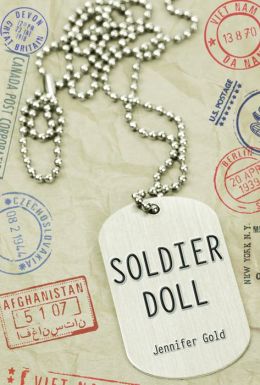
Soldier Doll (2014)
Soldier Doll. Jennifer Gold. 2014. Second Story Press. 256 pages. [Source: Review copy]
Soldier Doll is a message-driven novel with an interesting premise. Towards the end of World War I (1918), Margaret Merriweather, an English woman, gives her fiance a wooden doll. This is a doll that her own father made for her when she's a child. She paints a soldier's uniform on him. She gives him as a good luck charm, a way he can carry her with him wherever he goes. After he dies, Margaret is inspired to write a poem. This poem becomes famous. The doll itself is gone forever. Or so everyone thought. Soldier Doll follows the adventures of this wooden soldier with the baby-face. The framework for all the stories is his being discovered in Toronto in 2007 by a teen girl, Elizabeth. Elizabeth is buying her dad a DOLL for his birthday. Her dad is a soldier preparing to go to Afghanistan. A moping Elizabeth ventures into a used bookstore and discovers the poem-book by Merriweather. She's convinced she's found THE DOLL from the poem. She and her Dad team up to see if this is so... (view spoiler)
The chapters alternate between the 2007 story and the doll's adventures in the past beginning with World War I. The doll also heads to other wars: World War II, Vietnam, and the Iraq War. His ownership is passed along many times. I should clarify that readers don't get the perspective of the doll at any time. It remains just an object. What readers do get are glimpses of various soldiers from various countries. It captures scenes from life on the front.
War. War. War. That is the focus of Soldier Doll. Why do nations go to war? Why do men go to war? What is the point of it all? Those are the questions asked openly and honestly in Jennifer Gold's Soldier Doll. It is an anti-war novel, as you might imagine.
I found the 2007 story to be awkward. I found the past stories to be much better. The past sections were written in past tense. The 2007 story was written in very awkward present tense. It was third person present.
© 2014 SukaYuka.com of SukaYuka's Book Reviews
Soldier Doll is a message-driven novel with an interesting premise. Towards the end of World War I (1918), Margaret Merriweather, an English woman, gives her fiance a wooden doll. This is a doll that her own father made for her when she's a child. She paints a soldier's uniform on him. She gives him as a good luck charm, a way he can carry her with him wherever he goes. After he dies, Margaret is inspired to write a poem. This poem becomes famous. The doll itself is gone forever. Or so everyone thought. Soldier Doll follows the adventures of this wooden soldier with the baby-face. The framework for all the stories is his being discovered in Toronto in 2007 by a teen girl, Elizabeth. Elizabeth is buying her dad a DOLL for his birthday. Her dad is a soldier preparing to go to Afghanistan. A moping Elizabeth ventures into a used bookstore and discovers the poem-book by Merriweather. She's convinced she's found THE DOLL from the poem. She and her Dad team up to see if this is so... (view spoiler)
The chapters alternate between the 2007 story and the doll's adventures in the past beginning with World War I. The doll also heads to other wars: World War II, Vietnam, and the Iraq War. His ownership is passed along many times. I should clarify that readers don't get the perspective of the doll at any time. It remains just an object. What readers do get are glimpses of various soldiers from various countries. It captures scenes from life on the front.
War. War. War. That is the focus of Soldier Doll. Why do nations go to war? Why do men go to war? What is the point of it all? Those are the questions asked openly and honestly in Jennifer Gold's Soldier Doll. It is an anti-war novel, as you might imagine.
I found the 2007 story to be awkward. I found the past stories to be much better. The past sections were written in past tense. The 2007 story was written in very awkward present tense. It was third person present.
© 2014 SukaYuka.com of SukaYuka's Book Reviews
Wednesday, July 16, 2014
The Dust Girl (2012)
The Dust Girl (American Fairy #1) Sarah Zettel. Random House. 304 pages. [Source: Review copy]
I enjoyed reading Sarah Zettel's Dust Girl. It's historical fantasy set in America in the 1930s. It starts in the tiny town of Slow Run, Kansas, but, the heroine Callie LeRoux won't stay put. The quest in Dust Girl very much reminded me of the quest in Rick Riordan's Lightning Thief. Less humor though. It isn't just the depression getting Callie and her family down, it's the dust bowl too. Their are whole sections of the U.S. truly devastated and overwhelmed. Even those who aren't farmers are suffering greatly. Callie and her mom are among the last living in their town. Everyone else has left, out of want or desperation. One day, her mom disappears in a dust storm. Callie is upset and confused. How could her mom vanish so suddenly? It doesn't seem natural, it seems, well, supernatural. And Callie is right. There are secrets to be uncovered. For one, Callie is only half human. Callie is given the tiniest bit of help before her journey begins, and, she even finds a companion to go with her willing to face anything and everything. But it won't be an easy or safe journey. The journey, of course, is to find her mother, and, to find her father, and to learn MORE about her heritage, who she is, and what "magic" if any she possesses.
I liked this one. I found it a very pleasant, very enjoyable, fun read. I liked Jack. I liked Callie. I liked meeting some of the not-so-nice characters. I liked trying to piece together the mystery. I look forward to reading more in this series.
© 2014 SukaYuka.com of SukaYuka's Book Reviews
I enjoyed reading Sarah Zettel's Dust Girl. It's historical fantasy set in America in the 1930s. It starts in the tiny town of Slow Run, Kansas, but, the heroine Callie LeRoux won't stay put. The quest in Dust Girl very much reminded me of the quest in Rick Riordan's Lightning Thief. Less humor though. It isn't just the depression getting Callie and her family down, it's the dust bowl too. Their are whole sections of the U.S. truly devastated and overwhelmed. Even those who aren't farmers are suffering greatly. Callie and her mom are among the last living in their town. Everyone else has left, out of want or desperation. One day, her mom disappears in a dust storm. Callie is upset and confused. How could her mom vanish so suddenly? It doesn't seem natural, it seems, well, supernatural. And Callie is right. There are secrets to be uncovered. For one, Callie is only half human. Callie is given the tiniest bit of help before her journey begins, and, she even finds a companion to go with her willing to face anything and everything. But it won't be an easy or safe journey. The journey, of course, is to find her mother, and, to find her father, and to learn MORE about her heritage, who she is, and what "magic" if any she possesses.
I liked this one. I found it a very pleasant, very enjoyable, fun read. I liked Jack. I liked Callie. I liked meeting some of the not-so-nice characters. I liked trying to piece together the mystery. I look forward to reading more in this series.
© 2014 SukaYuka.com of SukaYuka's Book Reviews
Tuesday, July 1, 2014
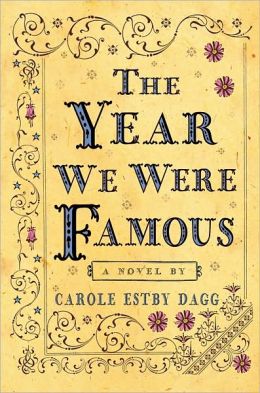
The Year We Were Famous
The Year We Were Famous. Carole Estby Dagg. 2011. Houghton Mifflin Harcourt. 256 pages. [Source: Review copy]
I definitely liked Carole Estby Dagg's The Year We Were Famous. This is historical fiction based on a true story, a true family story. It is fiction; liberties have been taken. Liberties that work in favor of a not-so-bleak ending.
Clara Estby is the heroine of The Year We Were Famous. She is the oldest daughter; she is seventeen. The family farm is in big, big trouble. Her mother, Helga, who suffers--and suffers understandably--from depression, works with her daughter to brainstorm a way to "save" the farm. Her daughter's careless comment about wanting to travel the world and be a journalist sparks an idea that can't be swept aside. Helga is determined to find sponsors, wealthy sponsors who want to test what women are capable of. She wants to make a deal. She and her daughter will walk across country, over three thousand miles, starting with no more than $5, if they reach New York City by the deadline, they will receive $10,000--more than enough to keep the farm. This is where the details are a bit fuzzy in reality because the journals and such were purposefully destroyed by the family. No one is sure *who* the sponsor was, if there even was a sponsor, the intentions of the sponsor, etc.
For over seven months May through December, these two women are on their own and on an adventure of sorts. It is dangerous and exhausting and overwhelming and a once in a lifetime opportunity. They meet new people almost every single day. They are sharing their stories with various newspapers across the country. They are speaking at suffragette events across the country. They are challenging themselves day and night...
I liked this one. It is set in 1896. I appreciated the fact that the author was inspired by her family history.
© 2014 SukaYuka.com of SukaYuka's Book Reviews
I definitely liked Carole Estby Dagg's The Year We Were Famous. This is historical fiction based on a true story, a true family story. It is fiction; liberties have been taken. Liberties that work in favor of a not-so-bleak ending.
Clara Estby is the heroine of The Year We Were Famous. She is the oldest daughter; she is seventeen. The family farm is in big, big trouble. Her mother, Helga, who suffers--and suffers understandably--from depression, works with her daughter to brainstorm a way to "save" the farm. Her daughter's careless comment about wanting to travel the world and be a journalist sparks an idea that can't be swept aside. Helga is determined to find sponsors, wealthy sponsors who want to test what women are capable of. She wants to make a deal. She and her daughter will walk across country, over three thousand miles, starting with no more than $5, if they reach New York City by the deadline, they will receive $10,000--more than enough to keep the farm. This is where the details are a bit fuzzy in reality because the journals and such were purposefully destroyed by the family. No one is sure *who* the sponsor was, if there even was a sponsor, the intentions of the sponsor, etc.
For over seven months May through December, these two women are on their own and on an adventure of sorts. It is dangerous and exhausting and overwhelming and a once in a lifetime opportunity. They meet new people almost every single day. They are sharing their stories with various newspapers across the country. They are speaking at suffragette events across the country. They are challenging themselves day and night...
I liked this one. It is set in 1896. I appreciated the fact that the author was inspired by her family history.
© 2014 SukaYuka.com of SukaYuka's Book Reviews
Tuesday, June 17, 2014
Between Two Worlds (2014)
Between Two Worlds. Katherine Kirkpatrick. 2014. Random House. 304 pages. [Source: Review copy]
Between Two Worlds was an interesting and thoughtful novel. The novel is set in Greenland at the turn of the twentieth century. It is told from the native perspective, a young woman named Eqariusaq, nicknamed Billy Bah by Robert E. Peary's wife and daughter. The novel explores the tension between the heroine's "two worlds." On the one hand, as a child, she went with Peary and lived with his family for about a year in the United States. Several years later, her parents also traveled with Peary. But they never returned, along with the other natives Peary had selected. Those natives did not have the personal connection, the friendship. These men and women were to be studied by a museum. Between Two Worlds tells young readers of their fate and treatment--or mistreatment as the case may be. Readers learn alongside the main character. On the other hand, her home is her HOME. Spending time with white people (qallunaat) did not change who she was, did not change her way of life, her culture, her beliefs. She did not trade in her spirituality, for example, for that of the white men. Since her time with Peary's family, she has grown up and gotten married. She's still super young for marriage by today's standards, but today's standards just don't apply to ANY part of this novel.
One of the novel's greatest strengths, perhaps, is that it presents the facts with little or no judgment at all. How husbands and wives treated one another, how women fit into the community and village life, it's something that modern readers will question perhaps. Especially in terms of how husbands traded their wives amongst themselves in addition to trading them to the white men. Part of a woman's value was the value she could bring her husband. A wife's body could be sold or traded. Eqariusaq's husband, Angulluk, loved to trade his wife alot, especially to the white men. He loved how he could use his wife to obtain guns and bullets and planks of wood. I should also point out that men and women could decide to separate or "divorce." Marriage did not mean forever. Women could decide to discard one man in favor of another, in favor of a better. Billy Bah takes comfort in that fact as she seriously considers leaving her husband; she has little respect for him since he's lazy and greedy.
Between Two Worlds is a contemplative novel. Our heroine is very much torn in what she wants and what she needs. She is questioning her past, her present, and her future. Her memories of the past are bitter and sweet. There are memories she cherishes, for better or worse, but she's more analytical than she was as a child. There were things that happened to her in America that through her innocence she did not see as damaging or painful, but, upon growing up and growing wise, she realizes things aren't that simple. For example, she has happy memories of Peary's wife and daughter. Seriously happy memories. Yet, as an adult, as she meets them again after years apart, she realizes the complexity of the situation. Mrs. Peary is willing to risk the lives of the natives without a thought, without a thank you. She commands and expects obedience. She simply does not see the natives as being equally human, equally of worth.
I thought it was a compelling read. It presents a whole other world to readers.
© 2014 SukaYuka.com of SukaYuka's Book Reviews
Between Two Worlds was an interesting and thoughtful novel. The novel is set in Greenland at the turn of the twentieth century. It is told from the native perspective, a young woman named Eqariusaq, nicknamed Billy Bah by Robert E. Peary's wife and daughter. The novel explores the tension between the heroine's "two worlds." On the one hand, as a child, she went with Peary and lived with his family for about a year in the United States. Several years later, her parents also traveled with Peary. But they never returned, along with the other natives Peary had selected. Those natives did not have the personal connection, the friendship. These men and women were to be studied by a museum. Between Two Worlds tells young readers of their fate and treatment--or mistreatment as the case may be. Readers learn alongside the main character. On the other hand, her home is her HOME. Spending time with white people (qallunaat) did not change who she was, did not change her way of life, her culture, her beliefs. She did not trade in her spirituality, for example, for that of the white men. Since her time with Peary's family, she has grown up and gotten married. She's still super young for marriage by today's standards, but today's standards just don't apply to ANY part of this novel.
One of the novel's greatest strengths, perhaps, is that it presents the facts with little or no judgment at all. How husbands and wives treated one another, how women fit into the community and village life, it's something that modern readers will question perhaps. Especially in terms of how husbands traded their wives amongst themselves in addition to trading them to the white men. Part of a woman's value was the value she could bring her husband. A wife's body could be sold or traded. Eqariusaq's husband, Angulluk, loved to trade his wife alot, especially to the white men. He loved how he could use his wife to obtain guns and bullets and planks of wood. I should also point out that men and women could decide to separate or "divorce." Marriage did not mean forever. Women could decide to discard one man in favor of another, in favor of a better. Billy Bah takes comfort in that fact as she seriously considers leaving her husband; she has little respect for him since he's lazy and greedy.
Between Two Worlds is a contemplative novel. Our heroine is very much torn in what she wants and what she needs. She is questioning her past, her present, and her future. Her memories of the past are bitter and sweet. There are memories she cherishes, for better or worse, but she's more analytical than she was as a child. There were things that happened to her in America that through her innocence she did not see as damaging or painful, but, upon growing up and growing wise, she realizes things aren't that simple. For example, she has happy memories of Peary's wife and daughter. Seriously happy memories. Yet, as an adult, as she meets them again after years apart, she realizes the complexity of the situation. Mrs. Peary is willing to risk the lives of the natives without a thought, without a thank you. She commands and expects obedience. She simply does not see the natives as being equally human, equally of worth.
I thought it was a compelling read. It presents a whole other world to readers.
© 2014 SukaYuka.com of SukaYuka's Book Reviews
Tuesday, May 27, 2014
By My Side (2014)
By My Side. Sue Reid. 2014. Scholastic. 176 pages. [Source: Review copy]
I definitely enjoyed reading Sue Reid's novel By My Side. This novel is told entirely through diary entries; it is set in the Netherlands during World War II during Nazi Occupation. The heroine of By My Side, Katrien, falls in love with a Jewish boy, Jan. Katrien, unlike some of her friends, is not boy crazy. She wasn't looking for a boyfriend; she wasn't planning on falling in love. But there was something different about Jan, setting him apart from other boys she knew. He was slightly older, true, but that wasn't really it. One thing she does learn early on, however, is the fact that he's Jewish. That is why he stopped attending school. That is why he's sometimes a bit hesitant to do the things she wants. At the very, very beginning, she does seem a bit oblivious and insensitive. Her intentions were always good, mind you, but she didn't stop to think about how his being Jewish could effect WHAT they do together: going to the park, going to the movies, etc. She'd never had reason really to stop and think about how many restrictions are placed on the Jews and the seriousness of the situation. Of course, after seeing him a few weeks, she's grown up quite a bit. That doesn't mean Katrien is mature and wise, mind you. She decides to keep Jan a complete secret from her parents; he wants her to be honest, he wants to come to her house as her boyfriend. She is reluctant.
I definitely enjoyed this romance. It was a quick read. By the end, it had gotten quite intense as well.
© 2014 SukaYuka.com of SukaYuka's Book Reviews
I definitely enjoyed reading Sue Reid's novel By My Side. This novel is told entirely through diary entries; it is set in the Netherlands during World War II during Nazi Occupation. The heroine of By My Side, Katrien, falls in love with a Jewish boy, Jan. Katrien, unlike some of her friends, is not boy crazy. She wasn't looking for a boyfriend; she wasn't planning on falling in love. But there was something different about Jan, setting him apart from other boys she knew. He was slightly older, true, but that wasn't really it. One thing she does learn early on, however, is the fact that he's Jewish. That is why he stopped attending school. That is why he's sometimes a bit hesitant to do the things she wants. At the very, very beginning, she does seem a bit oblivious and insensitive. Her intentions were always good, mind you, but she didn't stop to think about how his being Jewish could effect WHAT they do together: going to the park, going to the movies, etc. She'd never had reason really to stop and think about how many restrictions are placed on the Jews and the seriousness of the situation. Of course, after seeing him a few weeks, she's grown up quite a bit. That doesn't mean Katrien is mature and wise, mind you. She decides to keep Jan a complete secret from her parents; he wants her to be honest, he wants to come to her house as her boyfriend. She is reluctant.
I definitely enjoyed this romance. It was a quick read. By the end, it had gotten quite intense as well.
© 2014 SukaYuka.com of SukaYuka's Book Reviews
Tuesday, April 29, 2014
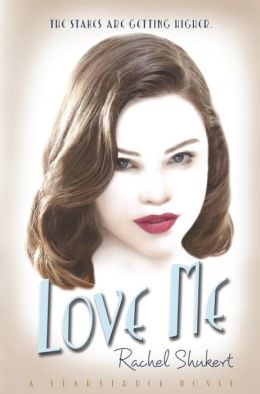
Love Me (2014)
Love Me. (Starstruck #2). Rachel Shukert. 2014. Random House. 336 pages. [Source: Review copy]
Love Me is the sequel to Rachel Shukert's Starstruck. I enjoyed Starstruck. I am not sure if I enjoyed Love Me as much. On the one hand, I could not put it down. I kept cheating. I would go to the end of the book, read a bit, and then go back to where I was. I don't ever really do that. So it did keep my interest, which, I suppose, is a good thing, right?! My favorite character is NOT a main character.
On the other hand, I found myself yelling at the characters from start to finish. I also found myself frustrated at times with the dialogue and the writing. Little things like name-dropping all the big, big stars and how they all were desperately mad to interact with these fictional characters. There were things that were just impossible to take seriously.
Love Me is definitely "darker" and messier than Starstruck. Every single character falls or fails in this one. Amanda, it turns out, had not reached her low point in Starstruck, far from it. And Gabby, well, I'm not sure Gabby makes even one good choice in this second novel. It's not that she doesn't try, it's just that her trying is hindered by her addictions. Margo's expectations are so out of control. After making one movie, she wants validation that she's the center of the universe. It doesn't happen. She whines and nags all the time. Readers, like Dane, may find themselves tuning her out.
The content of Love Me is definitely more adult than in Starstruck.
The men of Love Me:
Harry. Leftover from book one. Is there anything he does in this novel that does not make me angry?! I do NOT care for him at all. I HATE him.
Eddie. A musician. A band leader. Hints of trouble. I didn't mind him as much as Harry, because, at least he was honest about who he was and where he came from and what he was looking for. There is something refreshing about what you see is what you get.
Dexter. Another jazz musician. Not really seen as a love interest, but, an interesting guy I'd be curious to see again in a sequel if the author chooses to follow up with this character. I liked his scenes a good bit.
Dane. What can I say?! It has to be frustrating to be forced into a serious relationship with Margo. So I don't fault him for finding her annoying and frustrating and not who he hoped her to be. He wanted a girl who was smart enough not to fall for all the lies and concoctions the studio produced, and she is not that girl at all. That being said, he is far from perfect.
Don't expect Jimmy to have any scenes in this one. His name is mentioned a few times, sure, but that is it. This has me worried that Dexter won't be around in following books.
I mentioned that I "yelled" at the characters...
Dear Amanda,
Please stop obsessing over Harry. He is not worth it. Seriously. I know you want to feel loved and accepted. But it will NEVER happen with Harry no matter how much you put yourself into debt. A new dress will not change his mind. Your problems cannot be solved by going shopping every day. You've had to deal with so much, I just wish you'd be a little more grounded.
Dear Gabby,
You are the one least likely to listen, but the one who needs to hear the truth the most of all. Your mother would drive almost anyone crazy, so I don't blame you for wanting to escape it all. But the way you're doing it--drugs--is NOT the right answer.
Dear Margo,
You're so clueless that it hurts to be around you. Yes, I mean that. It hurts to see you act like a fool. Especially when it comes to Dane. You're so blinded by your so-called "love" for Dane. I have to ask: do you really love the real Dane OR are you in love with the Dane you've imagined in your own head? Do you even know there is a real Dane? Do you listen, really listen, when he talks? Do you see the way he acts around you? The way he treats you? Because I think if you had a little common sense and would just pay attention a fraction of the time, you would realize that your "relationship" with Dane is in trouble.
© 2014 SukaYuka.com of SukaYuka's Book Reviews
Love Me is the sequel to Rachel Shukert's Starstruck. I enjoyed Starstruck. I am not sure if I enjoyed Love Me as much. On the one hand, I could not put it down. I kept cheating. I would go to the end of the book, read a bit, and then go back to where I was. I don't ever really do that. So it did keep my interest, which, I suppose, is a good thing, right?! My favorite character is NOT a main character.
On the other hand, I found myself yelling at the characters from start to finish. I also found myself frustrated at times with the dialogue and the writing. Little things like name-dropping all the big, big stars and how they all were desperately mad to interact with these fictional characters. There were things that were just impossible to take seriously.
Love Me is definitely "darker" and messier than Starstruck. Every single character falls or fails in this one. Amanda, it turns out, had not reached her low point in Starstruck, far from it. And Gabby, well, I'm not sure Gabby makes even one good choice in this second novel. It's not that she doesn't try, it's just that her trying is hindered by her addictions. Margo's expectations are so out of control. After making one movie, she wants validation that she's the center of the universe. It doesn't happen. She whines and nags all the time. Readers, like Dane, may find themselves tuning her out.
The content of Love Me is definitely more adult than in Starstruck.
The men of Love Me:
Harry. Leftover from book one. Is there anything he does in this novel that does not make me angry?! I do NOT care for him at all. I HATE him.
Eddie. A musician. A band leader. Hints of trouble. I didn't mind him as much as Harry, because, at least he was honest about who he was and where he came from and what he was looking for. There is something refreshing about what you see is what you get.
Dexter. Another jazz musician. Not really seen as a love interest, but, an interesting guy I'd be curious to see again in a sequel if the author chooses to follow up with this character. I liked his scenes a good bit.
Dane. What can I say?! It has to be frustrating to be forced into a serious relationship with Margo. So I don't fault him for finding her annoying and frustrating and not who he hoped her to be. He wanted a girl who was smart enough not to fall for all the lies and concoctions the studio produced, and she is not that girl at all. That being said, he is far from perfect.
Don't expect Jimmy to have any scenes in this one. His name is mentioned a few times, sure, but that is it. This has me worried that Dexter won't be around in following books.
I mentioned that I "yelled" at the characters...
Dear Amanda,
Please stop obsessing over Harry. He is not worth it. Seriously. I know you want to feel loved and accepted. But it will NEVER happen with Harry no matter how much you put yourself into debt. A new dress will not change his mind. Your problems cannot be solved by going shopping every day. You've had to deal with so much, I just wish you'd be a little more grounded.
Dear Gabby,
You are the one least likely to listen, but the one who needs to hear the truth the most of all. Your mother would drive almost anyone crazy, so I don't blame you for wanting to escape it all. But the way you're doing it--drugs--is NOT the right answer.
Dear Margo,
You're so clueless that it hurts to be around you. Yes, I mean that. It hurts to see you act like a fool. Especially when it comes to Dane. You're so blinded by your so-called "love" for Dane. I have to ask: do you really love the real Dane OR are you in love with the Dane you've imagined in your own head? Do you even know there is a real Dane? Do you listen, really listen, when he talks? Do you see the way he acts around you? The way he treats you? Because I think if you had a little common sense and would just pay attention a fraction of the time, you would realize that your "relationship" with Dane is in trouble.
© 2014 SukaYuka.com of SukaYuka's Book Reviews
Friday, April 25, 2014
Reread #17 Ten Cents A Dance
Ten Cents A Dance. Christine Fletcher. 2008/2010. Bloomsbury USA. 368 pages. [Source: Review copy]
I first read and reviewed Ten Cents A Dance in November 2008. It was almost love. I loved the idea of loving it. I loved the setting: Chicago 1941-1942, both BEFORE and AFTER Pearl Harbor. It is narrated by Ruby Jacinski, our heroine. Ruby may not always make the best choices, the wisest in the long-term choices, but she's got gumption and fight in her.
Ruby is exhausted and frustrated by poverty. Even if she were to get a "nice" job in the meat-packing factory, she would still stink at the end of the day. And Ruby, though pretty, is feisty. (Her "nice" job in bacon didn't last long.) She IS the earner in her family; after her mother lost her job, Ruby dropped out of school and got a job.
In the opening chapters, readers see just how feisty Ruby is. Fights just seem to find her. And the opening fight, well, it just happens to bring her to the attention of a gangster-wanna-be, Paulie Suelze. He just happens to mention HOW she can earn some real money doing something she loves: dancing. He tells her of how she could be bringing home fifty dollars a week instead of ten. He tells her exactly where to go.
Ruby goes for it. It opens up a whole new world for her: for better or worse...nothing is the same after she starts working...
Ruth Etting singing "Ten Cents A Dance." Doris Day singing "Ten Cents A Dance." There is also a movie with this name from 1931.
© 2014 SukaYuka.com of SukaYuka's Book Reviews
I first read and reviewed Ten Cents A Dance in November 2008. It was almost love. I loved the idea of loving it. I loved the setting: Chicago 1941-1942, both BEFORE and AFTER Pearl Harbor. It is narrated by Ruby Jacinski, our heroine. Ruby may not always make the best choices, the wisest in the long-term choices, but she's got gumption and fight in her.
Ruby is exhausted and frustrated by poverty. Even if she were to get a "nice" job in the meat-packing factory, she would still stink at the end of the day. And Ruby, though pretty, is feisty. (Her "nice" job in bacon didn't last long.) She IS the earner in her family; after her mother lost her job, Ruby dropped out of school and got a job.
In the opening chapters, readers see just how feisty Ruby is. Fights just seem to find her. And the opening fight, well, it just happens to bring her to the attention of a gangster-wanna-be, Paulie Suelze. He just happens to mention HOW she can earn some real money doing something she loves: dancing. He tells her of how she could be bringing home fifty dollars a week instead of ten. He tells her exactly where to go.
Ruby goes for it. It opens up a whole new world for her: for better or worse...nothing is the same after she starts working...
Ruth Etting singing "Ten Cents A Dance." Doris Day singing "Ten Cents A Dance." There is also a movie with this name from 1931.
© 2014 SukaYuka.com of SukaYuka's Book Reviews
Subscribe to:
Posts (Atom)
