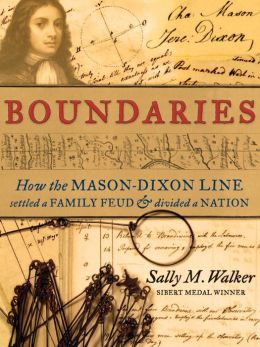
Boundaries. Sally M. Walker. 2014. Candlewick. 208 pages. [Source: Review copy]
While American history is not my favorite subject, I did enjoy various aspects of Boundaries: How The Mason-Dixon Line Settled A Family Feud and Divided a Nation. I can appreciate the thoroughness of the research and the organization of the narrative.
It's a broad subject. The book begins in England and follows two men who established colonies in the New World. One man, a Catholic, the second man, a Quaker. One would establish Maryland, the other would establish Pennsylvania. It follows those two families for a chapter or two pointing out the disputes and troubles regarding the border or boundary between the two colonies. It points out that there were regions that BOTH claimed and that BOTH tried to tax settlers. So one governing body could say pay taxes to me, not them. Readers could see how residents could find it frustrating and confusing. Most of the book, however, is about two men, two scientists: Charles Mason and Jeremiah Dixon. It goes into great detail about HOW the two men surveyed the land, walked the three lines to establish boundaries. It is very science-y, very technical. It shares details about their work, their crews, their journeys, their guides, etc. This project lasted several years. One chapter focuses on the Mason-Dixon line as symbol of free states and slave states, a division of North and South. That chapter discusses about two hundred years worth of history. The last chapter is an odd one. It brings the Mason-Dixon line into contemporary times; it speaks of the men and women who have taken an interest in it, have taken an interest in the boundary stones, who have set off on a quest to find the original markers, or, who have worked to get historical markers for the region in various locations.
I found this one to be a bit dry in places.
© 2014 SukaYuka.com of SukaYuka's Book Reviews
Showing posts with label YA nonfiction. Show all posts
Monday, December 29, 2014
Monday, December 15, 2014
Brown Girl Dreaming (2014)
Brown Girl Dreaming. Jacqueline Woodson. 2014. Nancy Paulsen Books. 336 pages. [Source: Library]
Brown Girl Dreaming is a lovely, often fascinating, memoir written in verse. "Verse novels" can be tricky for me. Sometimes I love them, sometimes I really don't. But in this case, it works well. The writing is just lovely, for the most part. The book is rich in detail capturing what it was like to grow up in Ohio, South Carolina, and New York in the 1960s and 1970s. The people. The places. The sights, sounds, and tastes. The feelings. It's a book that feels personal: an intimate look at family and friends. I very much enjoyed reading it.
Brown Girl Dreaming is a memoir of an author. So it's no big surprise that the focus of this one is on words and stories and reading and writing, of using words and stories to make sense of the world, or, to make a whole new world. But in addition to being about an author's journey, it is a novel about identity as well: who am I, why am I here, what am I supposed to do, etc.
Brown Girl Dreaming is a lovely, often fascinating, memoir written in verse. "Verse novels" can be tricky for me. Sometimes I love them, sometimes I really don't. But in this case, it works well. The writing is just lovely, for the most part. The book is rich in detail capturing what it was like to grow up in Ohio, South Carolina, and New York in the 1960s and 1970s. The people. The places. The sights, sounds, and tastes. The feelings. It's a book that feels personal: an intimate look at family and friends. I very much enjoyed reading it.
Brown Girl Dreaming is a memoir of an author. So it's no big surprise that the focus of this one is on words and stories and reading and writing, of using words and stories to make sense of the world, or, to make a whole new world. But in addition to being about an author's journey, it is a novel about identity as well: who am I, why am I here, what am I supposed to do, etc.
How can I explain to anyone that stories© 2014 SukaYuka.com of SukaYuka's Book Reviews
are like air to me,
I breathe them in and let them out
over and over again. (247)
Monday, November 17, 2014
Stand There! She Shouted (2014)
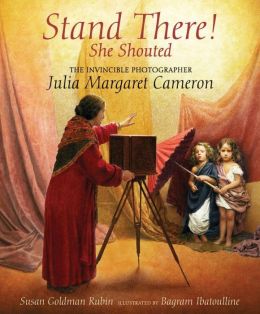
Stand There! She Shouted: The Invincible Photographer Julia Margaret Cameron. 2014. Candlewick. 80 pages. [Source: Review copy]
Stand There! She Shouted is a biography of Julia Margaret Cameron, a noted photographer of the nineteenth century. From birth to death, details of her life are highlighted for young readers. She was born in India, raised in France, recuperated from an illness in Cape Town, South Africa, where she met her future husband, Charles Hay Cameron. The book does spend some time on her personal life: daughter, sister, wife, mother, grandmother. But it also spends plenty of time on her hobby/career as a photographer. How she learned about photography. Her first camera. Her first photographs. Her first failures. Her first successes. Who she photographed and why. Her favorite techniques and unique style. (She liked the subject to be slightly out of focus. She liked the softness.) How many photographs she took--3,000. One thing the book did really well was focus on how her sitters or posers felt. Did they like posing for her? How did they describe the experience? I liked these accounts of her work.
The book is illustrated by Bagram Ibatoulline. I love his work. I do. But. I wish there had been more photographs by Julia Margaret Cameron.
Favorite quotes:
© 2014 SukaYuka.com of SukaYuka's Book Reviews
Stand There! She Shouted is a biography of Julia Margaret Cameron, a noted photographer of the nineteenth century. From birth to death, details of her life are highlighted for young readers. She was born in India, raised in France, recuperated from an illness in Cape Town, South Africa, where she met her future husband, Charles Hay Cameron. The book does spend some time on her personal life: daughter, sister, wife, mother, grandmother. But it also spends plenty of time on her hobby/career as a photographer. How she learned about photography. Her first camera. Her first photographs. Her first failures. Her first successes. Who she photographed and why. Her favorite techniques and unique style. (She liked the subject to be slightly out of focus. She liked the softness.) How many photographs she took--3,000. One thing the book did really well was focus on how her sitters or posers felt. Did they like posing for her? How did they describe the experience? I liked these accounts of her work.
The book is illustrated by Bagram Ibatoulline. I love his work. I do. But. I wish there had been more photographs by Julia Margaret Cameron.
Favorite quotes:
She selected her sitters carefully. In a letter to a friend, she said that there were three reasons she photographed: "great beauty--great celebrity--and great friendship." (58)
As a photographer, she was ruthless. Children, her favorite subject, feared her. Julia Margaret lurked by the door, ready to stop a passing child for hours of posing. Edith Bradley Ellison recalled that the children of Freshwater "loved" her but "fled from her." When they saw her, they'd call out, "She's coming! She'll catch one of us!" And when Julia Margaret caught them, she bribed them with candy to pose. (46)
© 2014 SukaYuka.com of SukaYuka's Book Reviews
Monday, November 10, 2014
The Family Romanov (2014)
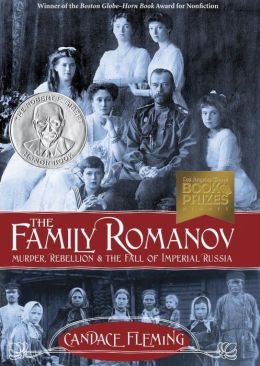
The Family Romanov: Murder, Rebellion, and the Fall of Imperial Russia. Candace Fleming. 2014. Random House. 304 pages. [Source: Library]
I've had this one checked out from the library for months, it seems. But once I actually started reading it, it moved quite quickly. That doesn't mean it was an "easy" read, however. It was just as dark and depressing as you might expect. It isn't always easy to read a book when you know the ending.
This one is rich in details, I thought. And it did a great job of putting everything into context, especially in terms of social classes. One got a feel for what life was like for the rich and the poor. It was easy to understand WHY the masses were ready for change, ready to rebel, ready to have a voice, ready to be taken seriously. Desperation. The book dwells on the desperation felt during these decades. That and despair. It's not an uplifting book. It's not a book with a lot of hope to it.
I think it authentically captures the times, the injustice of the times. And in a way, it is fascinating enough. But it's also heartbreaking. Because it doesn't matter if you're looking at the before or after picture, life was HORRIBLE, living conditions were awful.
© 2014 SukaYuka.com of SukaYuka's Book Reviews
I've had this one checked out from the library for months, it seems. But once I actually started reading it, it moved quite quickly. That doesn't mean it was an "easy" read, however. It was just as dark and depressing as you might expect. It isn't always easy to read a book when you know the ending.
This one is rich in details, I thought. And it did a great job of putting everything into context, especially in terms of social classes. One got a feel for what life was like for the rich and the poor. It was easy to understand WHY the masses were ready for change, ready to rebel, ready to have a voice, ready to be taken seriously. Desperation. The book dwells on the desperation felt during these decades. That and despair. It's not an uplifting book. It's not a book with a lot of hope to it.
I think it authentically captures the times, the injustice of the times. And in a way, it is fascinating enough. But it's also heartbreaking. Because it doesn't matter if you're looking at the before or after picture, life was HORRIBLE, living conditions were awful.
© 2014 SukaYuka.com of SukaYuka's Book Reviews
Monday, November 3, 2014
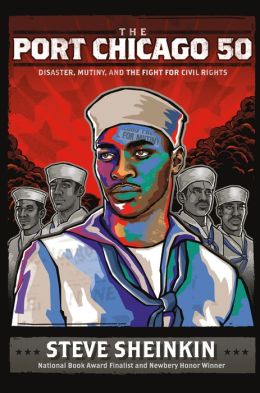
Port Chicago 50
The Port Chicago 50: Disaster, Mutiny, and the Fight for Civil Rights. Steve Sheinkin. 2014. Roaring Brook. 208 pages. [Source: Library]
Wow! What a book! Port Chicago 50 is a compelling nonfiction read. It is informative and detailed, but, it never felt like it was too much, like it was too-information-heavy. It was fascinating and at times shocking. It examines HOW African-Americans were treated in the navy during the second world war. It deals with prejudice and discrimination and injustice. Specifically it focuses on a select group of soldiers stationed at Port Chicago. The soldiers moving explosives from docks to ships were all African-Americans. These soldiers received no special training or instructions. It didn't take them long to figure out that disaster could come at any time, that every day came with big, big risks. Disaster did come. It was awful. It changed the survivors--haunted the survivors. So when these men are asked weeks later to go back to work with explosives, well, some decide to say no. The book is ultimately about 50 men who decided that they did not want to obey orders to load explosives. About the consequences of their actions--or inaction as the case may be. The men were charged with mutiny and put on trial. Would justice be served? Would they have a fair hearing?
The Port Chicago 50 is emotional and fascinating. It was a beautifully written story about the fight for justice and equality. It was everything a nonfiction book should be.
Definitely recommended.
© 2014 SukaYuka.com of SukaYuka's Book Reviews
Wow! What a book! Port Chicago 50 is a compelling nonfiction read. It is informative and detailed, but, it never felt like it was too much, like it was too-information-heavy. It was fascinating and at times shocking. It examines HOW African-Americans were treated in the navy during the second world war. It deals with prejudice and discrimination and injustice. Specifically it focuses on a select group of soldiers stationed at Port Chicago. The soldiers moving explosives from docks to ships were all African-Americans. These soldiers received no special training or instructions. It didn't take them long to figure out that disaster could come at any time, that every day came with big, big risks. Disaster did come. It was awful. It changed the survivors--haunted the survivors. So when these men are asked weeks later to go back to work with explosives, well, some decide to say no. The book is ultimately about 50 men who decided that they did not want to obey orders to load explosives. About the consequences of their actions--or inaction as the case may be. The men were charged with mutiny and put on trial. Would justice be served? Would they have a fair hearing?
The Port Chicago 50 is emotional and fascinating. It was a beautifully written story about the fight for justice and equality. It was everything a nonfiction book should be.
Definitely recommended.
© 2014 SukaYuka.com of SukaYuka's Book Reviews
Monday, October 27, 2014
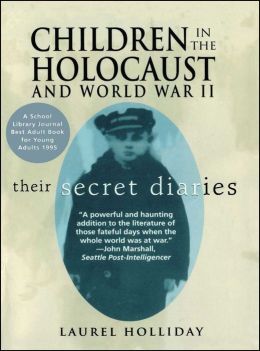
Children in the Holocaust and World War II
Children in the Holocaust: Their Secret Diaries. Laurel Holliday, ed. 1996. 432 pages. [Source: Library]
Children in the Holocaust and World War II: Their Secret Diaries is an almost must-read in my opinion. It is incredibly compelling and emotional. Memoirs are great. They are. I have loved many autobiographies and biographies. But diaries are a bit unique. They tend to stay in the moment; there is a rawness perhaps in the emotions. They capture specific moments in time. They record the best and worst and everything in between. These diary entries are well worth reading.
These children's diaries are testimonies to the fact that telling the truth about violence is not harmful. In fact, one wonders how much greater harm these boys and girls would have suffered had they not written about the horrific events they were experiencing. Far more dangerous than reading about atrocities, I believe, is the pretense that atrocities do not occur. To turn our eyes away and refuse to see, or to let children see, what prejudice and hatred lead to is truly to warp our collective psyche. It is important for all of us--adults and children alike--to acknowledge the depths to which humankind can sink. The children teach us, by sharing their own direct experience of oppression, that nothing is more valuable than human freedom. This lesson alone is reason enough to read and to encourage children to read, these diaries.This book gathers together diary entries from twenty-two writers. The countries represented include: Poland, Holland, Germany, Czechoslovakia, Austria, Hungary, Lithuania, Russia, Belgium, England, Israel, and Denmark. Seven of the twenty-two writers are from Poland. Some writers survived the war. Others did not. I believe that all of these entries have been previously published in some format, in at least one language. The listed age refers to the writer's age for the first diary entry printed in the book. This book provides excerpts from diaries. None of the diaries, I believe, are reprinted in full. These excerpts represent the diaries as a whole, and provide a bigger picture for understanding the war.
- Janine Phillips, Poland, 10 years old
- Ephraim Shtenkler, Poland, 11 years old
- Dirk Van der Heide, Holland, 12 years old
- Werner Galnick, Germany, 12 years old
- Janina Heshele, Poland, 12 years old
- Helga Weissova-Hoskova, Czechoslovakia, 12 years old
- Dawid Rubinowicz, Poland, 12 years old
- Helga Kinsky-Pollack, Austria, 13 years old
- Eva Heyman, Hungary, 13 years old
- Tamarah Lazerson, Lithuania, 13 years old
- Yitskhok Rudashevski, Lithuania, 14 years old
- Macha Rolnikas, Lithuania, 14 years old
- Charlotte Veresova, Czechoslovakia, 14 years old
- Mary Berg (pseudonym), Poland, 15 years old
- Ina Konstantinova, Russia, 16 years old
- Moshe Flinker, Belgium, 16 years old
- Joan Wyndham, England, 16 years old
- Hannah Senesh, Hungary and Israel, 17 years old
- Sarah Fishkin, Poland, 17 years old
- Kim Malthe-Bruun, Denmark, 18 years old
- Colin Perry, England, 18 years old
- The Unknown Brother and Sister of Lodz Ghetto, Poland, Unknown Age and 12 years old
Shootings have now become very frequent at the ghetto exits. Usually they are perpetrated by some guard who wants to amuse himself. Every day, morning and afternoon, when I go to school, I am not sure whether I will return alive. I have to go past two of the most dangerous German sentry posts..., Mary Berg, February 27, 1942, p. 233
Dr. Janusz Korczak's children's home is empty now. A few days ago we all stood at the window and watched the Germans surround the houses. Rows of children, holding each other by their little hands, began to walk out of the doorway. There were tiny tots of two or three years among them, while the oldest ones were perhaps thirteen. Each child carried a little bundle in his hand. All of them wore white aprons. They walked in ranks of two, calm, and even smiling. They had not the slightest foreboding of their fate. At the end of the procession marched Dr. Korczak, who saw to it that the children did not walk on the sidewalk. Now and then, with fatherly solicitude, he stroked a child on the head or arm, and straightened out the ranks. He wore high boots, with his trousers stuck in them, an alpaca coat, and a navy-blue cap, the so-called Maciejowka cap. He walked with a firm step, and was accompanied by one of the doctors of the children's home, who wore his white smock. This sad procession vanished at the corner of Dzielna and Smocza Streets. They went in the direction of Gesia Street, to the cemetery. At the cemetery all the children were shot. We were also told by our informants that Dr. Korczak was forced to witness the executions, and that he himself was shot afterward. Thus died one of the purest and noblest men who ever lived. He was the pride of the ghetto. His children's home gave us courage, and all of us gladly gave part of our own scanty means to support the model home organized by this great idealist. He devoted all his life, all his creative work as an educator and writer, to the poor children of Warsaw. Even at the last moment he refused to be separated from them. ~ Mary Berg, August, 1942, p. 239© 2014 SukaYuka.com of SukaYuka's Book Reviews
Monday, October 6, 2014
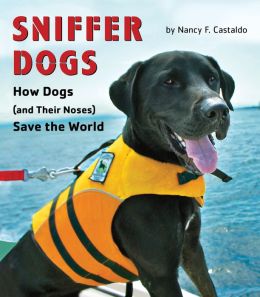
Sniffer Dogs (2014)
Sniffer Dogs: How Dogs (And Their Noses) Save The World. Nancy F. Castaldo. 2014. Houghton Mifflin Harcourt. 160 pages. [Source: Review copy]
Sniffer Dogs was a great read. It is packed with information. I learned so much by reading it. For example, did you know that there are specially trained dogs who can alert diabetics (type 1) if their blood sugar is too high or too low?! While I knew that there were dogs involved in search and rescue, I did not know that there were also dogs especially trained to search out bones. The book is very reader-friendly; I loved all the photographs. I loved the personal stories about the men and women who work with and train dogs to do very special tasks.
I would definitely recommend this one to readers of all ages who love dogs. It would also make a great choice for those readers who enjoy compelling nonfiction. This book is about dogs who make a difference, and also about the special bond between dogs and their trainers/owners.
© 2014 SukaYuka.com of SukaYuka's Book Reviews
Sniffer Dogs was a great read. It is packed with information. I learned so much by reading it. For example, did you know that there are specially trained dogs who can alert diabetics (type 1) if their blood sugar is too high or too low?! While I knew that there were dogs involved in search and rescue, I did not know that there were also dogs especially trained to search out bones. The book is very reader-friendly; I loved all the photographs. I loved the personal stories about the men and women who work with and train dogs to do very special tasks.
I would definitely recommend this one to readers of all ages who love dogs. It would also make a great choice for those readers who enjoy compelling nonfiction. This book is about dogs who make a difference, and also about the special bond between dogs and their trainers/owners.
© 2014 SukaYuka.com of SukaYuka's Book Reviews
Monday, September 22, 2014
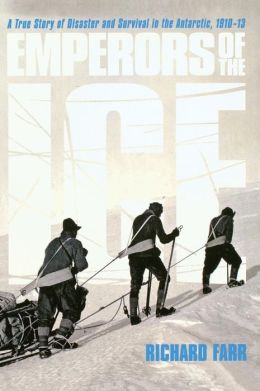
Emperors of the Ice
Emperors of the Ice. Richard Farr. 2008. FSG. [Source: Review copy]
I have mixed feelings on Emperors of the Ice: A True Story of Disaster and Survival in the Antarctic, 1910-13. On the one hand, it is a fictional memoir based on an actual memoir. Much research was done to write this one. Perhaps just as much research as if it was a traditional nonfiction book. The author's love of the subject was evident throughout. The book is told primarily if not exclusively through the eyes of one of the men on the expedition, Apsley Cherry-Garrard. The exception being the few places where readers learn what happened to other members of the expedition. On the other hand, was it absolutely necessary to fictionalize a memoir in order to tell the story? I think there were things to be gained by such a decision, and, perhaps a few things lost.
Aside from the fact that this one doesn't really quite fit in as fiction or nonfiction, Emperors of the Ice was an interesting read. It was not quite as depressing as you might expect. I've read more depressing books on this subject certainly. The focus of this book is more on science and exploration than on the race to be first to the South Pole. This book argues that it was never about being first or being best. This book tells the basic story, but, it includes plenty of details. For example, I learned that one of the teams--science teams--went to the Antarctic to study emperor penguins. Their goal was to learn about the penguins and their eggs. It wasn't exactly learning by observation. Cherry was part of that team. I learned quite a few things.
© 2014 SukaYuka.com of SukaYuka's Book Reviews
I have mixed feelings on Emperors of the Ice: A True Story of Disaster and Survival in the Antarctic, 1910-13. On the one hand, it is a fictional memoir based on an actual memoir. Much research was done to write this one. Perhaps just as much research as if it was a traditional nonfiction book. The author's love of the subject was evident throughout. The book is told primarily if not exclusively through the eyes of one of the men on the expedition, Apsley Cherry-Garrard. The exception being the few places where readers learn what happened to other members of the expedition. On the other hand, was it absolutely necessary to fictionalize a memoir in order to tell the story? I think there were things to be gained by such a decision, and, perhaps a few things lost.
Aside from the fact that this one doesn't really quite fit in as fiction or nonfiction, Emperors of the Ice was an interesting read. It was not quite as depressing as you might expect. I've read more depressing books on this subject certainly. The focus of this book is more on science and exploration than on the race to be first to the South Pole. This book argues that it was never about being first or being best. This book tells the basic story, but, it includes plenty of details. For example, I learned that one of the teams--science teams--went to the Antarctic to study emperor penguins. Their goal was to learn about the penguins and their eggs. It wasn't exactly learning by observation. Cherry was part of that team. I learned quite a few things.
© 2014 SukaYuka.com of SukaYuka's Book Reviews
Monday, September 1, 2014
Two Get Into Art Books
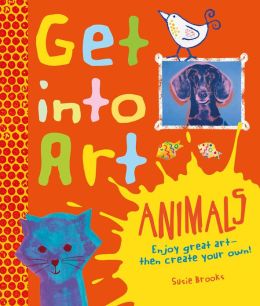
Get Into Art: Animals. Susie Brooks. 2013. Kingfisher. 32 pages. [Source: Review copy]
If you were going to draw an animal, what would it be? You have so much choice, it might be hard to decide! Animals are a great subject for artists because there are so many shapes, colors, and characters to choose from...Look at the different ways in which animals have inspired famous artists--and then let them inspire you, too!
What a fun concept book for sharing art with children! Get Into Art Animals shares twelve famous artworks with children. Facts about the artists are given for each work of art. In addition, there is a recommended hands-on art project inspired by each work. A glossary in the back defines art terms. There's also a list of everything you'll need to do all the projects.
The Snail, Henri Matisse, 1953
Suspense, Sir Edwin Landseer, 1861
Crinkly Giraffe, Alexander Calder, 1971
The Bird, Georges Braque, 1949
Peacock and Magpie, Edward Bawden, 1970
Fish (E59), M.C. Escher, 1942
Carnival of Harlequin, Joan Miro, 1924-1925
Totem Poles, Wayne Alfred and Beau Dick 1991 and Ellen Neel 1955
Yellow Cow, Franz Marc, 1911
Dragon Wish, Chinese artist 1600-1635
Portrait of Maurice, Andy Warhol, 1976
Jockeys in the Rain, Edgar Degas, 1883-1886
The project for "Totem Poles" is "Crafty Totem." Making your own totem pole out of a cardboard tube and paper. But my favorite may just be "Colorful Cats" a project inspired by Andy Warhol.
Can you think of an art subject that's always around? Just look in a mirror for the answer! Artists often base their work on themselves or other people. Some create portraits to remember people by or characters to illustrate a story. Others capture feelings, actions, fashions, or imaginary faces. The great thing is that people are all different, and artists can bring them to life in many ways. See how people have inspired famous artists--then let them inspire you, too!
I have really enjoyed looking at both books in this art-appreciation series. Like the previous book, this one introduces twelve works of art to children. Facts about each artist are shared. Each work is connected to a hands-on art project. A project materials checklist and a glossary are included in the back.
Vertumnus, Giuseppe Arcimboldo, about 1590
Weeping Woman, Pablo Picasso, 1937
David, Michelangelo Buonarroti, 1501-1504
The Scream, Edvard Munch, 1893
Children's Games, Pieter Bruegel the Elder, 1560
Portrait of Adele Bloch-Bauer 1, Gustav Klimt, 1907
A Sunday Afternoon On the Island of La Grande Jatte, Georges Seurat, 1884
Grotesque Faces, Leonardo da Vinci, 1500s
Egyptian Burial Mask, Ancient Egyptian craftspeople, around 3000 BC to A.D. 1st Century
Girl in Mirror, Roy Lichtenstein, 1964
Lawn Tennis, Eadweard Muybridge, 1887
Las Meninas, Diego Velazquez, 1656
There are so many great project ideas in this one! I find myself liking the projects better in Get Into Art People than in Get Into Art Animals. I'm not sure why! I like how the project for "David" is teaching proportion in drawing. It shows step by step how to draw a face (and body) in proper proportion. The Mummy Mask looks like so much fun!!! However, the example I'd like to share with you is inspired by the photograph action sequences of Eadweard Muybridge.
© 2014 SukaYuka.com of SukaYuka's Book Reviews
If you were going to draw an animal, what would it be? You have so much choice, it might be hard to decide! Animals are a great subject for artists because there are so many shapes, colors, and characters to choose from...Look at the different ways in which animals have inspired famous artists--and then let them inspire you, too!
What a fun concept book for sharing art with children! Get Into Art Animals shares twelve famous artworks with children. Facts about the artists are given for each work of art. In addition, there is a recommended hands-on art project inspired by each work. A glossary in the back defines art terms. There's also a list of everything you'll need to do all the projects.
The Snail, Henri Matisse, 1953
Suspense, Sir Edwin Landseer, 1861
Crinkly Giraffe, Alexander Calder, 1971
The Bird, Georges Braque, 1949
Peacock and Magpie, Edward Bawden, 1970
Fish (E59), M.C. Escher, 1942
Carnival of Harlequin, Joan Miro, 1924-1925
Totem Poles, Wayne Alfred and Beau Dick 1991 and Ellen Neel 1955
Yellow Cow, Franz Marc, 1911
Dragon Wish, Chinese artist 1600-1635
Portrait of Maurice, Andy Warhol, 1976
Jockeys in the Rain, Edgar Degas, 1883-1886
The project for "Totem Poles" is "Crafty Totem." Making your own totem pole out of a cardboard tube and paper. But my favorite may just be "Colorful Cats" a project inspired by Andy Warhol.
Colorful CatsGet Into Art: People. Susie Brooks. 2013. Kingfisher. 32 pages. [Source: Review copy]
Warhol's silk-screen method was complicated, but you can get a similar effect with a simple stencil.
1. On a piece of card stock, draw the outline of an animal and carefully cut it out. You'll end up with two stencils like these. (Cut out the eyes, nose and mouth on the second stencil).
2 Lay stencil 1 on a piece of thick paper and attach it with paper clips. Sponge yellow paint all over it.
3. When the paint is dry, lift the stencil and move it slightly down and to one side. Sponge red paint unevenly over it and then leave it to dry.
4. Now lay stencil 2 on top of the picture and sponge blue paint over the holes. Leave it to dry, and then remove the stencil. Cut out the animal and stick it onto a colorful background. (You can print whiskers by dipping the edge of a strip of card stock in paint.)
Warhol often repeated his prints in different colors. Try making a set like this. (27)
Can you think of an art subject that's always around? Just look in a mirror for the answer! Artists often base their work on themselves or other people. Some create portraits to remember people by or characters to illustrate a story. Others capture feelings, actions, fashions, or imaginary faces. The great thing is that people are all different, and artists can bring them to life in many ways. See how people have inspired famous artists--then let them inspire you, too!
I have really enjoyed looking at both books in this art-appreciation series. Like the previous book, this one introduces twelve works of art to children. Facts about each artist are shared. Each work is connected to a hands-on art project. A project materials checklist and a glossary are included in the back.
Vertumnus, Giuseppe Arcimboldo, about 1590
Weeping Woman, Pablo Picasso, 1937
David, Michelangelo Buonarroti, 1501-1504
The Scream, Edvard Munch, 1893
Children's Games, Pieter Bruegel the Elder, 1560
Portrait of Adele Bloch-Bauer 1, Gustav Klimt, 1907
A Sunday Afternoon On the Island of La Grande Jatte, Georges Seurat, 1884
Grotesque Faces, Leonardo da Vinci, 1500s
Egyptian Burial Mask, Ancient Egyptian craftspeople, around 3000 BC to A.D. 1st Century
Girl in Mirror, Roy Lichtenstein, 1964
Lawn Tennis, Eadweard Muybridge, 1887
Las Meninas, Diego Velazquez, 1656
There are so many great project ideas in this one! I find myself liking the projects better in Get Into Art People than in Get Into Art Animals. I'm not sure why! I like how the project for "David" is teaching proportion in drawing. It shows step by step how to draw a face (and body) in proper proportion. The Mummy Mask looks like so much fun!!! However, the example I'd like to share with you is inspired by the photograph action sequences of Eadweard Muybridge.
Action SnapsI would recommend both of these books by Susie Brooks.
To photograph your own action sequences you'll need a camera and a friend.
1. Decide what movement you are going to photograph. It's best if it's something that can be done slowly. Get your friend to try moving in slow motion and holding each stage of the pose. When you're ready to start, stand at a good distance from your subject so that he or she fills the camera frame.
2. Keep the same distance between you and your friend as you photograph each stage of the action. If your model moves in one direction, you should move too.
3. If you're photographing something quick, like a somersault, get your friend to repeat the movement and press the shutter button at a different stage each time.
4. Print out your photos and arrange them in sequence--or "stitch" them together on a computer. (27)
© 2014 SukaYuka.com of SukaYuka's Book Reviews
Monday, July 28, 2014
The Girl From The Tar Paper School (2014)
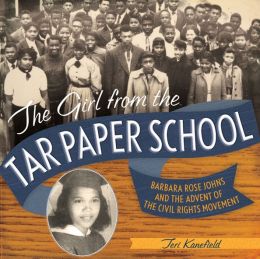
The Girl From the Tar Paper School. Teri Kanefield. 2014. Abrams. 56 pages. [Source: Library]
The Girl From the Tar Paper School: Barbara Rose Johns and the Advent of the Civil Rights Movement is a quick nonfiction read for young(er) readers. Set in 1950-1951 in Farmville, Virginia, the book tells the story of Barbara Rose Johns and the student strike she inspires, perhaps one of the first of its kind. The heroine, Barbara Rose Johns, is tired of the inequality between the white school and the black school. The conditions of the black school are truly pathetic and shocking. Instead of believing that nothing will change, that nothing can change, that this is just how things are and how things will always be, Barbara decides to put her mind to it. Barbara contemplates everything carefully. Once she makes up her mind, she organizes and acts. She finds supporters; she turns reluctant hesitate-to-act listeners into full supporters. By the end, her case is combined with several other cases--all from different states--into Brown v. Board of Education.
I found this an informative, thought-provoking read. I thought it was well-researched. I liked the personal approach. I would definitely recommend this one.
© 2014 SukaYuka.com of SukaYuka's Book Reviews
The Girl From the Tar Paper School: Barbara Rose Johns and the Advent of the Civil Rights Movement is a quick nonfiction read for young(er) readers. Set in 1950-1951 in Farmville, Virginia, the book tells the story of Barbara Rose Johns and the student strike she inspires, perhaps one of the first of its kind. The heroine, Barbara Rose Johns, is tired of the inequality between the white school and the black school. The conditions of the black school are truly pathetic and shocking. Instead of believing that nothing will change, that nothing can change, that this is just how things are and how things will always be, Barbara decides to put her mind to it. Barbara contemplates everything carefully. Once she makes up her mind, she organizes and acts. She finds supporters; she turns reluctant hesitate-to-act listeners into full supporters. By the end, her case is combined with several other cases--all from different states--into Brown v. Board of Education.
I found this an informative, thought-provoking read. I thought it was well-researched. I liked the personal approach. I would definitely recommend this one.
© 2014 SukaYuka.com of SukaYuka's Book Reviews
Monday, July 14, 2014
Hidden Like Anne Frank (2014)
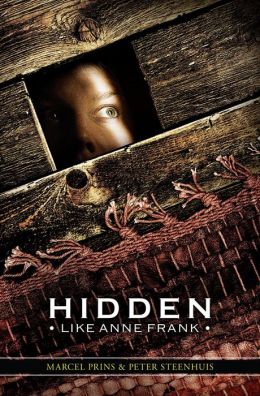
Hidden Like Anne Frank. Marcel Prins. Peter Henk Steenhuis. Translated by Laura Watkinson. Scholastic. 256 pages. [Source: Review copy]
If I had to pick just a few words to describe this Holocaust collection, I would choose the words honest and haunting. Hidden Like Anne Frank is a collection of fourteen true stories of survival. All of these stories are set in the Netherlands during World War II. All focus on children (or teenagers) who hid from the Nazis. Anne Frank is perhaps the most famous hidden child from the war, but unlike Anne Frank, these are the survivor stories, the so-called happy-ending holocaust stories. Before I read the book, I would have considered the fact that they survived through the war enough to make it a happy ending. What I learned was that was not always the case.
What followed was years of tears. A whole lifetime. That war will not be over until I take my last breath. (211, Donald de Marcas)
The fourteen: Rita Degen, Jaap Sitters, Bloeme Emden, Jack Eljon, Rosemary Kahn, Lies Elion, Maurice Meijer, Sieny Kattenburg, Leni de Vries, Benjamin Kosses, Michael Goldsteen, Lowina de Levie, Johan Sanders, and Donald de Marcas.
I liked the fact that these were individual stories. Each writer, each survivor, has their own voice, their own story, their own message. No two stories really read alike. This is as it should be. Readers catch glimpses of what life was like before, during, and after the war.
I found Hidden Like Anne Frank was a book I had to read very slowly. To read more than two or three stories at a time proved too much. This one is not a light read. It is compelling and honest and important. But it is not easy.
© 2014 SukaYuka.com of SukaYuka's Book Reviews
If I had to pick just a few words to describe this Holocaust collection, I would choose the words honest and haunting. Hidden Like Anne Frank is a collection of fourteen true stories of survival. All of these stories are set in the Netherlands during World War II. All focus on children (or teenagers) who hid from the Nazis. Anne Frank is perhaps the most famous hidden child from the war, but unlike Anne Frank, these are the survivor stories, the so-called happy-ending holocaust stories. Before I read the book, I would have considered the fact that they survived through the war enough to make it a happy ending. What I learned was that was not always the case.
What followed was years of tears. A whole lifetime. That war will not be over until I take my last breath. (211, Donald de Marcas)
The fourteen: Rita Degen, Jaap Sitters, Bloeme Emden, Jack Eljon, Rosemary Kahn, Lies Elion, Maurice Meijer, Sieny Kattenburg, Leni de Vries, Benjamin Kosses, Michael Goldsteen, Lowina de Levie, Johan Sanders, and Donald de Marcas.
I liked the fact that these were individual stories. Each writer, each survivor, has their own voice, their own story, their own message. No two stories really read alike. This is as it should be. Readers catch glimpses of what life was like before, during, and after the war.
I found Hidden Like Anne Frank was a book I had to read very slowly. To read more than two or three stories at a time proved too much. This one is not a light read. It is compelling and honest and important. But it is not easy.
© 2014 SukaYuka.com of SukaYuka's Book Reviews
Monday, June 30, 2014
Josephine: The Dazzling Life of Josephine Baker
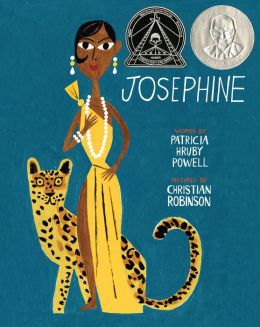
Josephine: The Dazzling Life of Josephine Baker. Patricia Hruby Powell. 2014. Chronicle. 104 pages. [Source: Library]
I definitely enjoyed reading Josephine: The Dazzling Life of Josephine Baker by Patricia Hruby Powell. I loved that this biography is told in verse. The book essentially looks at her entire life, not all biographies for young readers take the time and make the effort. By focusing on her entire life instead of just one or two moments where she shined or triumphed, readers get a greater glimpse of who she was and what she wanted. The book has highs and lows, of course, presenting many challenges that faced her throughout her life. The book sought to capture her spirit, her personality. I think it succeeded. The book also, in my opinion, gives readers a good sense of the times in which she lived.
I also loved the illustrations by Christian Robinson. I suppose you could even say I loved, loved, loved the illustrations. They add so much to the book! They seem to capture movement and fun. They definitely compliment the text well. Together they give readers a spirited look at the past.
© 2014 SukaYuka.com of SukaYuka's Book Reviews
I definitely enjoyed reading Josephine: The Dazzling Life of Josephine Baker by Patricia Hruby Powell. I loved that this biography is told in verse. The book essentially looks at her entire life, not all biographies for young readers take the time and make the effort. By focusing on her entire life instead of just one or two moments where she shined or triumphed, readers get a greater glimpse of who she was and what she wanted. The book has highs and lows, of course, presenting many challenges that faced her throughout her life. The book sought to capture her spirit, her personality. I think it succeeded. The book also, in my opinion, gives readers a good sense of the times in which she lived.
I also loved the illustrations by Christian Robinson. I suppose you could even say I loved, loved, loved the illustrations. They add so much to the book! They seem to capture movement and fun. They definitely compliment the text well. Together they give readers a spirited look at the past.
© 2014 SukaYuka.com of SukaYuka's Book Reviews
Monday, June 2, 2014
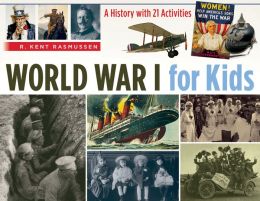
World War I for Kids: A History With 21 Activities
World War I for Kids: A History with 21 Activities. R. Kent Rasmussen. 2014. Chicago Review Press. 192 pages. [Source: Review copy]
World War I, or "The Great War," is a complex subject or topic. It can be difficult for adults to understand at times. I thought Rasmussen did an admirable job in simplifying it for middle grade readers in his World War I for Kids. He breaks the war down into twelve chapters:
I found the book to be informative, very well-researched. The layout was nice as well, plenty of photographs and maps. It is always important for nonfiction to be as appealing as possible. As I was reading it, a few Horrible Histories sketches came to mind, which was good fun.
© 2014 SukaYuka.com of SukaYuka's Book Reviews
World War I, or "The Great War," is a complex subject or topic. It can be difficult for adults to understand at times. I thought Rasmussen did an admirable job in simplifying it for middle grade readers in his World War I for Kids. He breaks the war down into twelve chapters:
- The Road to War
- Stalemate on the Western Front
- Trench Warfare
- Other Fronts
- The Weapons of War
- The War at Sea
- The War in the Air
- Animals Go to War
- Enter the United States
- The Home Fronts
- Ending the Fighting
- Beyond the Armistice
I found the book to be informative, very well-researched. The layout was nice as well, plenty of photographs and maps. It is always important for nonfiction to be as appealing as possible. As I was reading it, a few Horrible Histories sketches came to mind, which was good fun.
© 2014 SukaYuka.com of SukaYuka's Book Reviews
Monday, May 12, 2014
Show Me A Story (2012)
Show Me A Story! Why Picture Books Matter. Conversations with 21 of the World's Most Celebrated Illustrators. Compiled and edited by Leonard S. Marcus. 2012. Candlewick. 304 pages. [Source: Review copy]
Show Me A Story! Why Picture Books Matter is a collection of interviews. Leonard S. Marcus has spent decades interviewing illustrators. In this collection, he shares his interviews with 21 illustrators. Some of the illustrators are also authors. The long list includes: Mitsumasa Anno, Quentin Blake, Ashley Bryan, John Burningham, Eric Carle, Lois Ehlert, Kevin Henkes, Yumi Heo, Tana Hoban, James Marshall, Robert McCloskey, Helen Oxenbury, Jerry Pinkney, Chris Raschka, Maurice Sendak, Peter Sis, William Steig, Rosemary Wells, Mo Willems, Vera B. Williams, and Lisbeth Zwerger. Chances are that if you've read any picture books in the past thirty years, you'll recognize a name or two from the list. I'll be honest, there were a few on the list who were new to me.
It is a book of interviews. Some of the interviews are older interviews. Some are newer, of course. Some interviews cover a greater number of books than others. A few just discuss the latest (at-the-moment) picture book published. Others do a better job of covering an artist's career, of touching on many, many books--often beloved books. In my opinion, the interviews vary in quality. I think some people felt more comfortable than others during the interviews. Some interviewees really gave it their all, and were very open and outgoing. Some interviewees I felt held back and were more reserved. It seemed like he had to really work hard to get answers from some. By far my most favorite, favorite, favorite interview was with James Marshall.
What I appreciated in this book is the discussion, the emphasis on how important picture books are, on how important good, quality art is in picture books.
Favorite quotes:
© 2014 SukaYuka.com of SukaYuka's Book Reviews
Show Me A Story! Why Picture Books Matter is a collection of interviews. Leonard S. Marcus has spent decades interviewing illustrators. In this collection, he shares his interviews with 21 illustrators. Some of the illustrators are also authors. The long list includes: Mitsumasa Anno, Quentin Blake, Ashley Bryan, John Burningham, Eric Carle, Lois Ehlert, Kevin Henkes, Yumi Heo, Tana Hoban, James Marshall, Robert McCloskey, Helen Oxenbury, Jerry Pinkney, Chris Raschka, Maurice Sendak, Peter Sis, William Steig, Rosemary Wells, Mo Willems, Vera B. Williams, and Lisbeth Zwerger. Chances are that if you've read any picture books in the past thirty years, you'll recognize a name or two from the list. I'll be honest, there were a few on the list who were new to me.
It is a book of interviews. Some of the interviews are older interviews. Some are newer, of course. Some interviews cover a greater number of books than others. A few just discuss the latest (at-the-moment) picture book published. Others do a better job of covering an artist's career, of touching on many, many books--often beloved books. In my opinion, the interviews vary in quality. I think some people felt more comfortable than others during the interviews. Some interviewees really gave it their all, and were very open and outgoing. Some interviewees I felt held back and were more reserved. It seemed like he had to really work hard to get answers from some. By far my most favorite, favorite, favorite interview was with James Marshall.
What I appreciated in this book is the discussion, the emphasis on how important picture books are, on how important good, quality art is in picture books.
Favorite quotes:
Picture books tell stories in a visual language that is rich and multi-leveled, sophisticated in its workings despite its often deceptively simple appearance. It is through the book's images that a child first understands the world of the story--where it is set, when it takes place, whether it's familiar or new. They read the characters' emotions and interactions in facial expressions and body language. They may notice secondary pictorial story lines happening alongside the main action, like a secret for them to follow. And nowhere is visual humor explored more fully than in the picture book. ~ David Wiesner
In my books, I don't want to teach. What I have done might better be described as "teaching without teaching"--providing the conditions that allow children to learn for themselves. ~ Mitsumasa Anno
Before I decided to go there [Cambridge], I thought, If I go to an art school I might stop reading, whereas if I go to university I know I won't stop drawing...as an illustrator, reading is an important part of what I do, so I think it turned out to be good training. ~ Quentin Blake
A picture book becomes a whole world if it's done properly. I'm very surprised that sometimes people don't understand this, or realize that the picture book is a true art form. ~ James Marshall
A good ending is inevitable, but it's also a surprise. ~ James Marshall
I'm quite suspicious of books that set out to teach things. A picture book, after all, is primarily a stepping-stone to reading. That is what one hopes will happen in the end. What a book must do is to make a child want to read it, to make him think: "Oh, gosh, now what's going to happen?"--and turn a page. ~ Helen Oxenbury
© 2014 SukaYuka.com of SukaYuka's Book Reviews
Monday, May 5, 2014
Shipwreck at the Bottom of the Sea (1998)
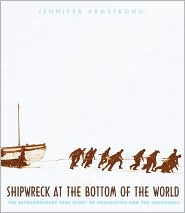
Shipwreck at the Bottom of the World: The Extraordinary True Story of Shackleton and the Endurance. Jennifer Armstrong. 1998. Random House. 144 pages. [Source: Library]
Just imagine yourself in the most hostile place on earth. It's not the Sahara or the Gobi Desert. It's not the Arctic. The most hostile place on earth is the Antarctic, the location of the South Pole--what's the difference? The Arctic is mostly water--with ice on top, of course--and that ice is never more than a few feet thick. But under the South Pole lies a continent that supports glaciers up to two miles in depth. Almost the entire southern continent is covered by ice. The mammoth icecap presses down so heavily that it actually distorts the shape of the earth. The ice never melts; it clings to the bottom of the world, spawning winds, storms, and weather that affect the whole planet.
I have read Jennifer Armstrong's Shipwreck at the Bottom of the World three or four times now. The narrative is so strong and compelling, and, yes, even inspiring. It is definitely one of my favorite nonfiction books. And nonfiction isn't something I usually take the time to reread.
Originally published in 1998, Shipwreck at the Bottom of the World won the Orbis Pictus Award in 1999. The book follows "the extraordinary true story of Shackleton and the Endurance." If you are unfamiliar with this story, then you really SHOULD read this one. It is a great introduction to the subject. Chapter by chapter, the book follows Shackleton and his men on their journey to Antarctica. Almost from the start, there are indicators that their goal, their quest, will not be an easy one to achieve. After a series of mishaps--thanks to nature--it becomes a long fight to survive.
The story is simple and yet dramatic. I think the story would be gripping no matter who told it. But I do think that Jennifer Armstrong did a wonderful job in painting a very human picture of Shackleton and his crew. I think the ending was beautiful--very moving! This one is a book I think everyone should read.
© 2014 SukaYuka.com of SukaYuka's Book Reviews
Just imagine yourself in the most hostile place on earth. It's not the Sahara or the Gobi Desert. It's not the Arctic. The most hostile place on earth is the Antarctic, the location of the South Pole--what's the difference? The Arctic is mostly water--with ice on top, of course--and that ice is never more than a few feet thick. But under the South Pole lies a continent that supports glaciers up to two miles in depth. Almost the entire southern continent is covered by ice. The mammoth icecap presses down so heavily that it actually distorts the shape of the earth. The ice never melts; it clings to the bottom of the world, spawning winds, storms, and weather that affect the whole planet.
I have read Jennifer Armstrong's Shipwreck at the Bottom of the World three or four times now. The narrative is so strong and compelling, and, yes, even inspiring. It is definitely one of my favorite nonfiction books. And nonfiction isn't something I usually take the time to reread.
Originally published in 1998, Shipwreck at the Bottom of the World won the Orbis Pictus Award in 1999. The book follows "the extraordinary true story of Shackleton and the Endurance." If you are unfamiliar with this story, then you really SHOULD read this one. It is a great introduction to the subject. Chapter by chapter, the book follows Shackleton and his men on their journey to Antarctica. Almost from the start, there are indicators that their goal, their quest, will not be an easy one to achieve. After a series of mishaps--thanks to nature--it becomes a long fight to survive.
The story is simple and yet dramatic. I think the story would be gripping no matter who told it. But I do think that Jennifer Armstrong did a wonderful job in painting a very human picture of Shackleton and his crew. I think the ending was beautiful--very moving! This one is a book I think everyone should read.
© 2014 SukaYuka.com of SukaYuka's Book Reviews
Monday, April 21, 2014
Meet Me in St. Louis (2004)
Meet Me in St. Louis: A Trip to the 1904 World's Fair. Robert Jackson. 2004. HarperCollins. 144 pages. [Source: Bought]
Meet Me in St. Louis is a fascinating book about the 1904 World's Fair. I found this nonfiction book for young readers to be entertaining and wonderful from cover to cover. It was well-organized. The narration was great--never a dull moment. It was detailed. If you love discovering "I didn't know that?!" facts, this is one to treasure. I found myself wanting to find people to enlighten. I learned so much from reading it.
Chapter one is a direct appeal to readers. Jackson writes in second person. He wants YOU to join him at the fair. This chapter gives a brief overview of the fair, inviting you to "experience" it through your five senses.
Chapter three tells of opening day.
Chapters four and five tells of buildings and exhibits. It tells about each of the palaces at the World's Fair. There was, for example, the palace of mines and metallurgy, palace of varied industries, palace of education and social economy, palace of fine arts, palace of liberal arts, palace of manufactures, palace of transportation, palace of electricity and machinery, palace of agriculture, palace of horticulture, palace of forestry, fish, and game. One of my favorite places to read about was the Model Playground.
Chapter six is a great for capturing the unique entertainments. It focuses on "the Illusions on the Pike." Jackson writes,
Chapter eight is titled, "Faces of the Fair." I thought this was a well done chapter that examines, with honesty, the diversity of the Fair; in many places, it addresses racism and exploitation. The fair, as we've read so far, may have been educational, and it may have been FUN, but, it wasn't always fair and just.
I would definitely recommend this one!!
© 2014 SukaYuka.com of SukaYuka's Book Reviews
Meet Me in St. Louis is a fascinating book about the 1904 World's Fair. I found this nonfiction book for young readers to be entertaining and wonderful from cover to cover. It was well-organized. The narration was great--never a dull moment. It was detailed. If you love discovering "I didn't know that?!" facts, this is one to treasure. I found myself wanting to find people to enlighten. I learned so much from reading it.
Chapter one is a direct appeal to readers. Jackson writes in second person. He wants YOU to join him at the fair. This chapter gives a brief overview of the fair, inviting you to "experience" it through your five senses.
"The giant wheel lurches into motion; you hold your breath and feel yourself moving. How is it possible for such a large car, stuffed to the gills with sixty people, to rise into the air like this? You bravely take a first peek out the windows. Off to the near right, you spot the Abraham Lincoln Exhibit, which houses the actual log cabin where Lincoln lived as a child in Kentucky. Then the rolling gardens and peaceful ponds of the Japanese Pavilion opens up in front of you. A bit higher and you can see all of the Jerusalem Exhibit, a miniature version of that Middle Eastern city filled with replicas of ancient buildings. Can this be St. Louis, or have you been transported to a whole new world?" (10)Chapter two chronicles the preparation and construction.
Chapter three tells of opening day.
Chapters four and five tells of buildings and exhibits. It tells about each of the palaces at the World's Fair. There was, for example, the palace of mines and metallurgy, palace of varied industries, palace of education and social economy, palace of fine arts, palace of liberal arts, palace of manufactures, palace of transportation, palace of electricity and machinery, palace of agriculture, palace of horticulture, palace of forestry, fish, and game. One of my favorite places to read about was the Model Playground.
Chapter six is a great for capturing the unique entertainments. It focuses on "the Illusions on the Pike." Jackson writes,
"Plays, concerts, circus tricks--more than forty different shows were staged in all, some in theaters and others right in the center of the wide walkway. Fifteen hundred animals, from zebras to polar bears, lived on the Pike during the fair, and many of them were entertaining performers too. Without a doubt, the Pike was the loudest area on the fairgrounds. Dozens of men called "spielers" or "barkers" shouted into megaphones for hours, trying to attract people to rides and shows." (73) This chapter also mentions Geronimo. "He signed autographs for ten cents each; depending on his mood, the price for his photograph ranged between fifty cents and two dollars. Geronimo would even sell his hat for the wildly expensive price of five dollars--then coolly pull a new one from under the table, place it on his head, and wait for another buyer." (83)Chapter seven focuses on the debut of the Ferris Wheel, or "Observation Wheel."
Chapter eight is titled, "Faces of the Fair." I thought this was a well done chapter that examines, with honesty, the diversity of the Fair; in many places, it addresses racism and exploitation. The fair, as we've read so far, may have been educational, and it may have been FUN, but, it wasn't always fair and just.
"While blacks were not the only minority group treated with disrespect, at least they were free to boycott the fair if they wanted. Others were not able to protest. Several ethnic groups had been brought from their homelands to St. Louis--in some cases by force. Men, women, and children were put on display so that fairgoers could take a first-hand look at them and, in theory, learn about their cultures. The largest of these "anthropological" exhibits came from the Philippines. Hundreds of exploited Filipinos lived on the fairgrounds in open huts and flimsy thatched cabins. Cramped and filthy, the housing offered almost no privacy. The Filipinos were forced by fair managers to sit quietly while crowds of curious visitors gawked at them; they were also told to sing, dance, and perform other activities against their will. Instead of learning about the Filipinos and gaining respect for this culture, most fairgoers concluded they were a primitive race of inferior beings." (100)And later from the same chapter,
"Some people were disturbed by the exploitation of ethnic groups, including a magazine reporter named Laura Ingalls Wilder. Long before the Little House on the Prairie books made her a well-known children's author, she traveled from her home in southern Missouri to write about the fair. Wilder enjoyed the palaces, foreign buildings, and the Pike, but she was appalled by the mistreatment of many of the foreign and Native American people. She reportedly even tried to stop exhibitors from forcing them on display. One day, a young man from Africa was being exploited during a typically cruel stage show. Wilder stood up in the middle of the audience and demanded that the show stop immediately." (103-4)Chapter nine is about "special events." The chapter covers many such events. But the BEST, BEST, BEST part of this chapter is devoted to the 1904 Olympic Games in St. Louis!!! There were a dozen little things that I found fascinating in this section. At least a dozen!
"Because the Games were fairly new--and therefore disorganized--many bizarre and amusing things happened. After a disagreement over who won the fifty-meter race, two swimmers got into a brawl and just agreed to race again. There was no such thing as instant replay in 1904, of course. And American gymnast George Eyser ambled off with five medals, including two golds, after competing with a wooden leg. He had lost one leg after being run over by a train years earlier." (114)And
"A pair of Zulu tribesmen, Len Taunyane and Jan Mashiani, became the first African athletes to compete in the Olympics, even though they were supposed to be part of the Boer War Exhibit. Taunyane might have won, but a fierce dog chased him nearly a mile off course, and he finished in ninth place." (116)Chapter ten focuses on the last days of the fair.
I would definitely recommend this one!!
© 2014 SukaYuka.com of SukaYuka's Book Reviews
Monday, April 14, 2014
Mountains Beyond Mountains (2013)
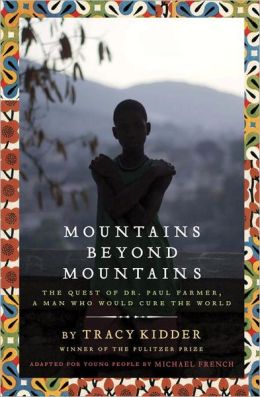
Mountains Beyond Mountains: The Quest of Dr. Paul Farmer, A Man Who Would Cure the World. By Tracy Kidder. Adapted for Young People by Michael French. 2013. Random House. 288 pages. [Source: Review copy]
Some books are intimidating to review. They just are. Such is the case with Mountains Beyond Mountains. The book I read was the "adapted for young people" edition; it was adapted by Michael French. The book is good, very good. The subject is serious, but, the style is personal. The subject of the book is Dr. Paul Farmer. The book is not always in chronological order, but, essentially by the time you're done, you've got a good grasp on who he is, what he does, why he does it, how he grew up, how he balances (or not) his personal life and professional life, etc. The book seems very well-researched and quite detailed. I'm not sure all those personal details were essential. For example, I'm not sure readers need to follow every little fight he had with an ex-girlfriend and how that relationship developed and fell out. I suppose, it was interesting to have another strong opinion as to what he was like to be around on a day to day to day basis, but, was it essential? I'm not sure.
The book chronicles decades worth of work, mainly but not exclusively in Haiti. There is a lot of discussion about infectious diseases: how to treat them, how to make the most effective treatments available to everyone, how to decide who gets what and who pays what, etc. TB-MDR, HIV, AIDS among others.
The book has an honest, open approach to it. Many parts are narrated by the author who, over the years, accompanied him various places, observed him working and interacting, traveled with him to various conferences, etc. The author, of course, also was in contact with him at other times through email. The author, again, had access to interview those closest to Farmer. The book definitely reflects this.
I would recommend this one.
© 2014 SukaYuka.com of SukaYuka's Book Reviews
Some books are intimidating to review. They just are. Such is the case with Mountains Beyond Mountains. The book I read was the "adapted for young people" edition; it was adapted by Michael French. The book is good, very good. The subject is serious, but, the style is personal. The subject of the book is Dr. Paul Farmer. The book is not always in chronological order, but, essentially by the time you're done, you've got a good grasp on who he is, what he does, why he does it, how he grew up, how he balances (or not) his personal life and professional life, etc. The book seems very well-researched and quite detailed. I'm not sure all those personal details were essential. For example, I'm not sure readers need to follow every little fight he had with an ex-girlfriend and how that relationship developed and fell out. I suppose, it was interesting to have another strong opinion as to what he was like to be around on a day to day to day basis, but, was it essential? I'm not sure.
The book chronicles decades worth of work, mainly but not exclusively in Haiti. There is a lot of discussion about infectious diseases: how to treat them, how to make the most effective treatments available to everyone, how to decide who gets what and who pays what, etc. TB-MDR, HIV, AIDS among others.
The book has an honest, open approach to it. Many parts are narrated by the author who, over the years, accompanied him various places, observed him working and interacting, traveled with him to various conferences, etc. The author, of course, also was in contact with him at other times through email. The author, again, had access to interview those closest to Farmer. The book definitely reflects this.
I would recommend this one.
© 2014 SukaYuka.com of SukaYuka's Book Reviews
Monday, March 3, 2014
The Boy on the Wooden Box (2013)
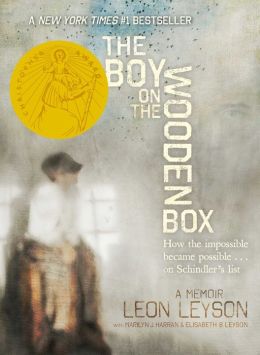
The Boy on the Wooden Box by Leon Leyson. 2013. Simon & Schuster. 240 pages. [Source: Library]
Definitely loved this memoir! I would definitely recommend it to anyone interested in reading about the Holocaust. The story begins in the late 1930s in Poland, and continues on through the war to liberation. It is the story of a young boy and his family--many members were saved by Schindler, however, not all of them, for not all lived in the same community and had the same opportunities to come and work for Schindler. Still, it seems miraculous that so many of his immediate family WERE saved, and did survive the war despite all the horrors and hardships and unknowns. Leon Leyson's memoir is powerful and compelling, just what you'd expect. But it was also thoughtful and age-appropriate. It did a good job in providing details and experiences, grounding this very human story into history.
There was just something about it that I LOVED. He could reflect with love and affection on the people he loved and respected; he seemed to hold onto the good of his past, the little things and the not-so-little things that made his childhood what it was. He did this without negating the things that were painful and bitter and just as true. The narrative voice was so strong and wonderful in this one.
© 2014 SukaYuka.com of SukaYuka's Book Reviews
Definitely loved this memoir! I would definitely recommend it to anyone interested in reading about the Holocaust. The story begins in the late 1930s in Poland, and continues on through the war to liberation. It is the story of a young boy and his family--many members were saved by Schindler, however, not all of them, for not all lived in the same community and had the same opportunities to come and work for Schindler. Still, it seems miraculous that so many of his immediate family WERE saved, and did survive the war despite all the horrors and hardships and unknowns. Leon Leyson's memoir is powerful and compelling, just what you'd expect. But it was also thoughtful and age-appropriate. It did a good job in providing details and experiences, grounding this very human story into history.
There was just something about it that I LOVED. He could reflect with love and affection on the people he loved and respected; he seemed to hold onto the good of his past, the little things and the not-so-little things that made his childhood what it was. He did this without negating the things that were painful and bitter and just as true. The narrative voice was so strong and wonderful in this one.
© 2014 SukaYuka.com of SukaYuka's Book Reviews
Subscribe to:
Posts (Atom)