In the Kingdom of Ice: The Grand and Terrible Polar Voyage of the USS Jeannette. Hampton Sides. 2014. 454 pages. [Source: Library]
I enjoy reading nonfiction. I do. The topic is polar exploration--the North Pole to be precise. (I've read more about the South Pole, by the way.) The good news is that In the Kingdom of Ice: The Grand and Terrible Polar Voyage of the USS Jeannette is fascinating and thorough. It is detailed and focused on personalities and contexts. (Two of the personalities explored are George Washington De Long and James Gordon Bennett, Jr.)
The trip is presented in great detail. Before the trip: how/when De Long became interested in polar exploration, finding financial backers for the trip, finding THE ship, finding men to go with him, finding resources and materials, doing the research, picking and choosing what research to rely on, planning and organizing, etc. During the trip: before the Jeannette got trapped in ice--what it was like on a day-to-day, week-to-week basis, the dangers, the joys, etc., trapped in the ice on ship--what it was like to spend YEARS (I believe almost two years?) on a ship that's trapped in the ice, what it was like to be stuck with the same people in such close quarters for those years, trapped ON the ice with NO ship--what it was like in the final months as thirty-something men with limited provisions and supplies, men not in the best health, fought to survive and reach land and civilization. After the trip: what it was like for the survivors to encounter land and civilization again, who survived, etc.
Most everything is given context and brought to life. That being said, it doesn't mean every person is likable!
I enjoyed reading this one. I found it to be a quick read--just a day or two at most.
© 2015 SukaYuka.com of SukaYuka's Book Reviews
Showing posts with label adult nonfiction. Show all posts
Monday, January 12, 2015
Wednesday, January 7, 2015
The Girl with the White Flag
The Girl With The White Flag. Tomiko Higa. Translated by Dorothy Britton. 1989. 130 pages. [Source: Bought]
The Girl with the White Flag is the story of the author's childhood in war-time Japan. It begins by giving the reader ample background into the time and culture and place.
One of the first events she shares with readers is the death of her mother. She then relates what life was like with her father, two older sisters, and her older brother. This portion is hard to navigate. I think in some ways it is just as hard for modern readers to understand the family life--the harshness, the strictness, the discipline, as it is to understand the monstrosities of war and soldiers and starvation. (Or maybe that's just my take on it.)
About halfway through the narrative, the father disappears. He was on his somewhat routine mission of delivering food to the Japanese soldiers, but on this occasion he never returned home. The four children are left to fend for themselves. The American soldiers have just begun their invasion, their battle to capture this island. The children become refugees and the fight to survive has begun. The children ranged in age from 17 to 6. Somewhere along the way, however, two things happen--big things--that make this event even scarier: 1) Their brother dies one night from a stray bullet. 2) Within a few days of burying their brother, our narrator--the six/seven year old girl becomes lost--separated--from her sisters.
The book recounts what it was like to be seven and alone and wandering in and out of danger. There was no safe place. Not really. Japanese soldiers weren't "safe." In fact, in her brief encounters with them she was almost killed. No, being near soldiers wasn't safe. The only "safe" soldier was a dead soldier. She did in fact scavenge around the dead soldiers looking for food.
Her will to survive was strong. Her stamina incredible in my opinion. The sights. The sounds. The smells. All surrounded her. Could have potentially traumatized her and paralyzed her into inaction.
If there is power in the Girl with The White Flag it is in its rawness, its simplicity, its boldness when it comes to being straightforward and honest. The story is incredible is powerful because it's true. Here is an eyewitness account of what it means to be seven and a refugee in a war zone. It can be brutal. It can be intense. But there is more to it than that.
I found The Girl with The White Flag to be an incredibly compelling read, a must-read for adults.
© 2015 SukaYuka.com of SukaYuka's Book Reviews
The Girl with the White Flag is the story of the author's childhood in war-time Japan. It begins by giving the reader ample background into the time and culture and place.
One of the first events she shares with readers is the death of her mother. She then relates what life was like with her father, two older sisters, and her older brother. This portion is hard to navigate. I think in some ways it is just as hard for modern readers to understand the family life--the harshness, the strictness, the discipline, as it is to understand the monstrosities of war and soldiers and starvation. (Or maybe that's just my take on it.)
About halfway through the narrative, the father disappears. He was on his somewhat routine mission of delivering food to the Japanese soldiers, but on this occasion he never returned home. The four children are left to fend for themselves. The American soldiers have just begun their invasion, their battle to capture this island. The children become refugees and the fight to survive has begun. The children ranged in age from 17 to 6. Somewhere along the way, however, two things happen--big things--that make this event even scarier: 1) Their brother dies one night from a stray bullet. 2) Within a few days of burying their brother, our narrator--the six/seven year old girl becomes lost--separated--from her sisters.
The book recounts what it was like to be seven and alone and wandering in and out of danger. There was no safe place. Not really. Japanese soldiers weren't "safe." In fact, in her brief encounters with them she was almost killed. No, being near soldiers wasn't safe. The only "safe" soldier was a dead soldier. She did in fact scavenge around the dead soldiers looking for food.
Her will to survive was strong. Her stamina incredible in my opinion. The sights. The sounds. The smells. All surrounded her. Could have potentially traumatized her and paralyzed her into inaction.
If there is power in the Girl with The White Flag it is in its rawness, its simplicity, its boldness when it comes to being straightforward and honest. The story is incredible is powerful because it's true. Here is an eyewitness account of what it means to be seven and a refugee in a war zone. It can be brutal. It can be intense. But there is more to it than that.
I found The Girl with The White Flag to be an incredibly compelling read, a must-read for adults.
© 2015 SukaYuka.com of SukaYuka's Book Reviews
Monday, December 22, 2014
Wars of the Roses (2014)
The Wars of the Roses: The Fall of the Plantagenets and the Rise of the Tudors. Dan Jones. 2014. Viking Adult. 416 pages. [Source: Library]
I wouldn't say I'd read just any book on this subject. But I would say I'd read almost any book on this subject. I've read plenty nonfiction and fiction covering these decades of English history. I find it fascinating yet brutal.
The Wars of the Roses: The Fall of the Plantagenets and the Rise of the Tudors was originally published as The Hollow Crown in the UK. It focuses on the lives of Henry V, Henry VI, Edward IV, Richard III, Henry VII, and Henry VIII. Others come into it as well: men and women who had a role to play in the "Wars of the Roses." I can imagine that if you're completely new to the subject, there would be a lot of names to keep up with, a lot of connections to remember. I didn't find that to be the case, however. I found the story was clearly told, with plenty of detail. It is an engaging read. It can lead you to plenty of "what ifs..." Because the story of how Henry VII came to the throne is just like that. He wasn't a likely candidate, in other words. If there hadn't been decades of distrust and betrayals and executions and battles, he'd never have stood a chance.
The book has plenty of drama, and I'd say it does a good job bringing the subjects to life or revealing their character or personality. I think the book makes an effort to quote what contemporary records had to say about any given king, what reputation they had during their reign and directly afterwards.
I would say that both The Plantagenets and The Wars of the Roses are great at illustrating that all the kings had weaknesses. There was never one completely perfect king. Some kings had more strengths than weaknesses. Some kings had more weaknesses than strengths. Some kings came to reign at exactly the right time when their country needed their strengths and could overlook their weaknesses. Some kings came to reign and didn't have what the country needed--at least not at that time. The books are also a great reminder of how DIFFERENT things were in the past, of how BLOODY and CRUEL politics could be. It wasn't just one king here and there that proved execution-happy or power-hungry, and, it wasn't just English kings either. If you put the times into context, you'll see that's just how things were all over Europe, and probably even broader than that.
For some potential readers, there's only ONE question: Does Dan Jones say that Richard III killed his nephews?! This is what the book says exactly, "All we can be sure of is that the boys were first disinherited, then deprived of their liberty and servants, and that they then disappeared, presumed dead by contemporaries across Europe. And the person who benefited most from their disappearance was Richard III" (278). That is all the book says about WHO might have done it. It does not suggest others who may have had motive and opportunity. But he doesn't spend time elaborating--speculating--on how, when, where, and why Richard did it. That was a big relief to me. Yes, I would have preferred for him to mention OTHER possible murderers, to be completely fair. BUT at least he didn't spend pages and pages building up a case against Richard murdering his nephews in the tower. Those two sentences are it. That is all the time he spends on the subject. So I think it would be overreacting to reject the whole book based on two sentences. The book covers decades of material. It covers the reigns of SIX kings. You can doubt his conclusion, and still benefit from the book as a whole.
© 2014 SukaYuka.com of SukaYuka's Book Reviews
I wouldn't say I'd read just any book on this subject. But I would say I'd read almost any book on this subject. I've read plenty nonfiction and fiction covering these decades of English history. I find it fascinating yet brutal.
The Wars of the Roses: The Fall of the Plantagenets and the Rise of the Tudors was originally published as The Hollow Crown in the UK. It focuses on the lives of Henry V, Henry VI, Edward IV, Richard III, Henry VII, and Henry VIII. Others come into it as well: men and women who had a role to play in the "Wars of the Roses." I can imagine that if you're completely new to the subject, there would be a lot of names to keep up with, a lot of connections to remember. I didn't find that to be the case, however. I found the story was clearly told, with plenty of detail. It is an engaging read. It can lead you to plenty of "what ifs..." Because the story of how Henry VII came to the throne is just like that. He wasn't a likely candidate, in other words. If there hadn't been decades of distrust and betrayals and executions and battles, he'd never have stood a chance.
The book has plenty of drama, and I'd say it does a good job bringing the subjects to life or revealing their character or personality. I think the book makes an effort to quote what contemporary records had to say about any given king, what reputation they had during their reign and directly afterwards.
I would say that both The Plantagenets and The Wars of the Roses are great at illustrating that all the kings had weaknesses. There was never one completely perfect king. Some kings had more strengths than weaknesses. Some kings had more weaknesses than strengths. Some kings came to reign at exactly the right time when their country needed their strengths and could overlook their weaknesses. Some kings came to reign and didn't have what the country needed--at least not at that time. The books are also a great reminder of how DIFFERENT things were in the past, of how BLOODY and CRUEL politics could be. It wasn't just one king here and there that proved execution-happy or power-hungry, and, it wasn't just English kings either. If you put the times into context, you'll see that's just how things were all over Europe, and probably even broader than that.
For some potential readers, there's only ONE question: Does Dan Jones say that Richard III killed his nephews?! This is what the book says exactly, "All we can be sure of is that the boys were first disinherited, then deprived of their liberty and servants, and that they then disappeared, presumed dead by contemporaries across Europe. And the person who benefited most from their disappearance was Richard III" (278). That is all the book says about WHO might have done it. It does not suggest others who may have had motive and opportunity. But he doesn't spend time elaborating--speculating--on how, when, where, and why Richard did it. That was a big relief to me. Yes, I would have preferred for him to mention OTHER possible murderers, to be completely fair. BUT at least he didn't spend pages and pages building up a case against Richard murdering his nephews in the tower. Those two sentences are it. That is all the time he spends on the subject. So I think it would be overreacting to reject the whole book based on two sentences. The book covers decades of material. It covers the reigns of SIX kings. You can doubt his conclusion, and still benefit from the book as a whole.
© 2014 SukaYuka.com of SukaYuka's Book Reviews
Monday, December 8, 2014
The Plantagenets
The Plantagenets. Dan Jones. 2013. Viking. 560 pages. [Source: Library]
I enjoyed reading this overview of British history. The book examines the reigns of a handful of Plantagenet kings: Henry II, Richard I, John, Henry III, Edward I, Edward II, Edward III, and Richard II. It spans several centuries: 1120-1399. It also overlaps a bit with French history.
The book opens with "The White Ship." It's a dramatic way to start a book. Henry I, the son of William the Conqueror, loses his son and heir in a shipwreck. Henry I has two dozen illegitimate children--give or take one or two. But his only legitimate child is a daughter, Matilda. He remarries hoping presumably to have another child--a son, a new heir. But that is not to be. He marries the widowed Matilda off--it was anything but a love match--and she starts having children of her own, many of them sons. He leaves his kingdom to his daughter, supposedly everyone has sworn their allegiance to her, but, in reality, she's never in a position to reign as queen. Her cousin, Stephen, reigns instead. War follows, naturally. It is not a short war, a quick and decisive war. It is a here and there, on-and-off again war where the people suffer for the family squabble most. Eventually, an agreement of sorts is reached, Stephen will pass the crown to Matilda's son, Henry II. He is the first Plantagenet king. Henry II, if you remember, is married to Eleanor of Aquitaine, the former French queen as well. They have many children together...
The book follows the reigns of each king. It goes into detail with politics and economics. It goes into detail with the struggles of each king. Their strengths and weaknesses, their battles. Sometimes these battles are with the church; sometimes these battles are with the French; sometimes these battles are with the Irish or the Welsh or the Scottish; sometimes these battles are with their own flesh and blood, their family; sometimes these battles are with their own countrymen, the barons, the nobility, or even the peasants. No one king has it all. No one king has a perfect, problem-free reign. It wouldn't necessarily be fair or right to sort the kings into two groups of "good" and "bad." Some kings had a reputation of being horrible, and yet they didn't do anything over and above what other kings before them or after them did. Writers of all centuries can label kings this or that, but, that is because historians can be biased. (Some are openly biased. Some not so much.)
As for the details about each king, what can I say? It's an overview, a detailed overview, to be sure. Some readers may be more of an expert and find fault with statements here and there throughout the book. They may spot myths presented as fact. But I certainly can't be among them. I don't know enough about each and every king.
I found the book to be interesting. Some chapters were more fascinating than others. Some chapters even seemed a bit confusing. But I kept reading.
© 2014 SukaYuka.com of SukaYuka's Book Reviews
I enjoyed reading this overview of British history. The book examines the reigns of a handful of Plantagenet kings: Henry II, Richard I, John, Henry III, Edward I, Edward II, Edward III, and Richard II. It spans several centuries: 1120-1399. It also overlaps a bit with French history.
The book opens with "The White Ship." It's a dramatic way to start a book. Henry I, the son of William the Conqueror, loses his son and heir in a shipwreck. Henry I has two dozen illegitimate children--give or take one or two. But his only legitimate child is a daughter, Matilda. He remarries hoping presumably to have another child--a son, a new heir. But that is not to be. He marries the widowed Matilda off--it was anything but a love match--and she starts having children of her own, many of them sons. He leaves his kingdom to his daughter, supposedly everyone has sworn their allegiance to her, but, in reality, she's never in a position to reign as queen. Her cousin, Stephen, reigns instead. War follows, naturally. It is not a short war, a quick and decisive war. It is a here and there, on-and-off again war where the people suffer for the family squabble most. Eventually, an agreement of sorts is reached, Stephen will pass the crown to Matilda's son, Henry II. He is the first Plantagenet king. Henry II, if you remember, is married to Eleanor of Aquitaine, the former French queen as well. They have many children together...
The book follows the reigns of each king. It goes into detail with politics and economics. It goes into detail with the struggles of each king. Their strengths and weaknesses, their battles. Sometimes these battles are with the church; sometimes these battles are with the French; sometimes these battles are with the Irish or the Welsh or the Scottish; sometimes these battles are with their own flesh and blood, their family; sometimes these battles are with their own countrymen, the barons, the nobility, or even the peasants. No one king has it all. No one king has a perfect, problem-free reign. It wouldn't necessarily be fair or right to sort the kings into two groups of "good" and "bad." Some kings had a reputation of being horrible, and yet they didn't do anything over and above what other kings before them or after them did. Writers of all centuries can label kings this or that, but, that is because historians can be biased. (Some are openly biased. Some not so much.)
As for the details about each king, what can I say? It's an overview, a detailed overview, to be sure. Some readers may be more of an expert and find fault with statements here and there throughout the book. They may spot myths presented as fact. But I certainly can't be among them. I don't know enough about each and every king.
I found the book to be interesting. Some chapters were more fascinating than others. Some chapters even seemed a bit confusing. But I kept reading.
© 2014 SukaYuka.com of SukaYuka's Book Reviews
Monday, November 24, 2014
The Man Who Invented Christmas (2008)
The Man Who Invented Christmas. Les Standiford. 2008. Crown. 241 pages. [Source: Library]
Different readers will have different expectations when they see the full title of this one: The Man Who Invented Christmas: How Charles Dickens's A Christmas Carol Rescued His Career and Revived Our Holiday Spirits.
The focus is not so much on Christmas, as it is on Charles Dickens: his private and public life, his writing career, his inspirations, his fears and worries, his relationship with his publishers. The focus isn't solely on A Christmas Carol. Yes, this work gets discussed in detail. But the same can be said of many of Dickens' novels. The book, despite the title, focuses on Dickens' career as a writer or novelist. This book mentions and in some cases discusses most of Dickens' published works. Not just his books published BEFORE A Christmas Carol, but his whole career.
A Christmas Carol gets special treatment in this one, perhaps, not because it has a Christmas theme, but, because it is a significant to his career. Before A Christmas Carol, he'd had a few really big bestsellers. But. He'd also experienced some failures. His last three books were disappointing to his fans. They didn't sell as well. The critics didn't like them. His publishers were discouraged and worried. Dickens needed his next book to be something wonderful, something that would sell, something that would be loved by one and all. He needed a success: a feel-good success, something to give him confidence and something to give his publishers confidence in him again, and a financial success, something to get him out of debt, something to pay his bills.
The secondary focus of this one is not Christmas. Readers might expect it to be related to Christmas, the history of Christmas, its invention, or reinvention. But. Something gets more time and attention than Christmas. And that is the writing and/or publishing industry. The book gives readers a history lesson in publishing. How books were written, illustrated, printed, published, sold. Not just what went on BEFORE it was published, but also what typically happened next. How novels were adapted to the stage by others, by many others. How little control--if any--that the publisher and author had over their books, their stories, their characters and plots. Plays could do justice, at times, to the books they were based upon. But they could also be absolutely dreadful. The lack of copyright laws or international copyright laws. How publishers in other countries could steal entire books, republish them, not paying the author anything at all. The book even has a chapter or two on fan fiction. Not that he calls it fan fiction. But he writes of how other writers could "borrow" characters and give them further adventures and publish them.
Does the book talk about Christmas at all? Yes. It does. It tells of two extremes: those in the past who celebrated Christmas too wildly, too wantonly, and those in the past who refused to celebrate it all, who would have it be illegal. Either extreme seems a bit hard to believe, perhaps, for modern readers. The book tells of traditions. Some traditions being somewhat established before A Christmas Carol, and other traditions becoming more established by being described in A Christmas Carol. What I probably found most interesting was his mention of how traditionally it was goose served for the Christmas feast UNTIL the publishing of A Christmas Carol. When Scrooge buys a turkey to give to Bob Cratchit and his family, it seems he inspired his readers to change their traditions. Turkeys becoming more and more popular.
For readers interested in the life and death of Charles Dickens, his whole career, this one has some appeal. It provides plenty of details about his books and the publishing industry, how he was received by the public.
For readers looking for a quick, feel-good holiday read, this one may prove to be a chore to get through.
I liked it well enough. I've read a good many of his novels. I have some interest in his life. It worked for me. It was packed with plenty of information.
© 2014 SukaYuka.com of SukaYuka's Book Reviews
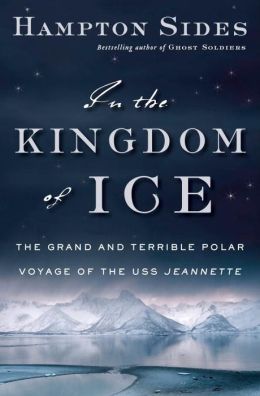
Different readers will have different expectations when they see the full title of this one: The Man Who Invented Christmas: How Charles Dickens's A Christmas Carol Rescued His Career and Revived Our Holiday Spirits.
The focus is not so much on Christmas, as it is on Charles Dickens: his private and public life, his writing career, his inspirations, his fears and worries, his relationship with his publishers. The focus isn't solely on A Christmas Carol. Yes, this work gets discussed in detail. But the same can be said of many of Dickens' novels. The book, despite the title, focuses on Dickens' career as a writer or novelist. This book mentions and in some cases discusses most of Dickens' published works. Not just his books published BEFORE A Christmas Carol, but his whole career.
A Christmas Carol gets special treatment in this one, perhaps, not because it has a Christmas theme, but, because it is a significant to his career. Before A Christmas Carol, he'd had a few really big bestsellers. But. He'd also experienced some failures. His last three books were disappointing to his fans. They didn't sell as well. The critics didn't like them. His publishers were discouraged and worried. Dickens needed his next book to be something wonderful, something that would sell, something that would be loved by one and all. He needed a success: a feel-good success, something to give him confidence and something to give his publishers confidence in him again, and a financial success, something to get him out of debt, something to pay his bills.
The secondary focus of this one is not Christmas. Readers might expect it to be related to Christmas, the history of Christmas, its invention, or reinvention. But. Something gets more time and attention than Christmas. And that is the writing and/or publishing industry. The book gives readers a history lesson in publishing. How books were written, illustrated, printed, published, sold. Not just what went on BEFORE it was published, but also what typically happened next. How novels were adapted to the stage by others, by many others. How little control--if any--that the publisher and author had over their books, their stories, their characters and plots. Plays could do justice, at times, to the books they were based upon. But they could also be absolutely dreadful. The lack of copyright laws or international copyright laws. How publishers in other countries could steal entire books, republish them, not paying the author anything at all. The book even has a chapter or two on fan fiction. Not that he calls it fan fiction. But he writes of how other writers could "borrow" characters and give them further adventures and publish them.
Does the book talk about Christmas at all? Yes. It does. It tells of two extremes: those in the past who celebrated Christmas too wildly, too wantonly, and those in the past who refused to celebrate it all, who would have it be illegal. Either extreme seems a bit hard to believe, perhaps, for modern readers. The book tells of traditions. Some traditions being somewhat established before A Christmas Carol, and other traditions becoming more established by being described in A Christmas Carol. What I probably found most interesting was his mention of how traditionally it was goose served for the Christmas feast UNTIL the publishing of A Christmas Carol. When Scrooge buys a turkey to give to Bob Cratchit and his family, it seems he inspired his readers to change their traditions. Turkeys becoming more and more popular.
For readers interested in the life and death of Charles Dickens, his whole career, this one has some appeal. It provides plenty of details about his books and the publishing industry, how he was received by the public.
For readers looking for a quick, feel-good holiday read, this one may prove to be a chore to get through.
I liked it well enough. I've read a good many of his novels. I have some interest in his life. It worked for me. It was packed with plenty of information.
© 2014 SukaYuka.com of SukaYuka's Book Reviews
Monday, October 27, 2014
Children in the Holocaust and World War II
Children in the Holocaust: Their Secret Diaries. Laurel Holliday, ed. 1996. 432 pages. [Source: Library]
Children in the Holocaust and World War II: Their Secret Diaries is an almost must-read in my opinion. It is incredibly compelling and emotional. Memoirs are great. They are. I have loved many autobiographies and biographies. But diaries are a bit unique. They tend to stay in the moment; there is a rawness perhaps in the emotions. They capture specific moments in time. They record the best and worst and everything in between. These diary entries are well worth reading.
These children's diaries are testimonies to the fact that telling the truth about violence is not harmful. In fact, one wonders how much greater harm these boys and girls would have suffered had they not written about the horrific events they were experiencing. Far more dangerous than reading about atrocities, I believe, is the pretense that atrocities do not occur. To turn our eyes away and refuse to see, or to let children see, what prejudice and hatred lead to is truly to warp our collective psyche. It is important for all of us--adults and children alike--to acknowledge the depths to which humankind can sink. The children teach us, by sharing their own direct experience of oppression, that nothing is more valuable than human freedom. This lesson alone is reason enough to read and to encourage children to read, these diaries.This book gathers together diary entries from twenty-two writers. The countries represented include: Poland, Holland, Germany, Czechoslovakia, Austria, Hungary, Lithuania, Russia, Belgium, England, Israel, and Denmark. Seven of the twenty-two writers are from Poland. Some writers survived the war. Others did not. I believe that all of these entries have been previously published in some format, in at least one language. The listed age refers to the writer's age for the first diary entry printed in the book. This book provides excerpts from diaries. None of the diaries, I believe, are reprinted in full. These excerpts represent the diaries as a whole, and provide a bigger picture for understanding the war.
- Janine Phillips, Poland, 10 years old
- Ephraim Shtenkler, Poland, 11 years old
- Dirk Van der Heide, Holland, 12 years old
- Werner Galnick, Germany, 12 years old
- Janina Heshele, Poland, 12 years old
- Helga Weissova-Hoskova, Czechoslovakia, 12 years old
- Dawid Rubinowicz, Poland, 12 years old
- Helga Kinsky-Pollack, Austria, 13 years old
- Eva Heyman, Hungary, 13 years old
- Tamarah Lazerson, Lithuania, 13 years old
- Yitskhok Rudashevski, Lithuania, 14 years old
- Macha Rolnikas, Lithuania, 14 years old
- Charlotte Veresova, Czechoslovakia, 14 years old
- Mary Berg (pseudonym), Poland, 15 years old
- Ina Konstantinova, Russia, 16 years old
- Moshe Flinker, Belgium, 16 years old
- Joan Wyndham, England, 16 years old
- Hannah Senesh, Hungary and Israel, 17 years old
- Sarah Fishkin, Poland, 17 years old
- Kim Malthe-Bruun, Denmark, 18 years old
- Colin Perry, England, 18 years old
- The Unknown Brother and Sister of Lodz Ghetto, Poland, Unknown Age and 12 years old
Shootings have now become very frequent at the ghetto exits. Usually they are perpetrated by some guard who wants to amuse himself. Every day, morning and afternoon, when I go to school, I am not sure whether I will return alive. I have to go past two of the most dangerous German sentry posts..., Mary Berg, February 27, 1942, p. 233
Dr. Janusz Korczak's children's home is empty now. A few days ago we all stood at the window and watched the Germans surround the houses. Rows of children, holding each other by their little hands, began to walk out of the doorway. There were tiny tots of two or three years among them, while the oldest ones were perhaps thirteen. Each child carried a little bundle in his hand. All of them wore white aprons. They walked in ranks of two, calm, and even smiling. They had not the slightest foreboding of their fate. At the end of the procession marched Dr. Korczak, who saw to it that the children did not walk on the sidewalk. Now and then, with fatherly solicitude, he stroked a child on the head or arm, and straightened out the ranks. He wore high boots, with his trousers stuck in them, an alpaca coat, and a navy-blue cap, the so-called Maciejowka cap. He walked with a firm step, and was accompanied by one of the doctors of the children's home, who wore his white smock. This sad procession vanished at the corner of Dzielna and Smocza Streets. They went in the direction of Gesia Street, to the cemetery. At the cemetery all the children were shot. We were also told by our informants that Dr. Korczak was forced to witness the executions, and that he himself was shot afterward. Thus died one of the purest and noblest men who ever lived. He was the pride of the ghetto. His children's home gave us courage, and all of us gladly gave part of our own scanty means to support the model home organized by this great idealist. He devoted all his life, all his creative work as an educator and writer, to the poor children of Warsaw. Even at the last moment he refused to be separated from them. ~ Mary Berg, August, 1942, p. 239© 2014 SukaYuka.com of SukaYuka's Book Reviews
Monday, October 20, 2014
Silver Like Dust
Silver Like Dust. Kimi Cunningham Grant. 2012. Pegasus. 288 pages. [Source: Library]
Silver Like Dust focuses on the relationship of a grandmother and granddaughter. The author--the granddaughter--wants to strengthen her relationship with her grandmother. At the start, she feels like she barely knows her. She knows a few things, perhaps, but not in a real-enough way. For example, she knows that her grandmother spent world war 2 in an internment camp. She knows that that is where her grandparents met, and also where her uncle was born. But her grandmother has never talked about the past, about the war, about her growing-up years. In fact, her grandmother has always been a private, quiet person. So she focuses her attention and begins to do things intentionally. She sets out to get to know her grandmother, she sets out to get the story, the real story. The book isn't just telling readers about the grandmother's experiences in the 1940s. The book is telling readers about the process, the journey, to getting to the story. That was unique, I thought. Not every nonfiction book lets readers in behind the scenes. I also thought it kept the book personal. This is very much family history, taking an interest in your family, in the past, of making sense of it all.
I found it an interesting read.
© 2014 SukaYuka.com of SukaYuka's Book Reviews
Silver Like Dust focuses on the relationship of a grandmother and granddaughter. The author--the granddaughter--wants to strengthen her relationship with her grandmother. At the start, she feels like she barely knows her. She knows a few things, perhaps, but not in a real-enough way. For example, she knows that her grandmother spent world war 2 in an internment camp. She knows that that is where her grandparents met, and also where her uncle was born. But her grandmother has never talked about the past, about the war, about her growing-up years. In fact, her grandmother has always been a private, quiet person. So she focuses her attention and begins to do things intentionally. She sets out to get to know her grandmother, she sets out to get the story, the real story. The book isn't just telling readers about the grandmother's experiences in the 1940s. The book is telling readers about the process, the journey, to getting to the story. That was unique, I thought. Not every nonfiction book lets readers in behind the scenes. I also thought it kept the book personal. This is very much family history, taking an interest in your family, in the past, of making sense of it all.
I found it an interesting read.
© 2014 SukaYuka.com of SukaYuka's Book Reviews
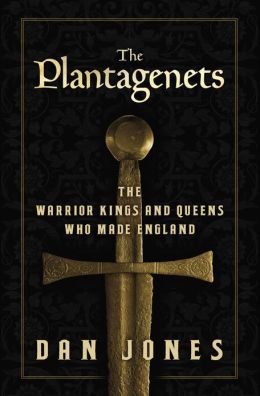
Monday, October 13, 2014
An Autobiography Agatha Christie
An Autobiography. Agatha Christie. 1977/1996. Berkley. 635 pages. [Source: Bought]
Agatha Christie's autobiography has been on my tbr pile for years now. I have looked forward to reading it for so long! I must admit the length had me a little intimidated. But once I started reading this one, I found myself completely absorbed in it. It is truly a fascinating read cover to cover. I think this one could prove appealing to a variety of readers.
Do you love history? I found Agatha Christie's Autobiography to be fascinating. This book is rich in details. Readers learn in great detail about her family and her growing up years. What Christie is describing is a way of life, and the way she saw the world around her. Her thoughts on her parents, grandparents, siblings, the family servants--the cook and the maids and nannies. You get a real sense of what it was to be a child (and teen) growing up in England in the 1890s and 1900s. She was "out" (ready to date) a year or two (or even three) before World War I began.
Are you interested in World War I? in World War II? Christie details what life was like during the war years. She was a nurse for a great part of World War I. She also assisted in dispensing drugs. She fell in love and got married during this time. During World War II she again did her part in the war effort. I believe volunteering in a hospital. She was in and around London during the War. She recalls how she rarely (if ever) took shelter during the raids because she was afraid of being buried alive under all the rubble. She had a grown daughter by that point. A daughter who fell in love, got married, and had a child during this time.
Are you a rehab addict? Christie loved looking at houses, buying houses in need of repair, fixing them up, renting them out, and selling them. She owned many properties at various points in her life. I believe the book said she owned eight during World War II. The book talks about her remodeling and redesigning houses.
Are you interested in writing, in her writing life? You'll find plenty to delight you within her autobiography. She talks about different sides of her writing life. Her novels. Her mystery novels. Her plays. Her short stories. Her poems. She talks about her mistakes and successes. Readers learn about which books she liked best and which book she really, really hated!
I want to emphasize the fact that you do not have to love mysteries in order to find this autobiography of a mystery writer fascinating! I marked so many passages that I wanted to share with you. Too many to actually share. It would overwhelm any post. So just trust me, read this one!
I will choose a quote which happens to bring to mind a certain song from Frozen.
© 2014 SukaYuka.com of SukaYuka's Book Reviews
Agatha Christie's autobiography has been on my tbr pile for years now. I have looked forward to reading it for so long! I must admit the length had me a little intimidated. But once I started reading this one, I found myself completely absorbed in it. It is truly a fascinating read cover to cover. I think this one could prove appealing to a variety of readers.
Do you love history? I found Agatha Christie's Autobiography to be fascinating. This book is rich in details. Readers learn in great detail about her family and her growing up years. What Christie is describing is a way of life, and the way she saw the world around her. Her thoughts on her parents, grandparents, siblings, the family servants--the cook and the maids and nannies. You get a real sense of what it was to be a child (and teen) growing up in England in the 1890s and 1900s. She was "out" (ready to date) a year or two (or even three) before World War I began.
Are you interested in World War I? in World War II? Christie details what life was like during the war years. She was a nurse for a great part of World War I. She also assisted in dispensing drugs. She fell in love and got married during this time. During World War II she again did her part in the war effort. I believe volunteering in a hospital. She was in and around London during the War. She recalls how she rarely (if ever) took shelter during the raids because she was afraid of being buried alive under all the rubble. She had a grown daughter by that point. A daughter who fell in love, got married, and had a child during this time.
England was at war. It had come. I can hardly express the difference between our feelings then and now. Now we might be horrified, perhaps surprised, but not really astonished that war should come, because we are all conscious that war does come; that it has come in the past and that, at any moment, it might come again. But in 1914 there had been no war for--how long? Fifty years--more? True, there had been the "Great Boer War," and skirmishes on the Northwest frontier, but those had not been wars involving one's own country--they had been large army exercises, as it were; the maintenance of power in far places. This was different--we were at war with Germany. (257)Are you interested in archaeology? in world-traveling? She spends a good deal of time recalling her travels around the world. She accompanied her first husband on an extended trip--covering several continents. (She left her (quite young) daughter with her mother and sister.) After her divorce--he fell in love with another woman and blamed her for it--she traveled on her own. On one of her trips to the Middle East, she met the man who would become her second husband. He was an archaeologist. While she did not stay with him the duration of all of his digs, she accompanied him on some, and visited on others. Readers learn that Christie LOVED, LOVED, LOVED to travel.
Are you a rehab addict? Christie loved looking at houses, buying houses in need of repair, fixing them up, renting them out, and selling them. She owned many properties at various points in her life. I believe the book said she owned eight during World War II. The book talks about her remodeling and redesigning houses.
Are you interested in writing, in her writing life? You'll find plenty to delight you within her autobiography. She talks about different sides of her writing life. Her novels. Her mystery novels. Her plays. Her short stories. Her poems. She talks about her mistakes and successes. Readers learn about which books she liked best and which book she really, really hated!
It was while I was working in the dispensary that I first conceived the idea of writing a detective story. (289)
People never stop writing to me nowadays to suggest that Miss Marple and Hercule Poirot should meet--but why should they? I am sure the would not enjoy it at all. Hercule Poirot, the complete egoist, would not like being taught his business by an elderly spinster lady. He was a professional sleuth, he would not be at home all in Miss Marple's world. No, they are both stars, and they are stars in their own right. (502)Do you love to read? Christie shares her thoughts on her favorite writers and books!
I want to emphasize the fact that you do not have to love mysteries in order to find this autobiography of a mystery writer fascinating! I marked so many passages that I wanted to share with you. Too many to actually share. It would overwhelm any post. So just trust me, read this one!
I will choose a quote which happens to bring to mind a certain song from Frozen.
One of the first things that happens when you are attracted to a man and he is to you is that extraordinary illusion that you think exactly alike about everything, that you each say the things the other has been thinking. (228)
© 2014 SukaYuka.com of SukaYuka's Book Reviews
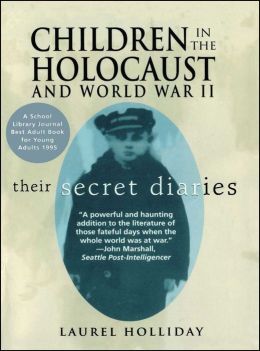
Monday, September 29, 2014
In Search of England
In Search of England. H.V. Morton. 1927/2007. Da Capo Press. 304 pages. [Source: Bought]
I enjoyed reading H.V. Morton's travel book In Search of England. If you enjoy reading leisurely, sometimes amusing, travel books with observations and stories you should consider reading it. I liked the casual, often-charming style of Morton's travel writing.
The premise of this book is simple: the author returns home to England from Palestine with one simple goal to go "in search of England." His homesickness has given him the desire to have an adventure, "I will see what lies off the beaten track. I will, as the mood takes me, go into famous towns and unknown hamlets. I will shake up the dust of kings and abbots; I will bring the knights and the cavaliers back to the roads, and once in a while, I will hear the thunder of old quarrels at earthwork and church door. If I become weary of dream and legend I will just sit and watch the ducks on a village pond, or take the horses to water: I will talk with lords and cottagers, tramps, gipsies, and dogs; I will, in fact, do anything that comes into my head as suddenly and light-heartedly as I will accept anything, and everything, that comes my way in rain or sun along the road."
In Search of England is best read with leisure and patience. Don't expect the book to be a thrilling fast-paced adventure. Expect to take your time, to read it in between other books you're reading. I enjoyed what I read. But I never enjoyed it so much that I felt the need to read the whole book in one sitting. It's not that kind of book. It's a book that you don't lose momentum on by taking a break.
(I've also read and reviewed H.V. Morton's In the Steps of the Master.)
Favorite quotes:
© 2014 SukaYuka.com of SukaYuka's Book Reviews
I enjoyed reading H.V. Morton's travel book In Search of England. If you enjoy reading leisurely, sometimes amusing, travel books with observations and stories you should consider reading it. I liked the casual, often-charming style of Morton's travel writing.
The premise of this book is simple: the author returns home to England from Palestine with one simple goal to go "in search of England." His homesickness has given him the desire to have an adventure, "I will see what lies off the beaten track. I will, as the mood takes me, go into famous towns and unknown hamlets. I will shake up the dust of kings and abbots; I will bring the knights and the cavaliers back to the roads, and once in a while, I will hear the thunder of old quarrels at earthwork and church door. If I become weary of dream and legend I will just sit and watch the ducks on a village pond, or take the horses to water: I will talk with lords and cottagers, tramps, gipsies, and dogs; I will, in fact, do anything that comes into my head as suddenly and light-heartedly as I will accept anything, and everything, that comes my way in rain or sun along the road."
In Search of England is best read with leisure and patience. Don't expect the book to be a thrilling fast-paced adventure. Expect to take your time, to read it in between other books you're reading. I enjoyed what I read. But I never enjoyed it so much that I felt the need to read the whole book in one sitting. It's not that kind of book. It's a book that you don't lose momentum on by taking a break.
(I've also read and reviewed H.V. Morton's In the Steps of the Master.)
Favorite quotes:
How often in London rain weighs on the spirit and soaks itself into the very soul; but in the country it seldom saddens you - in fact, there is a kind of country rain that exhilarates and causes you to sing aloud.
Whenever I see a small boy sail a boat I long to join in. I can never see him without wondering whether boys still have the heavenly time with boats that I have had.
I once heard a bright young man say at a party that living in Bath was rather like sitting in the lap of a dear old lady. Nobody laughed, because it is true. Bath is the dear old lady of Somerset: grey-haired, mittened, smelling faintly of lavender; one of those old ladies who have outlived a much-discussed past, and are now as obviously respectable as only old ladies with crowded pasts can be. She nurses you with a shrewd twinkle in which you detect experience mellowed by age. You look at her lovingly, wondering how she could ever have been wicked; wishing that she could grow young again for one wild evening and show you! That might wake you up!
I have been reading with avidity the medical pamphlets provided free in Bath, and I feel that my arteries become harder and harder every minute. I wonder whether the ache in my left eye is paraplegia. I have no idea what this is, but when I whisper the word something ominous seems in mid-air with bared claws. It is hardly possible that I shall escape from oxularia. (Obesity does not worry me.) Intestinal stasis? Well, perhaps! Chronic vesical catarrh? I wonder? As I glance down the long list of diseases cured at Bath - feeling a sharp twinge of fibrocitis, a swift jab of lithiasis, and an alarming touch of rhinitis - it is perfectly clear to me that the average human being's chance of seeing Bath more than once is about a hundred to one.
This story has no right in this book, and I apologize for writing it. It happened like this. I was finding my way out of Carlisle with the intention of crossing the Roman Wall that runs across England from Solway Firth to the Tyne, when I saw a signpost: `To Gretna Green io miles.' I pulled up sharply: `This,' I said, `is where I go right off the rails. I must see Gretna Green! I'll take a holiday and - go to Scotland!' How could I neglect to visit the scene of so much folly? In a few minutes I had left England behind me and was spinning along in a country which looked exactly like it, but was not. I had crossed the Border! Scotland does not begin to get `bonny' just here, but it was stimulating to realize that we were in the land of red whiskers and freckled maids, of brown trout streams, of purple moors, of great mountains, which, even in fair weather, wear white caps of cloud. At the cottage doors clustered brawny sandy-haired boys (who some day, of course, go south) and little girls who will grow up and speak the most delicious English in the world. The road runs straight from Carlisle to Gretna, as if anxious to cut off all the corners and give a sporting finish to the race. At the end of this road - and in the heart of a great crowd - I found Gretna Green.
How much romance, beauty and drama can be skipped over by a guide-book! As I was standing behind the high altar of Durham Cathedral earlier in the day I saw a large platform with one word carved in the stone: `Cuthbertus.' The guide-book says: `In the place of honour behind the high altar is the tomb of St Cuthbert, who died A.D. 687. The body still rests below....' Now as I read this bald truth my imagination went on a long journey. At the end of a tunnel of time, 1,239 years long, I saw a strange England, and I saw the hill of Durham before its great Norman church was built, before the stone Saxon church was built, before the first little reed chapel was built: just a woody hill of red sandstone, with perhaps a speckled.fawn standing in the fern. The roots of Durham go back into an England difficult to see: an England wild, bloody, savage; an England which prayed to Wotan and Thor in the ruins of Roman temples; an England beautiful at this time beyond words, because, caring nothing for the clash of kingdom on kingdom, the sound of swords and the trail of fire, Christ was walking through English meadows humbly as He walked through Galilee. The legions of Rome had returned with shaven heads bearing not a sword, but a message. Men have done deeds in the name of God which would have made Christ weep, but the story of the conversion of England to Christianity, with which Durham is so marvellously linked, is, I believe, one of the loveliest stories since the New Testament.
York is the lovely queen - as London is the powerful king - of English cities.
Men didn't just arrive with cartloads of stones and start to build a church. There is a story of faith and struggle behind every English cathedral.
I am the only person I have ever known who has been to Rutland. I admit that I have known men who have passed through Rutland in search of a fox, but I have never met a man who has deliberately set out to go to Rutland; and I do not suppose you have. Rutland - which I believe most people think is in Wales - is the smallest county in England, and the most remarkable. It is only seventeen miles long and seventeen miles wide, and it contains only two towns, Oakham and Uppingham, neither large enough to be a municipal borough. The county of Rutland, nestling like a baby in arms between Lincolnshire, Leicestershire, and Northamptonshire, is included in `The Shires'. Rutland is the only shire carved out of old Saxon Mercia not named after its county town, otherwise we would know it as Oakhamshire. On the other hand, no one would dream of calling it Rutlandshire! Tiny Rutland is the only example of an ancient Mercian division which has survived the West Saxon shire-ing of the district.
Norfolk is the most suspicious county in England. In Devon and Somerset men hit you on the back cordially; in Norfolk they look as though they would like to hit you over the head - till they size you up. You see, for centuries the north folk of East Anglia were accustomed to meet stray Vikings on lonely roads who had just waded ashore from the long boats...`Good morning, 'bor!' said the Vikings. `Which is the way to the church?' `What d'ye want to know for?' was the Norfolk retort. `Well, we thought about setting fire to it!' You will gather that Norfolk's suspicion of strangers, which is an ancient complex bitten into the East Anglian through centuries of bitter experience, is well grounded, and should never annoy the traveller... They mean well. Once they bring themselves to call you "bor' (which, I conclude, is the short for `neighbour' or, perhaps, `boy'), you can consider yourself highly complimented. In East Anglia men are either neighbours or Vikings.
© 2014 SukaYuka.com of SukaYuka's Book Reviews
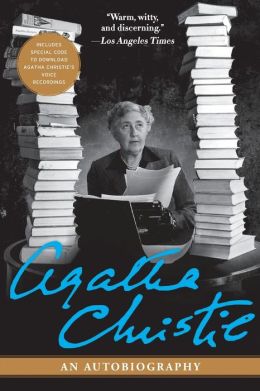
Monday, September 8, 2014
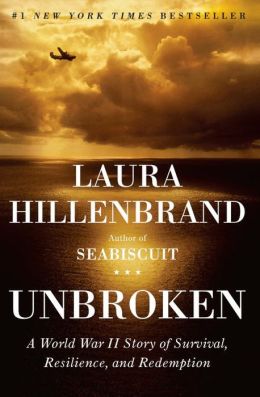
Unbroken
Unbroken. Laura Hillenbrand. 2010. Random House. 473 pages. [Source: Library]
Unbroken is an incredible read and an emotional one. It is the biography of Louis Zamperini. Readers learn about his family, his growing up years, his training and competitive years. Zamperini competed in track in the 1936 Olympics. He went home knowing that the next Olympics would be his Olympics. He spent years training for an Olympics that was never to be. The arrival of war shifts the focus to Zamperini in the military. Much of the book focuses on the war years. I suppose there are three sections that focus on the war years: his time as a bombardier, his crash and survival in the seas--this section was INTENSE, his "rescue" and time spent as a POW in Japan--and I thought the earlier section was intense! There is so much drama, so much emotion in this one. I don't mean that in a bad way at all. It's not overly dramatic or inappropriately dramatic or manipulative. The book is straightforward in its horrors. But the description of what life was like in the prisoner of war camps is vivid. Same with the descriptions of his survival at sea. For over a month, Zamperini and two others barely survived in two small rafts with essentially little to no food and water. So as I said, this is an emotional and unforgettable story of survival. What I didn't quite expect to be as emotional was the final section which focuses on his return to the States after the war is over. Those months and years where he had to get on with his life, to return to a "normal" life, his mental and emotional struggles. Since he was famous, it was made all the more difficult perhaps? As I said, I wasn't expecting that section to be as emotional as previous sections. There are a couple of scenes in this last section that just get to me.
I would recommend this one.
© 2014 SukaYuka.com of SukaYuka's Book Reviews
Unbroken is an incredible read and an emotional one. It is the biography of Louis Zamperini. Readers learn about his family, his growing up years, his training and competitive years. Zamperini competed in track in the 1936 Olympics. He went home knowing that the next Olympics would be his Olympics. He spent years training for an Olympics that was never to be. The arrival of war shifts the focus to Zamperini in the military. Much of the book focuses on the war years. I suppose there are three sections that focus on the war years: his time as a bombardier, his crash and survival in the seas--this section was INTENSE, his "rescue" and time spent as a POW in Japan--and I thought the earlier section was intense! There is so much drama, so much emotion in this one. I don't mean that in a bad way at all. It's not overly dramatic or inappropriately dramatic or manipulative. The book is straightforward in its horrors. But the description of what life was like in the prisoner of war camps is vivid. Same with the descriptions of his survival at sea. For over a month, Zamperini and two others barely survived in two small rafts with essentially little to no food and water. So as I said, this is an emotional and unforgettable story of survival. What I didn't quite expect to be as emotional was the final section which focuses on his return to the States after the war is over. Those months and years where he had to get on with his life, to return to a "normal" life, his mental and emotional struggles. Since he was famous, it was made all the more difficult perhaps? As I said, I wasn't expecting that section to be as emotional as previous sections. There are a couple of scenes in this last section that just get to me.
I would recommend this one.
© 2014 SukaYuka.com of SukaYuka's Book Reviews
Monday, August 25, 2014
The Courtiers (2010)
The Courtiers: Splendor and Intrigue in the Georgian Court At Kensington Palace. Lucy Worsley. 2010. Walker. 432 pages [Source: Bought]
She writes,
Readers learn more about George I, George II, Queen Caroline, Prince Frederick, Princess Augusta, and George III. (Did you know that George II was the grandfather not the father of George III?) Readers get public and private glimpses. The private stuff, I admit, gets messy! The royal family could be very dysfunctional! Readers get to hear all about the arguments and scandals!
I liked this one because it was rich in detail. I liked it because it was interesting. The narrative is very friendly.
© 2014 SukaYuka.com of SukaYuka's Book Reviews
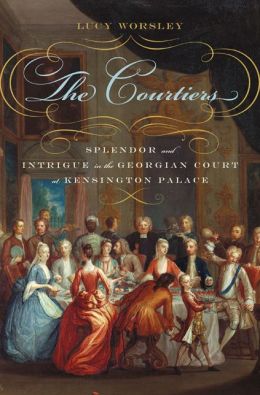
The Great Drawing Room, crammed full of courtiers, lay at the heart of the Georgian royal palace. Here the king mingled most evenings with his guests, signalling welcome with a nod and displeasure with a blank stare or, worse, a turned back. The winners and the losers of the Georgian age could calculate precisely how high they’d climbed – or how far they’d fallen – by the warmth of their reception at court. High-heeled and elegant shoes crushed into the floorboards of the drawing room the reputations of those who’d dropped out of favour, while those whose status was on the rise stood firmly in possession of their few square inches of space.I found Lucy Worsley's The Courtiers to be fascinating! The book focuses on the reigns of George I and George II of England. The book provides a behind-the-scenes look at court life during those decades. The author was inspired by the portraits found in the King's Grand Staircase.
She writes,
In this book, we’ll meet kings and queens, but also many of the people who worked to meet their most intimate needs. The Georgian royal household was staggeringly vast and complicated. The highest ranking of its members, the courtiers proper, were the ladies- and gentlemen-in-waiting.The author does a great job in sharing primary accounts of the times. These accounts can be very gossipy. One definitely gets a sense of who's who, who all the celebrities of the times were. Worsley gives us a glimpse of all of society really. I appreciated the focus on personalities. History is so interesting, so entertaining, when the focus is on individual people.
Beneath them in status were about 950 other royal servants, organised into a byzantine web of departments ranging from hairdressing to rat-catching, and extending right down to the four ‘necessary women’ who cleaned the palace and emptied the ‘necessaries’ or chamber pots.
If you want to know what these people looked like, you need only visit Kensington Palace. There, in the 1720s, the artist William Kent painted portraits of forty-five royal servants that look down upon palace visitors from the walls and ceiling of the King’s Grand Staircase.
Kensington Palace itself had existed long before the Hanoverian dynasty arrived in Britain to replace the Stuarts in 1714, yet it was also the one royal home that George I and his son really transformed and made their own. The servants there witnessed romance and violence, intrigue and infighting, and almost unimaginable acts of hatred and cruelty between members of the same family. I often find myself climbing the King’s Grand Staircase during the course of my working day, and the faces of the people populating it have always fascinated me. I’ve spent many hours studying them, wondering who they all were, and curiosity finally compelled me to try to find out. When I first began investigating their identities, I was surprised to discover that some of the names traditionally attached to the characters were wrong, while other obvious connections had been overlooked. My efforts to unearth each sitter’s true story led me on a much longer and more exciting journey than I’d expected, through caches of court papers in London, Windsor, Oxford and Suffolk. I found myself examining paintings at Buckingham Palace, gardens in Germany, and hitching lifts from kind strangers in rural Hertfordshire. My adventures both in and outside the archives led eventually to this book. I’ve selected the stories of just seven of them to illuminate the strange phenomenon of the Georgian court and to give a new perspective upon the lives of the kings, queens and princes inhabiting the rarefied court stratosphere above their heads.
Readers learn more about George I, George II, Queen Caroline, Prince Frederick, Princess Augusta, and George III. (Did you know that George II was the grandfather not the father of George III?) Readers get public and private glimpses. The private stuff, I admit, gets messy! The royal family could be very dysfunctional! Readers get to hear all about the arguments and scandals!
I liked this one because it was rich in detail. I liked it because it was interesting. The narrative is very friendly.
© 2014 SukaYuka.com of SukaYuka's Book Reviews
Monday, August 18, 2014
A Street Cat Named Bob
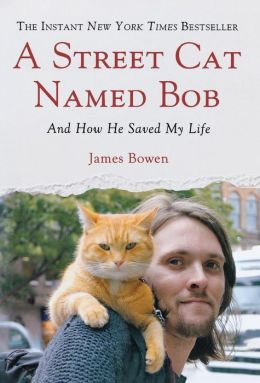
A Street Cat Named Bob: And How He Saved My Life. James Bowen. 2013. St. Martin's Press. 279 pages. [Source: Library]
A Street Cat Named Bob is a simple story in many ways. It's the story of one man and his cat: how they found each other, how they changed each other's lives, how they got to be so close, so fast. At the time the book opens, James Bowen was a street musician--a busker--and a recovering drug addict. He had taken steps to get off the street--at one time he was homeless and addicted to drugs--but the road ahead was still long and uncertain. He sees a stray cat, "a ginger tom," near his building, he sees that it could use a little help. He's injured. He's hungry. He decides to take the cat in and nurse him back to health. He didn't know it at the time, but, Bob wouldn't be going anywhere. Bob had found his home.
If Bob had been an ordinary cat, readers would never have heard of him or James Bowen. Bob would not have become a YouTube star. But ordinary doesn't exactly describe Bob.
Bob wasn't content to stay at home and let James go off busking. He wanted to go along. He wanted in on the action. James found that with a cat, he was irresistible, or rather Bob was irresistible. Wherever he and Bob went, Bob got ATTENTION and ADORATION. Busking became a LOT easier for him when Bob was there sitting on his guitar case and looking cute and adorable. People wanted to take Bob's picture. People wanted to take video. People wanted to pet him. People wanted to give him treats. People wanted to KNIT him clothes. But busking was still rough and unpredictable as the book shows. Eventually, James and Bob gave it up and pursued one of the few things possible. He was still on the streets, still out with Bob, but, now he was selling a magazine, Big Issue, instead of a song.
The book, as I mentioned, is in a way simple, a story of man meets cat. Happy cat. Happy man. But it's also got a bit of a message. And by message, I don't mean the preachy kind. It's the story of a man who went from invisible to visible. He talks about how having the cat gave him back his humanity, his dignity. The book, in a way, is about how we see others. Do we see the homeless, the poor? Do we see them or brush them aside?
© 2014 SukaYuka.com of SukaYuka's Book Reviews
A Street Cat Named Bob is a simple story in many ways. It's the story of one man and his cat: how they found each other, how they changed each other's lives, how they got to be so close, so fast. At the time the book opens, James Bowen was a street musician--a busker--and a recovering drug addict. He had taken steps to get off the street--at one time he was homeless and addicted to drugs--but the road ahead was still long and uncertain. He sees a stray cat, "a ginger tom," near his building, he sees that it could use a little help. He's injured. He's hungry. He decides to take the cat in and nurse him back to health. He didn't know it at the time, but, Bob wouldn't be going anywhere. Bob had found his home.
If Bob had been an ordinary cat, readers would never have heard of him or James Bowen. Bob would not have become a YouTube star. But ordinary doesn't exactly describe Bob.
Bob wasn't content to stay at home and let James go off busking. He wanted to go along. He wanted in on the action. James found that with a cat, he was irresistible, or rather Bob was irresistible. Wherever he and Bob went, Bob got ATTENTION and ADORATION. Busking became a LOT easier for him when Bob was there sitting on his guitar case and looking cute and adorable. People wanted to take Bob's picture. People wanted to take video. People wanted to pet him. People wanted to give him treats. People wanted to KNIT him clothes. But busking was still rough and unpredictable as the book shows. Eventually, James and Bob gave it up and pursued one of the few things possible. He was still on the streets, still out with Bob, but, now he was selling a magazine, Big Issue, instead of a song.
The book, as I mentioned, is in a way simple, a story of man meets cat. Happy cat. Happy man. But it's also got a bit of a message. And by message, I don't mean the preachy kind. It's the story of a man who went from invisible to visible. He talks about how having the cat gave him back his humanity, his dignity. The book, in a way, is about how we see others. Do we see the homeless, the poor? Do we see them or brush them aside?
© 2014 SukaYuka.com of SukaYuka's Book Reviews
Monday, August 11, 2014
The Dog Who Could Fly (2014)
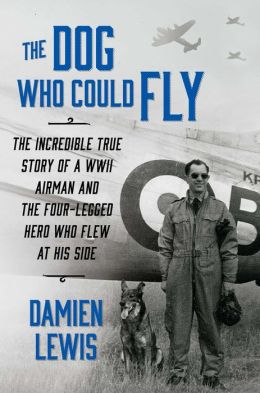
The Dog Who Could Fly: The Incredible True Story of a WWII Airman and the Four-Legged Hero Who Flew At His Side. Damien Lewis. 2014. Simon & Schuster. 304 pages. [Source: Library]
Read this book!!! Read it now! I loved, loved, loved this nonfiction biography. Damien Lewis tells the story of a RAF pilot and his dog in this new book. It is quite a remarkable story! Robert Bozdech fled Czechoslovakia before the Nazis invaded. He first joined the French in fighting the Nazis. During one of his early missions, he and another pilot crash. They seek refuge in an abandoned house. There they find a puppy. Robert didn't exactly plan on adopting this puppy for the duration, in fact, he hoped that the puppy would stay there and allow them to try for safety once darkness came. After all they are in enemy territory or close to it. But the dog had different ideas. They were destined to be together for better or worse...
Robert and Antis (the dog) end up fleeing to England and joining the RAF. Robert was one of many Czech pilots who joined the RAF during the early years of the war. Not all Czech pilots flew with a dog, however.
The book is about his experiences as a pilot, and his experiences as a dog owner. The book is very much focused on Antis! The dog was truly something special.
The story itself is compelling and fascinating. I loved learning about the RAF pilots. I loved the behind the scenes look at some of the missions. There are places this book is very intense!!! I loved the sections that were narrated by Antis. It was a great read.
© 2014 SukaYuka.com of SukaYuka's Book Reviews
Read this book!!! Read it now! I loved, loved, loved this nonfiction biography. Damien Lewis tells the story of a RAF pilot and his dog in this new book. It is quite a remarkable story! Robert Bozdech fled Czechoslovakia before the Nazis invaded. He first joined the French in fighting the Nazis. During one of his early missions, he and another pilot crash. They seek refuge in an abandoned house. There they find a puppy. Robert didn't exactly plan on adopting this puppy for the duration, in fact, he hoped that the puppy would stay there and allow them to try for safety once darkness came. After all they are in enemy territory or close to it. But the dog had different ideas. They were destined to be together for better or worse...
Robert and Antis (the dog) end up fleeing to England and joining the RAF. Robert was one of many Czech pilots who joined the RAF during the early years of the war. Not all Czech pilots flew with a dog, however.
The book is about his experiences as a pilot, and his experiences as a dog owner. The book is very much focused on Antis! The dog was truly something special.
The story itself is compelling and fascinating. I loved learning about the RAF pilots. I loved the behind the scenes look at some of the missions. There are places this book is very intense!!! I loved the sections that were narrated by Antis. It was a great read.
© 2014 SukaYuka.com of SukaYuka's Book Reviews
Monday, August 4, 2014
Birth of Britain (1956)
The Birth of Britain (History of the English Speaking People #1). Winston Churchill. 1956. 496 pages. [Source: Bought]
The Birth of Britain is the first of four volumes in Winston Churchill's History of the English Speaking People series. It begins around the time of Julius Caesar and ends on Bosworth Field with the death of Richard III.
"I write about the things in our past that appear significant to me, and I do so as one not without some experience of historical and violent events in our own time."
He later writes,
Every nation or group of nations has its own tale to tell. Knowledge of the trials and struggles is necessary to all who would comprehend the problems, perils, challenges, and opportunities which confront us to-day."
And,
"Five years is a lot. Twenty years is the horizon to most people. Fifty years is antiquity. To understand how the impact of destiny fell upon any generation of men one must first imagine their position and then apply the time-scale of our own lives. Thus nearly all changes were far less perceptible to those who lived through them from day to day than appears when the salient features of an epoch are extracted by the chronicler."
I enjoyed it. I really did. I love history. I do. And British history, well, it's my favorite and best. It's a subject that more often than not I find fascinating. Not to say that I'm never puzzled as I try to absorb new information. But for a history lover, absorbing new information is part of the fun, part of the appeal. So, yes, this one could prove challenging and complex at times. But it could also prove quite entertaining. I did feel it was more balanced than say Charles Dickens' history! If you remember, I did not think Dickens treated women fairly...at all.
Table of Contents
Book I: The Island Race
Quotes:
The Birth of Britain is the first of four volumes in Winston Churchill's History of the English Speaking People series. It begins around the time of Julius Caesar and ends on Bosworth Field with the death of Richard III.
"I write about the things in our past that appear significant to me, and I do so as one not without some experience of historical and violent events in our own time."
He later writes,
Every nation or group of nations has its own tale to tell. Knowledge of the trials and struggles is necessary to all who would comprehend the problems, perils, challenges, and opportunities which confront us to-day."
And,
"Five years is a lot. Twenty years is the horizon to most people. Fifty years is antiquity. To understand how the impact of destiny fell upon any generation of men one must first imagine their position and then apply the time-scale of our own lives. Thus nearly all changes were far less perceptible to those who lived through them from day to day than appears when the salient features of an epoch are extracted by the chronicler."
I enjoyed it. I really did. I love history. I do. And British history, well, it's my favorite and best. It's a subject that more often than not I find fascinating. Not to say that I'm never puzzled as I try to absorb new information. But for a history lover, absorbing new information is part of the fun, part of the appeal. So, yes, this one could prove challenging and complex at times. But it could also prove quite entertaining. I did feel it was more balanced than say Charles Dickens' history! If you remember, I did not think Dickens treated women fairly...at all.
Table of Contents
Book I: The Island Race
- Britannia
- Subjugation
- The Roman Province
- The Lost Island
- England
- The Vikings
- Alfred the Great
- The Saxon Dusk
- The Norman Invasion
- William the Conqueror
- Growth and Turmoil
- Henry Plantagenet
- The English Common Law
- Coeur de Lion
- Magna Carta
- On the Anvil
- The Mother of Parliaments
- King Edward I
- Bannockburn
- Scotland and Ireland
- The Long-Bow
- The Black Death
- King Richard and the Social Revolt
- The Usurpation of Henry Bolingbroke
- The Empire of Henry V
- Joan of Arc
- York and Lancaster
- The Wars of the Roses
- The Adventures of Edward IV
- Richard III
Quotes:
One morning Duke Robert of Normandy, the fourth descendant of Rollo, was riding towards his capital town, Falaise, when he saw Arlette, daughter of a tanner, washing linen in a stream. His love was instantly fired. He carried her to his castle, and, although already married to a lady of quality, lived with her for the rest of his days. To this romantic but irregular union there was born in 1027 a son, William, afterwards famous.
When death drew near his sons William and Henry came to him. William, whose one virtue had been filial fidelity, was named to succeed the Conqueror in England. The graceless Robert would rule in Normandy at last. For the youngest, Henry, there was nothing but five thousand pounds of silver, and the prophecy that he would one day reign over a united Anglo-Norman nation. This proved no empty blessing.
Few mortals have led so full a life as Henry II or have drunk so deeply of the cups of triumph and sorrow. In later life he fell out with Eleanor. When she was over fifty and he but forty-two he is said to have fallen in love with “Fair Rosamond”, a damosel of high degree and transcendent beauty, and generations have enjoyed the romantic tragedy of Queen Eleanor penetrating the protecting maze at Woodstock by the clue of a silken thread and offering her hapless supplanter the hard choice between the dagger and the poisoned cup. Tiresome investigators have undermined this excellent tale, but it certainly should find its place in any history worthy of the name.
It has often been said that Joan of Arc first raised the standard of nationalism in the Western world. But over a century before she appeared an outlaw knight, William Wallace, arising from the recesses of South-West Scotland which had been his refuge, embodied, commanded, and led to victory the Scottish nation. Edward, warring in France with piebald fortune, was forced to listen to tales of ceaseless inroads and forays against his royal peace in Scotland, hitherto deemed so sure. Wallace had behind him the spirit of a race as stern and as resolute as any bred among men. He added military gifts of a high order. Out of an unorganised mass of valiant fighting men he forged, in spite of cruel poverty and primitive administration, a stubborn, indomitable army, ready to fight at any odds and mock defeat. The structure of this army is curious. Every four men had a fifth man as leader; every nine men a tenth; every nineteen men a twentieth, and so on to every thousand; and it was agreed that the penalty for disobedience to the leader of any unit was death. Thus from the ground does freedom raise itself unconquerable.
When Henry V revived the English claims to France he opened the greatest tragedy in our medieval history. Agincourt was a glittering victory, but the wasteful and useless campaigns that followed more than outweighed its military and moral value, and the miserable, destroying century that ensued casts its black shadow upon Henry’s heroic triumph.
Out of her own mouth can she be judged in each generation. She embodied the natural goodness and valour of the human race in unexampled perfection. Unconquerable courage, infinite compassion, the virtue of the simple, the wisdom of the just, shone forth in her. She glorifies as she freed the soil from which she sprang. All soldiers should read her story and ponder on the words and deeds of the true warrior, who in one single year, though untaught in technical arts, reveals in every situation the key of victory.
It was upon this community that the agonies of the Wars of the Roses were now to fall. We must not underrate either the great issues which led to the struggle or the conscious, intense, prolonged efforts made to avert it. The need of all men and their active desire was for a strong and capable Government. Some thought this could only be obtained by aiding the lawful, established régime. Others had been for a long time secretly contending that a usurpation had been imposed upon them which had now become incompetent.
Historians have shrunk from the Wars of the Roses, and most of those who have catalogued their events have left us only a melancholy and disjointed picture. We are however in the presence of the most ferocious and implacable quarrel of which there is factual record. The individual actors were bred by generations of privilege and war, into which the feudal theme had brought its peculiar sense of honour, and to which the Papacy contributed such spiritual sanction as emerged from its rivalries and intrigues. It was a conflict in which personal hatreds reached their maximum, and from which mass effects were happily excluded. There must have been many similar convulsions in the human story. None however has been preserved with characters at once so worldly and so expensively chiselled.
History has scolded this prince of twenty-two for not possessing immediately the statecraft and addiction to business for which his office called. Edward united contrasting characters. He loved peace; he shone in war. But he loved peace for its indulgences rather than its dignity.© 2014 SukaYuka.com of SukaYuka's Book Reviews
Monday, July 21, 2014
Lost in Shangri-La
Lost in Shangri-La. Mitchell Zuckoff. 2011. HarperCollins. 384 pages. [Source: Library]
After reading Frozen in Time, I knew I wanted to read another by Mitchell Zuckoff. Lost In Shangri-La: A True Story of Survival, Adventure, and the Most Incredible Rescue Mission of World War II did not disappoint. The two books are similar in that both books are about plane crashes, survivors, and rescue attempts. Also, obviously, both books are set during World War II.
Lost In Shangri-La tells the story of Margaret Hastings, John McCollom, and Kenneth Decker. These three were the survivors of the plane crash. All three were stationed in Dutch New Guinea, all three were taking part in a little sight-seeing holiday. All hoped to see "Shangri-La" safely from above. Twenty-four were on the plane, but after the crash, after the first twenty-four hours, only three remained alive. The three are able to leave the crash site and make their way to a better place, they are hoping to get to where a passing plane, a search plane, can see them.
The book goes on to tell of the men involved in the rescuing. Hastings and Decker were suffering severe injuries and in need of immediate medical attention. A rescue could not be accomplished quickly, in just a day or two. No, it would take time and careful planning...
Survivors. Rescuers. Natives. The book is very interesting. I definitely recommend it!
© 2014 SukaYuka.com of SukaYuka's Book Reviews
After reading Frozen in Time, I knew I wanted to read another by Mitchell Zuckoff. Lost In Shangri-La: A True Story of Survival, Adventure, and the Most Incredible Rescue Mission of World War II did not disappoint. The two books are similar in that both books are about plane crashes, survivors, and rescue attempts. Also, obviously, both books are set during World War II.
Lost In Shangri-La tells the story of Margaret Hastings, John McCollom, and Kenneth Decker. These three were the survivors of the plane crash. All three were stationed in Dutch New Guinea, all three were taking part in a little sight-seeing holiday. All hoped to see "Shangri-La" safely from above. Twenty-four were on the plane, but after the crash, after the first twenty-four hours, only three remained alive. The three are able to leave the crash site and make their way to a better place, they are hoping to get to where a passing plane, a search plane, can see them.
The book goes on to tell of the men involved in the rescuing. Hastings and Decker were suffering severe injuries and in need of immediate medical attention. A rescue could not be accomplished quickly, in just a day or two. No, it would take time and careful planning...
Survivors. Rescuers. Natives. The book is very interesting. I definitely recommend it!
© 2014 SukaYuka.com of SukaYuka's Book Reviews
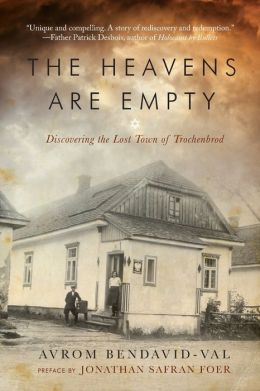
Monday, July 7, 2014
50 Children (2014)
50 Children: One Ordinary American Couple's Extraordinary Rescue Mission Into the Heart of Nazi Germany. Steven Pressman. 2014. HarperCollins. 320 pages. [Source: Library]
50 Children: One Ordinary American Couple's Extraordinary Rescue Mission Into the Heart of Nazi Germany is a must-read. It is incredibly compelling and, in my opinion, unforgettable. It tells the true story of an American Jewish couple, Gilbert and Eleanor Kraus, and how they diligently worked to save 50 Jewish children from Nazi Germany in 1939. Why 50? Well. They faced obstacles. You might think the biggest obstacles they faced were in Nazi Germany, working with the Nazi regime/government. And no doubt the obstacles they faced when they actually traveled there themselves to do the paperwork and bring over the children were many. But. What might surprise you is how BIG the obstacles were in the United States that they faced. The truth: the United States knew about the ever-increasing risks and dangers facing Jews, they knew that it was a matter of life-and-death, but they did not care. They simply did not care. They did not want Jewish immigrants. Plain and simple. There were laws in place, and those laws were kept strictly, limiting the number of immigrants, of Jewish immigrants. And loopholes had to be found, in a way, to get even those fifty into the United States. Want to know another sad truth? The couple faced opposition from Jewish Americans, from Jewish organizations in America! The book tells how some Jews worried that by bringing MORE Jews into the country, it would increase prejudice and hatred towards them.
The book tells the remarkable story of the men and women involved in this rescue mission. It tells of their determination and stubbornness, their perseverance, how they would not stop until it was accomplished, how they would not quit and say well, we tried, but, there's nothing more we can do. No, they could not turn away from what they knew to be right and good. It's an inspiring, courageous story.
I definitely recommend this one!
© 2014 SukaYuka.com of SukaYuka's Book Reviews
50 Children: One Ordinary American Couple's Extraordinary Rescue Mission Into the Heart of Nazi Germany is a must-read. It is incredibly compelling and, in my opinion, unforgettable. It tells the true story of an American Jewish couple, Gilbert and Eleanor Kraus, and how they diligently worked to save 50 Jewish children from Nazi Germany in 1939. Why 50? Well. They faced obstacles. You might think the biggest obstacles they faced were in Nazi Germany, working with the Nazi regime/government. And no doubt the obstacles they faced when they actually traveled there themselves to do the paperwork and bring over the children were many. But. What might surprise you is how BIG the obstacles were in the United States that they faced. The truth: the United States knew about the ever-increasing risks and dangers facing Jews, they knew that it was a matter of life-and-death, but they did not care. They simply did not care. They did not want Jewish immigrants. Plain and simple. There were laws in place, and those laws were kept strictly, limiting the number of immigrants, of Jewish immigrants. And loopholes had to be found, in a way, to get even those fifty into the United States. Want to know another sad truth? The couple faced opposition from Jewish Americans, from Jewish organizations in America! The book tells how some Jews worried that by bringing MORE Jews into the country, it would increase prejudice and hatred towards them.
The book tells the remarkable story of the men and women involved in this rescue mission. It tells of their determination and stubbornness, their perseverance, how they would not stop until it was accomplished, how they would not quit and say well, we tried, but, there's nothing more we can do. No, they could not turn away from what they knew to be right and good. It's an inspiring, courageous story.
I definitely recommend this one!
© 2014 SukaYuka.com of SukaYuka's Book Reviews
Monday, June 23, 2014
Frozen in Time (2013)
Frozen in Time. Mitchell Zuckoff. 2013. Harper. 391 pages. [Source: Library]
I absolutely loved Mitchell Zuckoff's Frozen in Time. Nonfiction can be compelling and fascinating and oh-so-intense. True, most people when looking for an engaging, emotional read might tend to think of fiction, but, nonfiction can prove just as addictive, just as satisfying. Such was the case with Frozen In Time. I found this nonfiction book IMPOSSIBLE to put down!
In the first chapter, readers learn how 'obscure' Greenland became suddenly important to the world:
The whole book is about survivors and saviors and would-be saviors: lives lost and saved. Just telling the story simply makes for a harsh, intense read. The intensity of the cold and hunger and the physical pain make it so. Not to mention the emotional and psychological effects of being stranded in a very very harsh environment in the middle of winter! These men weren't arctic explorers out for glory and fame, these were soldiers and pilots who were unprepared for this kind of danger.
Half the book focuses on the past, set during the winter of 1942-1943. The other half focuses on the present, a team of men and women searching for the "Grumman Duck" the rescue plane that crashed around Thanksgiving 1942. Their hope was to find it and recover the bodies of the three aboard. Two of the men were from the Coast Guard.
While I found this one to be essentially fascinating from cover to cover, I won't lie and say that the past and present narratives were equally captivating at all times. Part of the present story was chronicling the raising awareness and raising funds, searching for big sponsors, pleading their case to anyone who would listen.
This was a wonderful read! It is not as bleak as you might expect. I would definitely recommend it!!!
© 2014 SukaYuka.com of SukaYuka's Book Reviews
I absolutely loved Mitchell Zuckoff's Frozen in Time. Nonfiction can be compelling and fascinating and oh-so-intense. True, most people when looking for an engaging, emotional read might tend to think of fiction, but, nonfiction can prove just as addictive, just as satisfying. Such was the case with Frozen In Time. I found this nonfiction book IMPOSSIBLE to put down!
In the first chapter, readers learn how 'obscure' Greenland became suddenly important to the world:
All of that changed on April 9, 1940, when Nazi Germany invaded Denmark. American leaders suddenly looked with fear upon the big island so close to North America. They shuddered at the thought of Hitler building air bases and ports in Greenland, from which they imagined he might strike at Allied planes and ships in the North Atlantic. Even more frightening, Greenland was then six hours by air from New York, well within the range of German bombers. Worst of all was a doomsday scenario under which the island would be used as a Nazi staging area and springboard for a blitzkrieg, or 'lightning war,' with a ground invasion of the United States and Canada.That one chapter gives the reader some context for appreciating the whole. The book itself focuses on several plane crashes on Greenland in November 1942. The first plane crash was a C-53 Skytrooper. There were survivors. Radio contact was made. Other planes were sent to search for this missing plane. Unfortunately, one of the planes that went to search for the C-53 also crashed. This second plane crash was a B-17. All nine aboard survived--initially. But their continued survival was always a big question mark. After they finally make radio contact, and after several failed attempts at rescue by other means, another plane is sent to search for the B-17. The good news? They find the B-17! They are able to take two men aboard their plane and take them to safety. They plan to return the next day to rescue more of the men. The bad news? When they return the next day, it's a whole other story. They were not able to rescue more men. On their return flight, this rescue plane crashes. There are no survivors.
More immediately, American officials worried that Germany would establish elaborate weather stations in Greenland. The weather in Europe is "made" in Greenland; winds and currents that flow eastward over the island give birth to storms heading toward Great Britain, Norway, and beyond. Whoever knows today's weather in Greenland knows tomorrow's weather in Europe. Allied planners feared that German weather stations in Greenland could guide Luftwaffe bombing runs over Great Britain and the Continent. The battle to control Greenland wasn't a war for territory, one American official said--it was 'a war for weather.'
Concern about Greenland also reflected the fact that some wars are lost not in the field but in the factory. If the Nazis ruled Greenland, Germany would gain control of a rare and unique resource that could help determine the outcome of the war. A mine at Greenland's southwestern coast, in a place called Ivigtut, was the world's only reliable natural source of a milky white mineral called cryolite. Cryolite, a name derived from Greek words meaning "frost stone," was essential to the production of aluminum, and aluminum was essential to the production of warplanes...At less than a mile from the water, the Ivigtut mine was vulnerable to sabotage or attack...(19-20)
The whole book is about survivors and saviors and would-be saviors: lives lost and saved. Just telling the story simply makes for a harsh, intense read. The intensity of the cold and hunger and the physical pain make it so. Not to mention the emotional and psychological effects of being stranded in a very very harsh environment in the middle of winter! These men weren't arctic explorers out for glory and fame, these were soldiers and pilots who were unprepared for this kind of danger.
Half the book focuses on the past, set during the winter of 1942-1943. The other half focuses on the present, a team of men and women searching for the "Grumman Duck" the rescue plane that crashed around Thanksgiving 1942. Their hope was to find it and recover the bodies of the three aboard. Two of the men were from the Coast Guard.
While I found this one to be essentially fascinating from cover to cover, I won't lie and say that the past and present narratives were equally captivating at all times. Part of the present story was chronicling the raising awareness and raising funds, searching for big sponsors, pleading their case to anyone who would listen.
This was a wonderful read! It is not as bleak as you might expect. I would definitely recommend it!!!
© 2014 SukaYuka.com of SukaYuka's Book Reviews
Monday, June 9, 2014
A Child's History of England (1854)
A Child's History of England. Charles Dickens. 1851-1853. 390 pages. [Source: Book I Bought]
What a treat to discover Charles Dickens' A Child's History of England. I enjoyed Dickens style. I liked the action and characterization. It was also rich in description. Here's the first sentence,
I recently read Jane Austen's History of England. Dickens is definitely partial and prejudiced in his historical approach as well, even, if his book tries (with varying success) to carry more authority and substance. While I think Austen approached her work in fun with a good amount of playfulness, Dickens takes his subject much more seriously. While one can entertain doubts that Austen truly means every word she wrote in A History of England, Dickens opinions, which are even harsher in some ways, sound genuine enough. For better or worse. I don't have a problem with historians having opinions, and being passionate about the subject. But it's always nice to know that they know it's all so very subjective. Dickens and I would definitely disagree in places!!! Especially when he includes women in his history. And especially about Richard III!
Strengths:
© 2014 SukaYuka.com of SukaYuka's Book Reviews
What a treat to discover Charles Dickens' A Child's History of England. I enjoyed Dickens style. I liked the action and characterization. It was also rich in description. Here's the first sentence,
"In the old days, a long, long while ago, before Our Saviour was born on earth and lay asleep in a manger, these Islands were in the same place, and the stormy sea roared round them, just as it roars now. But the sea was not alive, then, with great ships and brave sailors, sailing to and from all parts of the world. It was very lonely. The Islands lay solitary, in the great expanse of water. The foaming waves dashed against their cliffs, and the bleak winds blew over their forests; but the winds and waves brought no adventurers to land upon the Islands, and the savage Islanders knew nothing of the rest of the world, and the rest of the world knew nothing of them."Not that every sentence is that scripted or forced. The book itself is very readable. The chapters are rarely--if ever--boring. That being said, some chapters are more exciting than others.
I recently read Jane Austen's History of England. Dickens is definitely partial and prejudiced in his historical approach as well, even, if his book tries (with varying success) to carry more authority and substance. While I think Austen approached her work in fun with a good amount of playfulness, Dickens takes his subject much more seriously. While one can entertain doubts that Austen truly means every word she wrote in A History of England, Dickens opinions, which are even harsher in some ways, sound genuine enough. For better or worse. I don't have a problem with historians having opinions, and being passionate about the subject. But it's always nice to know that they know it's all so very subjective. Dickens and I would definitely disagree in places!!! Especially when he includes women in his history. And especially about Richard III!
Strengths:
- Begins around the time of the Romans, ends around 1688 Revolution
- Covers centuries of stories and legends and facts
- Mainly focuses on royalty
- Seeks to explain big subjects simply
- Written with emphasis on characters and personalities
- Shows the subjectivity of history
Hengist and Horsa drove out the Picts and Scots; and Vortigern, being grateful to them for that service, made no opposition to their settling themselves in that part of England which is called the Isle of Thanet, or to their inviting over more of their countrymen to join them. But Hengist had a beautiful daughter named Rowena; and when, at a feast, she filled a golden goblet to the brim with wine, and gave it to Vortigern, saying in a sweet voice, ‘Dear King, thy health!’ the King fell in love with her. My opinion is, that the cunning Hengist meant him to do so, in order that the Saxons might have greater influence with him; and that the fair Rowena came to that feast, golden goblet and all, on purpose.
But the Duke showed so little inclination to do so now, that he proposed to Canute to marry his sister, the widow of The Unready; who, being but a showy flower, and caring for nothing so much as becoming a queen again, left her children and was wedded to him.
The King’s brother, Robert of Normandy, seeming quite content to be only Duke of that country; and the King’s other brother, Fine-Scholar, being quiet enough with his five thousand pounds in a chest; the King flattered himself, we may suppose, with the hope of an easy reign. But easy reigns were difficult to have in those days. [The King was William II]
Although King Stephen was, for the time in which he lived, a humane and moderate man, with many excellent qualities; and although nothing worse is known of him than his usurpation of the Crown, which he probably excused to himself by the consideration that King Henry the First was a usurper too — which was no excuse at all; the people of England suffered more in these dread nineteen years, than at any former period even of their suffering history. In the division of the nobility between the two rival claimants of the Crown, and in the growth of what is called the Feudal System (which made the peasants the born vassals and mere slaves of the Barons), every Noble had his strong Castle, where he reigned the cruel king of all the neighbouring people. Accordingly, he perpetrated whatever cruelties he chose. And never were worse cruelties committed upon earth than in wretched England in those nineteen years. The writers who were living then describe them fearfully. They say that the castles were filled with devils rather than with men; that the peasants, men and women, were put into dungeons for their gold and silver, were tortured with fire and smoke, were hung up by the thumbs, were hung up by the heels with great weights to their heads, were torn with jagged irons, killed with hunger, broken to death in narrow chests filled with sharp-pointed stones, murdered in countless fiendish ways. In England there was no corn, no meat, no cheese, no butter, there were no tilled lands, no harvests. Ashes of burnt towns, and dreary wastes, were all that the traveller, fearful of the robbers who prowled abroad at all hours, would see in a long day’s journey; and from sunrise until night, he would not come upon a home. The clergy sometimes suffered, and heavily too, from pillage, but many of them had castles of their own, and fought in helmet and armour like the barons, and drew lots with other fighting men for their share of booty. The Pope (or Bishop of Rome), on King Stephen’s resisting his ambition, laid England under an Interdict at one period of this reign; which means that he allowed no service to be performed in the churches, no couples to be married, no bells to be rung, no dead bodies to be buried. Any man having the power to refuse these things, no matter whether he were called a Pope or a Poulterer, would, of course, have the power of afflicting numbers of innocent people. That nothing might be wanting to the miseries of King Stephen’s time, the Pope threw in this contribution to the public store — not very like the widow’s contribution, as I think, when Our Saviour sat in Jerusalem over-against the Treasury, ‘and she threw in two mites, which make a farthing.’
He had four sons. Henry, now aged eighteen — his secret crowning of whom had given such offence to Thomas à Becket. Richard, aged sixteen; Geoffrey, fifteen; and John, his favourite, a young boy whom the courtiers named Lackland, because he had no inheritance, but to whom the King meant to give the Lordship of Ireland. All these misguided boys, in their turn, were unnatural sons to him, and unnatural brothers to each other. Prince Henry, stimulated by the French King, and by his bad mother, Queen Eleanor, began the undutiful history, First, he demanded that his young wife, Margaret, the French King’s daughter, should be crowned as well as he. His father, the King, consented, and it was done. It was no sooner done, than he demanded to have a part of his father’s dominions, during his father’s life. This being refused, he made off from his father in the night, with his bad heart full of bitterness, and took refuge at the French King’s Court. Within a day or two, his brothers Richard and Geoffrey followed. Their mother tried to join them — escaping in man’s clothes — but she was seized by King Henry’s men, and immured in prison, where she lay, deservedly, for sixteen years. [Henry II and his children]
Nothing can make war otherwise than horrible.
Ah! happy had it been for the Maid of Orleans, if she had resumed her rustic dress that day, and had gone home to the little chapel and the wild hills, and had forgotten all these things, and had been a good man’s wife, and had heard no stranger voices than the voices of little children!
Sir Robert Brackenbury was at that time Governor of the Tower. To him, by the hands of a messenger named John Green, did King Richard send a letter, ordering him by some means to put the two young princes to death. But Sir Robert — I hope because he had children of his own, and loved them — sent John Green back again, riding and spurring along the dusty roads, with the answer that he could not do so horrible a piece of work. The King, having frowningly considered a little, called to him Sir James Tyrrel, his master of the horse, and to him gave authority to take command of the Tower, whenever he would, for twenty-four hours, and to keep all the keys of the Tower during that space of time. Tyrrel, well knowing what was wanted, looked about him for two hardened ruffians, and chose John Dighton, one of his own grooms, and Miles Forest, who was a murderer by trade. Having secured these two assistants, he went, upon a day in August, to the Tower, showed his authority from the King, took the command for four-and-twenty hours, and obtained possession of the keys. And when the black night came he went creeping, creeping, like a guilty villain as he was, up the dark, stone winding stairs, and along the dark stone passages, until he came to the door of the room where the two young princes, having said their prayers, lay fast asleep, clasped in each other’s arms. And while he watched and listened at the door, he sent in those evil demons, John Dighton and Miles Forest, who smothered the two princes with the bed and pillows, and carried their bodies down the stairs, and buried them under a great heap of stones at the staircase foot. And when the day came, he gave up the command of the Tower, and restored the keys, and hurried away without once looking behind him; and Sir Robert Brackenbury went with fear and sadness to the princes’ room, and found the princes gone for ever.
We now come to King Henry the Eighth, whom it has been too much the fashion to call ‘Bluff King Hal,’ and ‘Burly King Harry,’ and other fine names; but whom I shall take the liberty to call, plainly, one of the most detestable villains that ever drew breath. You will be able to judge, long before we come to the end of his life, whether he deserves the character.
Her bad marriage with a worse man came to its natural end. Its natural end was not, as we shall too soon see, a natural death for her.
Henry the Eighth has been favoured by some Protestant writers, because the Reformation was achieved in his time. But the mighty merit of it lies with other men and not with him; and it can be rendered none the worse by this monster’s crimes, and none the better by any defence of them. The plain truth is, that he was a most intolerable ruffian, a disgrace to human nature, and a blot of blood and grease upon the History of England.
Mary was now crowned Queen. She was thirty-seven years of age, short and thin, wrinkled in the face, and very unhealthy. But she had a great liking for show and for bright colours, and all the ladies of her Court were magnificently dressed. She had a great liking too for old customs, without much sense in them; and she was oiled in the oldest way, and blessed in the oldest way, and done all manner of things to in the oldest way, at her coronation. I hope they did her good. She soon began to show her desire to put down the Reformed religion, and put up the unreformed one: though it was dangerous work as yet, the people being something wiser than they used to be. They even cast a shower of stones — and among them a dagger — at one of the royal chaplains who attacked the Reformed religion in a public sermon. But the Queen and her priests went steadily on.
It would seem that Philip, the Prince of Spain, was a main cause of this change in Elizabeth’s fortunes. He was not an amiable man, being, on the contrary, proud, overbearing, and gloomy; but he and the Spanish lords who came over with him, assuredly did discountenance the idea of doing any violence to the Princess. It may have been mere prudence, but we will hope it was manhood and honour. The Queen had been expecting her husband with great impatience, and at length he came, to her great joy, though he never cared much for her.
She was clever, but cunning and deceitful, and inherited much of her father’s violent temper. I mention this now, because she has been so over-praised by one party, and so over-abused by another, that it is hardly possible to understand the greater part of her reign without first understanding what kind of woman she really was... The Queen always declared in good set speeches, that she would never be married at all, but would live and die a Maiden Queen. It was a very pleasant and meritorious declaration, I suppose; but it has been puffed and trumpeted so much, that I am rather tired of it myself... It is very difficult to make out, at this distance of time, and between opposite accounts, whether Elizabeth really was a humane woman, or desired to appear so, or was fearful of shedding the blood of people of great name who were popular in the country. [About Queen Elizabeth]
‘Our cousin of Scotland’ was ugly, awkward, and shuffling both in mind and person. His tongue was much too large for his mouth, his legs were much too weak for his body, and his dull goggle-eyes stared and rolled like an idiot’s. He was cunning, covetous, wasteful, idle, drunken, greedy, dirty, cowardly, a great swearer, and the most conceited man on earth... While these events were in progress, and while his Sowship was making such an exhibition of himself, from day to day and from year to year, as is not often seen in any sty... [About King James I]
Baby Charles became King Charles the First, in the twenty-fifth year of his age. Unlike his father, he was usually amiable in his private character, and grave and dignified in his bearing; but, like his father, he had monstrously exaggerated notions of the rights of a king, and was evasive, and not to be trusted. If his word could have been relied upon, his history might have had a different end... With all my sorrow for him, I cannot agree with him that he died ‘the martyr of the people;’ for the people had been martyrs to him, and to his ideas of a King’s rights, long before.
There never were such profligate times in England as under Charles the Second. Whenever you see his portrait, with his swarthy, ill-looking face and great nose, you may fancy him in his Court at Whitehall, surrounded by some of the very worst vagabonds in the kingdom (though they were lords and ladies), drinking, gambling, indulging in vicious conversation, and committing every kind of profligate excess. It has been a fashion to call Charles the Second ‘The Merry Monarch.’ Let me try to give you a general idea of some of the merry things that were done, in the merry days when this merry gentleman sat upon his merry throne, in merry England. The first merry proceeding was — of course — to declare that he was one of the greatest, the wisest, and the noblest kings that ever shone, like the blessed sun itself, on this benighted earth. The next merry and pleasant piece of business was, for the Parliament, in the humblest manner, to give him one million two hundred thousand pounds a year, and to settle upon him for life that old disputed tonnage and poundage which had been so bravely fought for.
King James the Second was a man so very disagreeable, that even the best of historians has favoured his brother Charles, as becoming, by comparison, quite a pleasant character.As you can see, Dickens is very, very, very opinionated! A Child's History of England is an interesting and entertaining read for the history lover.
© 2014 SukaYuka.com of SukaYuka's Book Reviews
Monday, May 26, 2014
The Heavens Are Empty
The Heavens Are Empty: Discovering the Lost Town of Trochenbrod. Avrom Bendavid-Val. 2010. Pegasus. 256 pages. [Source: Library]
The Heavens Are Empty is a compelling nonfiction read. Avrom Bendavid-Val has approached the subject matter with care and attention. This book is about a town--a village--that existed for a little over hundred years, the Jewish town of Trochenbrod.
Trochenbrod did not vanish slowly but surely over decades, it's death was not natural at all. After sharing his personal story, his behind-the-scenes look at his research process, his motivation for wanting--needing--to know more, he presents his findings in four chapters. The first chapter focuses on "the first hundred years." This is a look, a glimpse, at what life was like in Trochenbrod in the nineteenth century and a little beyond. If this book has a "happy" section, this would be it. The second chapter focuses on the decades between the first world war and the start of the second world war. Again, there are no great indicators of what is to come. The third chapter covers the years 1939-1942, readers see Trochenbrod under Soviet rule and under German rule. The fourth chapter is perhaps the most haunting, the most horrific. The fourth chapter focuses on how an entire village was massacred by the Nazis. This chapter includes three incredible accounts of survivor-witnesses.
The Heavens Are Empty is rich in witness accounts. It's a difficult subject to read about, but important in my opinion.
© 2014 SukaYuka.com of SukaYuka's Book Reviews
The Heavens Are Empty is a compelling nonfiction read. Avrom Bendavid-Val has approached the subject matter with care and attention. This book is about a town--a village--that existed for a little over hundred years, the Jewish town of Trochenbrod.
Trochenbrod did not vanish slowly but surely over decades, it's death was not natural at all. After sharing his personal story, his behind-the-scenes look at his research process, his motivation for wanting--needing--to know more, he presents his findings in four chapters. The first chapter focuses on "the first hundred years." This is a look, a glimpse, at what life was like in Trochenbrod in the nineteenth century and a little beyond. If this book has a "happy" section, this would be it. The second chapter focuses on the decades between the first world war and the start of the second world war. Again, there are no great indicators of what is to come. The third chapter covers the years 1939-1942, readers see Trochenbrod under Soviet rule and under German rule. The fourth chapter is perhaps the most haunting, the most horrific. The fourth chapter focuses on how an entire village was massacred by the Nazis. This chapter includes three incredible accounts of survivor-witnesses.
The Heavens Are Empty is rich in witness accounts. It's a difficult subject to read about, but important in my opinion.
© 2014 SukaYuka.com of SukaYuka's Book Reviews
Monday, May 19, 2014
Tudor (2013)
Tudor: The Family Story. Leanda de Lisle. 2013. Public Affairs. 576 pages. [Source: Library]
Leanda de Lisle's Tudor: The Story of England's Most Notorious Royal Family was a fascinating read. It opens with a queen (Catherine of Valois, the widow of Henry V) marrying a Welsh squire (Owen Tudor); it ends with James VI of Scotland inheriting the throne of England and becoming James I of England. It covers almost (but not quite) two hundred years of English history. Henry VII. Henry VIII. Edward VI. Jane Grey. Bloody Mary. Queen Elizabeth. James I. Not to mention Mary, Queen of Scots. It focuses on the royals who reigned, but, it also pays a good amount of attention to other royals. The sisters of Henry VII. The sisters of Henry VIII. And their offspring, royal cousins. For example, Margaret Douglas and her children and grandchildren. Also Katherine Grey. It focuses on family AND politics AND religion. Also perhaps power and ambition. It avoids as much as possible drawing moral conclusions or judgments about the actions of the royal family. The book urges readers to consider everything in the context of time and culture. Kings and queens eliminated perceived threats via life imprisonment or execution. Emphasis on perceived. Guilt being a matter of perception, not of hard facts and proof.
Overall, I found this book an enjoyable and informative read. I liked the thoroughness, the evenness of the coverage. The information was concise and the narrative was well written. The pacing was well done. I would definitely recommend this one!
© 2014 SukaYuka.com of SukaYuka's Book Reviews
Leanda de Lisle's Tudor: The Story of England's Most Notorious Royal Family was a fascinating read. It opens with a queen (Catherine of Valois, the widow of Henry V) marrying a Welsh squire (Owen Tudor); it ends with James VI of Scotland inheriting the throne of England and becoming James I of England. It covers almost (but not quite) two hundred years of English history. Henry VII. Henry VIII. Edward VI. Jane Grey. Bloody Mary. Queen Elizabeth. James I. Not to mention Mary, Queen of Scots. It focuses on the royals who reigned, but, it also pays a good amount of attention to other royals. The sisters of Henry VII. The sisters of Henry VIII. And their offspring, royal cousins. For example, Margaret Douglas and her children and grandchildren. Also Katherine Grey. It focuses on family AND politics AND religion. Also perhaps power and ambition. It avoids as much as possible drawing moral conclusions or judgments about the actions of the royal family. The book urges readers to consider everything in the context of time and culture. Kings and queens eliminated perceived threats via life imprisonment or execution. Emphasis on perceived. Guilt being a matter of perception, not of hard facts and proof.
Overall, I found this book an enjoyable and informative read. I liked the thoroughness, the evenness of the coverage. The information was concise and the narrative was well written. The pacing was well done. I would definitely recommend this one!
© 2014 SukaYuka.com of SukaYuka's Book Reviews
Subscribe to:
Posts (Atom)
