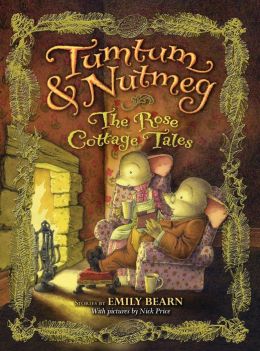
Tumtum & Nutmeg: The Rose Cottage Tales. Emily Bearn. 2010. Little Brown. 416 pages. [Source: Library]
Tumtum & Nutmeg: The Rose Cottage Tales features three stories starring some of my favorite mice: A Christmas Adventure, A Seaside Surprise, and A Circus Adventure.
In A Christmas Adventure, Tumtum and Nutmeg worry that the Mildew children (Arthur and Lucy) won't have Christmas this year unless they intervene. The mice read their letters to Santa. Arthur wants a toy car. Lucy wants a box of magic tricks. Can two mice give the children a Christmas to remember? Of course! Can two mice make an adventure of Christmas? Yes! Tumtum and Nutmeg seek to find the children presents locally. Baron Toymouse reigns over a nursery at a nearby house. (The children have long since grown up. He rules the former play room.) Baron Toymouse HAS a horrid reputation. But Tumtum and Nutmeg would risk just about anything to help the two children they've come to love so much. (They are more involved in Arthur and Lucy's upbringing then Mr. Mildew.)
In A Seaside Surprise, Tumtum and Nutmeg vacation with Arthur and Lucy (again). General Marchmouse also tags along. The two children are spending their holiday with their uncle or great-uncle. I enjoyed this adventure more than earlier ones, I believe. Or else I've come to appreciate the nonsensical General Marchmouse!
In A Circus Adventure, birthdays are celebrated. General Marchmouse has been invited to dine with Tumtum and Nutmeg. Unfortunately, he doesn't show up at his own party. Why? Well, he spies a present. It was Arthur's birthday as well. His uncle has sent a lovely present. A circus. A circus with a bus. General Marchmouse gives into temptation, he steals the bus and the ringmaster's clothes. He takes the bus for a trip outside and happens upon a circus in the meadow. A mouse circus of sorts. The book presents General Marchmouse at his best and worst. Can Tumtum and Nutmeg intervene and save all concerned?!
I was surprised that I liked/really liked ALL three stories. I was expecting to like one or maybe even two. But I really enjoyed all three stories. I was expecting to like A Circus Adventure the least, and, it may just be my favorite!!!
I would definitely recommend the six books I've read so far.
© 2014 SukaYuka.com of SukaYuka's Book Reviews
Showing posts with label 2010. Show all posts
Thursday, December 25, 2014
Sunday, December 14, 2014
My Year with Jane: A Darcy Christmas
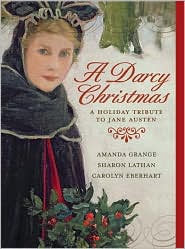
A Darcy Christmas: A Holiday Tribute to Jane Austen. By Amanda Grange, Carolyn Eberhart, and Sharon Lathan. 2010. Sourcebooks. 304 pages. [Source: Library]
I reread two of the three novellas in A Darcy Christmas. I reread Amanda Grange's Christmas Present and Carolyn Eberhart's Mr. Darcy's Christmas Carol. I chose not to reread Sharon Lathan's A Darcy Christmas. Each novella was around a hundred pages. A perfect length, in my opinion, for both stories.
Mr. Darcy's Christmas Carol is an interesting and often entertaining read starring Austen's characters and borrowing much from Charles Dickens. The premise is simple yet not completely predictable. Mr. Darcy is oh-so-happy that Bingley and Jane have married. But. He's still alone this holiday season. Unlike the original, he did not propose marriage to Elizabeth soon after Bingley and Jane's happy announcement. Georgiana, his sister, wants a new sister, a new particular sister for Christmas. His cousin has made a similar request, a particular new cousin. It isn't that Darcy doesn't still love her, want her, need her. But he's a bit proud and stubborn. So on the Christmas Eve in question, Darcy is visited by the ghost of his father who warns him of his faults and promises the visits of three spirits in the night. He adds that they will come with familiar faces. (Can you guess which "familiar face" is the ghost of Christmas future?)
I have conflicting thoughts on Mr. Darcy's Christmas Carol. On the one hand, there would be scenes and passages where I'm: it works, it really works, I can't believe this is working!!! And then perhaps just a page later, I'm: I take it back, this doesn't work at all, how am I suppose to believe this?! So there were plenty of scenes I liked. I liked how she fit it all together and made it work at least some of the time. It would be hard to fit all the great bits of Pride and Prejudice with all the great bits of A Christmas Carol. So I'm surprised it worked as well as it did actually. I like how one of my favorite scenes of A Christmas Carol is reworked from the beginning to the near-ending. That was something! I don't LOVE this one necessarily. As I mentioned, there are places where it is an almost-but-not-quite. It was a fun idea, perhaps, but not absolutely flawless. I alternated between wanting to shout at the book, and cheering. Still, it's worth reading at least once.
What did I think of Amanda Grange's Christmas Present? I liked it very much!!! I tend to like or love Amanda Grange's Austen adaptations. I think she does a great job with keeping Austen's characters as we know them and love them. She is able to capture the essence of each character. In this novella, readers get a glimpse of their second Christmases. (I believe, the two couples married in November or possibly early December?) Bingley and Jane have a baby. Elizabeth and Darcy are oh-so-close to having a baby as well. But have-her-own-way Elizabeth is insistent that even though she is due to have a baby any day, she is perfectly capable of traveling a few hours by carriage so she can spend the holidays with her family. Darcy gives in, of course. So what does a family Christmas look like? Well, this family Christmas borders on insane! Through half-a-dozen coincidences it seems, that most of the family (minus Georgiana) are brought together to share these few days. Including some you might not be expecting to see: Lady Catherine. Mr. Collins. The novella is comical. It's just a satisfying way to spend an afternoon. Sometimes a good, quick read that is light-hearted fun is just what you need.
This is my final post for "My Year With Jane." Here's a look at all the posts about Jane Austen:
I reread two of the three novellas in A Darcy Christmas. I reread Amanda Grange's Christmas Present and Carolyn Eberhart's Mr. Darcy's Christmas Carol. I chose not to reread Sharon Lathan's A Darcy Christmas. Each novella was around a hundred pages. A perfect length, in my opinion, for both stories.
Mr. Darcy's Christmas Carol is an interesting and often entertaining read starring Austen's characters and borrowing much from Charles Dickens. The premise is simple yet not completely predictable. Mr. Darcy is oh-so-happy that Bingley and Jane have married. But. He's still alone this holiday season. Unlike the original, he did not propose marriage to Elizabeth soon after Bingley and Jane's happy announcement. Georgiana, his sister, wants a new sister, a new particular sister for Christmas. His cousin has made a similar request, a particular new cousin. It isn't that Darcy doesn't still love her, want her, need her. But he's a bit proud and stubborn. So on the Christmas Eve in question, Darcy is visited by the ghost of his father who warns him of his faults and promises the visits of three spirits in the night. He adds that they will come with familiar faces. (Can you guess which "familiar face" is the ghost of Christmas future?)
I have conflicting thoughts on Mr. Darcy's Christmas Carol. On the one hand, there would be scenes and passages where I'm: it works, it really works, I can't believe this is working!!! And then perhaps just a page later, I'm: I take it back, this doesn't work at all, how am I suppose to believe this?! So there were plenty of scenes I liked. I liked how she fit it all together and made it work at least some of the time. It would be hard to fit all the great bits of Pride and Prejudice with all the great bits of A Christmas Carol. So I'm surprised it worked as well as it did actually. I like how one of my favorite scenes of A Christmas Carol is reworked from the beginning to the near-ending. That was something! I don't LOVE this one necessarily. As I mentioned, there are places where it is an almost-but-not-quite. It was a fun idea, perhaps, but not absolutely flawless. I alternated between wanting to shout at the book, and cheering. Still, it's worth reading at least once.
What did I think of Amanda Grange's Christmas Present? I liked it very much!!! I tend to like or love Amanda Grange's Austen adaptations. I think she does a great job with keeping Austen's characters as we know them and love them. She is able to capture the essence of each character. In this novella, readers get a glimpse of their second Christmases. (I believe, the two couples married in November or possibly early December?) Bingley and Jane have a baby. Elizabeth and Darcy are oh-so-close to having a baby as well. But have-her-own-way Elizabeth is insistent that even though she is due to have a baby any day, she is perfectly capable of traveling a few hours by carriage so she can spend the holidays with her family. Darcy gives in, of course. So what does a family Christmas look like? Well, this family Christmas borders on insane! Through half-a-dozen coincidences it seems, that most of the family (minus Georgiana) are brought together to share these few days. Including some you might not be expecting to see: Lady Catherine. Mr. Collins. The novella is comical. It's just a satisfying way to spend an afternoon. Sometimes a good, quick read that is light-hearted fun is just what you need.
This is my final post for "My Year With Jane." Here's a look at all the posts about Jane Austen:
- Sense and Sensibility. Jane Austen. 1811. 352 pages. [Source: Book I Bought]
- Pride and Prejudice. Jane Austen. 1813. 386 pages. [Source: Book I Bought]
- Mansfield Park. Jane Austen. 1814. 464 pages. [Source: Book I Bought]
- Emma. Jane Austen. 1815. 544 pages. [Source: Book I Own]
- Northanger Abbey. Jane Austen. 1817/1992. Everyman's Library. 288 pages. [Source: Book I Own]
- Persuasion. Jane Austen 1818/1992. Knopf Doubleday. 304 pages. [Source: Bought]
- History of England. Jane Austen. 1977. 64 pages. [Source: Book I Bought]
- Lady Susan, The Watsons, Sandition. Jane Austen. 1975. Penguin. 211 pages. [Source: Bought]
- Jane Austen's First Love. Syrie James. 2014. Berkley Trade. 400 pages. [Source: Review copy]
- Colonel Brandon's Diary. Amanda Grange. 2009. Penguin. 304 pages. [Source: Library]
- Charity Envieth Not. (George Knightley #1) Barbara Cornthwaite. 2009. CreateSpace. 260 pages. [Source: Library]
- Lend Me Leave. (George Knightley #2) Barbara Cornthwaite. 2011. CreateSpace. 246 pages. [Source: Library]
- Lizzy Bennet's Diary. Marcia Williams. 2014. Candlewick. 112 pages. [Source: Review copy]
- A Darcy Christmas: A Holiday Tribute to Jane Austen. By Amanda Grange, Carolyn Eberhart, and Sharon Lathan. 2010. Sourcebooks. 304 pages. [Source: Library]
Friday, November 7, 2014
Reread #45 Countdown
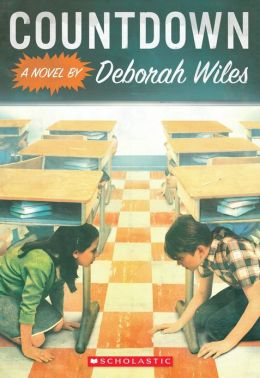
Countdown by Deborah Wiles. 2010. May 2010. Scholastic. 400 pages. [Source: Review copy]
I first read and reviewed Deborah Wiles' Countdown in 2010. I loved, loved, loved this documentary novel. If you love historical fiction, or, if you love coming of age stories, you should consider reading this one. It's a great read.
1962. October 1962. The world waits. Will there be war? Can the situation in Cuba be resolved peaceably? Or is this the beginning of the end?
Franny Chapman is the heroine of Countdown. She's eleven. She feels like she's invisible. She feels persecuted. Her sister assures her these feelings are completely normal. Franny herself isn't too sure. Franny struggles with issues big and small in this novel. Of course, there is the shared experience of worrying about the Cuban Missile Crisis. (Franny knows that everyone--adults and kids alike--is worried about this.) But of a more personal nature, Franny is struggling with several things. First, her forever-best-friend, Margie, is acting strange, different. Franny wonders if the two will be able to stay friends. It's more than just drifting apart. Margie seems to suddenly hate her. Second, Franny is worried about Uncle Otts (is he her great-uncle?). He's getting older. His mind isn't always great at distinguishing between past and present. The threat of war isn't helping matters any. He has his own way of reacting to threats and dangers. And to Franny, those ways are just EMBARRASSING, extremely embarrassing. Third, Franny finds herself in love with the boy next door. (His name is Chris. Many girls find themselves in love with Chris).
Readers see Franny at home, at school, at play. I loved meeting Franny and her family. I loved how the novel was put into context through the format itself. This documentary novel is packed with images, photographs, quotes, lyrics. (Everything from photographs of JFK and other world leaders, other politicians, other leaders to Miss America, to images from the Civil Rights movement, to a cover of a Nancy Drew novel.) So while Countdown is a novel, it also serves as a scrapbook. (You can see some of what the book looks like on the author's blog.) I think this one does a good job of capturing a time, a place in American history. It is rich in detail. (For example, I loved hearing about the wonder, the novelty of McDonald's hamburgers--for Franny and her family.)
Quotes:
© 2014 SukaYuka.com of SukaYuka's Book Reviews
I first read and reviewed Deborah Wiles' Countdown in 2010. I loved, loved, loved this documentary novel. If you love historical fiction, or, if you love coming of age stories, you should consider reading this one. It's a great read.
1962. October 1962. The world waits. Will there be war? Can the situation in Cuba be resolved peaceably? Or is this the beginning of the end?
Franny Chapman is the heroine of Countdown. She's eleven. She feels like she's invisible. She feels persecuted. Her sister assures her these feelings are completely normal. Franny herself isn't too sure. Franny struggles with issues big and small in this novel. Of course, there is the shared experience of worrying about the Cuban Missile Crisis. (Franny knows that everyone--adults and kids alike--is worried about this.) But of a more personal nature, Franny is struggling with several things. First, her forever-best-friend, Margie, is acting strange, different. Franny wonders if the two will be able to stay friends. It's more than just drifting apart. Margie seems to suddenly hate her. Second, Franny is worried about Uncle Otts (is he her great-uncle?). He's getting older. His mind isn't always great at distinguishing between past and present. The threat of war isn't helping matters any. He has his own way of reacting to threats and dangers. And to Franny, those ways are just EMBARRASSING, extremely embarrassing. Third, Franny finds herself in love with the boy next door. (His name is Chris. Many girls find themselves in love with Chris).
Readers see Franny at home, at school, at play. I loved meeting Franny and her family. I loved how the novel was put into context through the format itself. This documentary novel is packed with images, photographs, quotes, lyrics. (Everything from photographs of JFK and other world leaders, other politicians, other leaders to Miss America, to images from the Civil Rights movement, to a cover of a Nancy Drew novel.) So while Countdown is a novel, it also serves as a scrapbook. (You can see some of what the book looks like on the author's blog.) I think this one does a good job of capturing a time, a place in American history. It is rich in detail. (For example, I loved hearing about the wonder, the novelty of McDonald's hamburgers--for Franny and her family.)
Quotes:
Jo Ellen has the world's best 45-rpm record collection. Since I can remember, I've sprawled across her big bed when she's in her room doing homework or talking on the phone to her girlfriends, and Jo Ellen has let me play her records, as long as I don't get fingerprints on them or let the needle scratch them. I'm not allowed to touch her albums, but the 45s she lets me rifle through to my heart's content.
I've memorized the geography of every one of those records. "Johnny Angel" has a yellow label, "Twistin' the Night Away" has a tiny scratch at the beginning edge, and "Runaway," which is my current favorite, by my favorite singer, Del Shannon, has a heart drawn on the label--by me. Jo Ellen doesn't know this yet. (75-76)
My first concrete remembrance of church is going to revival with Miss Mattie in Halleluia, Mississippi. I like revival. It's entertaining. I know almost every hymn in the Methodist hymnal by heart, every verse, and I can play most of them on the piano.
Revival lasts two weeks, so we go every night to church, and every night there is tarnation preaching and seventeen verses of "Just As I Am," until someone walks up to the altar to be saved.
Trouble is, Halleluia is a small town, and most everybody in church has already been saved. So unless somebody new shows up, or an older kid is pushed into the aisle by his mother, we just sing and sing that hymn, until my grandmother stands up and ambles in her square shoes up the aisle with a half-exasperated look on her face, and gets saved once again. Mostly she is saving all of us, and she knows we know it. (130)
"Nobody's the favorite, Franny," she says. "Of course you're important. Just because they don't broadcast it--"
"You're not around enough to notice," I interrupt, standing up straight. "You're all grown up, you're in college--you have loads of friends--you even have new friends! You can do whatever you want."
"That's certainly not true," says Jo Ellen.
I sigh. "I just want to skip all these years in between and go off to college like you, only I want to live in the dorms like Lannie does."
"This, too, shall pass. You don't know how lucky you are, Franny. You go to a good school, your dad's an officer in the military, you eat, shop, play wherever you choose, you can go to any college you want when you grow up. You've got it made. You're privileged."
I toss the tissue in the trash. "I'm invisible around here. I could disappear for days and nobody would miss me."
Now it's Jo Ellen's turn to sigh. "Franny, you're eleven. That's the problem in a nutshell." She pulls an envelope out of her purse. "Everybody feels persecuted when they're eleven. It will pass." (85)
© 2014 SukaYuka.com of SukaYuka's Book Reviews
Friday, October 3, 2014
Reread #40 All Clear
All Clear. Connie Willis. 2010. Random House. 645 pages. [Source: Bought]
If you want a gushing review of the book, I recommend visiting my first review of the book. It is always interesting to me to see which books reread well, and which ones don't. Mood obviously comes into it. And apparently, I was not in the mood for All Clear. Perhaps because I was taking my time, instead of rushing through, I found myself less enthusiastic with the stories and characters. Too much time to think and ask questions, maybe?!
Is All Clear a disappointing novel? Yes and no. On the one hand, I certainly didn't LOVE, LOVE, LOVE it the same way I loved Doomsday Book and To Say Nothing of the Dog. Since I love reading books set during World War II, one would think that I'd almost have to love, love, love these two time travel books set in England during the war. I mean, I love time travel, I love books set during this time period. It would seem like the most natural thing in the world for me to ecstatically love Blackout and All Clear. But. That is not the case. On the other hand, the books are enjoyable enough. I certainly came to care about the characters and wanted to know what happened next. But there wasn't an urgency to KNOW if you know what I mean. I found both books less compelling than the previous time travel books. I found a handful of characters enjoyable or interesting. But I didn't LOVE any of the characters.
Would the books have been better if they'd been published as one book, perhaps an edited-down one book? Probably. Hard to say for sure. It wasn't that any one section or chapter proved boring or irrelevant. It is just that both books were so very, very thick. And the books weren't necessarily action-packed. Which I don't have a problem with actually. I prefer character-driven books typically. But essentially the books are just about three characters realizing they are trapped in the past and may never get back to the future. They think about being trapped a lot. They brainstorm. They panic. They brainstorm. They cling to hope but give into worrying.
Without any previous books in the series to compare it too, Blackout and All Clear are certainly enjoyable enough on their own. It is really only in comparison to Willis' earlier time travel novels that the novels become a bit disappointing.
I liked All Clear. I didn't love All Clear.
© 2014 SukaYuka.com of SukaYuka's Book Reviews
If you want a gushing review of the book, I recommend visiting my first review of the book. It is always interesting to me to see which books reread well, and which ones don't. Mood obviously comes into it. And apparently, I was not in the mood for All Clear. Perhaps because I was taking my time, instead of rushing through, I found myself less enthusiastic with the stories and characters. Too much time to think and ask questions, maybe?!
Is All Clear a disappointing novel? Yes and no. On the one hand, I certainly didn't LOVE, LOVE, LOVE it the same way I loved Doomsday Book and To Say Nothing of the Dog. Since I love reading books set during World War II, one would think that I'd almost have to love, love, love these two time travel books set in England during the war. I mean, I love time travel, I love books set during this time period. It would seem like the most natural thing in the world for me to ecstatically love Blackout and All Clear. But. That is not the case. On the other hand, the books are enjoyable enough. I certainly came to care about the characters and wanted to know what happened next. But there wasn't an urgency to KNOW if you know what I mean. I found both books less compelling than the previous time travel books. I found a handful of characters enjoyable or interesting. But I didn't LOVE any of the characters.
Would the books have been better if they'd been published as one book, perhaps an edited-down one book? Probably. Hard to say for sure. It wasn't that any one section or chapter proved boring or irrelevant. It is just that both books were so very, very thick. And the books weren't necessarily action-packed. Which I don't have a problem with actually. I prefer character-driven books typically. But essentially the books are just about three characters realizing they are trapped in the past and may never get back to the future. They think about being trapped a lot. They brainstorm. They panic. They brainstorm. They cling to hope but give into worrying.
Without any previous books in the series to compare it too, Blackout and All Clear are certainly enjoyable enough on their own. It is really only in comparison to Willis' earlier time travel novels that the novels become a bit disappointing.
I liked All Clear. I didn't love All Clear.
© 2014 SukaYuka.com of SukaYuka's Book Reviews
Friday, September 26, 2014
Reread #39 Blackout
Blackout. Connie Willis. 2010. Random House. 495 pages. [Source: Bought]
This year I've decided to reread all of Connie Willis' time travel books. This is the third book I've reread. I've also reread Doomsday Book and To Say Nothing of the Dog. I first reviewed Blackout in November 2010. I reviewed it again in January 2012.
Blackout is about (three) time travelers studying World War II. For the most part, the novel is set in the year 1940. However, the novel also contains other stories--almost like riddles. These small stories are set in 1944 and 1945, they feature other characters--or do they?--studying World War II: V1 Rockets and V-E Day.
Merope Ward (aka Eileen O'Reilly) has gone back to study the evacuation of children to the country. She is working as a nurse/maid on a country estate. Her assignment was for the spring of 1940.
Polly "Sebastian" (she takes on a different Shakespearean last name for every assignment) has gone back to study the London Blitz. She wants to work as a London shopgirl. Her assignment was for the fall of 1940.
Michael Davies (Mike) has gone back to observe the Dunkirk evacuation. His assignment was for the summer of 1940.
They've heard over and over again that historians cannot change the past, that historians cannot damage the timeline, that historians can merely observe past events. But what if everyone was wrong? What if time travel is dangerous and risky? Not just dangerous for the time traveler who may find himself/herself in trouble, but dangerous for everyone. What if there are negative consequences for time travel?
Eileen, Polly, and Mike will question what they've all been told when they find themselves trapped in 1940 unable to return to Oxford and their own time. Eileen missed her deadline because of a quarantine initially. Months later she tried to use her drop and failed. She thought it was because there were too many people nearby--the military has just taken possession of the estate where she worked. She remembers that Polly Churchill will be in London soon. She wants to find her and use her drop to go back. Mike was injured during the Dunkirk evacuation. An injury that kept him trapped for weeks. His drop is also impossible to use. He remembers Polly's assignment. He goes to London desperate to find another time traveler. These three reunite only to discover what Polly already knew--her own drop was damaged--she thinks because of a bomb. She was hoping that THEY were there to rescue her. Being trapped changes everything.
Blackout is an intense read. Primarily the focus is on what war was like on the homefront, what the war was like for Londoners. I definitely recommend this one. But it does come with a warning. It is only half the story. All Clear is the sequel, and, you'll want to read it to finish the story. Blackout does not stand on its own.
© 2014 SukaYuka.com of SukaYuka's Book Reviews
This year I've decided to reread all of Connie Willis' time travel books. This is the third book I've reread. I've also reread Doomsday Book and To Say Nothing of the Dog. I first reviewed Blackout in November 2010. I reviewed it again in January 2012.
Blackout is about (three) time travelers studying World War II. For the most part, the novel is set in the year 1940. However, the novel also contains other stories--almost like riddles. These small stories are set in 1944 and 1945, they feature other characters--or do they?--studying World War II: V1 Rockets and V-E Day.
Merope Ward (aka Eileen O'Reilly) has gone back to study the evacuation of children to the country. She is working as a nurse/maid on a country estate. Her assignment was for the spring of 1940.
Polly "Sebastian" (she takes on a different Shakespearean last name for every assignment) has gone back to study the London Blitz. She wants to work as a London shopgirl. Her assignment was for the fall of 1940.
Michael Davies (Mike) has gone back to observe the Dunkirk evacuation. His assignment was for the summer of 1940.
They've heard over and over again that historians cannot change the past, that historians cannot damage the timeline, that historians can merely observe past events. But what if everyone was wrong? What if time travel is dangerous and risky? Not just dangerous for the time traveler who may find himself/herself in trouble, but dangerous for everyone. What if there are negative consequences for time travel?
Eileen, Polly, and Mike will question what they've all been told when they find themselves trapped in 1940 unable to return to Oxford and their own time. Eileen missed her deadline because of a quarantine initially. Months later she tried to use her drop and failed. She thought it was because there were too many people nearby--the military has just taken possession of the estate where she worked. She remembers that Polly Churchill will be in London soon. She wants to find her and use her drop to go back. Mike was injured during the Dunkirk evacuation. An injury that kept him trapped for weeks. His drop is also impossible to use. He remembers Polly's assignment. He goes to London desperate to find another time traveler. These three reunite only to discover what Polly already knew--her own drop was damaged--she thinks because of a bomb. She was hoping that THEY were there to rescue her. Being trapped changes everything.
Blackout is an intense read. Primarily the focus is on what war was like on the homefront, what the war was like for Londoners. I definitely recommend this one. But it does come with a warning. It is only half the story. All Clear is the sequel, and, you'll want to read it to finish the story. Blackout does not stand on its own.
© 2014 SukaYuka.com of SukaYuka's Book Reviews
Tuesday, September 9, 2014
The Attenbury Emeralds
The Attenbury Emeralds. Jill Paton Walsh. 2010/2011. St. Martin's Press. 352 pages. [Source: Library]
I enjoyed reading The Attenbury Emeralds. I love Lord Peter Wimsey. I do. I love, love, love him. And I like the romance between Harriet and Lord Peter. So it was charming to revisit Lord Peter and Harriet several decades later in 1951. This mystery novel opens with a bit of storytelling. Lord Peter and Bunter team up and take turns telling Harriet about some early detecting concerning the Attenbury family jewels. The first such story begins in 1921. At one point the first mystery was solved, and I was unsure what direction the novel would take. It was only then I realized the story was far from over. For this simple case about the Attenbury emeralds was not as simple as it seemed. It was a mystery with no clear beginning or end in fact! The novel was not merely a sharing of former detecting successes, but, a new opportunity for Lord Peter to solve the case and prove he still has it.
I enjoyed spending time with Lord Peter and Bunter. I love their relationship. I do. I also enjoy seeing Lord Peter and Harriet together. And the brief glimpses we get of their children are nice enough. I really liked knowing that Lord Peter's mother, the Dowager Duchess, was still around! I do find her delightful!!!
For so many reasons this one was just a joy to read. I do recommend it for fans of Dorothy Sayers' mysteries.
© 2014 SukaYuka.com of SukaYuka's Book Reviews
I enjoyed reading The Attenbury Emeralds. I love Lord Peter Wimsey. I do. I love, love, love him. And I like the romance between Harriet and Lord Peter. So it was charming to revisit Lord Peter and Harriet several decades later in 1951. This mystery novel opens with a bit of storytelling. Lord Peter and Bunter team up and take turns telling Harriet about some early detecting concerning the Attenbury family jewels. The first such story begins in 1921. At one point the first mystery was solved, and I was unsure what direction the novel would take. It was only then I realized the story was far from over. For this simple case about the Attenbury emeralds was not as simple as it seemed. It was a mystery with no clear beginning or end in fact! The novel was not merely a sharing of former detecting successes, but, a new opportunity for Lord Peter to solve the case and prove he still has it.
I enjoyed spending time with Lord Peter and Bunter. I love their relationship. I do. I also enjoy seeing Lord Peter and Harriet together. And the brief glimpses we get of their children are nice enough. I really liked knowing that Lord Peter's mother, the Dowager Duchess, was still around! I do find her delightful!!!
For so many reasons this one was just a joy to read. I do recommend it for fans of Dorothy Sayers' mysteries.
© 2014 SukaYuka.com of SukaYuka's Book Reviews
Monday, September 8, 2014
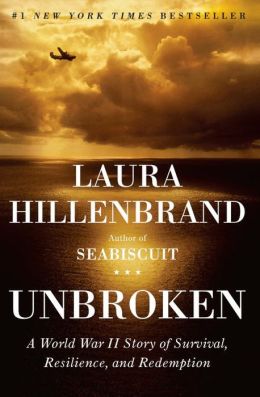
Unbroken
Unbroken. Laura Hillenbrand. 2010. Random House. 473 pages. [Source: Library]
Unbroken is an incredible read and an emotional one. It is the biography of Louis Zamperini. Readers learn about his family, his growing up years, his training and competitive years. Zamperini competed in track in the 1936 Olympics. He went home knowing that the next Olympics would be his Olympics. He spent years training for an Olympics that was never to be. The arrival of war shifts the focus to Zamperini in the military. Much of the book focuses on the war years. I suppose there are three sections that focus on the war years: his time as a bombardier, his crash and survival in the seas--this section was INTENSE, his "rescue" and time spent as a POW in Japan--and I thought the earlier section was intense! There is so much drama, so much emotion in this one. I don't mean that in a bad way at all. It's not overly dramatic or inappropriately dramatic or manipulative. The book is straightforward in its horrors. But the description of what life was like in the prisoner of war camps is vivid. Same with the descriptions of his survival at sea. For over a month, Zamperini and two others barely survived in two small rafts with essentially little to no food and water. So as I said, this is an emotional and unforgettable story of survival. What I didn't quite expect to be as emotional was the final section which focuses on his return to the States after the war is over. Those months and years where he had to get on with his life, to return to a "normal" life, his mental and emotional struggles. Since he was famous, it was made all the more difficult perhaps? As I said, I wasn't expecting that section to be as emotional as previous sections. There are a couple of scenes in this last section that just get to me.
I would recommend this one.
© 2014 SukaYuka.com of SukaYuka's Book Reviews
Unbroken is an incredible read and an emotional one. It is the biography of Louis Zamperini. Readers learn about his family, his growing up years, his training and competitive years. Zamperini competed in track in the 1936 Olympics. He went home knowing that the next Olympics would be his Olympics. He spent years training for an Olympics that was never to be. The arrival of war shifts the focus to Zamperini in the military. Much of the book focuses on the war years. I suppose there are three sections that focus on the war years: his time as a bombardier, his crash and survival in the seas--this section was INTENSE, his "rescue" and time spent as a POW in Japan--and I thought the earlier section was intense! There is so much drama, so much emotion in this one. I don't mean that in a bad way at all. It's not overly dramatic or inappropriately dramatic or manipulative. The book is straightforward in its horrors. But the description of what life was like in the prisoner of war camps is vivid. Same with the descriptions of his survival at sea. For over a month, Zamperini and two others barely survived in two small rafts with essentially little to no food and water. So as I said, this is an emotional and unforgettable story of survival. What I didn't quite expect to be as emotional was the final section which focuses on his return to the States after the war is over. Those months and years where he had to get on with his life, to return to a "normal" life, his mental and emotional struggles. Since he was famous, it was made all the more difficult perhaps? As I said, I wasn't expecting that section to be as emotional as previous sections. There are a couple of scenes in this last section that just get to me.
I would recommend this one.
© 2014 SukaYuka.com of SukaYuka's Book Reviews

Monday, August 25, 2014
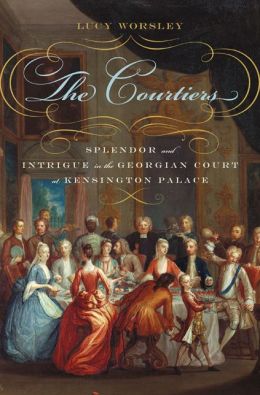
The Courtiers (2010)
The Courtiers: Splendor and Intrigue in the Georgian Court At Kensington Palace. Lucy Worsley. 2010. Walker. 432 pages [Source: Bought]
She writes,
Readers learn more about George I, George II, Queen Caroline, Prince Frederick, Princess Augusta, and George III. (Did you know that George II was the grandfather not the father of George III?) Readers get public and private glimpses. The private stuff, I admit, gets messy! The royal family could be very dysfunctional! Readers get to hear all about the arguments and scandals!
I liked this one because it was rich in detail. I liked it because it was interesting. The narrative is very friendly.
© 2014 SukaYuka.com of SukaYuka's Book Reviews
The Great Drawing Room, crammed full of courtiers, lay at the heart of the Georgian royal palace. Here the king mingled most evenings with his guests, signalling welcome with a nod and displeasure with a blank stare or, worse, a turned back. The winners and the losers of the Georgian age could calculate precisely how high they’d climbed – or how far they’d fallen – by the warmth of their reception at court. High-heeled and elegant shoes crushed into the floorboards of the drawing room the reputations of those who’d dropped out of favour, while those whose status was on the rise stood firmly in possession of their few square inches of space.I found Lucy Worsley's The Courtiers to be fascinating! The book focuses on the reigns of George I and George II of England. The book provides a behind-the-scenes look at court life during those decades. The author was inspired by the portraits found in the King's Grand Staircase.
She writes,
In this book, we’ll meet kings and queens, but also many of the people who worked to meet their most intimate needs. The Georgian royal household was staggeringly vast and complicated. The highest ranking of its members, the courtiers proper, were the ladies- and gentlemen-in-waiting.The author does a great job in sharing primary accounts of the times. These accounts can be very gossipy. One definitely gets a sense of who's who, who all the celebrities of the times were. Worsley gives us a glimpse of all of society really. I appreciated the focus on personalities. History is so interesting, so entertaining, when the focus is on individual people.
Beneath them in status were about 950 other royal servants, organised into a byzantine web of departments ranging from hairdressing to rat-catching, and extending right down to the four ‘necessary women’ who cleaned the palace and emptied the ‘necessaries’ or chamber pots.
If you want to know what these people looked like, you need only visit Kensington Palace. There, in the 1720s, the artist William Kent painted portraits of forty-five royal servants that look down upon palace visitors from the walls and ceiling of the King’s Grand Staircase.
Kensington Palace itself had existed long before the Hanoverian dynasty arrived in Britain to replace the Stuarts in 1714, yet it was also the one royal home that George I and his son really transformed and made their own. The servants there witnessed romance and violence, intrigue and infighting, and almost unimaginable acts of hatred and cruelty between members of the same family. I often find myself climbing the King’s Grand Staircase during the course of my working day, and the faces of the people populating it have always fascinated me. I’ve spent many hours studying them, wondering who they all were, and curiosity finally compelled me to try to find out. When I first began investigating their identities, I was surprised to discover that some of the names traditionally attached to the characters were wrong, while other obvious connections had been overlooked. My efforts to unearth each sitter’s true story led me on a much longer and more exciting journey than I’d expected, through caches of court papers in London, Windsor, Oxford and Suffolk. I found myself examining paintings at Buckingham Palace, gardens in Germany, and hitching lifts from kind strangers in rural Hertfordshire. My adventures both in and outside the archives led eventually to this book. I’ve selected the stories of just seven of them to illuminate the strange phenomenon of the Georgian court and to give a new perspective upon the lives of the kings, queens and princes inhabiting the rarefied court stratosphere above their heads.
Readers learn more about George I, George II, Queen Caroline, Prince Frederick, Princess Augusta, and George III. (Did you know that George II was the grandfather not the father of George III?) Readers get public and private glimpses. The private stuff, I admit, gets messy! The royal family could be very dysfunctional! Readers get to hear all about the arguments and scandals!
I liked this one because it was rich in detail. I liked it because it was interesting. The narrative is very friendly.
© 2014 SukaYuka.com of SukaYuka's Book Reviews
Friday, August 15, 2014
#33 Convenient Marriage
"Lady Winwood being denied, the morning caller inquired with some anxiety for Miss Winwood, or, in fact, for any of the young ladies. In face of the rumour which had come to her ears it would be too provoking if all the Winwood ladies were to withhold themselves."
I can't do justice in my review. I just can't. This audio book is perfect. Not practically perfect. But actually perfect. (Dare I say that Richard Armitage and Georgette Heyer go together better than chocolate and caramel?) Those five hours, well, they feel so delightfully delicious and satisfying. (An audio sample is available from Naxos Audiobooks).
The book itself is one of Georgette Heyer's best. I loved it the first time I read it. And I've appreciated it more with each rereading. (My first review is from 2009; my second review is from 2010; my third review is from 2013.) Best is a tricky word, I admit. Every single Heyer fan has strong opinions on what her "best" books are. And reading is subjective. And opinions can and do change over time. I know I struggle with having a favorite with Heyer BECAUSE whatever book I just read (by Heyer) I may just say is my favorite or best. That's one of the reasons why, last year, I wanted to challenge myself to read ALL of her romances in one year so that I could have them all fresh in my mind and decide--though not decide once and for all--which books were best, which books were definitely my favorites.
Heyer created dozens of heroes and heroines. But Lord Rule (Marcus) and Horatia (Horry) are probably among my favorite and best. They make a great couple!!! But the novel has great overall characterization. There are many characters to love! And in some cases, characters that you can't help loving-to-hate. Not many romance novels spend enough time with other characters, with "minor characters," so it is always wonderful to find.
From my first review:
We meet the Winwood family early on in The Convenient Marriage. We spy on them (in a way) as Mrs. Maulfrey comes to call--or should I say get the juicy gossip on the latest news in the family. Elizabeth, the oldest sister is upset and rightfully so. Her mother, Lady Winwood, has just agreed to an engagement between her and the rich Earl Rule. The problem? Elizabeth is in love with a poor (at least relatively speaking) soldier, a Mr. Edward Heron. Charlotte, the middle sister, doesn't see what the big deal is. After all, in her way of thinking marriage doesn't amount to much. She has no interest--so she claims--in becoming someone's wife. But the youngest sister, Horatia feels her sister's pain. And she's determined--though she stutters or stammers and has thick eyebrows--to do something to solve this dilemma. She gives Mr. Heron her word that she will not let their hearts be broken. Her plan is quite bold and quite wonderful. By that I mean it is deliciously entertaining. The first few chapters of this one are so full of promise. Especially the second and third chapters. If there was an award for the best-ever-second-chapter-in-a-book, I'd nominate The Convenient Marriage.From my second review:
However, the book soon settles down. As you can probably guess from the title, it is about a marriage--a husband and wife. Marcus Drelincourt (a.k.a. The Earl, or Marcus, or simply 'Rule') and his wife, Horatia (or Horry). And since the marriage occurs early in the book--by page sixty--the reader knows that there must be some drama in the works. And indeed there is. There's the former (and somewhat still current) mistress who's jealous and spiteful, Lady Massey. There's the cousin-who-would-inherit-it-all-if-only-Rule-would-hurry-up-and-die, Mr. Crosby Drelincourt, a cousin. And the villainous and cold-hearted Lord Lethbridge. All three of these people add to the drama--each in their own little way. All want to get revenge on Rule. All want to see the happy little couple become miserable. And oh the plotting that goes on that tries to break up this pair!
Horatia's closest friend is her brother, Pelham. Though he's a bit of a gambler--and often an unlucky one at that--he's got a good heart. I don't know if it was Heyer's intent to make him so likable, so enjoyable, but I just really liked him in spite of his flaws. He truly had his sister's best interests at heart. And she does need someone to look out for her with all the villains roaming about the town (or should that be ton) out for revenge.
None of the characters in The Convenient Marriage are perfect. All are flawed in one way or another. But the relationships are genuinely enjoyable, and are quite well done. The atmosphere of The Convenient Marriage--much like Heyer's other novels--is so rich, so detailed, so luxuriously drawn. The society. The fashion. The wit. The charm. The dangers of being unique in a world where conformity reigns. The delicate balance between being respectable, being boring, and being the Talk or Toast of the ton.
Listening to the novel (abridged though it may be) gave me a greater appreciation for Georgette Heyer. Why? While I've always appreciated Heyer's dialogue--it being a chance for her characters to be witty, charming, or romantic--I appreciate it even more having heard it performed. The wit seems funnier. The action scenes even more dramatic. The love scenes even more romantic. I wouldn't have thought it possible for one narrator to convey the chemistry between two characters--but with Armitage narrating it works really well.© 2014 SukaYuka.com of SukaYuka's Book Reviews
Thursday, June 12, 2014
You Wish (2010)
You Wish. Mandy Hubbard. 2010. Penguin. 304 pages. [Source: Review copy]
Kayla McHenry is the heroine of You Wish. It is Kayla's sixteenth birthday. If Kayla was getting to spend the day as she wished, she might not mind her birthday quite so much. But Kayla doesn't have any say in her birthday party. Her mom is an event planner. And her daughter's sixteenth birthday party is the perfect place to showcase her skills to clients and potential clients. Yes, most of the guests are strangers to Kayla, and the one person Kayla herself invited to the party oh-so-politely requests permission to not come so she can go on a date with her boyfriend. Yes, from the start readers know that Nicole is NOT best friend material.
Kayla makes yet another birthday wish as she blows out her candles. But for the first time in sixteen years, it actually comes true. For better or worse. Her wish that was granted? That ALL her previous birthday wishes will come true. A roomful of gumballs. Her rag doll coming to life. Ken as a boyfriend. The sudden ability to speak Italian fluently. Almost all of Kayla's wishes are regrettable. But the one she most regrets, OR, should I say the one she most WANTS to regret, is her wish that BEN would kiss her. Ben has been her dream guy for several years now. Nicole got up the courage to ask him out a few months ago, now he is HER boyfriend.
Kayla's life has become crazy since her sixteenth birthday. And since the wishes are coming true one day at a time, Kayla knows that almost anything could happen in the next two weeks...
I wanted to like You Wish. I did. I thought the premise was wonderful. Some of the wishes were very well done. Like when Kayla went from flat-chested to full-figured overnight. Like when KEN showed up and started following her around believing that she is Barbie. But despite all the fun, I thought the novel was very weak in terms of characterization and relationship building.
Stuff happens to Kayla because of her wishes. The end. No other characters are given any depth at all in the novel. Especially Ben and Nicole. Readers are treated to almost three hundred pages of Kayla obsessing over Ben. In a way, it was nice that readers never got to see Nicole as an actual human since the whole plot is about how Kayla and Ben are meant to be together forever. But I can't really enjoy a novel with no characterization. Yes, it was fun and playful and a quick read. But a favorite? I just can't.
© 2014 SukaYuka.com of SukaYuka's Book Reviews
Kayla McHenry is the heroine of You Wish. It is Kayla's sixteenth birthday. If Kayla was getting to spend the day as she wished, she might not mind her birthday quite so much. But Kayla doesn't have any say in her birthday party. Her mom is an event planner. And her daughter's sixteenth birthday party is the perfect place to showcase her skills to clients and potential clients. Yes, most of the guests are strangers to Kayla, and the one person Kayla herself invited to the party oh-so-politely requests permission to not come so she can go on a date with her boyfriend. Yes, from the start readers know that Nicole is NOT best friend material.
Kayla makes yet another birthday wish as she blows out her candles. But for the first time in sixteen years, it actually comes true. For better or worse. Her wish that was granted? That ALL her previous birthday wishes will come true. A roomful of gumballs. Her rag doll coming to life. Ken as a boyfriend. The sudden ability to speak Italian fluently. Almost all of Kayla's wishes are regrettable. But the one she most regrets, OR, should I say the one she most WANTS to regret, is her wish that BEN would kiss her. Ben has been her dream guy for several years now. Nicole got up the courage to ask him out a few months ago, now he is HER boyfriend.
Kayla's life has become crazy since her sixteenth birthday. And since the wishes are coming true one day at a time, Kayla knows that almost anything could happen in the next two weeks...
I wanted to like You Wish. I did. I thought the premise was wonderful. Some of the wishes were very well done. Like when Kayla went from flat-chested to full-figured overnight. Like when KEN showed up and started following her around believing that she is Barbie. But despite all the fun, I thought the novel was very weak in terms of characterization and relationship building.
Stuff happens to Kayla because of her wishes. The end. No other characters are given any depth at all in the novel. Especially Ben and Nicole. Readers are treated to almost three hundred pages of Kayla obsessing over Ben. In a way, it was nice that readers never got to see Nicole as an actual human since the whole plot is about how Kayla and Ben are meant to be together forever. But I can't really enjoy a novel with no characterization. Yes, it was fun and playful and a quick read. But a favorite? I just can't.
© 2014 SukaYuka.com of SukaYuka's Book Reviews
Wednesday, June 11, 2014
Finally (2012)
Finally (Willow Falls #2) Wendy Mass. 2010. Scholastic. 304 pages. [Source: Review copy]
Finally is a companion book to Wendy Mass's 11 Birthdays. Both books are set in Willow Falls. Both books feature "the old lady with the duck birthmark on her cheek," Angelina D'Angelo. Both books reveal Angelina's "thing" about birthdays. Did I enjoy Finally as much as I enjoyed 11 Birthdays? Probably not.
Rory Swenson, our heroine, is something. Before she turns twelve, she's a bit on the whining side. She has a list of twenty-two things she wants to do when she turns twelve. Eleven are supposedly big things; eleven are supposedly little things. Because Rory lives in Willow Falls, because Rory catches the attention of a certain old lady, none of the things on her list will go well for her...at all.
Rory truly is unlucky in Finally. All of these unlucky circumstances point back to Angelina in some ways, but not all ways. I have to believe that we still get to know the real Rory in spite of all the misfortune. She happens to learn that she's allergic to certain plant-based cosmetics. Her face swells up in a horrid reaction. She happens to learn that she's allergic to gold when she pierces her ears. Again another allergic reaction. She happens to scratch her eye when trying to get her first pair of contacts out which leads her to having to wear an eye patch until it heals. She happens to do some serious damage to one of her legs while shaving for the first time. She happens to lose her cell phone within ten or fifteen minutes of buying it with her dad. The list goes on and on and on.
Rory's humiliations catch the notice of a certain movie star, a teen celebrity, that, of course, just happens to be filming at her very school in Willow Falls. Thirty extras are needed for the film, and Rory and her friends--some new friends, some old friends--are chosen, of course.
Everything, or almost everything, that happens in Finally is for Rory's ultimate good, or, so we're led to believe. Rory's trials are transforming her life for the better. Her misfortune is bringing new friends into her life. These friendships and relationships are life-changing.
Finally was an entertaining read. In my opinion, the Willow Falls series isn't supposed to be taken seriously as realistic fiction. That was perhaps a little more obvious in 11 Birthdays with the reliving-the-same-day-eleven-times plot. But it's true here as well. The town is far from ordinary, and its citizens are touched--some more than others--by hints of spells, curses, and magic.
© 2014 SukaYuka.com of SukaYuka's Book Reviews
Finally is a companion book to Wendy Mass's 11 Birthdays. Both books are set in Willow Falls. Both books feature "the old lady with the duck birthmark on her cheek," Angelina D'Angelo. Both books reveal Angelina's "thing" about birthdays. Did I enjoy Finally as much as I enjoyed 11 Birthdays? Probably not.
Rory Swenson, our heroine, is something. Before she turns twelve, she's a bit on the whining side. She has a list of twenty-two things she wants to do when she turns twelve. Eleven are supposedly big things; eleven are supposedly little things. Because Rory lives in Willow Falls, because Rory catches the attention of a certain old lady, none of the things on her list will go well for her...at all.
Rory truly is unlucky in Finally. All of these unlucky circumstances point back to Angelina in some ways, but not all ways. I have to believe that we still get to know the real Rory in spite of all the misfortune. She happens to learn that she's allergic to certain plant-based cosmetics. Her face swells up in a horrid reaction. She happens to learn that she's allergic to gold when she pierces her ears. Again another allergic reaction. She happens to scratch her eye when trying to get her first pair of contacts out which leads her to having to wear an eye patch until it heals. She happens to do some serious damage to one of her legs while shaving for the first time. She happens to lose her cell phone within ten or fifteen minutes of buying it with her dad. The list goes on and on and on.
Rory's humiliations catch the notice of a certain movie star, a teen celebrity, that, of course, just happens to be filming at her very school in Willow Falls. Thirty extras are needed for the film, and Rory and her friends--some new friends, some old friends--are chosen, of course.
Everything, or almost everything, that happens in Finally is for Rory's ultimate good, or, so we're led to believe. Rory's trials are transforming her life for the better. Her misfortune is bringing new friends into her life. These friendships and relationships are life-changing.
Finally was an entertaining read. In my opinion, the Willow Falls series isn't supposed to be taken seriously as realistic fiction. That was perhaps a little more obvious in 11 Birthdays with the reliving-the-same-day-eleven-times plot. But it's true here as well. The town is far from ordinary, and its citizens are touched--some more than others--by hints of spells, curses, and magic.
© 2014 SukaYuka.com of SukaYuka's Book Reviews
Monday, May 26, 2014
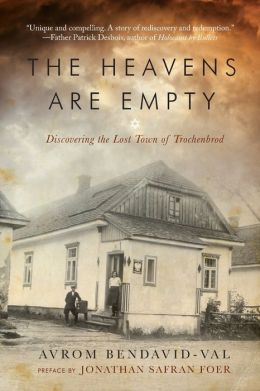
The Heavens Are Empty
The Heavens Are Empty: Discovering the Lost Town of Trochenbrod. Avrom Bendavid-Val. 2010. Pegasus. 256 pages. [Source: Library]
The Heavens Are Empty is a compelling nonfiction read. Avrom Bendavid-Val has approached the subject matter with care and attention. This book is about a town--a village--that existed for a little over hundred years, the Jewish town of Trochenbrod.
Trochenbrod did not vanish slowly but surely over decades, it's death was not natural at all. After sharing his personal story, his behind-the-scenes look at his research process, his motivation for wanting--needing--to know more, he presents his findings in four chapters. The first chapter focuses on "the first hundred years." This is a look, a glimpse, at what life was like in Trochenbrod in the nineteenth century and a little beyond. If this book has a "happy" section, this would be it. The second chapter focuses on the decades between the first world war and the start of the second world war. Again, there are no great indicators of what is to come. The third chapter covers the years 1939-1942, readers see Trochenbrod under Soviet rule and under German rule. The fourth chapter is perhaps the most haunting, the most horrific. The fourth chapter focuses on how an entire village was massacred by the Nazis. This chapter includes three incredible accounts of survivor-witnesses.
The Heavens Are Empty is rich in witness accounts. It's a difficult subject to read about, but important in my opinion.
© 2014 SukaYuka.com of SukaYuka's Book Reviews
The Heavens Are Empty is a compelling nonfiction read. Avrom Bendavid-Val has approached the subject matter with care and attention. This book is about a town--a village--that existed for a little over hundred years, the Jewish town of Trochenbrod.
Trochenbrod did not vanish slowly but surely over decades, it's death was not natural at all. After sharing his personal story, his behind-the-scenes look at his research process, his motivation for wanting--needing--to know more, he presents his findings in four chapters. The first chapter focuses on "the first hundred years." This is a look, a glimpse, at what life was like in Trochenbrod in the nineteenth century and a little beyond. If this book has a "happy" section, this would be it. The second chapter focuses on the decades between the first world war and the start of the second world war. Again, there are no great indicators of what is to come. The third chapter covers the years 1939-1942, readers see Trochenbrod under Soviet rule and under German rule. The fourth chapter is perhaps the most haunting, the most horrific. The fourth chapter focuses on how an entire village was massacred by the Nazis. This chapter includes three incredible accounts of survivor-witnesses.
The Heavens Are Empty is rich in witness accounts. It's a difficult subject to read about, but important in my opinion.
© 2014 SukaYuka.com of SukaYuka's Book Reviews
Subscribe to:
Posts (Atom)