Showing posts with label family. Show all posts

Wednesday, November 26, 2014

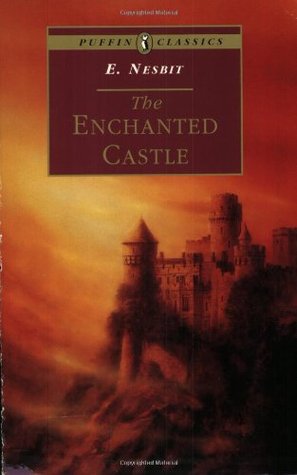
The Enchanted Castle (1907)

The Enchanted Castle. E. Nesbit. 1907. 291 pages. [Source: Bought]

I really enjoyed reading The Enchanted Castle by E. Nesbit. I had started this one at least twice before, but, I had never been in the right mood to properly appreciate this children's fantasy novel. I was in the right mood this time.

If you enjoy adventure fantasy novels, you'll probably enjoy spending time with Jerry, Jimmy, Cathy, and Mabel. Jerry, Jimmy, and Cathy are siblings. When these three first meet Mabel, they mistake her for a princess. At the time, they are having an adventure looking for an enchanted castle. So finding a princess within that castle makes complete sense! Mabel is actually the niece of the housekeeper. She confesses that a bit later on. That first meeting is magical enough! She shows them a secret room behind a paneled wall. This room is fabulous if you're looking for treasures. While in the room, the children find (and pick up) a ring. This ring is central to all their further adventures. And Mabel is their new best friend. She's always part of the group.

This one was a very fun read. It reminded me of why I love E. Nesbit in the first place. It wasn't a perfect novel. But flaws and all, it worked well enough for me. It was a joy to read of their adventures and misadventures. The ring gets them into trouble more often than it gets them out of trouble.

Favorite quotes:
“Go then, and be not more naughty than you must.”
“If we were in a book it would be an enchanted castle — certain to be,” said Kathleen. “It is an enchanted castle,” said Gerald in hollow tones. “But there aren’t any.” Jimmy was quite positive. “How do you know? Do you think there’s nothing in the world but what you’ve seen?” His scorn was crushing.
“I think magic went out when people began to have steam-engines,” Jimmy insisted, “and newspapers, and telephones and wireless telegraphing.” “Wireless is rather like magic when you come to think of it,” said Gerald. “Oh, that sort!” Jimmy’s contempt was deep. “Perhaps there’s given up being magic because people didn’t believe in it any more,” said Kathleen. “Well, don’t let’s spoil the show with any silly old not believing,” said Gerald with decision. “I’m going to believe in magic as hard as I can. This is an enchanted garden, and that’s an enchanted castle, and I’m jolly well going to explore.
“I am so hungry!” said Jimmy. “Why didn’t you say so before?” asked Gerald bitterly. “I wasn’t before.” “Then you can’t be now. You don’t get hungry all in a minute. What’s that?”
“Well, then — a detective.” “There’s got to be something to detect before you can begin detectiving,” said Mabel. “Detectives don’t always detect things,” said Jimmy, very truly. “If I couldn’t be any other kind I’d be a baffled detective. You could be one all right, and have no end of larks just the same. Why don’t you do it?” “It’s exactly what I am going to do,” said Gerald. “We’ll go round by the police-station and see what they’ve got in the way of crimes.” They did, and read the notices on the board outside. Two dogs had been lost, a purse, and a portfolio of papers “of no value to any but the owner.” Also Houghton Grange had been broken into and a quantity of silver plate stolen. “Twenty pounds reward offered for any information that may lead to the recovery of the missing property.”
You know pretty well what Beauty and the Beast would be like acted by four children who had spent the afternoon in arranging their costumes and so had left no time for rehearsing what they had to say. Yet it delighted them, and it charmed their audience. There is a curtain, thin as gossamer, clear as glass, strong as iron, that hangs for ever between the world of magic and the world that seems to us to be real. And when once people have found one of the little weak spots in that curtain which are marked by magic rings, and amulets, and the like, almost anything may happen.And what more can any play do, even Shakespeare’s?

© 2014 SukaYuka.com of SukaYuka's Book Reviews

Tuesday, November 18, 2014

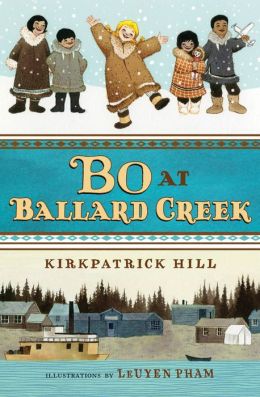
Bo at Ballard Creek (2013)

Bo at Ballard Creek. Kirkpatrick Hill. Illustrated by LeUyen Pham. 2013. Henry Holt. 288 pages. [Source: Library]

I loved Bo at Ballard Creek. Did I love, love, love it? I'm not sure. Time will tell. I certainly loved many things about it.

I loved the setting, that it's historical fiction, set in Alaska, set in a small mining town, in the 1920s. I loved the perspective, Bo, the heroine is young adopted girl. For most of the book, she's too young to attend school. So perhaps in the four to six range throughout the book. Readers meet Bo, her two fathers Jack Jackson and Arvid Ivorsen. (One is black. One is Swedish.) Readers meet the whole community: other miners and former miners mostly men, of course, all ages and ethnicities; Eskimo families, and the dance-hall girls. I loved the narration and the amount of detail. I love that the book covers a whole year, if not a little more. So readers see the community in detail throughout the year. One gets a real sense of what was like on a day-to-day, week-to-week, month-to-month basis. On ordinary days. On special days. Special days being not just holidays, but, also days where airplanes stop and land, the days when supplies arrive. I love the vignettes of the whole town. I loved the strong sense of family and community in this one. It just felt right from cover to cover. I also loved the illustrations. I'll be honest. It was seeing LeUyen Pham's name that made me pick this one up. That being said, I may have loved her illustrations. But I also LOVED the text itself.

If the book lacks anything, however, it may be a strong plot. Think Little House In the Big Woods. The chapters are strong in description and characterization and little happenings. I loved it. I did. I loved meeting Bo. I loved some of the relationships in the book.

© 2014 SukaYuka.com of SukaYuka's Book Reviews
Friday, November 7, 2014

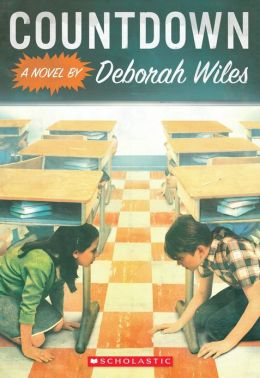
Reread #45 Countdown

Countdown by Deborah Wiles. 2010. May 2010. Scholastic. 400 pages. [Source: Review copy]

I first read and reviewed Deborah Wiles' Countdown in 2010. I loved, loved, loved this documentary novel. If you love historical fiction, or, if you love coming of age stories, you should consider reading this one. It's a great read.

1962. October 1962. The world waits. Will there be war? Can the situation in Cuba be resolved peaceably? Or is this the beginning of the end?

Franny Chapman is the heroine of Countdown. She's eleven. She feels like she's invisible. She feels persecuted. Her sister assures her these feelings are completely normal. Franny herself isn't too sure. Franny struggles with issues big and small in this novel. Of course, there is the shared experience of worrying about the Cuban Missile Crisis. (Franny knows that everyone--adults and kids alike--is worried about this.) But of a more personal nature, Franny is struggling with several things. First, her forever-best-friend, Margie, is acting strange, different. Franny wonders if the two will be able to stay friends. It's more than just drifting apart. Margie seems to suddenly hate her. Second, Franny is worried about Uncle Otts (is he her great-uncle?). He's getting older. His mind isn't always great at distinguishing between past and present. The threat of war isn't helping matters any. He has his own way of reacting to threats and dangers. And to Franny, those ways are just EMBARRASSING, extremely embarrassing. Third, Franny finds herself in love with the boy next door. (His name is Chris. Many girls find themselves in love with Chris).

Readers see Franny at home, at school, at play. I loved meeting Franny and her family. I loved how the novel was put into context through the format itself. This documentary novel is packed with images, photographs, quotes, lyrics. (Everything from photographs of JFK and other world leaders, other politicians, other leaders to Miss America, to images from the Civil Rights movement, to a cover of a Nancy Drew novel.) So while Countdown is a novel, it also serves as a scrapbook. (You can see some of what the book looks like on the author's blog.) I think this one does a good job of capturing a time, a place in American history. It is rich in detail. (For example, I loved hearing about the wonder, the novelty of McDonald's hamburgers--for Franny and her family.)

Quotes:
Jo Ellen has the world's best 45-rpm record collection. Since I can remember, I've sprawled across her big bed when she's in her room doing homework or talking on the phone to her girlfriends, and Jo Ellen has let me play her records, as long as I don't get fingerprints on them or let the needle scratch them. I'm not allowed to touch her albums, but the 45s she lets me rifle through to my heart's content.
I've memorized the geography of every one of those records. "Johnny Angel" has a yellow label, "Twistin' the Night Away" has a tiny scratch at the beginning edge, and "Runaway," which is my current favorite, by my favorite singer, Del Shannon, has a heart drawn on the label--by me. Jo Ellen doesn't know this yet. (75-76)
 My first concrete remembrance of church is going to revival with Miss Mattie in Halleluia, Mississippi. I like revival. It's entertaining. I know almost every hymn in the Methodist hymnal by heart, every verse, and I can play most of them on the piano.
Revival lasts two weeks, so we go every night to church, and every night there is tarnation preaching and seventeen verses of "Just As I Am," until someone walks up to the altar to be saved.
Trouble is, Halleluia is a small town, and most everybody in church has already been saved. So unless somebody new shows up, or an older kid is pushed into the aisle by his mother, we just sing and sing that hymn, until my grandmother stands up and ambles in her square shoes up the aisle with a half-exasperated look on her face, and gets saved once again. Mostly she is saving all of us, and she knows we know it. (130)
"Nobody's the favorite, Franny," she says. "Of course you're important. Just because they don't broadcast it--"
"You're not around enough to notice," I interrupt, standing up straight. "You're all grown up, you're in college--you have loads of friends--you even have new friends! You can do whatever you want."
"That's certainly not true," says Jo Ellen.
I sigh. "I just want to skip all these years in between and go off to college like you, only I want to live in the dorms like Lannie does."
"This, too, shall pass. You don't know how lucky you are, Franny. You go to a good school, your dad's an officer in the military, you eat, shop, play wherever you choose, you can go to any college you want when you grow up. You've got it made. You're privileged."
I toss the tissue in the trash. "I'm invisible around here. I could disappear for days and nobody would miss me."
Now it's Jo Ellen's turn to sigh. "Franny, you're eleven. That's the problem in a nutshell." She pulls an envelope out of her purse. "Everybody feels persecuted when they're eleven. It will pass." (85)

© 2014 SukaYuka.com of SukaYuka's Book Reviews
Thursday, November 6, 2014

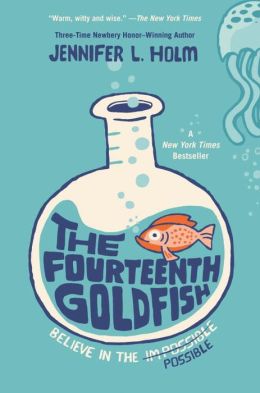
The Fourteenth Goldfish (2014)

The Fourteenth Goldfish. Jennifer L. Holm. 2014. Random House. 208 pages. [Source: Library]

Ellie gets the unique opportunity to hang out with her grandfather, Melvin, when his scientific experiments succeed. Ellie has grown up knowing--observing--that her mom and her grandfather don't get along very well. But she'll get the chance to know him much, much better when his experiment reverses the aging process and he becomes 13 again. They'll live together. They'll go to school together. It would be hard to judge who has a harder time: Ellie, Melvin, or the mom/daughter. (Though my guess would be the mom/daughter. By all appearances, he's a kid, he's living in her house! She has to make sure he's doing his homework! But he is still very much her father. He has OPINIONS on everything she does.)

Ellie is growing apart from her best, best friend. Her friend has some new interests. Ellie has new interests as well. Ellie is meeting people she likes and though she hasn't made a new best friend overnight, Ellie is learning that change can be good, that meeting new people can be a good thing. One of Ellie's new interests is science. She really enjoys it! And she loves hanging out with her grandfather and their new friends. (Yes, they have friends in common.)

I liked it. I did. I am on the fence on if I liked it or loved it. It was a quick read that I enjoyed very much.
© 2014 SukaYuka.com of SukaYuka's Book Reviews
Wednesday, November 5, 2014

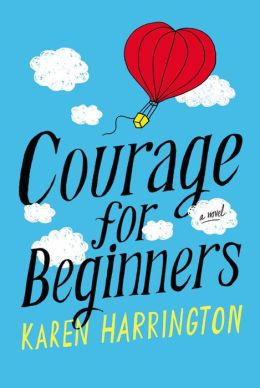
Courage for Beginners (2014)

Courage for Beginners. Karen Harrington. 2014. Little, Brown. 304 pages. [Source: Library]

I would definitely recommend Karen Harrington's Courage for Beginners. This middle grade novel is a compelling coming of age novel. It would pair well, I think, with The Swift Boys and Me by Kody Keplinger.

Mysti Murphy is a seventh grader with special challenges. Her mom is agoraphobic; for as long as Mysti can remember her mom has been that way. Her dad does it all: all the driving, all the errands. But the fall of her seventh grade year, her dad has an accident, and ends up in the hospital in a coma for several months. The guy who has been her best friend--by all appearances--decides to drop her. She won't fit in with his new "hipster" persona. He's decided that by wearing a hipster hat and being a huge jerk, he'll become more popular with people who count. Mysti definitely doesn't count. At least when there's a small chance that others are watching. Mysti struggles. No doubt. The book is about her growing pains--everything going all wrong at once. But does she have the strength and courage to face her problems and cope with them?

I enjoyed this one. I enjoyed spending time with Mysti. I was very glad that she got to make some new friends. I thought there was a nice balance of scenes between home and school.
© 2014 SukaYuka.com of SukaYuka's Book Reviews
Friday, September 5, 2014

Reread #36 Blue Plate Special

Blue Plate Special by Michelle D. Kwasney. 2009. Chronicle Books. 366 pages. [Source: Library]


I originally reviewed Blue Plate Special in February of 2010. I loved it. I loved it the same way that I love Speak by Laurie Halse Anderson.

Blue Plate Special is a compelling, dramatic story about three daughters. (John Mayer's "Daughters" kept coming to mind. For better or worse. Also Atticus' advice to Scout: "if you can learn a simple trick, Scout, you'll get along a lot better with all kinds of folks. You never really understand a person until you consider things from his point of view--until you climb into his skin and walk around in it.") The book is very much character-driven. I don't know that I'd go so far to say that it is one of those "what it means to be human" books, but, if not it comes very close.

All of the characters are flawed; not one person within the pages of this book is perfect or flawless. Relationships in Blue Plate Special are messy. Readers meet three heroines. Madeline (1977-78). Desiree (1993-1994). Ariel (2009). Their stories are told in alternating chapters. I believe all the heroines are around fifteen to sixteen. As you'd expect, in some ways their stories are the same, yet, in other ways all three are different. All, for example, are coming-of-age stories. All focus on first love, or first significant romantic relationships. All are bittersweet, but in different ways. But each heroine is unique. The book is great at complexities. Of seeing the whole person from different angles, which made it easier perhaps to take Atticus' advice. I cared about all three.

I definitely would recommend this one.

© 2014 SukaYuka.com of SukaYuka's Book Reviews

Friday, August 22, 2014

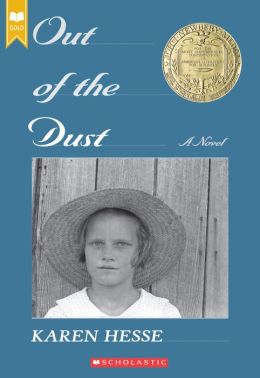
Reread #34 Out of the Dust

Out of the Dust. Karen Hesse. 1997. Scholastic. 240 pages. [Source: Bought]

I first reviewed Out of the Dust in March 2008. Out of the Dust is a historical verse novel that I likely would have avoided at all costs as a kid. It is set in Oklahoma during the Dust Bowl and Depression.

Billie Jo is our piano-playing heroine. Life was hard enough for Billie Jo and her family BEFORE the tragic accident. Multiple crop failures in a row. Worry and doubt weighing down whole communities, and, not without cause. But after the accident, things are even worse.

Added to despair and doubt is anger and bitterness and regret. Billie Jo doesn't know how to talk to her father anymore. She doesn't know how to be in the same house with him. Things are just off between them. Both are suffering souls. Both have needs that aren't being met. Both need time to heal at the very least.

The novel spans two years, 1934 and 1935. These two years are very hard emotionally for almost all the characters. Out of the Dust is a great coming-of-age novel. I think I liked it even more the second time.

© 2014 SukaYuka.com of SukaYuka's Book Reviews
Thursday, August 21, 2014

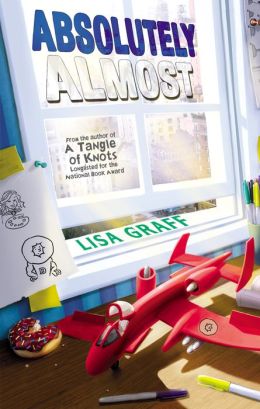
Absolutely Almost (2014)

Absolutely Almost. Lisa Graff. 2014. Penguin. 304 pages [Source: Library]

I loved Absolutely Almost. I think I loved it at least as much as Umbrella Summer. Maybe even a little bit more. I don't know. Time will tell. I don't actually have to choose between the two, right?! I can LOVE two GREAT books by one very talented middle grade author, can't I?!

Albie is the protagonist of Absolutely Almost. His narration gives the book a just right feel. It's a satisfying read about a boy who struggles with meeting expectations: his parents, his grandparents, his teachers, his own. He's never good or great, he's always only almost. Almost good at this or that. Almost ready for this or that. And this oppressive almost gets him down now and then. Not always, mind you. I don't want to give the impression that Albie is sad and depressed and unable to cope with life. Albie is more than capable of having a good time, of enjoying life, of appreciating the world around him.

I really appreciated Graff's characterization. Not only do readers come to love (in some cases I imagine love, love, love) Albie, but, all the characters are well written or well developed. Albie's parents at times seem to be disconnected, out of touch with who their son is, what life is like for him, what he wants, what he needs. But just when I get ready to dismiss them as neglectful or clueless, something would happen that would make me pause and reconsider. Readers also get to know several other characters: his nanny, Calista, his math teacher, Mr. Clifton, and his friend, Betsy. For the record, he does have more than one friend. But Betsy is his new friend, his first friend that he makes at his new school. It is their friendship that is put to the test in the novel. It is his relationship with Betsy that allows for him to progress a bit emotionally. If that makes sense. (So yes, I know that his best-best friend is Erlan. But Erlan has been his friend for as long as he can remember, probably since they were toddlers. He's completely comfortable in that friendship. Their friendship does come into the novel here and there. But for me, it wasn't the most interesting aspect of the novel.)

I loved the setting of Absolutely Almost. I loved how we get to spend time with Albie in school and out of school. I loved how we get to see him in and out of his comfort zone. I loved that we got to see his home life. We got to see for ourselves how he interacts with parents. I love how Albie is able to love his parents even if they don't really make him top priority. Especially his Dad. Albie's need for his Dad's attention, the right kind of attention, can be FELT. Albie held onto hope that one day his Dad would find time to spend with him, that one day his Dad would see him--really see him. There were moments that hope lessened a bit as Albie gave into his emotions-of-the-moment. But Albie's love for his dad always won out at the end. His hope would return.

The writing. I loved it. I did. I think the quality of the writing was amazing. There were chapters that just got to me. Their were paragraphs that just resonated with me. The writing just felt TRUE.

Absolutely, Almost is set in New York City.

© 2014 SukaYuka.com of SukaYuka's Book Reviews
Friday, July 4, 2014

Reread #27 Umbrella Summer

Umbrella Summer. Lisa Graff. 2009. HarperCollins. 240 pages. [Source: Library]

 I have been wanting to reread Umbrella Summer for several years now. I first reviewed it in October 2009. I remember having a good, strong connection with Annie, the heroine. Every single person in the Richards family is struggling with grief--with the loss of Jared, Annie's older brother. But it is Annie whom we come to know and love throughout the book. We see the parents handling of grief, of moving on or not moving on as the case may be. We see how they parent, if they parent, Annie. All this is seen through Annie's perspective. Annie's perspective is seen through a complex range of emotions: fear, anxiety, sadness, and anger. For example, Annie has a hard time sympathizing with her friend, Rebecca, who has lost her pet hamster. Her response to Rebecca's strong grief is understandable, but, problematic for the friendship. He was just a hamster. It's not like you lost your brother. While the book is very much about grief, it is also a very good book about friendship, about what it means to be a friend, about building new friendships and restoring broken ones.

One of my favorite friendships in Umbrella Summer is Annie's friendship with their new neighbor, Mrs. Finch. Mrs. Finch is no stranger to loss, she has also lost someone close to her, her husband. Mrs. Finch and Annie both feel their losses strongly, yet, by coming together, by being honest with one another, by sharing the best memories, the best qualities about those they have loved and lost, they realize that they are beginning to heal a little, and that is a very good thing.

I also thought it was sweet that Annie and Jared's best friend have a special connection and come together as friends to truly celebrate Jared.

© 2014 SukaYuka.com of SukaYuka's Book Reviews
Thursday, June 26, 2014

The Magic Trap (2014)

The Magic Trap. (Lemonade War #5) Jacqueline Davies. 2014. HMH. 272 pages. [Source: Review copy]

The Magic Trap is the fifth novel in Jacqueline Davies' Lemonade War series. Her newest book starring Evan and Jessie Treski opens in the month of May. It is almost summer once again, readers have almost spent an entire year with these two siblings.

Mrs. Treski is going on a business trip. She'll be gone a whole week. She's hired a sitter to stay with Evan and Jessie. But hours before she's scheduled to leave and just mere minutes after an unexpected knock at the door, she learns that the sitter has been in a car accident and needs surgery. While she'll be fine, there is no way she'll be able to keep two kids. The knock at the door? Evan and Jessie's father. He just happens to be in town for a day or two; he just happens to be in between stories for the moment; he's a war correspondent. He volunteers to stay with the kids the whole week. She is hesitant. After all, the last visit he stayed just a few hours. He is always in and out of their lives. He rarely stays around longer than a day or two at most. A whole week with the kids?! Is he capable of sticking around that long? Of putting his kids first? She isn't positive. But she goes.

Evan is working on a disappearing act of his own. Evan's new interest? Magic tricks. He's got a handful he's great at. He's working at mastering several more. He's found an old--really, really old--magic book. He needs help, and Jessie and his Dad are ready to help him out. Evan plans a big magic show and everything...

But life doesn't always go according to plan. And Jessie and Evan are about to be severely tested. All week long, their dad has been emphasizing over and over and over again how tough Treskis are and how they can do anything. Jessie and Evan will be given the chance to prove just that...

The Magic Trap certainly has its dramatic moments.
© 2014 SukaYuka.com of SukaYuka's Book Reviews
Wednesday, June 25, 2014

The Candy Smash (2013)

The Candy Smash. Jacqueline Davies (Lemonade War #4) 2013. Houghton Mifflin Harcourt. 240 pages. [Source: Review copy]

The fourth book in Jacqueline Davies Lemonade War series brings us to February in Jessie and Evan Treski's fourth grade year. Apparently after returning to school, Jessie decided to start a classroom newspaper. The Candy Smash is ALL about Jessie working very hard as a journalist and reporter as she tries to figure out the ethics of publishing. For example, if Jessie *knows* that someone like-likes someone, should she report it? Perhaps if Jessie herself were to have a crush, she'd know the answer to that one. But boys, well, they just don't interest her yet. Evan, on the other hand, well, he is definitely interested in one particular girl. (He has been since The Lemonade War!)

The Candy Smash isn't all about journalism. The teacher has started a poetry unit. While some students like hearing and discussing the poems each class day, Evan happens to love it. He tries not to let his love show too much, of course. But Evan's big secret: HE LOVES POETRY. And at home, behind his unlocked "locked" door (there's a sign on the door) he writes poetry of his own. For someone who has struggled with school, Evan's newly discovered gift with words is pure blessing.

The books have been getting more serious as the series progresses. In the Candy Smash, readers learn that Grandma has come to stay with them. I was very relieved to learn that she would not be left on her own. Also, Jessie has started thinking a LOT about her father whom she hasn't seen in over a year. Readers learn that HE is a journalist, that he travels all over the world. I knew, of course, that their mother is a single mom, divorced, but this is the first mention that I can recall revealing details about the dad.

© 2014 SukaYuka.com of SukaYuka's Book Reviews

Friday, June 20, 2014

Reread #25 Julia Gillian And the Art of Knowing

Julia Gillian (And the Art of Knowing) by Alison McGhee. 2008. Scholastic. 290 pages. [Source: Review copy]

Several years ago, I read the Julia Gillian series. The first book in the series is Julia Gillian And the Art of Knowing. The book introduces us to a lovely little heroine, Julia Gillian, who is something. She is not really like other children her age (she's about 10) and she's not really like other adults either. She is individual, unique, special. While I did not see myself in each and every bit of Julia Gillian, there was one thing in particular we share. (Or should I say shared.) Julia Gillian is afraid of books with sad endings. Julia Gillian has recently bought a book, a green book, I believe, with a dog on the cover. (As a child, I would have known to avoid it.) When she started the book, all was well. A few chapters in, and Julia has become WORRIED, very WORRIED about the dog in the story. She's afraid that the dog might...dare she say it...DIE in the end. The second she begins to worry, she stops reading. She puts the book aside. But. Julia Gillian can't stop thinking about the book, about the characters. Though she's not spending time with the book anymore, it's still haunting her. Her parents guess this, as do some of her older friends, and for some reason they make her finish the book. (The reason why sounded a bit unbelievable to me.) Can Julia Gillian survive reading a sad book, a sad dog-dying book?

Julia Gillian lives life. She is very, very, very close to her dog, Bigfoot. Her dog is her best, best friend. So it's understandable why she has such a hard time reading the book. Her fear is, in a way, not so much that the fictional dog will die as it is that HER beloved dog will die.

There are several little stories going on in Julia Gillian and the Art of Knowing. I liked how Julia reaches out to a neighborhood girl who is about to start kindergarten. They have two conversations, I believe, but in them we see Julia Gillian at her best.

I definitely enjoyed rereading this one.

© 2014 SukaYuka.com of SukaYuka's Book Reviews
Friday, June 6, 2014

Reread #23 11 Birthdays

11 Birthdays. Wendy Mass. 2009. Scholastic. 267 pages. [Source: Library book]

I am so glad I reread 11 Birthdays by Wendy Mass. I had forgotten how lovely this one is. Amanda and Leo share a birthday in June. For ten years, these two kids shared a big birthday party together. For ten years, these two were close friends. But at the tenth birthday party, Amanda overhears Leo's friends asking him WHY he was having a birthday party WITH A GIRL. Leo, wanting to stop the teasing, said something he shouldn't have. He said that he "had" to have a party with Amanda, that he didn't "want" to. Amanda, crushed, fled the party and a great friendship was at an end. The book opens on the day before their eleventh birthday party. For the first time, Amanda and Leo will be having separate parties, for the first time, their classmates, their friends, will have to choose which party to attend. Amanda is not exactly in a happy place when the novel opens...

11 Birthdays is a FUN read about families, friends, and reconciliation. Leo and Amanda celebrate their eleventh birthday eleven times! Yes, Amanda and Leo are caught in a time loop! It will take them working together, speaking together, forgiving one another to break the spell...

I definitely recommend this middle grade novel!

I first reviewed 11 Birthdays in March 2010.

© 2014 SukaYuka.com of SukaYuka's Book Reviews

Thursday, June 5, 2014

The Bell Bandit (2012)

The Bell Bandit. Jacqueline Davies. (Lemonade War #3) 2012. HMH. 192 pages. [Source: Library]

The Bell Bandit is the third book in the Lemonade War Series. The novel opens with Evan, Jessie, and their mom going to Grandma's house to celebrate the holidays--New Years, to be precise. In the Lemonade Crime, Davies hinted that Grandma's memory was declining. She sent Jessie two copies of Mark Twain's The Prince and the Pauper. In the subsequent four months or so, things have gotten so much worse! Though I suspect the mom was a bit clueless at how much her mom had lost already.

Jessie and Evan are a bit confused as to WHY their Grandma burned the kitchen down. She'd always been a good cook before. Yet here Grandma was burning holes in walls, ceilings, and floors. And not remembering doing it. Blaming others. But even more disturbing to Evan and Jessie is Grandma forgetting them. Sometimes she remembers Jessie but not Evan. She can be quite cruel and want "that strange boy" to go away, to leave, that she doesn't like him or want him around. Sometimes she forgets Jessie too. Jessie who has always had a hard time reading people, understanding emotions and making solid connections, is truly confused by it all.

By far, this is the most serious the series has gotten. The book deals very honestly with the subject. But. It has its lighter moments. In The Bell Bandit, Jessie teams up with a neighbor, Maxwell (he likes to call himself Maxwell Smart), to solve the mystery of who stole the neighborhood bell. That mystery, of course, is solved by the end.

I continue to like Evan and Jessie. The mom continues to not enter into the story very much. Evan seems to be placed in several awkward moments where he's almost given full responsibility for watching and handling his Grandma. I'm not sure if the mom is truly failing to understand her mom's true condition OR if she's just not very bright. But Evan finds these situations overwhelming because Grandma, as much as he LOVES her, is more than he can handle.
© 2014 SukaYuka.com of SukaYuka's Book Reviews
Thursday, May 29, 2014

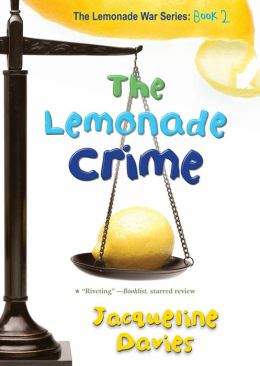
The Lemonade Crime (2011)

The Lemonade Crime. Jacqueline Davies. 2011. Houghton Mifflin Harcourt. 160 pages. [Source: Library book]

The Lemonade Crime opens with the fourth day of fourth grade for Jessie and Evan Treski. Evan and Jessie are still convinced that Scott Spencer STOLE $208 from Evan's short pockets on the last day of summer. They become even more convinced of his guilt when Scott starts bragging that he has the latest Xbox. And brag he does to anyone and everyone who will listen. And the teacher seems to be fine with this bragging taking up class time. Jessie wants justice. So she serves him with papers. These "fake" legal papers tell him he has to arrive in court on Friday after-school for his trial by his peers. Jessie assigns roles to her classmates. Her brother, Evan, is the plaintiff. She is his lawyer. Scott is the defendant. Megan is Scott's lawyer. Twelve of their classmates become jurors; six boys, six girls, I believe. David a boy that isn't particularly friendly with either Scott or Evan is chosen to be judge. The rest of the class will be the audience. Jessie takes this trial very seriously. If Scott is found guilty, he will "have" to give up his new Xbox. If Scott is found innocent, then Jessie and Evan will have to apologize in front of everyone.

It's obvious that The Lemonade Crime has a theme of justice. Two kids who feel they were wronged want justice, they want a wrong to be righted. They imagine how sweet it will be to prove Scott to be a liar and a thief in front of everyone. Holding onto this anger, however, is changing Jessie and Evan.

There is also a not-so-subtle, but oh-so-pleasant theme of forgiveness in this novel. This is first hinted at when Jessie notes that Saturday will be Yom Kippur, the Day of Atonement. Several of Evan's friends are Jewish. Several of his friends come to him privately and ask forgiveness for things they did previously. Evan lets this resonate and he begins to reflect. I really liked this turn of events.

I definitely enjoyed this second book in the series.


© 2014 SukaYuka.com of SukaYuka's Book Reviews
Friday, May 23, 2014

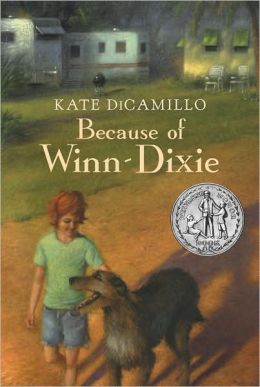
Reread #21 Because of Winn Dixie

Because of Winn Dixie. Kate DiCamillo. 2000. Candlewick. 182 pages. [Source: Book I bought]

Because of Winn Dixie is one of my favorite, favorite, favorite books. I love, love, love this one! Opal Buloni, our young heroine, has recently moved with her father, a preacher, to a small town in Florida. He is the new preacher at a small church, a church held in an old convenient store building, a church with no pews but lawn chairs. The novel, I believe, is set during the summer. Opal, when the novel opens, is still adjusting. She misses her mother tremendously. Her mother's leaving is not recent, but, as Opal grows up, she is beginning to realize more and more how much she misses her mother. Her curiosity and longing has changed. She feels her father ignores her, not because he doesn't love her, not because he doesn't want her or need her, but simply because he's always busy and quiet. Opal needs friends. Find friends she will and all because of Winn Dixie, the dog she finds at the grocery store. Winn Dixie, the dog with an irresistible smile, needs Opal just as much as she needs him. And with a little love from Opal and her Dad, Winn Dixie sets out to charm EVERYONE in town, even people who don't "like" dogs.

I love, love, love the characters in this one. I love Opal. I do. I love her dad. I love that he listens to his daughter and shares with her ten things about her mother. I love Gloria Dump, Miss Franny, Otis, and Sweetie Pie. And, of course, I love Winn Dixie. I also love Opal coming up with a ten things list for Winn Dixie.

I love the writing. This is one of those novels that is just so easy to quote!!!

Favorite quotes:
“Thinking about her was the same as the hole you keep on feeling with your tongue after you lose a tooth. Time after time, my mind kept going to that empty spot, the spot where I felt like she should be.”
“You can't always judge people by the things they done. You got to judge them by what they are doing now.”
“Do you think everybody misses somebody? Like I miss my mama?” “Mmmm-hmmm,” said Gloria. She closed her eyes. “I believe, sometimes, that the whole world has an aching heart.”
© 2014 SukaYuka.com of SukaYuka's Book Reviews
Wednesday, May 21, 2014

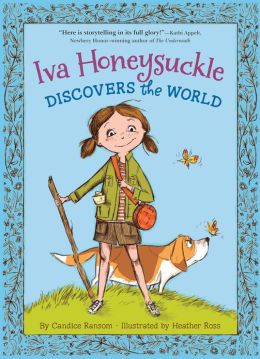
Iva Honeysuckle Discovers the World (2012)

Ivy Honeysuckle Discovers the World. Candice F. Ransom. 2012. Disney-Hyperion. 160 pages. [Source: Library book]

I definitely enjoyed meeting Iva and Heaven Honeycutt. These two are double first cousins. There is a LOT of tension in their relationship. Their mothers (Aunt Sissy and Aunt Sissy Two) wanted to time their pregnancies so that all their children could be best friends with each other. Arden and Lily Pearl are Iva's sisters. Hunter and Howard are Heaven's sister and brother. Ransom does a great job at bringing ALL six children to life in her book. Both families feel completely believable. I also enjoyed the community that this one is set in. Several neighbors enter into the story in lovely ways.

Iva and Heaven are different. Different from one another, yes, but also different from other children their own age. Neither girl truly excels in making and keeping friends.

Heaven loves going to yard sales. She likes buying things for her hope chest. When she's not looking for embroidered pillow cases and other dainty household items, she might be found praying or assisting with vacation church school.

Iva dreams of being an adventurer, she longs to discover something WONDERFUL in her hometown of Uncertain, Virginia. She has a plan. Once this girl has a plan, she likes to STICK to it. But it isn't always easy to stick to plans when plans don't take into account every little thing!

This is a summer adventure. I would definitely recommend this one!

© 2014 SukaYuka.com of SukaYuka's Book Reviews
Friday, May 16, 2014

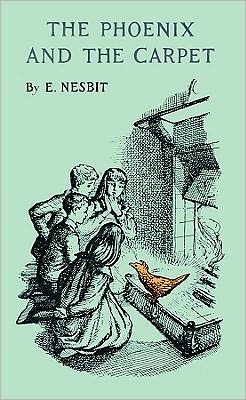
Reread #20 The Phoenix and the Carpet

The Phoenix and the Carpet. E. Nesbit. 1904. 224 pages. [Source: Bought]

I've read The Phoenix and the Carpet three times now, and, I think I've decided I love it even more than Five Children and It. (It wasn't an easy decision. But. I think I'm ready to admit the truth.) (The first review was June 2010; the second review was August 2011.)

The Phoenix and the Carpet is the sequel to Five Children and It. Readers can continue to read about the adventures and misadventures of five delightful-but-not-always-obedient children: Cyril, Robert, Anthea, Jane, and Lamb. (I like how Anthea is nicknamed "Panther" and how Lamb is always referred to by his nickname, "Lamb" because Baa was his first word. It is little details that charm me best perhaps.)

More wishes. More magic. More mischief. It's everything I loved about the first book, and then some!

So how do they meet the Phoenix? How do they get a magic carpet? Well, it all starts when the children decide that it would be a very good idea, a very fun idea, to try out their fireworks--to make sure they work properly--INSIDE the house, inside the nursery to be precise. And when one of the fireworks seems to not be lighting, one of the children pours paraffin on it while another lights it again. While the results are not horribly tragic, the nursery must be repainted/repaired, and a new carpet is a must. The carpet that replaces the old is magical, of course. And inside this roll of carpet is an egg. But not an ordinary egg. Though of course, they don't know that until it accidentally falls into the fire in their nursery. And the Phoenix emerges....

I loved the adventures. I loved seeing them get in and out of trouble. And most of all I love the writing. I love E. Nesbit. I do!!!

Favorite quotes:
It has been said that all roads lead to Rome; this may be true, but at any rate, in early youth I am quite sure that many roads lead to BED, and stop there — or YOU do.
‘We’re very much luckier than any one else, as it is,’ said Jane. ‘Why, no one else ever found a Psammead. We ought to be grateful.’ ‘Why shouldn’t we GO ON being, though?’ Cyril asked—’lucky, I mean, not grateful. Why’s it all got to stop?’ ‘Perhaps something will happen,’ said Anthea, comfortably. ‘Do you know, sometimes I think we are the sort of people that things DO happen to.’
‘Well,’ said the Phoenix, seeming on the whole rather flattered, ‘to cut about seventy long stories short (though I had to listen to them all — but to be sure in the wilderness there is plenty of time), this prince and princess were so fond of each other that they did not want any one else, and the enchanter — don’t be alarmed, I won’t go into his history — had given them a magic carpet (you’ve heard of a magic carpet?), and they had just sat on it and told it to take them right away from every one — and it had brought them to the wilderness. And as they meant to stay there they had no further use for the carpet, so they gave it to me. That was indeed the chance of a lifetime!’
You can always keep the Lamb good and happy for quite a long time if you play the Noah’s Ark game with him. It is quite simple. He just sits on your lap and tells you what animal he is, and then you say the little poetry piece about whatever animal he chooses to be. Of course, some of the animals, like the zebra and the tiger, haven’t got any poetry, because they are so difficult to rhyme to. The Lamb knows quite well which are the poetry animals. ‘I’m a baby bear!’ said the Lamb, snugging down; and Anthea began: ‘I love my little baby bear, I love his nose and toes and hair; I like to hold him in my arm, And keep him VERY safe and warm.’ And when she said ‘very’, of course there was a real bear’s hug. Then came the eel, and the Lamb was tickled till he wriggled exactly like a real one: ‘I love my little baby eel, He is so squidglety to feel; He’ll be an eel when he is big — But now he’s just — a — tiny SNIG!’ Perhaps you didn’t know that a snig was a baby eel? It is, though, and the Lamb knew it. ‘Hedgehog now-!’ he said; and Anthea went on: ‘My baby hedgehog, how I like ye, Though your back’s so prickly-spiky; Your front is very soft, I’ve found, So I must love you front ways round!’ And then she loved him front ways round, while he squealed with pleasure. It is a very baby game, and, of course, the rhymes are only meant for very, very small people — not for people who are old enough to read books, so I won’t tell you any more of them.
‘If you wanted me you should have recited the ode of invocation; it’s seven thousand lines long, and written in very pure and beautiful Greek.’
‘He says,’ the Phoenix remarked after some time, ‘that they wish to engage your cook permanently.’ ‘Without a character?’ asked Anthea, who had heard her mother speak of such things. ‘They do not wish to engage her as cook, but as queen; and queens need not have characters.’ There was a breathless pause. ‘WELL,’ said Cyril, ‘of all the choices! But there’s no accounting for tastes.’
Mother was really a great dear. She was pretty and she was loving, and most frightfully good when you were ill, and always kind, and almost always just. That is, she was just when she understood things. But of course she did not always understand things. No one understands everything, and mothers are not angels, though a good many of them come pretty near it. The children knew that mother always WANTED to do what was best for them, even if she was not clever enough to know exactly what was the best.
Every one was a little cross — some days are like that, usually Mondays, by the way. And this was a Monday.
‘My hat!’ Cyril remarked. ‘I never thought about its being a PERSIAN carpet.’ Yet it was now plain that it was so, for the beautiful objects which it had brought back were cats — Persian cats, grey Persian cats, and there were, as I have said, 199 of them, and they were sitting on the carpet as close as they could get to each other. But the moment the children entered the room the cats rose and stretched, and spread and overflowed from the carpet to the floor, and in an instant the floor was a sea of moving, mewing pussishness, and the children with one accord climbed to the table, and gathered up their legs, and the people next door knocked on the wall — and, indeed, no wonder, for the mews were Persian and piercing. ‘This is pretty poor sport,’ said Cyril. ‘What’s the matter with the bounders?’ ‘I imagine that they are hungry,’ said the Phoenix. ‘If you were to feed them—’ ‘We haven’t anything to feed them with,’ said Anthea in despair, and she stroked the nearest Persian back. ‘Oh, pussies, do be quiet — we can’t hear ourselves think.’ She had to shout this entreaty, for the mews were growing deafening, ‘and it would take pounds’ and pounds’ worth of cat’s-meat.’ ‘Let’s ask the carpet to take them away,’ said Robert. But the girls said ‘No.’ ‘They are so soft and pussy,’ said Jane. ‘And valuable,’ said Anthea, hastily. ‘We can sell them for lots and lots of money.’ ‘Why not send the carpet to get food for them?’ suggested the Phoenix, and its golden voice came harsh and cracked with the effort it had to be make to be heard above the increasing fierceness of the Persian mews. So it was written that the carpet should bring food for 199 Persian cats, and the paper was pinned to the carpet as before. The carpet seemed to gather itself together, and the cats dropped off it, as raindrops do from your mackintosh when you shake it. And the carpet disappeared. Unless you have had one-hundred and ninety-nine well-grown Persian cats in one small room, all hungry, and all saying so in unmistakable mews, you can form but a poor idea of the noise that now deafened the children and the Phoenix. The cats did not seem to have been at all properly brought up. They seemed to have no idea of its being a mistake in manners to ask for meals in a strange house — let alone to howl for them — and they mewed, and they mewed, and they mewed, and they mewed, till the children poked their fingers into their ears and waited in silent agony, wondering why the whole of Camden Town did not come knocking at the door to ask what was the matter, and only hoping that the food for the cats would come before the neighbours did — and before all the secret of the carpet and the Phoenix had to be given away beyond recall to an indignant neighbourhood. The cats mewed and mewed and twisted their Persian forms in and out and unfolded their Persian tails, and the children and the Phoenix huddled together on the table.
The Lamb was very glad to have his brothers and sisters to play with him. He had not forgotten them a bit, and he made them play all the old exhausting games: ‘Whirling Worlds’, where you swing the baby round and round by his hands; and ‘Leg and Wing’, where you swing him from side to side by one ankle and one wrist. There was also climbing Vesuvius. In this game the baby walks up you, and when he is standing on your shoulders, you shout as loud as you can, which is the rumbling of the burning mountain, and then tumble him gently on to the floor, and roll him there, which is the destruction of Pompeii.
© 2014 SukaYuka.com of SukaYuka's Book Reviews

Friday, May 9, 2014

Reread #19 The Lemonade War

The Lemonade War. Jacqueline Davies. 2007. Houghton Mifflin Harcourt. 192 pages. [Source: Library]

I enjoyed this book even more the second time around. (I first reviewed it in October 2007). The Lemonade War is the story of two siblings--Evan and Jessie--and their week-long war over who can make the most money selling lemonade. Officially, this war is all about WHO can earn $100 in just five days, the last five days of summer vacation. The winner takes it all. If he wins, he gets to keep his earnings and her earnings. And vice versa. He dreams of an iPod. She dreams of giving money to an animal rescue league.

Until the last week of summer, these two kids had had an enjoyable summer, with plenty of time together and plenty of time to themselves. But when a letter comes from the school alerting the mom to a big change, well, Evan loses it. Evan thought it was bad enough that his sister was skipping a grade, that she would be in the same grade--fourth. NOW he learns that they will be in the same class. (The school has gone from two fourth grade classes to one.) Evan and Jessie react very differently. Evan focuses only on his weaknesses: he's horrible at math, he doesn't want everyone to know that his sister is SMARTER and BETTER than he is. Evan may see Jessie that way, but Jessie sure doesn't see herself that way. Jessie has trouble reading people; she doesn't always connect the dots between what people say and what people mean. Most of her second grade year, she was miserable, absolutely miserable. There was even a "We Hate Jessie" club led by a group of particularly mean girls. Jessie is worried that she'll have just as much trouble in fourth grade socially. Evan, she feels, is oh-so-comfortable and oh-so-confident. He never seems to have trouble talking to anyone. If only she could be like him!!!

One positive thing about this war, in my opinion, is that it challenges both Jessie and Evan to rise above their weaknesses. Evan must face his fear of math, of figuring out HOW to do "story problems" in real life. With Evan, readers get to see the practical side of *why* math is important. Jessie faces her fear of talking to people, of taking the first steps, of making friends. She seeks out girls who will be in her class, and, she makes allies, in a way.

The Lemonade War is, in a way, all about problem-solving, of meeting life's problems with determination. That and it's about love and hate.

I really liked the character of Jessie. I did. I liked how she clings to Charlotte's Web. I liked her spirit, her determination. Not that she was perfect. Not that she didn't make mistakes. But they both made mistakes.

I would definitely recommend this book!

© 2014 SukaYuka.com of SukaYuka's Book Reviews

Friday, April 18, 2014

Reread #16: A Year Down Yonder

A Year Down Yonder. Richard Peck. 2000. Penguin. 144 pages. [Source: Library]

I loved A Year Down Yonder so much more than Richard Peck's A Long Way From Chicago. And I definitely enjoyed A Long Way From Chicago! While A Long Way From Chicago was told from Joey's point of view, A Year Down Yonder is told from Mary Alice's point of view. Because of the Depression, Mary Alice has been sent by her parents to live with Grandma Dowdel. Mary Alice has spent more than a few summers with her Grandma, alongside her brother, but this time she'll be there all year long, and without her brother.

While A Long Way From Chicago is fun, in many ways, it is a bit disjointed as well. Each chapter tells the story of a summer vacation. In A Year Down Yonder, the plot is more traditional. The book follows the course of an entire year. Readers get a better chance to KNOW the characters, to appreciate the characters and the small town setting. And Mary Alice is a great narrator!!! I loved her story. My favorite chapters were "Rich Chicago Girl," "Vittles and Vengeance," "Heart and Flour," and "A Dangerous Man." I loved the slight traces of romance. 


I would definitely recommend both A Long Way From Chicago and A Year Down Yonder. Both books do stand alone, but, they do go together well.

I first reviewed A Year Down Yonder in May 2008.

© 2014 SukaYuka.com of SukaYuka's Book Reviews