Showing posts with label J Fiction. Show all posts

Tuesday, January 13, 2015

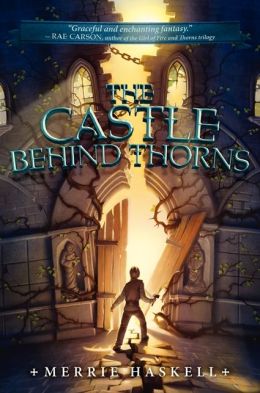
The Castle Behind Thorns (2014)

The Castle Behind Thorns. Merrie Haskell. 2014. HarperCollins. 336 pages. [Source: Library]

Sand woke, curled in the ashes of a great fireplace. Surprised to find himself waking at all, for he had no memory of falling asleep, Sand scrambled to his feet. Soot billowed from him in a cloud and sneaked up his nose. He sneezed four great sneezes that came back in lonely echoes from the vast room beyond the fireplace. Sand had never slept in a fireplace before. He never wanted to again. But he hesitated inside the fireplace, one foot suspended in midair, afraid to leave. In the room beyond, everything was broken. Every single thing.

I loved, loved, loved The Castle Behind Thorns. It is a retelling of Sleeping Beauty, I suppose. It puts a definite spin on it that is completely different from the original, but that is completely fascinating. Sand, the hero, wakes up in a fireplace in a castle that he's only heard stories about. The castle being abandoned quite suddenly when his own father was not yet grown. He finds himself very alone; he's the only living thing in the castle. (No growing plants, no bugs or insects, no birds, no mice, nothing). He keeps the panic to a minimum, in my opinion. Especially considering the situation! He's in an abandoned castle surrounded by hostile, vicious thorns. He explores. He plans. He mends. He learns and adapts. He's hungry and thirsty and tired. He finds a way to survive. In his exploring, he finds the family's crypt. He restores a body that had fallen, placing the young girl's body back gently and carefully.  Several days later, or some time later, readers meet the heroine Perrotte...

The Castle Behind Thorns is a beautiful story with memorable, well-developed characters. I enjoyed every minute of this one! The mystery is quite good! I would definitely recommend this one!

Read the Castle Behind Thorns
  • If you enjoy fairy tale retellings
  • If you enjoy good/great storytelling
  • If you like fantasy novels with a touch of magic
  • If you like mysteries 
  • If you like survival stories

© 2015 SukaYuka.com of SukaYuka's Book Reviews

Saturday, January 10, 2015

Owl Diaries: Eva's Treetop Festival

Eva's Treetop Festival (Owl Diaries #1) Rebecca Elliott. 2015. Scholastic. 80 pages. [Source: Review copy]

Tuesday
Hello Diary,
My name is Eva Wingdale. I live at Treehouse 11 on Woodpine Avenue in Treetopolis. 

 Plot/Premise: Eva, the owl, shares her diary. Readers learn about Eva, what she likes/loves, what she does NOT like/love. Readers get to know her and her family/friends. They also get to see Eva at school and home. Eva gets inspired to plan a big event--the Bloomtastic Festival. The diary shows day by day or night by night, I suppose, how that is going for her! Eva has some lessons to learn definitely!

My thoughts: The book just has a cute feel to it. It's cute from cover to cover. It's heavily illustrated. Which is a good thing, I think. Some of the text is narration: diary entries to be precise. But some of the text is dialogue in speech bubbles. This early chapter book is a fun choice for young girls.

The first book in the series releases this month. The second book releases in May.

© 2015 SukaYuka.com of SukaYuka's Book Reviews

Friday, January 9, 2015

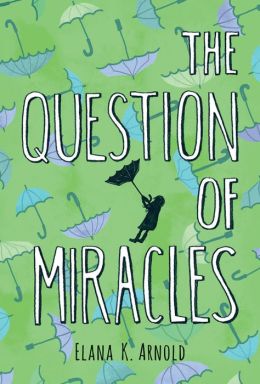
The Question of Miracles (2015)

The Question of Miracles. Elana K. Arnold. 2015. HMH. 240 pages. [Source: Review copy]


Iris Abernathy has recently moved to Oregon, and she HATES it. Her parents are sympathetic and supportive. (Iris visits a counselor, Dr. Shannon, somewhat regularly. Not because of her angst about the move, but, for other issues.) Iris misses her old life and her old friends. Most particularly she misses her friend Sarah. Part of Iris thinks it would be impossible to ever be happy here,  to ever have another best friend. But this "impossibility" is challenged a bit in The Question of Miracles.

There were a few things that I liked about The Question of Miracles. I liked Iris's new friend, Boris. I liked the slow-and-steady progression of their friendship. I liked getting to know him. I think he was good for Iris. And I think Iris was good for him. I like how their friendship made them both stronger as individuals.

I also liked the families within the novel. I liked getting to know Iris' family and Boris' family. Overall, characterization of even minor characters was well done.

The Question of Miracles is at the very least a sad novel, perhaps a dark one. (By dark, I don't mean as dark as it could possibly be and without any hope or redemption.) How do you move on after losing a best friend? after witnessing her die in the parking lot? Life does go on, but, it feels like it can't, like it shouldn't. The Question of Miracles is about Iris' life after a big loss.

The Question of Miracles is one girl's quest for the answer to all her why questions. Does Iris get her answers? Adults are probably not surprised that she doesn't--not really. But she does come to accept her loss and begin living life again.

I didn't like everything about this one. There were a few things that bothered me--mainly bothered me as a Christian--things that may not bother other readers. (For example, her seeking out a psychic and trying to communicate with her friend's spirit.)

© 2015 SukaYuka.com of SukaYuka's Book Reviews

Saturday, January 3, 2015

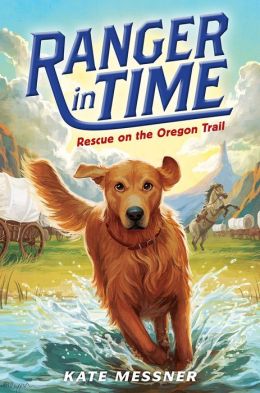
Ranger in Time

Rescue on the Oregon Trail. (Ranger in Time #1) Kate Messner. 2015. Scholastic. 144 pages. [Source: Review copy]

First sentence: Sam Abbott lugged another sack of bacon to the wagon and sat down to wipe his forehead.

Premise/plot: Ranger is a golden retriever who has been trained as a search and rescue dog. But he failed to graduate his training. Ranger wanted to let the humans know that in a real situation, he'd not be distracted by squirrels. But, of course, he couldn't make them get that. Thus he failed, despite his good intentions. But he's given a second chance, of sorts, when he digs up an old first-aid kit. This kit magically transports him BACK in time. Ranger suddenly finds himself in 1850 in Independence, Missouri. He finds a missing girl, Sam Abbott's sister, Amelia, and joins the Abbott family and the wagon train heading west to Oregon. On the way, Ranger will have PLENTY of opportunities to alert Sam and his family--really, the whole wagon train--of dangers on the trail. He proves himself trustworthy when it counts.

My thoughts: It's the first in a new series. I liked this one. I did. You do have to suspend your disbelief a bit, I admit. But once you do, it's just FUN. Time travel can be great fun after all. Readers learn facts about the Oregon trail AND meet a lovable dog. And since this is the first book in the series. Readers shouldn't worry about this dog-on-the-cover book. The book realistically portrays the dangers of trail life, but, not at the expense of the star of the book: Ranger.

Rescue on the Oregon Trail releases this month. And the second in the series, Danger in Ancient Rome, will release this summer.


© 2015 SukaYuka.com of SukaYuka's Book Reviews

Friday, January 2, 2015

Cartwheeling in Thunderstorms (2014)

Cartwheeling in Thunderstorms. Katherine Rundell. 2014. Simon & Schuster. 256 pages. [Source: Library] Mild spoilers.

The heroine of Cartwheeling in Thunderstorms is a girl named Will Silver (full name Wilhelmina, don't dare call her Wilhelmina though!). Will loves living on a farm in Zimbabwe. Her father doesn't own the farm--Captain Browne does--but he manages it. She can't remember her mother, but, life there with her father and her friends (mostly farm workers and local boys) and her animals is near perfect. Until her father dies from malaria. Just like her mother.

After his death, Captain Browne is her legal guardian. The problem? Well, this older gentlemen has fallen head over heels in love with a horrible woman with an evil plan. At least that's how Will sees it. Will soon finds herself heading off to England and boarding school. The situation seems bleak. And it is. And I think that's one reason why I didn't exactly love Cartwheeling in Thunderstorms. It is a bleak middle grade read with little hope. I like hope. I need hope. Will finds herself in dozens of desperate situations, and, it doesn't get better, it just ends. True to life? Probably. Is it important to be true to life and authentic? Sure.

Will is displaced. She's out of her element in England and at school. She's never interacted with girls her own age. She's never formally attended school. She's never had to follow rules. So she struggles with EVERYTHING. For example, she struggles with the concept of staying inside, staying inside classrooms and buildings during school, of staying in her room at night and sleeping. She can't understand why no one will let her sleep outside wherever she wants whenever she wants. She can't understand why no one wants to be near her despite the fact that she hasn't changed clothes or taken a bath or washed her hair or even brushed her hair in three weeks or so. She gets angry when people tell her to use a fork and knife to eat. So it's an understatement to say she's out of her element.

The book is interesting enough, I suppose. But I didn't really enjoy it very much.

© 2015 SukaYuka.com of SukaYuka's Book Reviews

Thursday, January 1, 2015

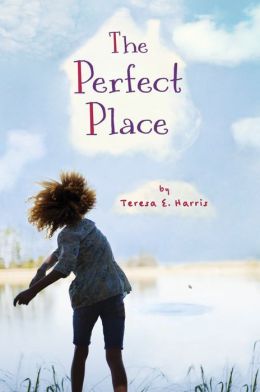
The Perfect Place (2014)

The Perfect Place. Teresa E. Harris. HMH. 272 pages. [Source: Review copy]

Since her dad left, Treasure has struggled with the changes in her life. And she's not the only one struggling. Her younger sister, Tiffany, and her Mom are all struggling a bit. In fact, the novel opens dramatically: "Dad has been gone exactly two months, one week, and four days when Mom stands up and says, "I can't do this anymore." Soon, all three will be on their way to Great Aunt Grace's house. The mom will be leaving her daughters behind while she searches several states for her missing husband. That's the goal, the mission. But will it be successful? Will she find him? be able to talk to him? convince him to come back? agree to live together as a family again? Or is that just an unrealistic wish that Tiffany and Treasure are clinging dearly to?

Great Aunt Grace is a character. She is. She's not used to living with kids. And she's not used to being a nurturer. She will struggle. The kids will struggle. But together the three of them may just be surprised at how they come to feel like a genuine family.

I loved the great aunt. I did. I loved Treasure and Tiffany too. I thought Treasure was a great big sister. I loved how she tried to comfort and support her sister. I thought she was an honest character as well. It was just easy to love her and cheer for her. I loved seeing Treasure develop as a character throughout the book. I loved seeing her open up a bit and allow herself to feel. I loved that she got the chance to start making friends.

Life in Virginia with her great-aunt is not perfect. She has not found a "perfect place." But she's coming to terms with life as it is, and she's learning to appreciate the good things of her imperfect life. Overall, I really thought The Perfect Place was a great coming-of-age novel. (That being said, I wish they'd not taken the Lord's name in vain so many times! There were a few language instances that kept me from loving this one absolutely.)

This one reminded me of A Long Way to Chicago.

© 2015 SukaYuka.com of SukaYuka's Book Reviews

Wednesday, December 31, 2014

Greenglass House (2014)

Greenglass House. Kate Milford. 2014.  Houghton Mifflin Harcourt. 384 pages. [Source: Library]

I had very high expectations for Kate Milford's Greenglass House. I loved, loved, LOVED Kate Milford's The Boneshaker. My love for that one hasn't faded a bit since I first read it. (I've reread it at least once or twice since.) Greenglass House is one that I've been looking forward to reading for most of the year. Almost a book I NEEDED to read instead of merely being one I wanted to read. And the opening paragraph was wonderful:
There is a right way to do things and a wrong way, if you're going to run a hotel in a smugglers' town. You shouldn't make it a habit to ask too many questions, for one thing. And you probably shouldn't be in it for the money. Smugglers are always going to be flush with cash as soon as they find a buyer for the eight cartons of fountain pen cartridges that write in illegal shades of green, but they never have money today. You should, if you are going to run a smugglers' hotel, get a big account book and assume that whatever you write in it, the reality is, you're going to get paid in fountain pen cartridges. If you're lucky. You could just as easily get paid with something even more useless. Milo Pine did not run a smugglers' hotel, but his parents did.Unfortunately, for me, the book proved disappointing. However, just because it was an almost for me does not mean that it would prove equally disappointing to other readers. I think it could definitely work for other readers. In fact, the very elements that annoyed me may be what another reader loves best of all about the book.
For a book set during the Christmas holidays, this is a very un-Christmas-y book. Christmas proves to be the last thing on every character's mind. So if you pick up the book thinking, A Christmas book! A Christmas mystery! How delightful! You may be disappointed.

Greenglass House is very much a mystery. It is a puzzle-solving mystery. It is a book that celebrates brainstorming. Milo, our hero, finds a map. He doesn't know anything at all about the map. Just that one of the new guests must have dropped it--either on purpose or by accident--on his/her way into the inn. Perhaps he first becomes curious out of boredom or frustration. It is the holidays. The inn never has--that he can recall--had guests over the winter holidays. So when three or four guests appear within an hour or two of each other, he's annoyed. Guests mean work. If not work for him directly, then work for his parents. And the guests range from slightly eccentric to VERY eccentric.

Greenglass Mystery is more than a mystery. I can't talk about it without spoiling it, however.

So what annoyed me most about the Greenglass House? The game-playing. The introduction of the role-playing game in order to solve the mystery at the inn. All the details--big and small--that come from the game. Including the names. Most of the book, the characters use their game-names (personas) instead of their real names.

There are also elements of a coming-of-age story within Greenglass House. Milo is adopted. He's Chinese. His parents are white. He thinks about being adopted a lot. Plus, I think he's just at that age where one questions their identity and who they are and why they are and what they want to be and where they fit and how they fit.

© 2014 SukaYuka.com of SukaYuka's Book Reviews

Thursday, December 25, 2014

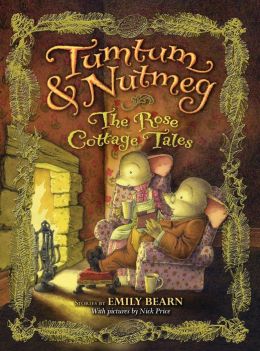
Tumtum & Nutmeg: The Rose Cottage Tales

Tumtum & Nutmeg: The Rose Cottage Tales. Emily Bearn. 2010. Little Brown. 416 pages. [Source: Library]

Tumtum & Nutmeg: The Rose Cottage Tales features three stories starring some of my favorite mice: A Christmas Adventure, A Seaside Surprise, and A Circus Adventure.

In A Christmas Adventure, Tumtum and Nutmeg worry that the Mildew children (Arthur and Lucy) won't have Christmas this year unless they intervene. The mice read their letters to Santa. Arthur wants a toy car. Lucy wants a box of magic tricks. Can two mice give the children a Christmas to remember? Of course! Can two mice make an adventure of Christmas? Yes! Tumtum and Nutmeg seek to find the children presents locally. Baron Toymouse reigns over a nursery at a nearby house. (The children have long since grown up. He rules the former play room.) Baron Toymouse HAS a horrid reputation. But Tumtum and Nutmeg would risk just about anything to help the two children they've come to love so much. (They are more involved in Arthur and Lucy's upbringing then Mr. Mildew.)

In A Seaside Surprise, Tumtum and Nutmeg vacation with Arthur and Lucy (again). General Marchmouse also tags along. The two children are spending their holiday with their uncle or great-uncle. I enjoyed this adventure more than earlier ones, I believe. Or else I've come to appreciate the nonsensical General Marchmouse!

In A Circus Adventure, birthdays are celebrated. General Marchmouse has been invited to dine with Tumtum and Nutmeg. Unfortunately, he doesn't show up at his own party. Why? Well, he spies a present. It was Arthur's birthday as well. His uncle has sent a lovely present. A circus. A circus with a bus. General Marchmouse gives into temptation, he steals the bus and the ringmaster's clothes. He takes the bus for a trip outside and happens upon a circus in the meadow. A mouse circus of sorts. The book presents General Marchmouse at his best and worst. Can Tumtum and Nutmeg intervene and save all concerned?!

I was surprised that I liked/really liked ALL three stories. I was expecting to like one or maybe even two. But I really enjoyed all three stories. I was expecting to like A Circus Adventure the least, and, it may just be my favorite!!!

I would definitely recommend the six books I've read so far.
© 2014 SukaYuka.com of SukaYuka's Book Reviews

Wednesday, December 24, 2014

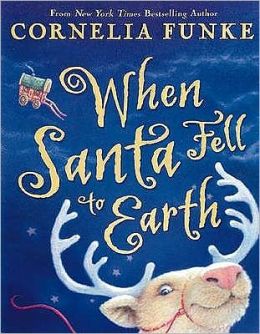
When Santa Fell to Earth

When Santa Fell To Earth. Cornelia Funke. Translated by Oliver Latsch. 1994/2006. Scholastic. 167 pages. [Source: Library]

I don't know what I was expecting exactly with Cornelia Funke's When Santa Fell to Earth. Was I disappointed with the reading experience? Not really. Funke's "Santa" may not have matched my expectations, but, once I got used to her take on "Santa" and his "elves," it worked fine for me. This book is certainly creative. It offers readers a) invisible reindeer, b) cursing elves, c) evil Nutcracker goons and d) chocolate santas. It is a very odd book in a way. Almost a Twilight Zone take on Christmas. (Especially about the BOOTS.)

The book begins with a failed escape of sorts. Niklas Goodfellow is a Santa on-the-run. He's been put on trial and unfairly sentenced. He isn't all on his own. There are a few elves and angels on his side in his caravan, a few who still "get" what Christmas is all about. But it's a dangerous time for them all. They may have initially escaped, but, they have crashed. They landed in small neighborhood. They may eventually get away BEFORE they're discovered, but, every day they remain, every day it takes to repair things increases the risk.

Charlotte and Ben are the kid heroes of When Santa Fell To Earth. They are the two that interact with Niklas Goodfellow and his angels and elves. They are the two that find the naughty reindeer, Twinklestar. They are the two that fight alongside Santa and his elves against the oh-so-evil Gerold Geronimus Goblynch.

The book is certainly interesting and entertaining. But it's also ODD.
© 2014 SukaYuka.com of SukaYuka's Book Reviews

Friday, December 19, 2014

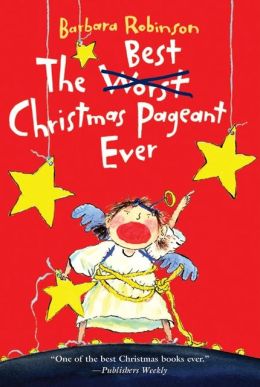
Reread #51 Best Christmas Pageant Ever

The Best Christmas Pageant Ever. Barbara Robinson. 1972. HarperCollins. 128 pages. [Source: Bought]

Is The Best Christmas Pageant Ever the best Christmas book ever? It might just be. I know I prefer it to Charles Dickens' A Christmas Carol. One reason why I do is because the book truly captures the getting-it moment, the moment when one realizes the true meaning of Christmas. A Christmas Carol may do an adequate job of "getting" the generosity of Christmas, but it is a Christ-less Christmas story. There is nothing in A Christmas Carol that would point you towards the real meaning of Christmas: the birth of a Savior. The Best Christmas Pageant does just that. And it doesn't sacrifice entertainment or humor. In fact, it is probably one of the funniest children's books ever. Here's how it opens:
The Herdmans were absolutely the worst kids in the history of the world. They lied and stole and smoked cigars (even the girls) and talked dirty and hit little kids and cussed their teachers and took the name of the Lord in vain and set fire to Fred Shoemaker's old broken-down toolhouse. The toolhouse burned right down to the ground, and I think that surprised the Herdmans. They set fire to things all the time, but that was the first time they managed to burn down a whole building. I guess it was an accident. I don't suppose they woke up that morning and said to one another, "Let's go burn down Fred Shoemaker's toolhouse"...but maybe they did. After all, it was a Saturday, and not much going on.
There are six Herdmans in all: Ralph, Imogene, Leroy, Claude, Ollie, and Gladys. The premise of this one is oh-so-simple: what if the yearly Christmas pageant was overrun with Herdmans? What if the WORST kids in town, possibly the WORST kids in the world, got the best roles in the Christmas pageant? What would it be like for the director(s)? What would it be like for the other kids? What would it be like for the audience? What no one was expecting was that the story itself would have an impact on the actors leading it to be THE BEST CHRISTMAS PAGEANT EVER.

It is narrated in the first person. I believe it is told from the perspective of the director's daughter. As I mentioned, it is hilarious and touching all at the same time. Though the 'touching' bit--the sentimental bit--is towards the very, very end.

I loved this one. I've read it again and again and again and again. It is well worth reading every year or every other year. It has a just-right feel about it. I think it is true enough to life. It captures the familiarity of the Christmas story. Almost everyone knows the story backwards and forwards. Everyone knows it so very well that none of the characters consider it. They don't process it or absorb it. But the Herdmans. Well. They have NEVER heard it. They don't find it boring or irrelevant. They find it absorbing and interesting. The details, big and small, are fresh to them. They are thinking of the story in a fresh way, in a human way. Not in a been-raised-in-church-my-whole-life way. So it captures the DRAMA of the Christmas story in a fresh way. Readers get a behind-the-scenes look at someone seeing/hearing the story for the very first time. The Herdmans take nothing for granted, assume nothing. They have questions, dozens and dozens of questions. The book isn't overly preachy either. It isn't that someone reads the story the first time, and all six kids suddenly decide to pray a little prayer and get baptized. It is not like that at all. Yet I can't help but seeing the spirit working in this story.

© 2014 SukaYuka.com of SukaYuka's Book Reviews

Thursday, December 18, 2014

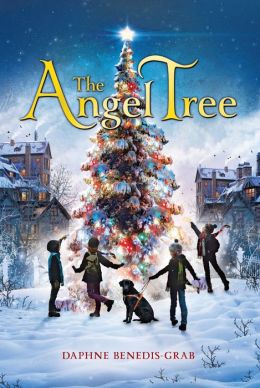
Angel Tree (2014)

Angel Tree. Daphne Benedis-Grab. 2014. Scholastic. 256 pages. [Source: Review copy]

Angel Tree is a lovely Christmas-y read. I think it is a good, balanced blend of bitter and sweet. I'll explain more of what I mean in a bit.

Pine River. Angel Tree is set in a small, cozy community called Pine River. Every December, a large community tree goes up. No one knows--at least officially--who is responsible for putting up the tree. But by the time this novel opens, the "angel tree" is legendary. (It has had a decade or two to get that status.) What makes this tree special or legendary is the fact that EVERYONE is welcome to write down their wishes and put them on the tree. Supposedly, in all the decades, the wishes have always come true. The whole community provides for its own, in a way. It gives every person an opportunity or two to be kind and generous.

Angel Tree introduces readers to a community, and it does so through several narrators/protagonists. One is named Lucy. She's blind. She's adopted (from China). Her guide-dog is dying of cancer. Her wish for the tree: medical treatment for her dog. One is named Joe. He's new to town. He's living in a small apartment with his uncle, I believe. His mom is a soldier stationed overseas. His wish for the tree: to spend Christmas with his mom. One is named Max. His house just burned down. His wish for the tree? A new house. The last is named Cami. She has a gift for bringing people together. And a musical gift as well. I honestly can't remember her wish for the tree since her wish isn't nearly as dramatic as the others.

So before the novel starts, these four young people aren't exactly close friends. I believe they are all in the same grade, and some have classes together. I think Cami and Max might have already been friends perhaps. Most of the book is about making friends, being friends, working together, thinking of others. One thing that all the kids seem to have in common--especially Max, Joe, and Lucy--is poverty.

Cami, I believe, decides that someone NEEDS to find out who is responsible for the Angel Tree. The person deserves recognition and honor. She knows she can't do it by herself, at least not in time to honor her THIS Christmas, so she involves other people. Can four kids working together solve the mystery?

The story is sweet in that it brings people together; friendships are formed; strong connections are made. In that way, it is an affirming read. The story is not perfectly sweet in that life is never made perfect. Even with all wishes fulfilled, life can never be perfect, stay perfect. For example, even if Joe gets his wish to spend Christmas day with his mom, she'll still have to go back. He'll go back to worrying about her when she does.


© 2014 SukaYuka.com of SukaYuka's Book Reviews

Friday, December 5, 2014

Reread #49 Tale of Despereaux

The Tale of Despereaux. Kate DiCamillo. 2003. Candlewick Press. 272 pages. [Source: Bought]

There are so few rereads left in the year, yet, I couldn't miss rereading Kate DiCamillo's The Tale of Despereaux. (I first reviewed this one in September 2007). I've also made a point of rereading Because of Winn Dixie and The Miraculous Journey of Edward Tulane.

I tend to like talking-mice books. I tend to like animal fantasy when it's well done. And in The Tale of Despereaux it is very well done. DiCamillo is a GREAT author. She is. She has a way with words, with phrasing things just so that happens to appeal to me. She's a good, solid storyteller. Her characters are always unique and memorable. That is definitely the case with The Tale of Despereaux.

Do you have a favorite Kate DiCamillo book?

Quotes:
“Stories are light. Light is precious in a world so dark. Begin at the beginning. Tell Gregory a story. Make some light.”
“There are those hearts, reader, that never mend again once they are broken. Or if they do mend, they heal themselves in a crooked and lopsided way, as if sewn together by a careless craftsman. Such was the fate of Chiaroscuro. His heart was broken. Picking up the spoon and placing it on his head, speaking of revenge, these things helped him to put his heart together again. But it was, alas, put together wrong.”
“Reader, you must know that an interesting fate (sometimes involving rats, sometimes not) awaits almost everyone, mouse or man, who does not conform.”
“Once upon a time," he said out loud to the darkness. He said these words because they were the best, the most powerful words that he knew and just the saying of them comforted him.”
“Despereaux looked at his father, at his grey-streaked fur and trembling whiskers and his front paws clasped together in front of his heart, and he felt suddenly as if his own heart would break in two. His father looked so small, so sad.
"Forgive me," said Lester again.
Forgiveness, reader, is, I think, something very much like hope and love - a powerful, wonderful thing.
And a ridiculous thing, too.
Isn't it ridiculous, after all, to think that a son could forgive his father for beating the drum that sent him to his death? Isn't it ridiculous to think that a mouse ever could forgive anyone for such perfidy?
But still, here are the words Despereaux Tilling spoke to his father. He said, "I forgive you, Pa."
And he said those words because he sensed it was the only way to save his own heart, to stop it from breaking in two. Despereaux, reader, spoke those words to save himself.”

© 2014 SukaYuka.com of SukaYuka's Book Reviews

Thursday, December 4, 2014

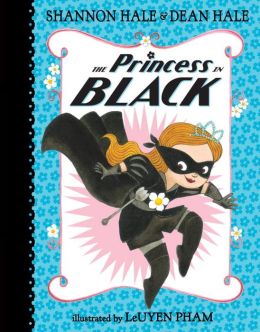
The Princess in Black (2014)

The Princess in Black. Shannon and Dean Hale. Illustrated by LeUyen Pham. 2014. Candlewick. 96 pages. [Source: Review copy]

I loved everything about The Princess in Black. That doesn't surprise me. I tend to love Shannon Hale's work. I also tend to love, love, love LeUyen Pham's work. It is an early chapter book. It stars Princess Magnolia, Duchess Wigtower, and Duff the Goat Boy. It also stars some monsters and goats.

Princess Magnolia is everything a princess should be by all appearances. But Princess Magnolia has a secret. Duchess Wigtower loves secrets. She loves discovering people's secrets. On the day this book opens, Duchess Wigtower and Princess Magnolia are having hot chocolate and scones. All was going smoothly, until...her glitter-stone rang. This ring alerts her to danger, the danger from monsters. When she hears the alarm, Princess Magnolia sheds her princess-y identity and becomes the mysterious-clever-and-strong Princess in Black.

Readers get to see the Princess in Black in action. The whole book is just fun and silly and oh-so-right and just-about-perfect. I loved the writing. I loved the descriptions. I loved the characters. I loved Duff the Goat Boy more than I thought I would. I expected to LOVE the main character. I didn't expect to LOVE Duff the Goat Boy too. Overall, it's just as charming and delightful as can be.

© 2014 SukaYuka.com of SukaYuka's Book Reviews

Wednesday, December 3, 2014

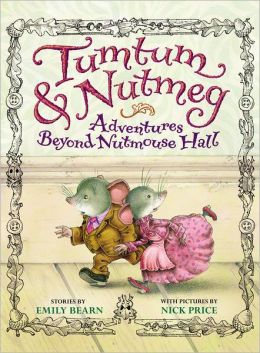
Tumtum and Nutmeg (2009)

Tumtum and Nutmeg: Adventures Beyond Nutmouse Hall. Emily Bearn. Illustrated by Nick Price. 2009. Little, Brown. 512 pages. [Source: Library]

I definitely enjoyed Tumtum and Nutmeg: Adventures Beyond Nutmouse Hall. Did I enjoy all three adventures equally? I'm not sure I can say that I did. The book contains three adventures--perhaps the first three adventures--of Mr. and Mrs. Nutmouse: Tumtum & Nutmeg, The Great Escape, and The Pirates' Treasure. Tumtum and Nutmeg are the nicknames this husband and wife have for one another. He is Tumtum. She is Nutmeg. The mice live in Nutmouse Hall, and Nutmouse Hall itself is in a closet (of sorts) in Rose Cottage. The mice are more well-to-do than the humans that reside there. Mr. Mildew lives at Rose Cottage with his daughter, Lucy, and son, Arthur. Tumtum and Nutmeg feel sorry for them all, but, especially for the two children who live in the attic. They decide to be good Samaritans. They will fix what needs fixing or mending. They will do what they can, when they can, to make things better. The children definitely notice. They believe it is the work of a fairy. That's enough of a background to appreciate the three stories in this one.

In Tumtum and Nutmeg, readers meet the mice, the family, the children. It focuses on what happens when Aunt Ivy comes to stay. The dangers that come about from her visit. And what the mice do about it. How they handle the situation. Readers also meet General Marchmouse.

In The Great Escape, the focus is on General Marchmouse. He was captured by the children in the attic. This visiting mouse against the good advice of Mr. and Mrs. Nutmouse became too fond of playing with the children's toys. He was NOT a careful mouse. The children take him to school and he's put into a cage with a dozen or so gerbils. I can't remember if it was a dozen gerbils or twenty-four gerbils. But A LOT. When Mr. and Mrs. Nutmouse learn of the situation, what will they do, how will they make it right?!

In The Pirates Treasure, the focus is on a camping trip gone wrong. Mr. and Mrs. Nutmouse, for better or worse, feel certain that the children NEED them so much that they just have to go along with the children on an overnight camping trip. All might have been well if it hadn't been for that bothersome General Marchmouse. Quite accidentally on Tumtum and Nutmeg's part, they find themselves at sea, or, at pond. They are on board the toy boat that the children float on the pond. They end up--with General Marchmosue, of course--shipwrecked on an island. What will they do? How can they get back to their home? Is the island dangerous?

I like the premise behind this series. I like the characters of Tumtum and Nutmeg. General Marchmouse is infuriating. But. I can also see that he is what makes these into adventure books. He brings the action, and, perhaps also the laughs.
© 2014 SukaYuka.com of SukaYuka's Book Reviews

Tuesday, December 2, 2014

My Friend the Enemy (2014)

My Friend the Enemy. Dan Smith. 2014. Scholastic. 288 pages. [Source: Review copy]

I really enjoyed reading Dan Smith's My Friend the Enemy. Give me a book set during this time period--World War II--and I'll most likely be eager to read it. This one happens to be set in England during the war! (It being set in England is an added bonus for me! Two reasons for me to be excited to pick it up!) I found My Friend the Enemy to be a quick read, and a compelling one. The premise is simple enough. Two twelve-year-olds, Peter and Kim, find a 'souvenir' in the woods after a German plane crashes near their village.

These two have just met. Kim isn't like any other girl he's known before. She dresses and acts differently. There is something about her that he's drawn to. I think they bring out the best in each other, in some ways, and I think together they are more likely to get into trouble! Kim is new to the community/village. Her parents wanted her to be safer, and they have sent her to live with an aunt. But she's seen more than Peter, perhaps, when it comes to the effect of the war. Her brother is a soldier. His father is a soldier. These two can relate well to one another. So. Back to the souvenir. These two break curfew and risk everyone's wrath by going where they technically have no business going at all. They go first to the scene of the crash, crawl into the plane itself, and then go exploring in the surrounding woods. What they find in the woods that night changes everything. For they find a near-dying German soldier, one of the plane's crew. He is--in German, of course--pleading for help, begging for mercy.

Before, if you'd asked either one, they most likely would have said Germans are the enemy, show no mercy, they're evil, they're killing monsters. But things change when they have 'the enemy' right in front of their eyes. He is young. He looks to be a teenager. To Kim's eyes, she's seeing someone just like her brother. He is not only young, but he's also weak and helpless. He is obviously in pain and very scared. They decide the right thing to do is to show him mercy, to treat him as they would want others--strangers--to treat his dad and her brother if their positions were reversed. They choose kindness. They give him water. They take him to a hiding place. They give him food and a blanket. Not right away, of course. They weren't walking around carrying provisions or anything. What they both struggle with in the next few days/weeks is keeping the secret. Is it right what they've done? They don't feel it is wrong to be merciful, of course, but is it wrong to lie and steal to cover up everything? They struggle with the ethics of it. In their minds, they see it as being a choice between life and death. They feel certain that soldiers would kill him, show no mercy or grace. (They are assuming this, of course. And adult readers might question their assumption.) But great risk and sacrifice is involved in keeping that secret, and it doesn't get any easier at all. It sounded good and right initially, but, what if the war lasts years?! How are they really going to pull this off? What will happen to Erik, the soldier? What will happen to them?! What is best for everyone?

Readers get to know Peter and Kim very well. And, to some extent, readers get to know Erik as well. Though perhaps limited since Kim and Peter don't speak much German, and Erik doesn't speak much English. Readers spend more time with Peter and his mother than with Kim and her aunt. Readers also get acquainted with the community, meeting various people. It has just enough detail to establish the setting. It isn't weighed down tediously by description. The plot moves quickly, and there is plenty of action.

I loved this one.
All those Germans we heard about on the wireless were different. They were not men, they were faceless, helmeted and armed, marching across places I knew the names of but had never seen. France, Norway, Africa. They were airplanes dogfighting over the English channel; they were bombers casting a shadow over our cities. They were the enemy. Our German was different. He was a real person. He was here, he had a face, and he was in trouble. (121)

© 2014 SukaYuka.com of SukaYuka's Book Reviews
Sunday, November 30, 2014

Miracle on 34th Street (1947)

Miracle on 34th Street. Valentine Davies. Illustrated by Tomie de Paola. 1947/2001. HMH. 136 pages. [Source: Library]

I have almost always loved the movie. I can now say that I love the book. If you love the movie, and, if you love to read, then, you should consider reading Miracle on 34th Street. True, it is not substantially different from the movie. But there are subtle differences, I found. I liked these differences small as they may be. The book is sweet and charming in all the right ways. I liked spending time with Kris Kringle, Doris and Susan Walker, and Fred Gayley. The book moves quickly, from scene to scene to scene. The book may not be as detailed and descriptive as a typical novel; it still has a movie-feel to it: going from scene to scene without pausing to ponder or describe. If I read the book first, would I get a sense, true sense, of the characters? I'm not sure. I'd like to think so. But it's hard to come to this story new. I know this story. I love this story.

© 2014 SukaYuka.com of SukaYuka's Book Reviews

Thursday, November 27, 2014

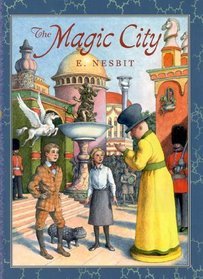
The Magic City (1910)

The Magic City. E. Nesbit. 1910. 212 pages. [Source: Bought]

Dare I say I have a new favorite-favorite Nesbit?! I loved, loved, LOVED The Magic City. I enjoyed The Enchanted Castle. I enjoyed it very much. But it doesn't come close to describing how I feel about The Magic City. I LOVE it so much! 

Philip, the hero, has been raised by his much older sister, Helen. When she marries a widower with a daughter, Lucy, around his own age, he is upset. He just knows that he will HATE Lucy. (It almost seems like he'd feel too guilty to hate his uncle--Helen's husband. But hating Lucy, well, it almost feels necessary.) Philip goes to his new home, and, his attitude could use some improvement. But if there is one thing that he doesn't hate about his new home is the nursery full of toys. At first, he's not allowed to touch anything--not even one toy! The nurse doesn't have permission from Lucy to allow Philip to play with her things. But the nurse in a brief moment of kindness changes her mind. Philip is allowed to play, to imagine. And he does. He builds, I believe, two wonderful cities. He builds them from toys--not just blocks, but all sorts of toys. He builds them from books. He builds with things he finds around the house. These cities are a work of an artist--a creator. But days later--I believe it is days--the nurse returns in a very bad mood. (She'd been called away for personal family business.) She is very angry. She yells. She threatens. She assures him that the cities will be torn down the very next day. By this point, his attitude has calmed down quite a bit. Most of the staff--the servants--like him if not love him now. In the middle of the night, he goes to see what his cities look like in the moonlight...and that decision changes everything. It is the beginning of the proper adventures!

I loved this one. I loved spending time with Philip and Lucy. I love how their relationship changes throughout the book. I loved meeting all the characters, or almost all the characters! I loved seeing the residents of the city. Particularly Mr. Noah and his son. The book is super-fun and just a joy to read. I loved the premise of this one too.
Philip drew a deep breath of satisfaction, went straight up to the nursery, took out all the toys, and examined every single one of them. It took him all the afternoon. The next day he looked at all the things again and longed to make something with them. He was accustomed to the joy that comes of making things. He and Helen had built many a city for the dream island out of his own two boxes of bricks and certain other things in the house — her Japanese cabinet, the dominoes and chessmen, cardboard boxes, books, the lids of kettles and teapots. But they had never had enough bricks. Lucy had enough bricks for anything. He began to build a city on the nursery table. But to build with bricks alone is poor work when you have been used to building with all sorts of other things. ‘It looks like a factory,’ said Philip discontentedly. He swept the building down and replaced the bricks in their different boxes. ‘There must be something downstairs that would come in useful,’ he told himself, ‘and she did say, “Take what you like.”’ By armfuls, two and three at a time, he carried down the boxes of bricks and the boxes of blocks, the draughts, the chessmen, and the box of dominoes. He took them into the long drawing-room where the crystal chandeliers were, and the chairs covered in brown holland — and the many long, light windows, and the cabinets and tables covered with the most interesting things. He cleared a big writing-table of such useless and unimportant objects as blotting-pad, silver inkstand, and red-backed books, and there was a clear space for his city.
And the city grew, till it covered the table. Philip, unwearied, set about to make another city on another table. This had for chief feature a great water-tower, with a fountain round its base; and now he stopped at nothing. He unhooked the crystal drops from the great chandeliers to make his fountains. This city was grander than the first. It had a grand tower made of a waste-paper basket and an astrologer’s tower that was a photograph-enlarging machine. The cities were really very beautiful. I wish I could describe them thoroughly to you. But it would take pages and pages. Besides all the things I have told of alone there were towers and turrets and grand staircases, pagodas and pavilions, canals made bright and water-like by strips of silver paper, and a lake with a boat on it. Philip put into his buildings all the things out of the doll’s house that seemed suitable. The wooden things-to-eat and dishes. The leaden tea-cups and goblets. He peopled the place with dominoes and pawns. The handsome chessmen were used for minarets. He made forts and garrisoned them with lead soldiers. He worked hard and he worked cleverly, and as the cities grew in beauty and interestingness he loved them more and more. He was happy now. There was no time to be unhappy in.

© 2014 SukaYuka.com of SukaYuka's Book Reviews

Wednesday, November 26, 2014

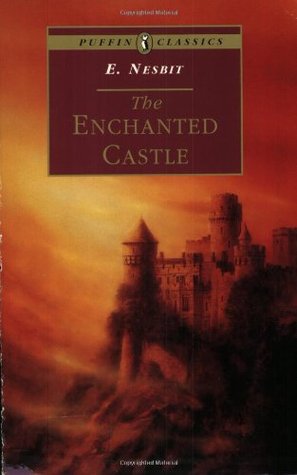
The Enchanted Castle (1907)

The Enchanted Castle. E. Nesbit. 1907. 291 pages. [Source: Bought]

I really enjoyed reading The Enchanted Castle by E. Nesbit. I had started this one at least twice before, but, I had never been in the right mood to properly appreciate this children's fantasy novel. I was in the right mood this time.

If you enjoy adventure fantasy novels, you'll probably enjoy spending time with Jerry, Jimmy, Cathy, and Mabel. Jerry, Jimmy, and Cathy are siblings. When these three first meet Mabel, they mistake her for a princess. At the time, they are having an adventure looking for an enchanted castle. So finding a princess within that castle makes complete sense! Mabel is actually the niece of the housekeeper. She confesses that a bit later on. That first meeting is magical enough! She shows them a secret room behind a paneled wall. This room is fabulous if you're looking for treasures. While in the room, the children find (and pick up) a ring. This ring is central to all their further adventures. And Mabel is their new best friend. She's always part of the group.

This one was a very fun read. It reminded me of why I love E. Nesbit in the first place. It wasn't a perfect novel. But flaws and all, it worked well enough for me. It was a joy to read of their adventures and misadventures. The ring gets them into trouble more often than it gets them out of trouble.

Favorite quotes:
“Go then, and be not more naughty than you must.”
“If we were in a book it would be an enchanted castle — certain to be,” said Kathleen. “It is an enchanted castle,” said Gerald in hollow tones. “But there aren’t any.” Jimmy was quite positive. “How do you know? Do you think there’s nothing in the world but what you’ve seen?” His scorn was crushing.
“I think magic went out when people began to have steam-engines,” Jimmy insisted, “and newspapers, and telephones and wireless telegraphing.” “Wireless is rather like magic when you come to think of it,” said Gerald. “Oh, that sort!” Jimmy’s contempt was deep. “Perhaps there’s given up being magic because people didn’t believe in it any more,” said Kathleen. “Well, don’t let’s spoil the show with any silly old not believing,” said Gerald with decision. “I’m going to believe in magic as hard as I can. This is an enchanted garden, and that’s an enchanted castle, and I’m jolly well going to explore.
“I am so hungry!” said Jimmy. “Why didn’t you say so before?” asked Gerald bitterly. “I wasn’t before.” “Then you can’t be now. You don’t get hungry all in a minute. What’s that?”
“Well, then — a detective.” “There’s got to be something to detect before you can begin detectiving,” said Mabel. “Detectives don’t always detect things,” said Jimmy, very truly. “If I couldn’t be any other kind I’d be a baffled detective. You could be one all right, and have no end of larks just the same. Why don’t you do it?” “It’s exactly what I am going to do,” said Gerald. “We’ll go round by the police-station and see what they’ve got in the way of crimes.” They did, and read the notices on the board outside. Two dogs had been lost, a purse, and a portfolio of papers “of no value to any but the owner.” Also Houghton Grange had been broken into and a quantity of silver plate stolen. “Twenty pounds reward offered for any information that may lead to the recovery of the missing property.”
You know pretty well what Beauty and the Beast would be like acted by four children who had spent the afternoon in arranging their costumes and so had left no time for rehearsing what they had to say. Yet it delighted them, and it charmed their audience. There is a curtain, thin as gossamer, clear as glass, strong as iron, that hangs for ever between the world of magic and the world that seems to us to be real. And when once people have found one of the little weak spots in that curtain which are marked by magic rings, and amulets, and the like, almost anything may happen.And what more can any play do, even Shakespeare’s?

© 2014 SukaYuka.com of SukaYuka's Book Reviews
Friday, November 21, 2014

Reread #47 Black Beauty

Black Beauty. Anna Sewell. 1877. 245 pages. [Source: Bought]

I have been wanting to reread Black Beauty since I finished it in July 2012. I loved it then. I loved it now upon rereading. In fact, I think I loved it even a tiny bit more since I knew exactly what to expect. I was able to relax a bit more, not worrying that something horrible was about to happen. Granted, plenty of horrible things do happen. If not to Black Beauty then to others. But their is a sweetness, a hopefulness to the book that keeps it from being dark and gloomy.

What I loved best about Black Beauty is the narration. From cover to cover, I was engaged with her story, her narration. I loved the writing. The book is rich in description and observation. The worldview of the book has a just-right feel to it. It's very quotable. I loved the characterization. I cared about the horses. I cared about the humans in the story.

If you haven't read it, you should give it a try. Even if you don't like animal stories.

Favorite quotes:
"I wish you to pay attention to what I am going to say to you. The colts who live here are very good colts, but they are cart-horse colts, and of course they have not learned manners. You have been well-bred and well-born; your father has a great name in these parts, and your grandfather won the cup two years at the Newmarket races; your grandmother had the sweetest temper of any horse I ever knew, and I think you have never seen me kick or bite. I hope you will grow up gentle and good, and never learn bad ways; do your work with a good will, lift your feet up well when you trot, and never bite or kick even in play." I have never forgotten my mother's advice; I knew she was a wise old horse, and our master thought a great deal of her.
The next day I was brought up for my master. I remembered my mother's counsel and my good old master's, and I tried to do exactly what he wanted me to do. I found he was a very good rider, and thoughtful for his horse too. When he came home the lady was at the hall door as he rode up. "Well, my dear," she said, "how do you like him?" "He is exactly what John said," he replied; "a pleasanter creature I never wish to mount. What shall we call him?" "Would you like Ebony?" said she; "he is as black as ebony." "No, not Ebony." "Will you call him Blackbird, like your uncle's old horse?" "No, he is far handsomer than old Blackbird ever was." "Yes," she said, "he is really quite a beauty, and he has such a sweet, good-tempered face, and such a fine, intelligent eye--what do you say to calling him Black Beauty?"
"I suppose it is fashion that makes them strap our heads up with those horrid bits that I was tortured with in London," said Ginger. "Of course it is," said he; "to my mind, fashion is one of the wickedest things in the world. Now look, for instance, at the way they serve dogs, cutting off their tails to make them look plucky, and shearing up their pretty little ears to a point to make them both look sharp, forsooth. I had a dear friend once, a brown terrier; 'Skye' they called her. She was so fond of me that she never would sleep out of my stall; she made her bed under the manger, and there she had a litter of five as pretty little puppies as need be; none were drowned, for they were a valuable kind, and how pleased she was with them! and when they got their eyes open and crawled about, it was a real pretty sight; but one day the man came and took them all away; I thought he might be afraid I should tread upon them. But it was not so; in the evening poor Skye brought them back again, one by one in her mouth; not the happy little things that they were, but bleeding and crying pitifully; they had all had a piece of their tails cut off, and the soft flap of their pretty little ears was cut quite off. How their mother licked them, and how troubled she was, poor thing! I never forgot it. They healed in time, and they forgot the pain, but the nice soft flap, that of course was intended to protect the delicate part of their ears from dust and injury, was gone forever. Why don't they cut their own children's ears into points to make them look sharp? Why don't they cut the end off their noses to make them look plucky? One would be just as sensible as the other. What right have they to torment and disfigure God's creatures?"
"He had no business to make that turn; his road was straight on!" said the man roughly. "You have often driven that pony up to my place," said master; "it only shows the creature's memory and intelligence; how did he know that you were not going there again? But that has little to do with it. I must say, Mr. Sawyer, that a more unmanly, brutal treatment of a little pony it was never my painful lot to witness, and by giving way to such passion you injure your own character as much, nay more, than you injure your horse; and remember, we shall all have to be judged according to our works, whether they be toward man or toward beast."
Master said, God had given men reason, by which they could find out things for themselves; but he had given animals knowledge which did not depend on reason, and which was much more prompt and perfect in its way, and by which they had often saved the lives of men.
But what stuck in my mind was this, he said that cruelty was the devil's own trade-mark, and if we saw any one who took pleasure in cruelty we might know who he belonged to, for the devil was a murderer from the beginning, and a tormentor to the end. On the other hand, where we saw people who loved their neighbors, and were kind to man and beast, we might know that was God's mark." "Your master never taught you a truer thing," said John; "there is no religion without love, and people may talk as much as they like about their religion, but if it does not teach them to be good and kind to man and beast it is all a sham--all a sham, James, and it won't stand when things come to be turned inside out."
"Only ignorance! only ignorance! how can you talk about only ignorance? Don't you know that it is the worst thing in the world, next to wickedness?--and which does the most mischief heaven only knows. If people can say, 'Oh! I did not know, I did not mean any harm,' they think it is all right.

"Right, Joe! you did right, my boy, whether the fellow gets a summons or not. Many folks would have ridden by and said it was not their business to interfere. Now I say that with cruelty and oppression it is everybody's business to interfere when they see it; you did right, my boy."
Every man must look after his own soul; you can't lay it down at another man's door like a foundling and expect him to take care of it.
If a thing is right it can be done, and if it is wrong it can be done without; and a good man will find a way.
Our friend stood still for a moment, and throwing his head a little back, "Do you know why this world is as bad as it is?" "No," said the other. "Then I'll tell you. It is because people think only about their own business, and won't trouble themselves to stand up for the oppressed, nor bring the wrongdoer to light. I never see a wicked thing like this without doing what I can, and many a master has thanked me for letting him know how his horses have been used." "I wish there were more gentlemen like you, sir," said Jerry, "for they are wanted badly enough in this city."

 "My doctrine is this, that if we see cruelty or wrong that we have the power to stop, and do nothing, we make ourselves sharers in the guilt."
"Is it not better," she said, "to lead a good fashion than to follow a bad one? A great many gentlemen do not use check-reins now; our carriage horses have not worn them for fifteen years, and work with much less fatigue than those who have them; besides," she added in a very serious voice, "we have no right to distress any of God's creatures without a very good reason; we call them dumb animals, and so they are, for they cannot tell us how they feel, but they do not suffer less because they have no words.

© 2014 SukaYuka.com of SukaYuka's Book Reviews
Thursday, November 20, 2014

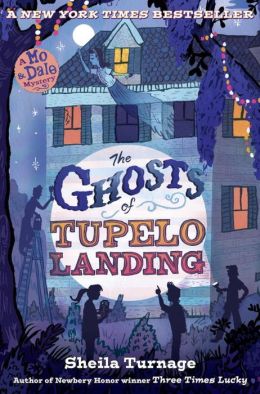
Ghosts of Tupelo Landing (2014)

Ghosts of Tupelo Landing. Sheila Turnage. 2014. Penguin. 368 pages. [Source: Library]

I enjoyed reading The Ghosts of Tupelo Landing. I am not sure I loved, loved, loved it as much as the first book, Three Times Lucky. But I'm not sure that matters. What I loved most about the first book is still present in the second.

Primarily what I love about both books is the narration by Miss Moses LoBeau (Mo). I love, love, love her voice, her narration. She's a wonderful character. I love seeing things through her eyes. I love getting to spend time in her community, getting to spend time with her own, unique family, getting to spend time with her friends. This is a book that is just oh-so-easy to enjoy. The writing just has an oh-so-right feel to it.

Mo and her best friend, Dale, have a challenge or two to face in this mystery. Miss Lana has just bought--impulsively bought--an old inn that is haunted. When she bid at the auction, she had no idea that it was haunted. (Not that Miss Lana believes in ghosts.) But Mo and Dale in their exploring before and after, know that it is in fact haunted. And, I believe, it is Dale that impulsively signs him and Mo up to interview the ghost for a history assignment. Regardless if it was Mo or Dale following an impulsive, this quick and hasty decision proves challenging from start to finish. How can they prove the ghost is real? Especially since they don't see it or feel it every time they visit the inn? And even if they happen to capture the ghost in a photo, how are they going to ask interview questions and record the answers?!

Ghosts of Tupelo Landing is a mystery novel. There is a mystery--from the past--to be solved from the community's past.

What I liked best about this one is the characterization, the setting, the writing itself. I also really liked meeting the new kid in town, Harm Crenshaw. I wasn't thrilled with the actual mystery in this one. The ghost story itself.

© 2014 SukaYuka.com of SukaYuka's Book Reviews