Showing posts with label ghosts. Show all posts

Wednesday, December 31, 2014

Greenglass House (2014)

Greenglass House. Kate Milford. 2014.  Houghton Mifflin Harcourt. 384 pages. [Source: Library]

I had very high expectations for Kate Milford's Greenglass House. I loved, loved, LOVED Kate Milford's The Boneshaker. My love for that one hasn't faded a bit since I first read it. (I've reread it at least once or twice since.) Greenglass House is one that I've been looking forward to reading for most of the year. Almost a book I NEEDED to read instead of merely being one I wanted to read. And the opening paragraph was wonderful:
There is a right way to do things and a wrong way, if you're going to run a hotel in a smugglers' town. You shouldn't make it a habit to ask too many questions, for one thing. And you probably shouldn't be in it for the money. Smugglers are always going to be flush with cash as soon as they find a buyer for the eight cartons of fountain pen cartridges that write in illegal shades of green, but they never have money today. You should, if you are going to run a smugglers' hotel, get a big account book and assume that whatever you write in it, the reality is, you're going to get paid in fountain pen cartridges. If you're lucky. You could just as easily get paid with something even more useless. Milo Pine did not run a smugglers' hotel, but his parents did.Unfortunately, for me, the book proved disappointing. However, just because it was an almost for me does not mean that it would prove equally disappointing to other readers. I think it could definitely work for other readers. In fact, the very elements that annoyed me may be what another reader loves best of all about the book.
For a book set during the Christmas holidays, this is a very un-Christmas-y book. Christmas proves to be the last thing on every character's mind. So if you pick up the book thinking, A Christmas book! A Christmas mystery! How delightful! You may be disappointed.

Greenglass House is very much a mystery. It is a puzzle-solving mystery. It is a book that celebrates brainstorming. Milo, our hero, finds a map. He doesn't know anything at all about the map. Just that one of the new guests must have dropped it--either on purpose or by accident--on his/her way into the inn. Perhaps he first becomes curious out of boredom or frustration. It is the holidays. The inn never has--that he can recall--had guests over the winter holidays. So when three or four guests appear within an hour or two of each other, he's annoyed. Guests mean work. If not work for him directly, then work for his parents. And the guests range from slightly eccentric to VERY eccentric.

Greenglass Mystery is more than a mystery. I can't talk about it without spoiling it, however.

So what annoyed me most about the Greenglass House? The game-playing. The introduction of the role-playing game in order to solve the mystery at the inn. All the details--big and small--that come from the game. Including the names. Most of the book, the characters use their game-names (personas) instead of their real names.

There are also elements of a coming-of-age story within Greenglass House. Milo is adopted. He's Chinese. His parents are white. He thinks about being adopted a lot. Plus, I think he's just at that age where one questions their identity and who they are and why they are and what they want to be and where they fit and how they fit.

© 2014 SukaYuka.com of SukaYuka's Book Reviews

Friday, November 28, 2014

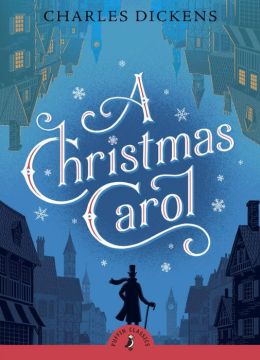
Reread #48 A Christmas Carol

A Christmas Carol. Charles Dickens. 1843. 96 pages. [Source: Bought]

MARLEY WAS DEAD, to begin with. There is no doubt whatever about that.

 I have watched A Christmas Carol more times than I've read it, and I've read it two or three times at least. The story is oh-so-familiar; the phrasing is oh-so-familiar. It's a book that has an old-friend feel even if you haven't read it dozens of times. There are scenes and descriptions that just feel incredibly right and familiar. For example,
Oh! but he was a tight-fisted hand at the grindstone, Scrooge! a squeezing, wrenching, grasping, scraping, clutching, covetous old sinner! Hard and sharp as flint, from which no steel had ever struck out generous fire, secret, and self-contained, and solitary as an oyster. The cold within him froze his old features, nipped his pointed nose, shriveled his cheek, stiffened his gait, made his eyes red, his thin lips blue, and spoke out shrewdly in his grating voice. A frosty rime was on his head, and on his eyebrows, and his wiry chin. He carried his own low temperature always about with him; he iced his office in the dog-days; and didn’t thaw it one degree at Christmas.
and
“A merry Christmas, uncle! God save you!” cried a cheerful voice. It was the voice of Scrooge’s nephew, who came upon him so quickly that this was the first intimation he had of his approach. “Bah!” said Scrooge. “Humbug!” He had so heated himself with rapid walking in the fog and frost, this nephew of Scrooge’s, that he was all in a glow; his face was ruddy handsome; his eyes sparkled, and his breath smoked again.
“Christmas a humbug, uncle!” said Scrooge’s nephew. “You don’t mean that, I am sure?” “I do,” said Scrooge. “Merry Christmas! What right have you to be merry? What reason have you to be merry? You’re poor enough.”
“Come, then,” returned the nephew gaily. “What right have you to be dismal? What reason have you to be morose? You’re rich enough.” Scrooge, having no better answer ready on the spur of the moment, said “Bah!” again; and followed it up with “Humbug!”
“Nephew!” returned the uncle sternly, “keep Christmas in your own way, and let me keep it in mine.” “Keep it!” repeated Scrooge’s nephew. “But you don’t keep it.” “Let me leave it alone, then,” said Scrooge. “Much good may it do you! Much good it has ever done you!” “There are many things from which I might have derived good by which I have not profited, I dare say,” returned the nephew, “Christmas among the rest. But I am sure I have always thought of Christmas-time, when it has come round—apart from the veneration due to its sacred name and origin, if anything belonging to it can be apart from that—as a good time; a kind, forgiving, charitable, pleasant time; the only time I know of, in the long calendar of the year, when men and women seem by one consent to open their shut-up hearts freely, and to think of people below them as if they really were fellow-passengers to the grave, and not another race of creatures bound on other journeys. And therefore, uncle, though it has never put a scrap of gold or silver in my pocket, I believe that it has done me good, and will do me good; and I say, God bless it!”
Other details, I've found, are less memorable perhaps.
“Forgive me if I am not justified in what I ask,” said Scrooge, looking intently at the Spirit’s robe, “but I see something strange, and not belonging to yourself, protruding from your skirts. Is it a foot or a claw?” “It might be a claw, for the flesh there is upon it,” was the Spirit’s sorrowful reply. “Look here.” From the foldings of its robe, it brought two children, wretched, abject, frightful, hideous, miserable. They knelt down at its feet, and clung upon the outside of its garment. “O Man! look here! Look, look, down here!” exclaimed the Ghost. They were a boy and girl. Yellow, meager, ragged, scowling, wolfish; but prostrate, too, in their humility. Where graceful youth should have filled their features out, and touched them with its freshest tints, a stale and shriveled hand, like that of age, had pinched and twisted them, and pulled them into shreds. Where angels might have sat enthroned, devils lurked, and glared out menacing. No change, no degradation, no perversion of humanity, in any grade, through all the mysteries of wonderful creation, has monsters half so horrible and dread. Scrooge started back, appalled. Having them shown to him in this way, he tried to say they were fine children, but the words choked themselves, rather than be parties to a lie of such enormous magnitude. “Spirit! are they yours?” Scrooge could say no more. “They are Man’s,” said the Spirit, looking down upon them. “And they cling to me, appealing from their fathers. This boy is Ignorance. This girl is Want. Beware of them both, and all of their degree, but most of all beware this boy, for on his brow I see that written which is Doom, unless the writing be erased. Deny it!” cried the Spirit, stretching out its hand toward the City. “Slander those who tell it ye! Admit it for your factious purposes, and make it worse! And bide the end!” “Have they no refuge or resource?” cried Scrooge. “Are there no prisons?” said the Spirit, turning on him for the last time with his own words. “Are there no workhouses?” The bell struck Twelve.
I don't recall thinking much of the two children Ignorance and Want, of thinking about what message Dickens was sending. But when I was reading The Man Who Invented Christmas, Standiford stressed their significance. (Standiford called A Christmas Carol, "a bald-faced parable that underscores Dickens's enduring themes: the deleterious effects of ignorance and want.") Why had I not noticed them before? I can only suppose that I've been rushing through the text looking for what was familiar and beloved, not really considering the book as a whole.

I like A Christmas Carol. I don't love, love, love it. I have found it to be a Christ-less Christmas story. A book that doesn't really focus on the Savior--newborn babe or risen Savior--so much as it focuses on humanity improving and changing and saving themselves. The message to Scrooge isn't, you're a bad man; you need a Savior; consider your eternal soul. The message is whether that even Scrooge, as horrible as he was, can change; he can change the way he lives; he can become a good man, a great man. He can avoid after-life horrors by changing his behavior. That isn't a Christian message.

© 2014 SukaYuka.com of SukaYuka's Book Reviews
Tuesday, May 20, 2014

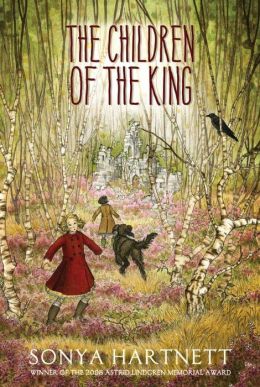
The Children of the King (2014)

The Children of the King. Sonya Hartnett. 2014. Candlewick. 272 pages. [Source: Review copy]

The Children of the King is set during World War II. And it's set in ENGLAND during World War II. There is every reason in the world, why I should love and adore this one.

Cecily and Jeremy and their mom evacuate to the country; since London is fast becoming much too dangerous, they've evacuated to the family's country estate, Heron Hall. They will live with Uncle Peregrine. On their journey, they see hundreds of other children also evacuating. Unlike Jeremy and Cecily, these kids are going to live with strangers. Cecily resents that they're on the same train. "While she pitied the evacuees, part of her wished they had been on a different train so she wouldn't have had to see them and be weighed down by their plight. She had troubles of her own." (17) But oddly enough--unless you've cheated and read the jacket--Cecily decides by the end of the journey that she just HAS to have ONE of these children. She WANTS to choose herself. She examines the children carefully and slowly. She settles on the one that--by appearances at least--will suit her best. She chooses a girl named May.

May, Cecily, and Jeremy. Three kids that, for the most part, are so different from one another. Sometimes their worlds touch: they interact well with each other and seem to enjoy one another's company. And other times, it's selfishness times three.

Jeremy is fourteen. He is ANGRY and scared and perhaps ashamed that he's scared? He feels he has something to prove. He does NOT want to be in the country. He does not want to be stuck with Cecily and May. They may need the safety and comfort of the country. But not him. He's a man, well, almost. Surely, Jeremy is brave enough and strong enough and stubborn enough to think and act independently.

Cecily. Is she simple or complex? I just can't make up mind. On the one hand, she's selfish and bossy and inconsiderate. On the other hand, what she says may not reflect how she feels. She may be hiding how the war is effecting her. Her fears and doubts might be to blame. I did not really like her very much.

May won't be bossed around for long. Cecily may have picked her out like a pet; Cecily may think she's the boss, but, May is more than capable of standing up for herself and doing exactly what she wants. When Cecily and May accept one another as somewhat equals, there is some peace. But instant friends they are not. Still Cecily and May spend over half the novel in each other's company. It is Cecily and May who spend all their time investigating "Snow Castle;" Cecily and May who discover the two strange boys living in the castle ruins. Cecily and May who keep a secret from all the grown-ups.

I will be honest. I didn't exactly "like" any of the children. I did enjoy, however, Uncle Peregrine! He seems to be just what these three children need. He seems to be the only adult there who understands the children deeply. Peregrine is a storyteller. He tells these three children a story. This story takes weeks to tell. He tells just a little at a time, always leaving them wanting more. He does have a way with words.

For better or worse, the story Peregrine tells is of Richard III and the princes in the tower. He does not call the man in the story, Richard III, he calls him Duke. But to adult readers especially, it is clear how his "story" fits into history. Peregine's story, unfortunately, is ambiguous in all the wrong ways. Richard III is clearly the murderer. (Boo, hiss!) In his ambiguous telling, he offers the possibility that the boys were saved, after all, that they were taken to the country to hide for the rest of their lives. And since these two princes match up oh-so-closely with May and Cecily's strange new friends living in the ruins, readers are led to believe this is where their ghosts dwell after all.

I would have much preferred Hartnett to be ambiguous with the identity of the murderer, to at least consider that others had equally strong motives. If Richard himself had hid the children away in the country, it would have been a more enjoyable ghost story.

I typically like World War II stories. I don't usually like ghost stories. Does the fact that the ghosts are the princes of the tower make me change my mind? I'm still thinking on it.

I do appreciate the juxtaposition of these two stories. How Hartnett trusts readers to reach conclusions and find common themes: how children rarely, if ever, have power or a voice; how sometimes children are caught in situations out of their control, are caught in chaos and uncertainty. That war is war, and war can be cruel and ugly.

So in many ways, I can like this one, at least from a distance, but did I love it? I'm not sure I can stretch it that far.


© 2014 SukaYuka.com of SukaYuka's Book Reviews