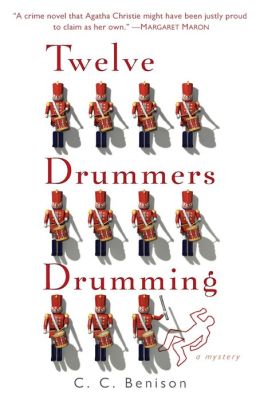
Twelve Drummers Drumming. Father Christmas Mystery #1. C.C. Benison. 2011. Doubleday. 384 pages. [Source: Library]
Twelve Drummers Drumming is the first in the Father Christmas mystery series by C.C. Benison. Tom Christmas, the hero, is a vicar in the village of Thornford Regis. He's a widower with a nine year old daughter, Miranda. Both are still healing and adapting. Tom's wife was murdered. So why settle in Thornford? Tom and his daughter were visiting his sister-in-law and her husband about a year before the novel opens. There was a funeral in the village that day, but, the vicar was missing. Tom Christmas (Father Christmas as people can't help calling him!) stepped in and performed the funeral service. When the position became available, Tom wanted the job for keeps. But village or hamlet life isn't all cozy. There are a few mysteries to be solved. And since Inspector Bliss and Inspector Blessing aren't quick to solve cases, Tom's skills come in handy. Tom is good at observing things, and, it helps that people can't seem to help confiding in him and telling their secrets.
So there are two murders to solve in Twelve Drummers Drumming. I won't say a word about the crimes and the clues. I hate having mysteries spoiled! Just as important as the clues, if not MORE important than the clues are the characters. That I can safely comment on! I really enjoyed the depth of the characters!
Overall, I would say that Twelve Drummers Drumming is an entertaining and satisfying read. I enjoyed spending time with the characters. I would recommend it!
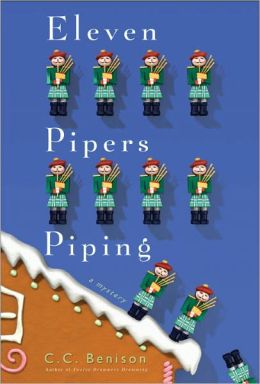
Eleven Piper Piping. Father Christmas Mystery #2. C.C. Benison. 2012. Delacorte. 474 pages. [Source: Library]
I think I enjoyed the second Father Christmas mystery even more than the first. Tom Christmas is the vicar of Thornford Regis. He is also the chaplain to a traditional Scottish pipe band, The Thistle But Mostly Rose South Devon Pipe Band. While Tom's daughter, Miranda, is having a sleepover, and his housekeeper, Madrun, is panicking about a failed yorkshire pudding, Tom Christmas is off--for better or worse--to the Burns Supper. But the weekend is problematic. The horrible weather--the blizzard-like conditions--means that half the band is unable to come, which leaves us with ELEVEN pipers piping. But while half the band is unable to make it through the storm, there is one unexpected guest that shows up at the local hotel where the Burns supper is being held. That guest is Judith Ingley, a retired nurse. Though usually women aren't allowed to attend, they don't turn her away in the storm.
Eleven Pipers Piping IS a murder mystery. So I won't share any details about the crime(s) or victim(s). I will say that the reader gets to spend plenty of time with Father Christmas as he interacts with the whole village before, during, and after the crime. I really enjoyed the setting very much. The characterization didn't disappoint.
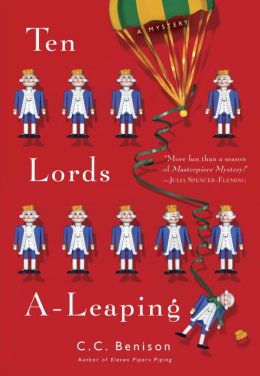
Ten Lords A-Leaping. Father Christmas #3. C.C. Benison. 2013. Delacorte. 512 pages. [Source: Library]
I wish I could give a rating for the first half and a rating for the second half.
Ten Lords A-Leaping is the third book in the Father Christmas series. In Eleven Pipers Piping, Father Christmas brings up a fund raiser idea to help pay for repairs on the church building. It involves sky diving. Ten Lords A-Leaping sees the event through. It is NOT set in Thornford Regis, unfortunately. I think I would have enjoyed it more if it had been.
So. The novel opens with the sky diving. In his jump, Tom has a little accident in the landing with his ankle, an accident that changes his plans and prolongs his visit in that part of the country. He is asked to stay over at Eggescombe Park. First, he's stuck there because of his own injury, then, he's stuck there because of a murder.
I really found myself hating the first half of the book. The series has never been squeaky clean, previous titles in the series have had a few words now and then that keep it from being perfectly clean. Still, it wasn't enough to keep me from reading, from wanting to read on in the series. But Ten Lords A-Leaping turns smutty. And smut in a creepy, inappropriate way. To the book's credit, Tom ends up feeling disgusted by the end of the novel with his own experience. But still.
Even though I really disliked much of the beginning and middle, I kept reading. And the mystery aspects of the novel began to grow on me a bit. I can't say that I "liked" it better than the first two in the series. I can't even say that I "liked" the majority of the characters. There were plenty of despicable characters. I'd say there were more despicable characters than nice ones. But. That is part of the genre, I suppose.
I enjoyed this one enough by the end, but, honestly I was a bit disappointed with this one.
© 2015 SukaYuka.com of SukaYuka's Book Reviews
Showing posts with label 2013. Show all posts
Sunday, January 4, 2015
Wednesday, December 10, 2014
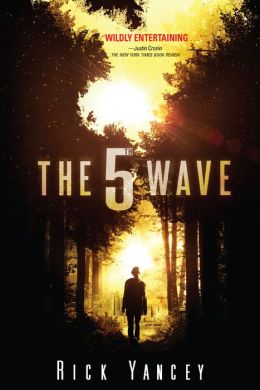
The 5th Wave (2013)
The 5th Wave. Rick Yancey. 2013. Penguin. 457 pages. [Source: Review copy]
Why reread The 5th Wave? Well, I wanted to reread The 5th Wave before beginning the second book in the series, The Infinite Sea. Also, it made sense to reread it for the Sci-Fi Experience!!!
If you're considering reading it for yourself in the near future, you might want to skip this review. Not because I'm planning on including spoilers. I'm not. But because some books should just be experienced as they are--no expectations, no hype.
So what is it about? Alien invasion. Humanity's fight to survive. It's a sci-fi thriller. It's intense and action-packed. Yet not without heart and soul and substance. It's action-packed and emotional. (Not always easy to balance the two to every reader's satisfaction.)
What else should you expect? Well. It's told through multiple narrators. Cassie, "Zombie," and "Nugget" to name a few. Normally this tends to irritate me. But I actually really enjoyed it in The 5th Wave. Yes, it was a bit disconcerting the first transition or two. But overall, it adds to the suspense and tension. The novel is better because of it.
Choices. To trust or not to trust. That is what The 5th Wave is about. Human survivors forced into difficult situations. Should they trust any survivor they come across? Should they assume the worst, and kill before they can be killed. Kill without question, without thinking, no exceptions. Or should they risk their own lives by clinging to hope that their are other survivors out there--survivors that are very much still human? Misplaced trust could prove deadly after all. But becoming a killer robs you of who you were.
Why reread The 5th Wave? Well, I wanted to reread The 5th Wave before beginning the second book in the series, The Infinite Sea. Also, it made sense to reread it for the Sci-Fi Experience!!!
If you're considering reading it for yourself in the near future, you might want to skip this review. Not because I'm planning on including spoilers. I'm not. But because some books should just be experienced as they are--no expectations, no hype.
So what is it about? Alien invasion. Humanity's fight to survive. It's a sci-fi thriller. It's intense and action-packed. Yet not without heart and soul and substance. It's action-packed and emotional. (Not always easy to balance the two to every reader's satisfaction.)
What else should you expect? Well. It's told through multiple narrators. Cassie, "Zombie," and "Nugget" to name a few. Normally this tends to irritate me. But I actually really enjoyed it in The 5th Wave. Yes, it was a bit disconcerting the first transition or two. But overall, it adds to the suspense and tension. The novel is better because of it.
Choices. To trust or not to trust. That is what The 5th Wave is about. Human survivors forced into difficult situations. Should they trust any survivor they come across? Should they assume the worst, and kill before they can be killed. Kill without question, without thinking, no exceptions. Or should they risk their own lives by clinging to hope that their are other survivors out there--survivors that are very much still human? Misplaced trust could prove deadly after all. But becoming a killer robs you of who you were.
This is what the Others have done to us. You can't band together to fight without trust. And without trust, there was no hope. How do you rid the Earth of humans? Rid the humans of their humanity.© 2014 SukaYuka.com of SukaYuka's Book Reviews
Tuesday, December 9, 2014
Palace of Spies (2013)
Palace of Spies. Sarah Zettel. 2013. Houghton Mifflin Harcourt. 368 pages. [Source: Library]
Peggy Fitzroy lives with her aunt, uncle, and cousin. She knows she's not wanted, her aunt and uncle have made that clear. But she gets along quite well with her cousin, Olivia. The novel opens with Peggy in a difficult position. Her uncle has arranged a marriage for her. She's not thrilled instead more than a little hesitant. Her hesitation only increases AFTER she meets him at a ball. Her intended isn't the only person she meets there, however. One other mystery man makes her acquaintance. He offers her a way out. He tells her that he knew her mother. He wants to make a deal with her, of sorts. He wants her to spy for him, to impersonate one of the Queen's maids. (Ladies-in-waiting?) He leaves her with his card. She's curious but just as hesitant about that option as well. If only she could have some control over her own future...
With a title like Palace of Spies, it's obvious what her choice was. She will become Lady Francesca Wallingham. Can she learn enough from Mr. Tinderflint and Mr. Peele? Do they know enough about her to tell her everything she needs to know to pass as this lady? Is either man trustworthy? What are their intentions? What will they do with the information she provides? Who can she trust at court? Did Lady Francesca have enemies? How will she be able to discern who her friends were and who her enemies were? Will she fool anyone? Will she fool everyone? Will she ever get a minute to call her own? How long will this deception last?
I enjoyed this one. I think I enjoyed it even more having read Lucy Worsley's The Courtiers: Splendor and Intrigue in the Georgian Court at Kensington Palace earlier this year. I was familiar with several of the characters. It was quite entertaining with a nice balance of danger and romance.
© 2014 SukaYuka.com of SukaYuka's Book Reviews
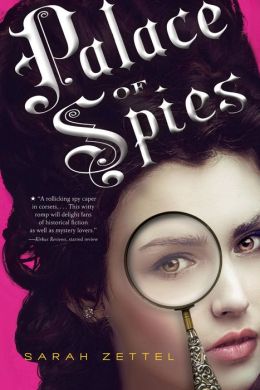
Peggy Fitzroy lives with her aunt, uncle, and cousin. She knows she's not wanted, her aunt and uncle have made that clear. But she gets along quite well with her cousin, Olivia. The novel opens with Peggy in a difficult position. Her uncle has arranged a marriage for her. She's not thrilled instead more than a little hesitant. Her hesitation only increases AFTER she meets him at a ball. Her intended isn't the only person she meets there, however. One other mystery man makes her acquaintance. He offers her a way out. He tells her that he knew her mother. He wants to make a deal with her, of sorts. He wants her to spy for him, to impersonate one of the Queen's maids. (Ladies-in-waiting?) He leaves her with his card. She's curious but just as hesitant about that option as well. If only she could have some control over her own future...
With a title like Palace of Spies, it's obvious what her choice was. She will become Lady Francesca Wallingham. Can she learn enough from Mr. Tinderflint and Mr. Peele? Do they know enough about her to tell her everything she needs to know to pass as this lady? Is either man trustworthy? What are their intentions? What will they do with the information she provides? Who can she trust at court? Did Lady Francesca have enemies? How will she be able to discern who her friends were and who her enemies were? Will she fool anyone? Will she fool everyone? Will she ever get a minute to call her own? How long will this deception last?
I enjoyed this one. I think I enjoyed it even more having read Lucy Worsley's The Courtiers: Splendor and Intrigue in the Georgian Court at Kensington Palace earlier this year. I was familiar with several of the characters. It was quite entertaining with a nice balance of danger and romance.
© 2014 SukaYuka.com of SukaYuka's Book Reviews
Monday, December 8, 2014
The Plantagenets
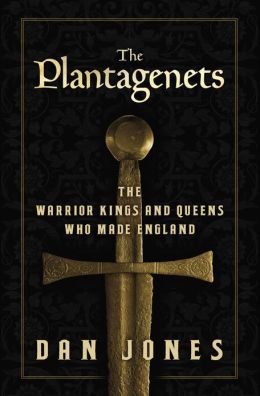
The Plantagenets. Dan Jones. 2013. Viking. 560 pages. [Source: Library]
I enjoyed reading this overview of British history. The book examines the reigns of a handful of Plantagenet kings: Henry II, Richard I, John, Henry III, Edward I, Edward II, Edward III, and Richard II. It spans several centuries: 1120-1399. It also overlaps a bit with French history.
The book opens with "The White Ship." It's a dramatic way to start a book. Henry I, the son of William the Conqueror, loses his son and heir in a shipwreck. Henry I has two dozen illegitimate children--give or take one or two. But his only legitimate child is a daughter, Matilda. He remarries hoping presumably to have another child--a son, a new heir. But that is not to be. He marries the widowed Matilda off--it was anything but a love match--and she starts having children of her own, many of them sons. He leaves his kingdom to his daughter, supposedly everyone has sworn their allegiance to her, but, in reality, she's never in a position to reign as queen. Her cousin, Stephen, reigns instead. War follows, naturally. It is not a short war, a quick and decisive war. It is a here and there, on-and-off again war where the people suffer for the family squabble most. Eventually, an agreement of sorts is reached, Stephen will pass the crown to Matilda's son, Henry II. He is the first Plantagenet king. Henry II, if you remember, is married to Eleanor of Aquitaine, the former French queen as well. They have many children together...
The book follows the reigns of each king. It goes into detail with politics and economics. It goes into detail with the struggles of each king. Their strengths and weaknesses, their battles. Sometimes these battles are with the church; sometimes these battles are with the French; sometimes these battles are with the Irish or the Welsh or the Scottish; sometimes these battles are with their own flesh and blood, their family; sometimes these battles are with their own countrymen, the barons, the nobility, or even the peasants. No one king has it all. No one king has a perfect, problem-free reign. It wouldn't necessarily be fair or right to sort the kings into two groups of "good" and "bad." Some kings had a reputation of being horrible, and yet they didn't do anything over and above what other kings before them or after them did. Writers of all centuries can label kings this or that, but, that is because historians can be biased. (Some are openly biased. Some not so much.)
As for the details about each king, what can I say? It's an overview, a detailed overview, to be sure. Some readers may be more of an expert and find fault with statements here and there throughout the book. They may spot myths presented as fact. But I certainly can't be among them. I don't know enough about each and every king.
I found the book to be interesting. Some chapters were more fascinating than others. Some chapters even seemed a bit confusing. But I kept reading.
© 2014 SukaYuka.com of SukaYuka's Book Reviews
I enjoyed reading this overview of British history. The book examines the reigns of a handful of Plantagenet kings: Henry II, Richard I, John, Henry III, Edward I, Edward II, Edward III, and Richard II. It spans several centuries: 1120-1399. It also overlaps a bit with French history.
The book opens with "The White Ship." It's a dramatic way to start a book. Henry I, the son of William the Conqueror, loses his son and heir in a shipwreck. Henry I has two dozen illegitimate children--give or take one or two. But his only legitimate child is a daughter, Matilda. He remarries hoping presumably to have another child--a son, a new heir. But that is not to be. He marries the widowed Matilda off--it was anything but a love match--and she starts having children of her own, many of them sons. He leaves his kingdom to his daughter, supposedly everyone has sworn their allegiance to her, but, in reality, she's never in a position to reign as queen. Her cousin, Stephen, reigns instead. War follows, naturally. It is not a short war, a quick and decisive war. It is a here and there, on-and-off again war where the people suffer for the family squabble most. Eventually, an agreement of sorts is reached, Stephen will pass the crown to Matilda's son, Henry II. He is the first Plantagenet king. Henry II, if you remember, is married to Eleanor of Aquitaine, the former French queen as well. They have many children together...
The book follows the reigns of each king. It goes into detail with politics and economics. It goes into detail with the struggles of each king. Their strengths and weaknesses, their battles. Sometimes these battles are with the church; sometimes these battles are with the French; sometimes these battles are with the Irish or the Welsh or the Scottish; sometimes these battles are with their own flesh and blood, their family; sometimes these battles are with their own countrymen, the barons, the nobility, or even the peasants. No one king has it all. No one king has a perfect, problem-free reign. It wouldn't necessarily be fair or right to sort the kings into two groups of "good" and "bad." Some kings had a reputation of being horrible, and yet they didn't do anything over and above what other kings before them or after them did. Writers of all centuries can label kings this or that, but, that is because historians can be biased. (Some are openly biased. Some not so much.)
As for the details about each king, what can I say? It's an overview, a detailed overview, to be sure. Some readers may be more of an expert and find fault with statements here and there throughout the book. They may spot myths presented as fact. But I certainly can't be among them. I don't know enough about each and every king.
I found the book to be interesting. Some chapters were more fascinating than others. Some chapters even seemed a bit confusing. But I kept reading.
© 2014 SukaYuka.com of SukaYuka's Book Reviews
Tuesday, November 18, 2014
Bo at Ballard Creek (2013)
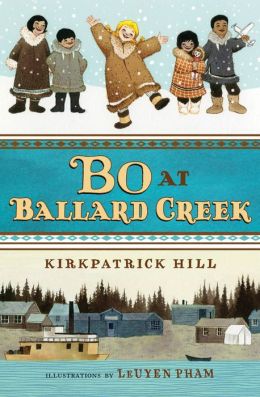
Bo at Ballard Creek. Kirkpatrick Hill. Illustrated by LeUyen Pham. 2013. Henry Holt. 288 pages. [Source: Library]
I loved Bo at Ballard Creek. Did I love, love, love it? I'm not sure. Time will tell. I certainly loved many things about it.
I loved the setting, that it's historical fiction, set in Alaska, set in a small mining town, in the 1920s. I loved the perspective, Bo, the heroine is young adopted girl. For most of the book, she's too young to attend school. So perhaps in the four to six range throughout the book. Readers meet Bo, her two fathers Jack Jackson and Arvid Ivorsen. (One is black. One is Swedish.) Readers meet the whole community: other miners and former miners mostly men, of course, all ages and ethnicities; Eskimo families, and the dance-hall girls. I loved the narration and the amount of detail. I love that the book covers a whole year, if not a little more. So readers see the community in detail throughout the year. One gets a real sense of what was like on a day-to-day, week-to-week, month-to-month basis. On ordinary days. On special days. Special days being not just holidays, but, also days where airplanes stop and land, the days when supplies arrive. I love the vignettes of the whole town. I loved the strong sense of family and community in this one. It just felt right from cover to cover. I also loved the illustrations. I'll be honest. It was seeing LeUyen Pham's name that made me pick this one up. That being said, I may have loved her illustrations. But I also LOVED the text itself.
If the book lacks anything, however, it may be a strong plot. Think Little House In the Big Woods. The chapters are strong in description and characterization and little happenings. I loved it. I did. I loved meeting Bo. I loved some of the relationships in the book.
© 2014 SukaYuka.com of SukaYuka's Book Reviews
I loved Bo at Ballard Creek. Did I love, love, love it? I'm not sure. Time will tell. I certainly loved many things about it.
I loved the setting, that it's historical fiction, set in Alaska, set in a small mining town, in the 1920s. I loved the perspective, Bo, the heroine is young adopted girl. For most of the book, she's too young to attend school. So perhaps in the four to six range throughout the book. Readers meet Bo, her two fathers Jack Jackson and Arvid Ivorsen. (One is black. One is Swedish.) Readers meet the whole community: other miners and former miners mostly men, of course, all ages and ethnicities; Eskimo families, and the dance-hall girls. I loved the narration and the amount of detail. I love that the book covers a whole year, if not a little more. So readers see the community in detail throughout the year. One gets a real sense of what was like on a day-to-day, week-to-week, month-to-month basis. On ordinary days. On special days. Special days being not just holidays, but, also days where airplanes stop and land, the days when supplies arrive. I love the vignettes of the whole town. I loved the strong sense of family and community in this one. It just felt right from cover to cover. I also loved the illustrations. I'll be honest. It was seeing LeUyen Pham's name that made me pick this one up. That being said, I may have loved her illustrations. But I also LOVED the text itself.
If the book lacks anything, however, it may be a strong plot. Think Little House In the Big Woods. The chapters are strong in description and characterization and little happenings. I loved it. I did. I loved meeting Bo. I loved some of the relationships in the book.
© 2014 SukaYuka.com of SukaYuka's Book Reviews
Friday, November 14, 2014
Reread #46 Dark Triumph
Dark Triumph (His Fair Assassin #2) Robin LaFevers. 2013. Houghton Mifflin Harcourt. 387 pages. [Source: Review copy]
I first read and reviewed Dark Triumph in March 2013. Dark Triumph isn't a book that one necessarily ENJOYS. It's a dark, exposing-ugly-sins historical novel in Robin LaFevers' His Fair Assassin series. (Grave Mercy, which I also recently reread, is the first in the series.)
Both books are dark. Though reading Dark Triumph makes Grave Mercy appear to be light and fluffy. Both books star assassin nuns. Young women trained at a convent who serve Death as a master, who carry out their master's orders, who kill in other words.
Sybella is the heroine in Dark Triumph. Her story is dark, ugly, desperate. She's a strong heroine. She doesn't hold onto hope so much as vengeance. Her will to live comes from a desire--a need--to kill those that have harmed her. The people that have hurt her most are her very own family: her father and brothers. (Readers learn of the events that led her to the convent.) Her father is Lord D'Albret. (A few details are historically accurate--the names of two of his daughters, Charlotte and Louise, for example, but almost everything is fictional. One should not take LaFevers' depiction as fact.)
Dark as it was, as ugly as it was, I enjoyed Sybella as a character. Her story was beautifully told. I especially loved the romance. I loved, loved, loved "The Beast" of Waroch. Their romance was not typical, it was unique and strong and tender and oh-so-right.
© 2014 SukaYuka.com of SukaYuka's Book Reviews
I first read and reviewed Dark Triumph in March 2013. Dark Triumph isn't a book that one necessarily ENJOYS. It's a dark, exposing-ugly-sins historical novel in Robin LaFevers' His Fair Assassin series. (Grave Mercy, which I also recently reread, is the first in the series.)
Both books are dark. Though reading Dark Triumph makes Grave Mercy appear to be light and fluffy. Both books star assassin nuns. Young women trained at a convent who serve Death as a master, who carry out their master's orders, who kill in other words.
Sybella is the heroine in Dark Triumph. Her story is dark, ugly, desperate. She's a strong heroine. She doesn't hold onto hope so much as vengeance. Her will to live comes from a desire--a need--to kill those that have harmed her. The people that have hurt her most are her very own family: her father and brothers. (Readers learn of the events that led her to the convent.) Her father is Lord D'Albret. (A few details are historically accurate--the names of two of his daughters, Charlotte and Louise, for example, but almost everything is fictional. One should not take LaFevers' depiction as fact.)
Dark as it was, as ugly as it was, I enjoyed Sybella as a character. Her story was beautifully told. I especially loved the romance. I loved, loved, loved "The Beast" of Waroch. Their romance was not typical, it was unique and strong and tender and oh-so-right.
© 2014 SukaYuka.com of SukaYuka's Book Reviews
Thursday, October 9, 2014
Sky Jumpers (2013)
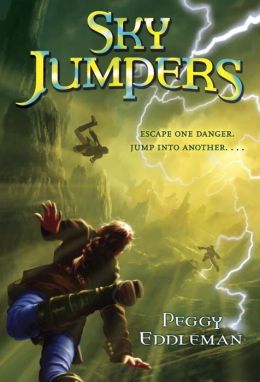
Sky Jumpers. Peggy Eddleman. 2013. Random House. 288 pages. [Source: Review copy]
I loved, loved, loved Sky Jumpers by Peggy Eddleman. I didn't expect to love it that much. I certainly wanted to enjoy it, to love it even. I always want to like what I read. I was swept away by Sky Jumpers. I found it impossible to put down! I thought the world-building was fantastic. I thought the characterization was so well done. And the plotting too. Really, I have no complaints actually! Everything just works so very well in this one. It is intense and dramatic when it needs to be, and full of heart when it needs to be. It balances action with emotion.
Hope Toriella is the heroine of Sky Jumpers. I loved Hope. I did. Hope is different from the others in the community of White Rock. It seems EVERYONE in the community is good--if not great--at inventing. And since everyone over the age of four is encouraged--strongly encouraged--to invent things throughout the year, to be good at it means that you belong, that you fit. Why are inventions so central to the community? Well, the world has been devastated by World War III. And surviving communities are trying to rebuild and survive. Anything that can make surviving easier, anything that enhances life in the community is a very, very good thing. Hope has strengths. She does. But they aren't useful-to-the-community strengths. She is clever--quick thinking. When she gets in a predicament, she can usually think her way out of it. She is athletic too. And above all else, Hope is a brave, risk-taker. Hope seems certain that the community doesn't need her, that instead of contributing to the community, she's just a burden--another mouth to feed, another body to clothe and shelter. But is that really true? Could Hope's unique gifts be just what the community needs to survive another winter?
Along with Hope, readers get to know Brock, Aaren, and Brenna. To name just a few. I really thought the whole community was developed well, brought to life. The world Eddleman created seems so real, so possible.
© 2014 SukaYuka.com of SukaYuka's Book Reviews
I loved, loved, loved Sky Jumpers by Peggy Eddleman. I didn't expect to love it that much. I certainly wanted to enjoy it, to love it even. I always want to like what I read. I was swept away by Sky Jumpers. I found it impossible to put down! I thought the world-building was fantastic. I thought the characterization was so well done. And the plotting too. Really, I have no complaints actually! Everything just works so very well in this one. It is intense and dramatic when it needs to be, and full of heart when it needs to be. It balances action with emotion.
Hope Toriella is the heroine of Sky Jumpers. I loved Hope. I did. Hope is different from the others in the community of White Rock. It seems EVERYONE in the community is good--if not great--at inventing. And since everyone over the age of four is encouraged--strongly encouraged--to invent things throughout the year, to be good at it means that you belong, that you fit. Why are inventions so central to the community? Well, the world has been devastated by World War III. And surviving communities are trying to rebuild and survive. Anything that can make surviving easier, anything that enhances life in the community is a very, very good thing. Hope has strengths. She does. But they aren't useful-to-the-community strengths. She is clever--quick thinking. When she gets in a predicament, she can usually think her way out of it. She is athletic too. And above all else, Hope is a brave, risk-taker. Hope seems certain that the community doesn't need her, that instead of contributing to the community, she's just a burden--another mouth to feed, another body to clothe and shelter. But is that really true? Could Hope's unique gifts be just what the community needs to survive another winter?
Along with Hope, readers get to know Brock, Aaren, and Brenna. To name just a few. I really thought the whole community was developed well, brought to life. The world Eddleman created seems so real, so possible.
© 2014 SukaYuka.com of SukaYuka's Book Reviews
Wednesday, September 24, 2014
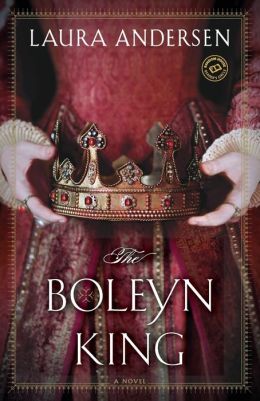
The Boleyn King
The Boleyn King. Laura Andersen. 2013. Ballantine. 358 pages. [Source: Library]
Alternate history. What if Anne Boleyn had given Henry VIII the son he so desperately wanted and needed? What if she survived her husband instead of being beheaded? What if Henry VIII had only had TWO wives? What if Elizabeth and her younger brother grew up with both parents, relatively happy? King William is that son. His father has died, and, he though under the age of 18, has been England's king. He faces challenges, every king does, and those challenges are what The Boleyn King is all about. The book has four narrators: William and Elizabeth (royal siblings) and Minuette and Dominic (close and trusted friends of both William and Elizabeth). Minuette seems to be the type of heroine that no male character can resist. Elizabeth somewhat secretly is in love with a married man, no surprises as to who that is. William is being pressured to marry well. Will his choice be a) Mary, Queen of Scots b) Jane Grey c) a French princess d) someone of his own choice that will upset his advisers and the court just as much as his father's decision to marry Anne Boleyn. This is the start of a trilogy...
The good news: It's a quick read. I read it in one day. It is also a premise-driven book. For readers who find the premise intriguing, this one is worth the read. Especially if one can get it from the library. Just in case. I liked seeing which characters avoided death and disaster. I don't know if these characters will continue to have happily ever afters, of, if they'll find themselves in troubles of a different sort. But. It was an interesting enough read.
The bad news: It's light on history. This one focuses more on fictional characters than on real people. And the characters based on real people aren't always that accurate. This makes some sense for some characters whose lives were very different in this alternate universe. But this may leave some readers disappointed that there isn't more substance and depth. If you're looking for a character-driven book, this one might disappoint. Also. It definitely is trying to appeal more to romance readers than historical readers. If that makes sense.
© 2014 SukaYuka.com of SukaYuka's Book Reviews
Alternate history. What if Anne Boleyn had given Henry VIII the son he so desperately wanted and needed? What if she survived her husband instead of being beheaded? What if Henry VIII had only had TWO wives? What if Elizabeth and her younger brother grew up with both parents, relatively happy? King William is that son. His father has died, and, he though under the age of 18, has been England's king. He faces challenges, every king does, and those challenges are what The Boleyn King is all about. The book has four narrators: William and Elizabeth (royal siblings) and Minuette and Dominic (close and trusted friends of both William and Elizabeth). Minuette seems to be the type of heroine that no male character can resist. Elizabeth somewhat secretly is in love with a married man, no surprises as to who that is. William is being pressured to marry well. Will his choice be a) Mary, Queen of Scots b) Jane Grey c) a French princess d) someone of his own choice that will upset his advisers and the court just as much as his father's decision to marry Anne Boleyn. This is the start of a trilogy...
The good news: It's a quick read. I read it in one day. It is also a premise-driven book. For readers who find the premise intriguing, this one is worth the read. Especially if one can get it from the library. Just in case. I liked seeing which characters avoided death and disaster. I don't know if these characters will continue to have happily ever afters, of, if they'll find themselves in troubles of a different sort. But. It was an interesting enough read.
The bad news: It's light on history. This one focuses more on fictional characters than on real people. And the characters based on real people aren't always that accurate. This makes some sense for some characters whose lives were very different in this alternate universe. But this may leave some readers disappointed that there isn't more substance and depth. If you're looking for a character-driven book, this one might disappoint. Also. It definitely is trying to appeal more to romance readers than historical readers. If that makes sense.
© 2014 SukaYuka.com of SukaYuka's Book Reviews
Wednesday, September 17, 2014
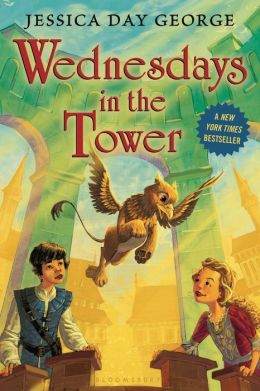
Wednesdays in the Tower (2013)
Wednesdays in the Tower. Jessica Day George. 2013. Bloomsbury. 240 pages. [Source: Library]
Even though it has only been two years since I've read Tuesdays at the Castle, I remembered very little about the characters and the plot. So I was hoping that Wednesdays in the Tower would not prove too tricky or challenging. Within pages, I was hooked. I read this one cover to cover without putting it down even once. I do have to say that it has a great opening which worked in its favor: "There are a lot of things that can hatch out of an egg. A chicken, for example. Or a dragon. And when the egg in question is the size of a pumpkin, and almost as orange, not to mention burning hot, you know that you're far more likely to get a dragon than a chicken."
Princess Celie and her family live at Castle Glower. The castle is without a doubt one of the more interesting in literature. This castle has a mind of its own. It does what it wants, when it wants. Usually on Tuesday is when it decides to add rooms, or, perhaps take away rooms. It isn't always adding or subtracting. Sometimes it's rearranging. One thing is for certain, only a handful of people know their way around all the rooms in the Castle. And Princess Celie is trying her best to provide a map or atlas of the ever-changing castle.
As I said, usually the castle is full of surprises on Tuesday. However, it is a Wednesday when Celie discovers a new room, and not just the room, but an egg. The castle leads Celie to this room again and again, but only when she's alone. Anytime she tries to bring someone else, to show them what she's found, it's vanished.
Essentially Wednesdays in the Tower concerns Celie and what hatches from the egg. Also about the magic of the castle as well, trying to understand how the castle works and why it does what it does when it does. In other words, the history of the Castle in general and how it connects with what hatched from the egg.
I found this a quick and enjoyable read. I liked Celie. I liked her siblings and parents. I liked getting to know her friends. I probably would have appreciated them all a bit more if I remembered Tuesdays at the Castle. But. Sometimes it's good to know that a book can be read alone or out of sequence.
The ending. Did it leave me wanting more? Yes. Was that how it should have been? I think so. Not that I'm a fan of cliffhanger endings. But. When the opening of a book and the ending of a book leave you wanting more it can't be a bad thing. Of course, if I'd read this book when it first came out, I might have felt frustrated. But the sequel will be out soon.
© 2014 SukaYuka.com of SukaYuka's Book Reviews
Even though it has only been two years since I've read Tuesdays at the Castle, I remembered very little about the characters and the plot. So I was hoping that Wednesdays in the Tower would not prove too tricky or challenging. Within pages, I was hooked. I read this one cover to cover without putting it down even once. I do have to say that it has a great opening which worked in its favor: "There are a lot of things that can hatch out of an egg. A chicken, for example. Or a dragon. And when the egg in question is the size of a pumpkin, and almost as orange, not to mention burning hot, you know that you're far more likely to get a dragon than a chicken."
Princess Celie and her family live at Castle Glower. The castle is without a doubt one of the more interesting in literature. This castle has a mind of its own. It does what it wants, when it wants. Usually on Tuesday is when it decides to add rooms, or, perhaps take away rooms. It isn't always adding or subtracting. Sometimes it's rearranging. One thing is for certain, only a handful of people know their way around all the rooms in the Castle. And Princess Celie is trying her best to provide a map or atlas of the ever-changing castle.
As I said, usually the castle is full of surprises on Tuesday. However, it is a Wednesday when Celie discovers a new room, and not just the room, but an egg. The castle leads Celie to this room again and again, but only when she's alone. Anytime she tries to bring someone else, to show them what she's found, it's vanished.
Essentially Wednesdays in the Tower concerns Celie and what hatches from the egg. Also about the magic of the castle as well, trying to understand how the castle works and why it does what it does when it does. In other words, the history of the Castle in general and how it connects with what hatched from the egg.
I found this a quick and enjoyable read. I liked Celie. I liked her siblings and parents. I liked getting to know her friends. I probably would have appreciated them all a bit more if I remembered Tuesdays at the Castle. But. Sometimes it's good to know that a book can be read alone or out of sequence.
The ending. Did it leave me wanting more? Yes. Was that how it should have been? I think so. Not that I'm a fan of cliffhanger endings. But. When the opening of a book and the ending of a book leave you wanting more it can't be a bad thing. Of course, if I'd read this book when it first came out, I might have felt frustrated. But the sequel will be out soon.
© 2014 SukaYuka.com of SukaYuka's Book Reviews
Monday, September 1, 2014
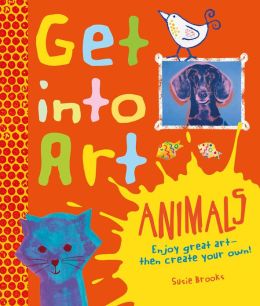
Two Get Into Art Books
Get Into Art: Animals. Susie Brooks. 2013. Kingfisher. 32 pages. [Source: Review copy]
If you were going to draw an animal, what would it be? You have so much choice, it might be hard to decide! Animals are a great subject for artists because there are so many shapes, colors, and characters to choose from...Look at the different ways in which animals have inspired famous artists--and then let them inspire you, too!
What a fun concept book for sharing art with children! Get Into Art Animals shares twelve famous artworks with children. Facts about the artists are given for each work of art. In addition, there is a recommended hands-on art project inspired by each work. A glossary in the back defines art terms. There's also a list of everything you'll need to do all the projects.
The Snail, Henri Matisse, 1953
Suspense, Sir Edwin Landseer, 1861
Crinkly Giraffe, Alexander Calder, 1971
The Bird, Georges Braque, 1949
Peacock and Magpie, Edward Bawden, 1970
Fish (E59), M.C. Escher, 1942
Carnival of Harlequin, Joan Miro, 1924-1925
Totem Poles, Wayne Alfred and Beau Dick 1991 and Ellen Neel 1955
Yellow Cow, Franz Marc, 1911
Dragon Wish, Chinese artist 1600-1635
Portrait of Maurice, Andy Warhol, 1976
Jockeys in the Rain, Edgar Degas, 1883-1886
The project for "Totem Poles" is "Crafty Totem." Making your own totem pole out of a cardboard tube and paper. But my favorite may just be "Colorful Cats" a project inspired by Andy Warhol.
Can you think of an art subject that's always around? Just look in a mirror for the answer! Artists often base their work on themselves or other people. Some create portraits to remember people by or characters to illustrate a story. Others capture feelings, actions, fashions, or imaginary faces. The great thing is that people are all different, and artists can bring them to life in many ways. See how people have inspired famous artists--then let them inspire you, too!
I have really enjoyed looking at both books in this art-appreciation series. Like the previous book, this one introduces twelve works of art to children. Facts about each artist are shared. Each work is connected to a hands-on art project. A project materials checklist and a glossary are included in the back.
Vertumnus, Giuseppe Arcimboldo, about 1590
Weeping Woman, Pablo Picasso, 1937
David, Michelangelo Buonarroti, 1501-1504
The Scream, Edvard Munch, 1893
Children's Games, Pieter Bruegel the Elder, 1560
Portrait of Adele Bloch-Bauer 1, Gustav Klimt, 1907
A Sunday Afternoon On the Island of La Grande Jatte, Georges Seurat, 1884
Grotesque Faces, Leonardo da Vinci, 1500s
Egyptian Burial Mask, Ancient Egyptian craftspeople, around 3000 BC to A.D. 1st Century
Girl in Mirror, Roy Lichtenstein, 1964
Lawn Tennis, Eadweard Muybridge, 1887
Las Meninas, Diego Velazquez, 1656
There are so many great project ideas in this one! I find myself liking the projects better in Get Into Art People than in Get Into Art Animals. I'm not sure why! I like how the project for "David" is teaching proportion in drawing. It shows step by step how to draw a face (and body) in proper proportion. The Mummy Mask looks like so much fun!!! However, the example I'd like to share with you is inspired by the photograph action sequences of Eadweard Muybridge.
© 2014 SukaYuka.com of SukaYuka's Book Reviews
If you were going to draw an animal, what would it be? You have so much choice, it might be hard to decide! Animals are a great subject for artists because there are so many shapes, colors, and characters to choose from...Look at the different ways in which animals have inspired famous artists--and then let them inspire you, too!
What a fun concept book for sharing art with children! Get Into Art Animals shares twelve famous artworks with children. Facts about the artists are given for each work of art. In addition, there is a recommended hands-on art project inspired by each work. A glossary in the back defines art terms. There's also a list of everything you'll need to do all the projects.
The Snail, Henri Matisse, 1953
Suspense, Sir Edwin Landseer, 1861
Crinkly Giraffe, Alexander Calder, 1971
The Bird, Georges Braque, 1949
Peacock and Magpie, Edward Bawden, 1970
Fish (E59), M.C. Escher, 1942
Carnival of Harlequin, Joan Miro, 1924-1925
Totem Poles, Wayne Alfred and Beau Dick 1991 and Ellen Neel 1955
Yellow Cow, Franz Marc, 1911
Dragon Wish, Chinese artist 1600-1635
Portrait of Maurice, Andy Warhol, 1976
Jockeys in the Rain, Edgar Degas, 1883-1886
The project for "Totem Poles" is "Crafty Totem." Making your own totem pole out of a cardboard tube and paper. But my favorite may just be "Colorful Cats" a project inspired by Andy Warhol.
Colorful CatsGet Into Art: People. Susie Brooks. 2013. Kingfisher. 32 pages. [Source: Review copy]
Warhol's silk-screen method was complicated, but you can get a similar effect with a simple stencil.
1. On a piece of card stock, draw the outline of an animal and carefully cut it out. You'll end up with two stencils like these. (Cut out the eyes, nose and mouth on the second stencil).
2 Lay stencil 1 on a piece of thick paper and attach it with paper clips. Sponge yellow paint all over it.
3. When the paint is dry, lift the stencil and move it slightly down and to one side. Sponge red paint unevenly over it and then leave it to dry.
4. Now lay stencil 2 on top of the picture and sponge blue paint over the holes. Leave it to dry, and then remove the stencil. Cut out the animal and stick it onto a colorful background. (You can print whiskers by dipping the edge of a strip of card stock in paint.)
Warhol often repeated his prints in different colors. Try making a set like this. (27)
Can you think of an art subject that's always around? Just look in a mirror for the answer! Artists often base their work on themselves or other people. Some create portraits to remember people by or characters to illustrate a story. Others capture feelings, actions, fashions, or imaginary faces. The great thing is that people are all different, and artists can bring them to life in many ways. See how people have inspired famous artists--then let them inspire you, too!
I have really enjoyed looking at both books in this art-appreciation series. Like the previous book, this one introduces twelve works of art to children. Facts about each artist are shared. Each work is connected to a hands-on art project. A project materials checklist and a glossary are included in the back.
Vertumnus, Giuseppe Arcimboldo, about 1590
Weeping Woman, Pablo Picasso, 1937
David, Michelangelo Buonarroti, 1501-1504
The Scream, Edvard Munch, 1893
Children's Games, Pieter Bruegel the Elder, 1560
Portrait of Adele Bloch-Bauer 1, Gustav Klimt, 1907
A Sunday Afternoon On the Island of La Grande Jatte, Georges Seurat, 1884
Grotesque Faces, Leonardo da Vinci, 1500s
Egyptian Burial Mask, Ancient Egyptian craftspeople, around 3000 BC to A.D. 1st Century
Girl in Mirror, Roy Lichtenstein, 1964
Lawn Tennis, Eadweard Muybridge, 1887
Las Meninas, Diego Velazquez, 1656
There are so many great project ideas in this one! I find myself liking the projects better in Get Into Art People than in Get Into Art Animals. I'm not sure why! I like how the project for "David" is teaching proportion in drawing. It shows step by step how to draw a face (and body) in proper proportion. The Mummy Mask looks like so much fun!!! However, the example I'd like to share with you is inspired by the photograph action sequences of Eadweard Muybridge.
Action SnapsI would recommend both of these books by Susie Brooks.
To photograph your own action sequences you'll need a camera and a friend.
1. Decide what movement you are going to photograph. It's best if it's something that can be done slowly. Get your friend to try moving in slow motion and holding each stage of the pose. When you're ready to start, stand at a good distance from your subject so that he or she fills the camera frame.
2. Keep the same distance between you and your friend as you photograph each stage of the action. If your model moves in one direction, you should move too.
3. If you're photographing something quick, like a somersault, get your friend to repeat the movement and press the shutter button at a different stage each time.
4. Print out your photos and arrange them in sequence--or "stitch" them together on a computer. (27)
© 2014 SukaYuka.com of SukaYuka's Book Reviews
Monday, August 18, 2014
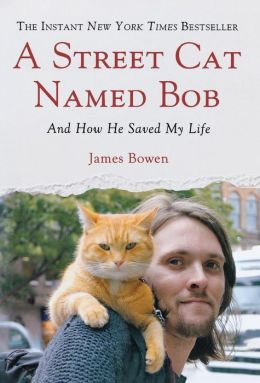
A Street Cat Named Bob
A Street Cat Named Bob: And How He Saved My Life. James Bowen. 2013. St. Martin's Press. 279 pages. [Source: Library]
A Street Cat Named Bob is a simple story in many ways. It's the story of one man and his cat: how they found each other, how they changed each other's lives, how they got to be so close, so fast. At the time the book opens, James Bowen was a street musician--a busker--and a recovering drug addict. He had taken steps to get off the street--at one time he was homeless and addicted to drugs--but the road ahead was still long and uncertain. He sees a stray cat, "a ginger tom," near his building, he sees that it could use a little help. He's injured. He's hungry. He decides to take the cat in and nurse him back to health. He didn't know it at the time, but, Bob wouldn't be going anywhere. Bob had found his home.
If Bob had been an ordinary cat, readers would never have heard of him or James Bowen. Bob would not have become a YouTube star. But ordinary doesn't exactly describe Bob.
Bob wasn't content to stay at home and let James go off busking. He wanted to go along. He wanted in on the action. James found that with a cat, he was irresistible, or rather Bob was irresistible. Wherever he and Bob went, Bob got ATTENTION and ADORATION. Busking became a LOT easier for him when Bob was there sitting on his guitar case and looking cute and adorable. People wanted to take Bob's picture. People wanted to take video. People wanted to pet him. People wanted to give him treats. People wanted to KNIT him clothes. But busking was still rough and unpredictable as the book shows. Eventually, James and Bob gave it up and pursued one of the few things possible. He was still on the streets, still out with Bob, but, now he was selling a magazine, Big Issue, instead of a song.
The book, as I mentioned, is in a way simple, a story of man meets cat. Happy cat. Happy man. But it's also got a bit of a message. And by message, I don't mean the preachy kind. It's the story of a man who went from invisible to visible. He talks about how having the cat gave him back his humanity, his dignity. The book, in a way, is about how we see others. Do we see the homeless, the poor? Do we see them or brush them aside?
© 2014 SukaYuka.com of SukaYuka's Book Reviews
A Street Cat Named Bob is a simple story in many ways. It's the story of one man and his cat: how they found each other, how they changed each other's lives, how they got to be so close, so fast. At the time the book opens, James Bowen was a street musician--a busker--and a recovering drug addict. He had taken steps to get off the street--at one time he was homeless and addicted to drugs--but the road ahead was still long and uncertain. He sees a stray cat, "a ginger tom," near his building, he sees that it could use a little help. He's injured. He's hungry. He decides to take the cat in and nurse him back to health. He didn't know it at the time, but, Bob wouldn't be going anywhere. Bob had found his home.
If Bob had been an ordinary cat, readers would never have heard of him or James Bowen. Bob would not have become a YouTube star. But ordinary doesn't exactly describe Bob.
Bob wasn't content to stay at home and let James go off busking. He wanted to go along. He wanted in on the action. James found that with a cat, he was irresistible, or rather Bob was irresistible. Wherever he and Bob went, Bob got ATTENTION and ADORATION. Busking became a LOT easier for him when Bob was there sitting on his guitar case and looking cute and adorable. People wanted to take Bob's picture. People wanted to take video. People wanted to pet him. People wanted to give him treats. People wanted to KNIT him clothes. But busking was still rough and unpredictable as the book shows. Eventually, James and Bob gave it up and pursued one of the few things possible. He was still on the streets, still out with Bob, but, now he was selling a magazine, Big Issue, instead of a song.
The book, as I mentioned, is in a way simple, a story of man meets cat. Happy cat. Happy man. But it's also got a bit of a message. And by message, I don't mean the preachy kind. It's the story of a man who went from invisible to visible. He talks about how having the cat gave him back his humanity, his dignity. The book, in a way, is about how we see others. Do we see the homeless, the poor? Do we see them or brush them aside?
© 2014 SukaYuka.com of SukaYuka's Book Reviews
Wednesday, July 30, 2014
Dualed (2013)
Dualed. Elsie Chapman. 2013. Random House. 304 pages. [Source: Library]
My second attempt at reading Dualed went much better than my first. The second time I picked it up, it was an easy read. Easy meaning that I read almost all of it in one sitting. The content itself, well, easy doesn't really describe the world Chapman created in her novel.
West, the heroine, has known her whole life that she'll have to kill or be killed in order to take a place in the community. That's just how things are now. Every person has an alt--a genetic clone of sorts. Every alt poses a threat. When an assignment goes active, both know it's kill or be killed. And both also know that timing is key. They have exactly one month to complete their assignment or both will be killed. West is the only one left in her family. It's a dangerous world, a violent world. Many people are PK's peripheral kills--being killed "accidentally" during the fight between two alts. No street or neighborhood is really safe because of it. There will always be teens who have gone active and are in survival mode. Though West does not have any family in her life--readers do briefly meet Luc, her brother--she is not truly alone. Her brother's friend, Chord, cares about her a great deal. The book opens with Chord receiving his assignment; readers get a brief glimpse of what the book will be like. His assignment is completed very quickly and dramatically. Though some of the drama is lost since readers barely know the characters and haven't come to care yet. Effective for letting readers know that death, violent death, is what this book is all about perhaps.
Some
Spoilers
Follow
West. I didn't like or dislike her really. I had a hard time understanding her, why, she would be completely fine being an assassin and murdering others on almost a daily or at least weekly basis. Yet be so anxious about facing her own alt. After all, the risks to her own life are the same. The fact that she was an assassin meant that she was capable of killing. It also meant that she was not afraid to put her own life in danger. Every job she took, there was risk that she could die if it went bad. Yet West does the opposite of what you'd expect: she hides and waits and hides and waits and hides and waits and mopes a bit.
Chord was a good guy, well, as good a guy as you're going to get in this crazy society where all adults have committed murder at least once. I did get the sense that he cared about West and wanted a relationship with her that was based more on them and less on Luc.
Overall, Dualed is a not-for-me book. Others may enjoy it more, of course.
© 2014 SukaYuka.com of SukaYuka's Book Reviews
My second attempt at reading Dualed went much better than my first. The second time I picked it up, it was an easy read. Easy meaning that I read almost all of it in one sitting. The content itself, well, easy doesn't really describe the world Chapman created in her novel.
West, the heroine, has known her whole life that she'll have to kill or be killed in order to take a place in the community. That's just how things are now. Every person has an alt--a genetic clone of sorts. Every alt poses a threat. When an assignment goes active, both know it's kill or be killed. And both also know that timing is key. They have exactly one month to complete their assignment or both will be killed. West is the only one left in her family. It's a dangerous world, a violent world. Many people are PK's peripheral kills--being killed "accidentally" during the fight between two alts. No street or neighborhood is really safe because of it. There will always be teens who have gone active and are in survival mode. Though West does not have any family in her life--readers do briefly meet Luc, her brother--she is not truly alone. Her brother's friend, Chord, cares about her a great deal. The book opens with Chord receiving his assignment; readers get a brief glimpse of what the book will be like. His assignment is completed very quickly and dramatically. Though some of the drama is lost since readers barely know the characters and haven't come to care yet. Effective for letting readers know that death, violent death, is what this book is all about perhaps.
Some
Spoilers
Follow
West. I didn't like or dislike her really. I had a hard time understanding her, why, she would be completely fine being an assassin and murdering others on almost a daily or at least weekly basis. Yet be so anxious about facing her own alt. After all, the risks to her own life are the same. The fact that she was an assassin meant that she was capable of killing. It also meant that she was not afraid to put her own life in danger. Every job she took, there was risk that she could die if it went bad. Yet West does the opposite of what you'd expect: she hides and waits and hides and waits and hides and waits and mopes a bit.
Chord was a good guy, well, as good a guy as you're going to get in this crazy society where all adults have committed murder at least once. I did get the sense that he cared about West and wanted a relationship with her that was based more on them and less on Luc.
Overall, Dualed is a not-for-me book. Others may enjoy it more, of course.
© 2014 SukaYuka.com of SukaYuka's Book Reviews
Wednesday, June 25, 2014
The Candy Smash (2013)
The Candy Smash. Jacqueline Davies (Lemonade War #4) 2013. Houghton Mifflin Harcourt. 240 pages. [Source: Review copy]
The fourth book in Jacqueline Davies Lemonade War series brings us to February in Jessie and Evan Treski's fourth grade year. Apparently after returning to school, Jessie decided to start a classroom newspaper. The Candy Smash is ALL about Jessie working very hard as a journalist and reporter as she tries to figure out the ethics of publishing. For example, if Jessie *knows* that someone like-likes someone, should she report it? Perhaps if Jessie herself were to have a crush, she'd know the answer to that one. But boys, well, they just don't interest her yet. Evan, on the other hand, well, he is definitely interested in one particular girl. (He has been since The Lemonade War!)
The Candy Smash isn't all about journalism. The teacher has started a poetry unit. While some students like hearing and discussing the poems each class day, Evan happens to love it. He tries not to let his love show too much, of course. But Evan's big secret: HE LOVES POETRY. And at home, behind his unlocked "locked" door (there's a sign on the door) he writes poetry of his own. For someone who has struggled with school, Evan's newly discovered gift with words is pure blessing.
The books have been getting more serious as the series progresses. In the Candy Smash, readers learn that Grandma has come to stay with them. I was very relieved to learn that she would not be left on her own. Also, Jessie has started thinking a LOT about her father whom she hasn't seen in over a year. Readers learn that HE is a journalist, that he travels all over the world. I knew, of course, that their mother is a single mom, divorced, but this is the first mention that I can recall revealing details about the dad.
© 2014 SukaYuka.com of SukaYuka's Book Reviews
The fourth book in Jacqueline Davies Lemonade War series brings us to February in Jessie and Evan Treski's fourth grade year. Apparently after returning to school, Jessie decided to start a classroom newspaper. The Candy Smash is ALL about Jessie working very hard as a journalist and reporter as she tries to figure out the ethics of publishing. For example, if Jessie *knows* that someone like-likes someone, should she report it? Perhaps if Jessie herself were to have a crush, she'd know the answer to that one. But boys, well, they just don't interest her yet. Evan, on the other hand, well, he is definitely interested in one particular girl. (He has been since The Lemonade War!)
The Candy Smash isn't all about journalism. The teacher has started a poetry unit. While some students like hearing and discussing the poems each class day, Evan happens to love it. He tries not to let his love show too much, of course. But Evan's big secret: HE LOVES POETRY. And at home, behind his unlocked "locked" door (there's a sign on the door) he writes poetry of his own. For someone who has struggled with school, Evan's newly discovered gift with words is pure blessing.
The books have been getting more serious as the series progresses. In the Candy Smash, readers learn that Grandma has come to stay with them. I was very relieved to learn that she would not be left on her own. Also, Jessie has started thinking a LOT about her father whom she hasn't seen in over a year. Readers learn that HE is a journalist, that he travels all over the world. I knew, of course, that their mother is a single mom, divorced, but this is the first mention that I can recall revealing details about the dad.
© 2014 SukaYuka.com of SukaYuka's Book Reviews
Monday, June 23, 2014
Frozen in Time (2013)
Frozen in Time. Mitchell Zuckoff. 2013. Harper. 391 pages. [Source: Library]
I absolutely loved Mitchell Zuckoff's Frozen in Time. Nonfiction can be compelling and fascinating and oh-so-intense. True, most people when looking for an engaging, emotional read might tend to think of fiction, but, nonfiction can prove just as addictive, just as satisfying. Such was the case with Frozen In Time. I found this nonfiction book IMPOSSIBLE to put down!
In the first chapter, readers learn how 'obscure' Greenland became suddenly important to the world:
The whole book is about survivors and saviors and would-be saviors: lives lost and saved. Just telling the story simply makes for a harsh, intense read. The intensity of the cold and hunger and the physical pain make it so. Not to mention the emotional and psychological effects of being stranded in a very very harsh environment in the middle of winter! These men weren't arctic explorers out for glory and fame, these were soldiers and pilots who were unprepared for this kind of danger.
Half the book focuses on the past, set during the winter of 1942-1943. The other half focuses on the present, a team of men and women searching for the "Grumman Duck" the rescue plane that crashed around Thanksgiving 1942. Their hope was to find it and recover the bodies of the three aboard. Two of the men were from the Coast Guard.
While I found this one to be essentially fascinating from cover to cover, I won't lie and say that the past and present narratives were equally captivating at all times. Part of the present story was chronicling the raising awareness and raising funds, searching for big sponsors, pleading their case to anyone who would listen.
This was a wonderful read! It is not as bleak as you might expect. I would definitely recommend it!!!
© 2014 SukaYuka.com of SukaYuka's Book Reviews
I absolutely loved Mitchell Zuckoff's Frozen in Time. Nonfiction can be compelling and fascinating and oh-so-intense. True, most people when looking for an engaging, emotional read might tend to think of fiction, but, nonfiction can prove just as addictive, just as satisfying. Such was the case with Frozen In Time. I found this nonfiction book IMPOSSIBLE to put down!
In the first chapter, readers learn how 'obscure' Greenland became suddenly important to the world:
All of that changed on April 9, 1940, when Nazi Germany invaded Denmark. American leaders suddenly looked with fear upon the big island so close to North America. They shuddered at the thought of Hitler building air bases and ports in Greenland, from which they imagined he might strike at Allied planes and ships in the North Atlantic. Even more frightening, Greenland was then six hours by air from New York, well within the range of German bombers. Worst of all was a doomsday scenario under which the island would be used as a Nazi staging area and springboard for a blitzkrieg, or 'lightning war,' with a ground invasion of the United States and Canada.That one chapter gives the reader some context for appreciating the whole. The book itself focuses on several plane crashes on Greenland in November 1942. The first plane crash was a C-53 Skytrooper. There were survivors. Radio contact was made. Other planes were sent to search for this missing plane. Unfortunately, one of the planes that went to search for the C-53 also crashed. This second plane crash was a B-17. All nine aboard survived--initially. But their continued survival was always a big question mark. After they finally make radio contact, and after several failed attempts at rescue by other means, another plane is sent to search for the B-17. The good news? They find the B-17! They are able to take two men aboard their plane and take them to safety. They plan to return the next day to rescue more of the men. The bad news? When they return the next day, it's a whole other story. They were not able to rescue more men. On their return flight, this rescue plane crashes. There are no survivors.
More immediately, American officials worried that Germany would establish elaborate weather stations in Greenland. The weather in Europe is "made" in Greenland; winds and currents that flow eastward over the island give birth to storms heading toward Great Britain, Norway, and beyond. Whoever knows today's weather in Greenland knows tomorrow's weather in Europe. Allied planners feared that German weather stations in Greenland could guide Luftwaffe bombing runs over Great Britain and the Continent. The battle to control Greenland wasn't a war for territory, one American official said--it was 'a war for weather.'
Concern about Greenland also reflected the fact that some wars are lost not in the field but in the factory. If the Nazis ruled Greenland, Germany would gain control of a rare and unique resource that could help determine the outcome of the war. A mine at Greenland's southwestern coast, in a place called Ivigtut, was the world's only reliable natural source of a milky white mineral called cryolite. Cryolite, a name derived from Greek words meaning "frost stone," was essential to the production of aluminum, and aluminum was essential to the production of warplanes...At less than a mile from the water, the Ivigtut mine was vulnerable to sabotage or attack...(19-20)
The whole book is about survivors and saviors and would-be saviors: lives lost and saved. Just telling the story simply makes for a harsh, intense read. The intensity of the cold and hunger and the physical pain make it so. Not to mention the emotional and psychological effects of being stranded in a very very harsh environment in the middle of winter! These men weren't arctic explorers out for glory and fame, these were soldiers and pilots who were unprepared for this kind of danger.
Half the book focuses on the past, set during the winter of 1942-1943. The other half focuses on the present, a team of men and women searching for the "Grumman Duck" the rescue plane that crashed around Thanksgiving 1942. Their hope was to find it and recover the bodies of the three aboard. Two of the men were from the Coast Guard.
While I found this one to be essentially fascinating from cover to cover, I won't lie and say that the past and present narratives were equally captivating at all times. Part of the present story was chronicling the raising awareness and raising funds, searching for big sponsors, pleading their case to anyone who would listen.
This was a wonderful read! It is not as bleak as you might expect. I would definitely recommend it!!!
© 2014 SukaYuka.com of SukaYuka's Book Reviews
Thursday, June 19, 2014
The Last Present (2013)
The Last Present (Willow Falls #4) Wendy Mass. 2013. Scholastic. 256 pages. [Source: Review copy]
The Last Present is the sequel to 13 Gifts. The two books are closely connected. 13 Gifts had a cliffhanger ending--for better or worse. Much of 13 Gifts was spent hinting that Leo and Amanda had a BIG TASK AHEAD which required them to sacrifice talking to one another for an entire year. (Only texting and writing was allowed.) Tara, the heroine of 13 Gifts, came to town in the last weeks of their sacrifice. At first, Leo and Amanda, guess that it's all about Tara, and then that it's all about David. Two friends celebrating birthdays the same weekend in July. But at David's party, the truth becomes obvious. Grace, the younger sister of Connor, one of David's friends, falls into a coma after babbling nonsense. Amanda and Leo have no doubt that Angelina will be needing them to save the day somehow, someway. Such is the case.
The two will be traveling back in time. They will travel to each of Grace's birthday parties. They will fix what went wrong with Angelina's "blessing of protection." What they notice from the start is that Connor and another relative seem to be acting against them each and every time. They have no idea if Connor is ruining his sister's parties on purpose or if it's completely accidental. Their mission is clear. How that mission is actually accomplished remains a bit of a puzzle. Readers are just told at each twist and turn that it's the work of Angelina, and that she alone knows what is going on, and since Angelina wouldn't ever dream of sharing that knowledge with anyone no matter what, everything the kids do is on faith.
I liked this one. I didn't not like it anyway. But for a book that supposedly answers all the questions and solves the mystery that is Angelina, this one left me unsatisfied. Out of all the novels, this one is definitely the clearest that this is FANTASY and that magic is going on all around. But the little details seem messy from my perspective.
© 2014 SukaYuka.com of SukaYuka's Book Reviews
The Last Present is the sequel to 13 Gifts. The two books are closely connected. 13 Gifts had a cliffhanger ending--for better or worse. Much of 13 Gifts was spent hinting that Leo and Amanda had a BIG TASK AHEAD which required them to sacrifice talking to one another for an entire year. (Only texting and writing was allowed.) Tara, the heroine of 13 Gifts, came to town in the last weeks of their sacrifice. At first, Leo and Amanda, guess that it's all about Tara, and then that it's all about David. Two friends celebrating birthdays the same weekend in July. But at David's party, the truth becomes obvious. Grace, the younger sister of Connor, one of David's friends, falls into a coma after babbling nonsense. Amanda and Leo have no doubt that Angelina will be needing them to save the day somehow, someway. Such is the case.
The two will be traveling back in time. They will travel to each of Grace's birthday parties. They will fix what went wrong with Angelina's "blessing of protection." What they notice from the start is that Connor and another relative seem to be acting against them each and every time. They have no idea if Connor is ruining his sister's parties on purpose or if it's completely accidental. Their mission is clear. How that mission is actually accomplished remains a bit of a puzzle. Readers are just told at each twist and turn that it's the work of Angelina, and that she alone knows what is going on, and since Angelina wouldn't ever dream of sharing that knowledge with anyone no matter what, everything the kids do is on faith.
I liked this one. I didn't not like it anyway. But for a book that supposedly answers all the questions and solves the mystery that is Angelina, this one left me unsatisfied. Out of all the novels, this one is definitely the clearest that this is FANTASY and that magic is going on all around. But the little details seem messy from my perspective.
© 2014 SukaYuka.com of SukaYuka's Book Reviews
Saturday, June 14, 2014
The Lost Sun (2013)
The Lost Sun. (The United States of Asgard #1) Tess Gratton. 2013. Random House. 368 pages. [Source: Library]
My mom used to say that in the United States of Asgard, you can feel the moments when the threads of destiny knot together, to push you or pull you or crush you. But only if you're paying attention.
I found The Lost Sun to be an enjoyable read. I didn't love, love, love it. But all the same, I found it to be a quick and pleasant read for an afternoon. The hero of The Lost Sun is Soren Bearskin. He is "destined" to be a beserker just as his father was. His beserker legacy troubles him greatly. He does not want to give way to it, no matter if it's in his nature or written in his destiny. He does not see anything positive in it. Soren Bearskin falls for the new girl at school, Astrid Glyn. Astrid is a seer; her mother was a very, very famous seer. Early in the novel, something bizarre happens. Baldur the Beautiful, a god who was supposed to resurrect in the springtime, did not appear. He did not come back to life. He did not rejoin the gods. He's completely missing. Astrid and Soren team up to find him. Astrid's dreams and visions offer BIG clues to the pair. Together can they find him and set things right?
For readers who enjoy fantasy quests, The Lost Sun is definitely recommended. Astrid and Sun have a mystery to solve, and they go on a quest together. Along the way, they offer readers a look at a very different alternate vision of the U.S.
© 2014 SukaYuka.com of SukaYuka's Book Reviews
My mom used to say that in the United States of Asgard, you can feel the moments when the threads of destiny knot together, to push you or pull you or crush you. But only if you're paying attention.
I found The Lost Sun to be an enjoyable read. I didn't love, love, love it. But all the same, I found it to be a quick and pleasant read for an afternoon. The hero of The Lost Sun is Soren Bearskin. He is "destined" to be a beserker just as his father was. His beserker legacy troubles him greatly. He does not want to give way to it, no matter if it's in his nature or written in his destiny. He does not see anything positive in it. Soren Bearskin falls for the new girl at school, Astrid Glyn. Astrid is a seer; her mother was a very, very famous seer. Early in the novel, something bizarre happens. Baldur the Beautiful, a god who was supposed to resurrect in the springtime, did not appear. He did not come back to life. He did not rejoin the gods. He's completely missing. Astrid and Soren team up to find him. Astrid's dreams and visions offer BIG clues to the pair. Together can they find him and set things right?
For readers who enjoy fantasy quests, The Lost Sun is definitely recommended. Astrid and Sun have a mystery to solve, and they go on a quest together. Along the way, they offer readers a look at a very different alternate vision of the U.S.
© 2014 SukaYuka.com of SukaYuka's Book Reviews
Thursday, May 22, 2014
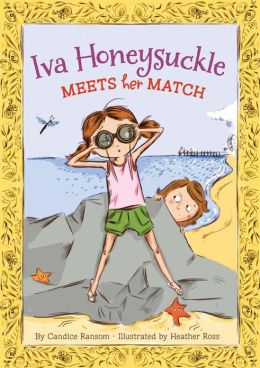
Iva Honeysuckle Meets Her Match (2013)
Iva Honeysuckle Meets Her Match. Candice F. Ransom. Illustrated by Heather Ross. 2013. Disney-Hyperion. 192 pages. [Source: Library]
Sissy One and Sissy Two are brave in Iva Honeysuckle Meets Her Match. These two sisters head to the beach for a week-long vacation with all six children.
Why brave? Well, Iva and Heaven and Lily Pearl and Howard aren't exactly calm, predictable, obedient children. Though in Howard's defense, he is led by Lily Pearl most of the time. In the first chapter book, Iva Honeysuckle Discovers the World, Lily Pearl was in a witchy phase. (One of her favorite games was playing Naked Witch which involves running wildly around the house: naked, of course.) Howard was a ghost, I believe, in that game. In the second book, Lily Pearl has moved on to playing BRIDE. And Howard, of course, is her victim-playmate. But as it turns out, all six children take a notion to be disobedient and break all the rules set for them by their moms.
Summer vacation. One week. Plenty of adventures and misadventures. They meet new (and interesting) people. They try to manage their own spending money. They try to problem-solve.
Iva, poor dear, has a time of it during vacation! She sees a SEA MONSTER, takes her mom's camera, DROPS it into the ocean, doesn't confess and lets her mother search for it all week long. She feels bad--really bad--so then she starts trying to SOLVE this problem all on her own, how to make restitution AND how to establish proof of the sea monster.
Plenty of action and fun in this one. And the characters, while far from flawless, continue to be entertaining.
I would definitely recommend this one!
© 2014 SukaYuka.com of SukaYuka's Book Reviews
Sissy One and Sissy Two are brave in Iva Honeysuckle Meets Her Match. These two sisters head to the beach for a week-long vacation with all six children.
Why brave? Well, Iva and Heaven and Lily Pearl and Howard aren't exactly calm, predictable, obedient children. Though in Howard's defense, he is led by Lily Pearl most of the time. In the first chapter book, Iva Honeysuckle Discovers the World, Lily Pearl was in a witchy phase. (One of her favorite games was playing Naked Witch which involves running wildly around the house: naked, of course.) Howard was a ghost, I believe, in that game. In the second book, Lily Pearl has moved on to playing BRIDE. And Howard, of course, is her victim-playmate. But as it turns out, all six children take a notion to be disobedient and break all the rules set for them by their moms.
Summer vacation. One week. Plenty of adventures and misadventures. They meet new (and interesting) people. They try to manage their own spending money. They try to problem-solve.
Iva, poor dear, has a time of it during vacation! She sees a SEA MONSTER, takes her mom's camera, DROPS it into the ocean, doesn't confess and lets her mother search for it all week long. She feels bad--really bad--so then she starts trying to SOLVE this problem all on her own, how to make restitution AND how to establish proof of the sea monster.
Plenty of action and fun in this one. And the characters, while far from flawless, continue to be entertaining.
I would definitely recommend this one!
© 2014 SukaYuka.com of SukaYuka's Book Reviews
Monday, May 19, 2014
Tudor (2013)
Tudor: The Family Story. Leanda de Lisle. 2013. Public Affairs. 576 pages. [Source: Library]
Leanda de Lisle's Tudor: The Story of England's Most Notorious Royal Family was a fascinating read. It opens with a queen (Catherine of Valois, the widow of Henry V) marrying a Welsh squire (Owen Tudor); it ends with James VI of Scotland inheriting the throne of England and becoming James I of England. It covers almost (but not quite) two hundred years of English history. Henry VII. Henry VIII. Edward VI. Jane Grey. Bloody Mary. Queen Elizabeth. James I. Not to mention Mary, Queen of Scots. It focuses on the royals who reigned, but, it also pays a good amount of attention to other royals. The sisters of Henry VII. The sisters of Henry VIII. And their offspring, royal cousins. For example, Margaret Douglas and her children and grandchildren. Also Katherine Grey. It focuses on family AND politics AND religion. Also perhaps power and ambition. It avoids as much as possible drawing moral conclusions or judgments about the actions of the royal family. The book urges readers to consider everything in the context of time and culture. Kings and queens eliminated perceived threats via life imprisonment or execution. Emphasis on perceived. Guilt being a matter of perception, not of hard facts and proof.
Overall, I found this book an enjoyable and informative read. I liked the thoroughness, the evenness of the coverage. The information was concise and the narrative was well written. The pacing was well done. I would definitely recommend this one!
© 2014 SukaYuka.com of SukaYuka's Book Reviews
Leanda de Lisle's Tudor: The Story of England's Most Notorious Royal Family was a fascinating read. It opens with a queen (Catherine of Valois, the widow of Henry V) marrying a Welsh squire (Owen Tudor); it ends with James VI of Scotland inheriting the throne of England and becoming James I of England. It covers almost (but not quite) two hundred years of English history. Henry VII. Henry VIII. Edward VI. Jane Grey. Bloody Mary. Queen Elizabeth. James I. Not to mention Mary, Queen of Scots. It focuses on the royals who reigned, but, it also pays a good amount of attention to other royals. The sisters of Henry VII. The sisters of Henry VIII. And their offspring, royal cousins. For example, Margaret Douglas and her children and grandchildren. Also Katherine Grey. It focuses on family AND politics AND religion. Also perhaps power and ambition. It avoids as much as possible drawing moral conclusions or judgments about the actions of the royal family. The book urges readers to consider everything in the context of time and culture. Kings and queens eliminated perceived threats via life imprisonment or execution. Emphasis on perceived. Guilt being a matter of perception, not of hard facts and proof.
Overall, I found this book an enjoyable and informative read. I liked the thoroughness, the evenness of the coverage. The information was concise and the narrative was well written. The pacing was well done. I would definitely recommend this one!
© 2014 SukaYuka.com of SukaYuka's Book Reviews
Saturday, May 10, 2014
Rumpelstilstkin (Faerie Tale Collection)
Rumpelstiltskin. Jenni James. 2013. Stonehouse Ink. [Source: Bought]
I have mixed feelings on this one. I can see strengths. I can see weaknesses.
Strengths:
Weaknesses:
© 2014 SukaYuka.com of SukaYuka's Book Reviews
I have mixed feelings on this one. I can see strengths. I can see weaknesses.
Strengths:
- Both the hero, Rumpelstiltskin, and heroine, Aubrynn, are well introduced. The chapters devoted to introducing these two to the reader were quite good. These two made a good impression on me from the beginning. Because of how well this one begins, my expectations for the whole story were raised considerably.
- For readers of romance, yes, LIGHT romance, there are dozens of kissing descriptions. If you like that sort of thing, if you are looking for relatively clean romance that doesn't go too far, too fast, then this one may satisfy.
- In a way, it has a Beauty and the Beast feel to it. But not quite. Aubrynn is initially startled, perhaps, by his appearance. But she is never reluctant or hesitant or fearful. She's very accepting and grateful from about two minutes into their relationship.
ON THE DAY OF the commemoration of Prince Frederico’s death, Aubrynn Sloat hustled and bustled around the small cottage to prepare for the trip up to the castle grounds. It was imperative that every villager attend or the king’s men would be sure to toss them in the dungeons. It was used as a day of reckoning—of final tax collecting and an accounting of all the villagers still under the king’s reign.
Clearly she had no magical abilities whatsoever. “Lie to him,” Rumple whispered quietly to himself. “Lie. Tell the most convincing falsehood you can.” The king clenched the girl’s jaw. “Tell me now. Can you turn straw into gold?” Rumple sucked in air and tightened his hold upon the nearest branch. She closed her eyes and nodded. Heaving a sigh of relief, Rumple watched as his brother began to lightly stroke her jaw and neck. “Good. Because if you can, I will marry you.” Her eyes closed tightly, obviously repulsed by his forward behavior as his hand moved to her shoulder and clasped it. “But if you are lying and cannot do what your father says you can, he will die.” The girl’s eyes flew to the king, and for a moment she looked just like a frightened rabbit facing a hunter before she nodded again. “You are very beautiful, you know.” Marcus ran his hand up her neck and jaw again. “So very beautiful. I believe you would make a striking queen.”
Weaknesses:
- So much time was spent on detailing the kisses between the hero and heroine there is hardly any time at all spent towards developing other characters (including villains). Not only did the other characters suffer a bit in development, the story itself suffers here and there. Not all the time. Not so much that it is definitely "bad". But just enough that you think it is just so-so, nothing special.
- You definitely have to suspend your disbelief when it comes to the magic stones. I had an easier time believing that sucking on a magic stone would make Rumpelstiltskin able to spin straw into gold than I did that a magic stone could magically make two characters slide down endless flights of stairs in no time, and magically whisk these two characters from one room on another in the castle. Some rules or some logic would have been nice. As I said, sometimes the "magic" worked for me, other times not at all. (And did anyone else think it slightly awkward that so many pages of dialogue were spent on Aubrynn needing to use the bathroom?)
- Some of the word choices--the phrases--seemed slightly off. I don't expect to see phrases like "once the coast was clear" and "Great Scott" and "fully happy tummy" and "having to buckle down" in a fairy tale. Also, some of the dialogue was poor. I don't know if it was because the dialogue was weighed down with too many descriptive words OR if poorly developed characters are just awkward communicating with each other. For the most part, Rumpelstiltskin and Aubrynn's dialogue was fine.
“Happy?” He barked out a laugh. “My dear maiden, you have made me much more than happy! I am exuberant! I am ecstatic! I am so well pleased with you, I mean to move you out of this room this very instant and do something simply divine with you! Something—something to reward you for your tremendous talents.”And:
“My window is broken. See that it is fixed immediately. I do not appreciate the chill wind that has been streaming through it.”
© 2014 SukaYuka.com of SukaYuka's Book Reviews
Thursday, May 1, 2014
Hero (2013)
Hero. (Woodcutter Sisters #2). Alethea Kontis. 2013. Houghton Mifflin Harcourt. 304 pages. [Source: Review copy]
At first, I thought I might have found Hero so very, very confusing because it's been two years since I read Enchanted. And then I reread my review of Enchanted. I found Enchanted just as confusing it seems! So even if I read these two close together, I might not have made sense of this crazy fairy-tale-esque world.
The Woodcutter Family is something, magically, crazily dysfunctional perhaps? Hero stars two of the seven sisters and a brother, Trix. Readers get a glimpse of Thursday (the pirate sibling). But this is not Thursday's tale to tell. This is Saturday's story almost start to finish. But it isn't her story alone. It also belongs to Peregrine. Here is the least confusing part that will still sound confusing:
Peregrine is a boy under enchantment to look like a girl; the witch's daughter is a role he plays and has played for many years. I'm not sure what is enchantment and what is just acting on his part, assuming a disguise that he can put on and take off at will.
Saturday is a girl under enchantment to look like her older brother, Jack. Now how the witch casts the spell to make Saturday look like Jack is beyond me. The spell was intended to bring Jack to her. She wants REVENGE. Jack blinded her.
Somehow Peregrine can see past the enchantment and see the real Saturday. And Saturday learns Peregrine's identity early on as well. I can't remember if she sees the real him, or the enchanted girl. Regardless, these two are destined to fall in love.
They meet, of course, because both are trapped by the oh-so-evil blind witch who can't seem to get her magic to function right. She's just capable enough to be thought a possible risk to life-as-we-know it. But not capable enough that there's a rush to bring her down immediately.
Anyway, the whole book is confusing and messy. It had its moments where I could see why it would be appealing to readers. But it didn't work for me.
© 2014 SukaYuka.com of SukaYuka's Book Reviews
At first, I thought I might have found Hero so very, very confusing because it's been two years since I read Enchanted. And then I reread my review of Enchanted. I found Enchanted just as confusing it seems! So even if I read these two close together, I might not have made sense of this crazy fairy-tale-esque world.
The Woodcutter Family is something, magically, crazily dysfunctional perhaps? Hero stars two of the seven sisters and a brother, Trix. Readers get a glimpse of Thursday (the pirate sibling). But this is not Thursday's tale to tell. This is Saturday's story almost start to finish. But it isn't her story alone. It also belongs to Peregrine. Here is the least confusing part that will still sound confusing:
Peregrine is a boy under enchantment to look like a girl; the witch's daughter is a role he plays and has played for many years. I'm not sure what is enchantment and what is just acting on his part, assuming a disguise that he can put on and take off at will.
Saturday is a girl under enchantment to look like her older brother, Jack. Now how the witch casts the spell to make Saturday look like Jack is beyond me. The spell was intended to bring Jack to her. She wants REVENGE. Jack blinded her.
Somehow Peregrine can see past the enchantment and see the real Saturday. And Saturday learns Peregrine's identity early on as well. I can't remember if she sees the real him, or the enchanted girl. Regardless, these two are destined to fall in love.
They meet, of course, because both are trapped by the oh-so-evil blind witch who can't seem to get her magic to function right. She's just capable enough to be thought a possible risk to life-as-we-know it. But not capable enough that there's a rush to bring her down immediately.
Anyway, the whole book is confusing and messy. It had its moments where I could see why it would be appealing to readers. But it didn't work for me.
© 2014 SukaYuka.com of SukaYuka's Book Reviews
Subscribe to:
Posts (Atom)
