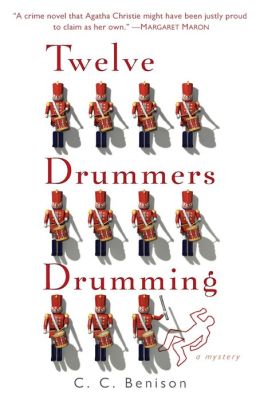
Twelve Drummers Drumming. Father Christmas Mystery #1. C.C. Benison. 2011. Doubleday. 384 pages. [Source: Library]
Twelve Drummers Drumming is the first in the Father Christmas mystery series by C.C. Benison. Tom Christmas, the hero, is a vicar in the village of Thornford Regis. He's a widower with a nine year old daughter, Miranda. Both are still healing and adapting. Tom's wife was murdered. So why settle in Thornford? Tom and his daughter were visiting his sister-in-law and her husband about a year before the novel opens. There was a funeral in the village that day, but, the vicar was missing. Tom Christmas (Father Christmas as people can't help calling him!) stepped in and performed the funeral service. When the position became available, Tom wanted the job for keeps. But village or hamlet life isn't all cozy. There are a few mysteries to be solved. And since Inspector Bliss and Inspector Blessing aren't quick to solve cases, Tom's skills come in handy. Tom is good at observing things, and, it helps that people can't seem to help confiding in him and telling their secrets.
So there are two murders to solve in Twelve Drummers Drumming. I won't say a word about the crimes and the clues. I hate having mysteries spoiled! Just as important as the clues, if not MORE important than the clues are the characters. That I can safely comment on! I really enjoyed the depth of the characters!
Overall, I would say that Twelve Drummers Drumming is an entertaining and satisfying read. I enjoyed spending time with the characters. I would recommend it!
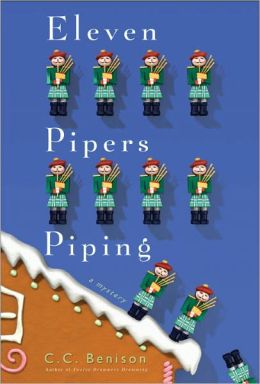
Eleven Piper Piping. Father Christmas Mystery #2. C.C. Benison. 2012. Delacorte. 474 pages. [Source: Library]
I think I enjoyed the second Father Christmas mystery even more than the first. Tom Christmas is the vicar of Thornford Regis. He is also the chaplain to a traditional Scottish pipe band, The Thistle But Mostly Rose South Devon Pipe Band. While Tom's daughter, Miranda, is having a sleepover, and his housekeeper, Madrun, is panicking about a failed yorkshire pudding, Tom Christmas is off--for better or worse--to the Burns Supper. But the weekend is problematic. The horrible weather--the blizzard-like conditions--means that half the band is unable to come, which leaves us with ELEVEN pipers piping. But while half the band is unable to make it through the storm, there is one unexpected guest that shows up at the local hotel where the Burns supper is being held. That guest is Judith Ingley, a retired nurse. Though usually women aren't allowed to attend, they don't turn her away in the storm.
Eleven Pipers Piping IS a murder mystery. So I won't share any details about the crime(s) or victim(s). I will say that the reader gets to spend plenty of time with Father Christmas as he interacts with the whole village before, during, and after the crime. I really enjoyed the setting very much. The characterization didn't disappoint.
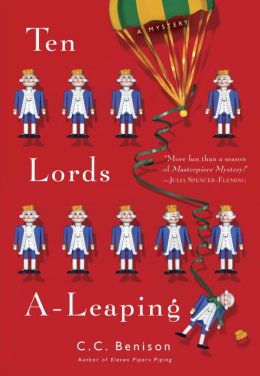
Ten Lords A-Leaping. Father Christmas #3. C.C. Benison. 2013. Delacorte. 512 pages. [Source: Library]
I wish I could give a rating for the first half and a rating for the second half.
Ten Lords A-Leaping is the third book in the Father Christmas series. In Eleven Pipers Piping, Father Christmas brings up a fund raiser idea to help pay for repairs on the church building. It involves sky diving. Ten Lords A-Leaping sees the event through. It is NOT set in Thornford Regis, unfortunately. I think I would have enjoyed it more if it had been.
So. The novel opens with the sky diving. In his jump, Tom has a little accident in the landing with his ankle, an accident that changes his plans and prolongs his visit in that part of the country. He is asked to stay over at Eggescombe Park. First, he's stuck there because of his own injury, then, he's stuck there because of a murder.
I really found myself hating the first half of the book. The series has never been squeaky clean, previous titles in the series have had a few words now and then that keep it from being perfectly clean. Still, it wasn't enough to keep me from reading, from wanting to read on in the series. But Ten Lords A-Leaping turns smutty. And smut in a creepy, inappropriate way. To the book's credit, Tom ends up feeling disgusted by the end of the novel with his own experience. But still.
Even though I really disliked much of the beginning and middle, I kept reading. And the mystery aspects of the novel began to grow on me a bit. I can't say that I "liked" it better than the first two in the series. I can't even say that I "liked" the majority of the characters. There were plenty of despicable characters. I'd say there were more despicable characters than nice ones. But. That is part of the genre, I suppose.
I enjoyed this one enough by the end, but, honestly I was a bit disappointed with this one.
© 2015 SukaYuka.com of SukaYuka's Book Reviews
Showing posts with label adult mystery. Show all posts
Sunday, January 4, 2015
Sunday, December 28, 2014
The Case of the Postponed Murder
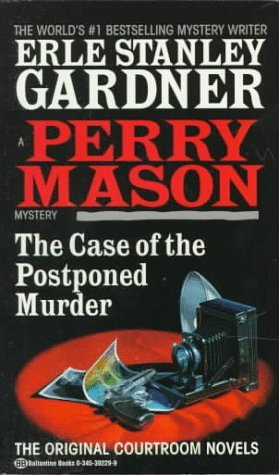
The Case of the Postponed Murder. Erle Stanley Gardner. 1973. 152 pages. [Source: Bought]
I enjoyed reading The Case of the Postponed Murder. Is it the best mystery ever? OF course not. I wouldn't even say it is the best Perry Mason mystery that I've ever read. But is it worth the quick time it takes? I think so. If you love the characters Perry Mason, Paul Drake, and Della Street, then you'll most likely enjoy reading this one enough.
The mystery begins with a woman visiting Mason's office. The would-be-client is concerned about her sister whom she claims is missing. Mason doesn't trust the woman, he thinks she's lying, or telling half-truths at least. He does direct her to hire Paul Drake as a private detective. Mason's hunch is that the sister story is flawed. His best guest is that "Sylvia Farr" the oh-so-concerned sister is in fact Mae Farr the so-called missing sister. His suspicions are confirmed a few days later, but, by then he's too involved in the case. It starts out a forgery case, an alleged check-forgery case. But, of course, you may have guessed it, ends in a murder case. (Though this one doesn't have a very satisfying murder-trial element to it.) The book is predictable enough, but, I don't have a problem with predictable and Perry Mason.
The book does feel a bit dated, even for 1973. The client, Mae Farr, is determined to be independent and strong-willed. She wants to make her way through life on her own, earn her own money, pay her own way, take care of her own problems. Yet, by the conclusion, she's decided that maybe she was wrong to think she could do it all on her own in the big city, that it would be best for her to marry the rancher who's spent years of his life loving her from afar. You definitely get the sense that she's been tamed. I guess my concern with that is that she's spent the entire book saying that she didn't love him at all, that she didn't care for him, that she'd never be happy with him, that she had no desire at all to get married and settle down. And then, within two pages a complete change of heart.
© 2014 SukaYuka.com of SukaYuka's Book Reviews
I enjoyed reading The Case of the Postponed Murder. Is it the best mystery ever? OF course not. I wouldn't even say it is the best Perry Mason mystery that I've ever read. But is it worth the quick time it takes? I think so. If you love the characters Perry Mason, Paul Drake, and Della Street, then you'll most likely enjoy reading this one enough.
The mystery begins with a woman visiting Mason's office. The would-be-client is concerned about her sister whom she claims is missing. Mason doesn't trust the woman, he thinks she's lying, or telling half-truths at least. He does direct her to hire Paul Drake as a private detective. Mason's hunch is that the sister story is flawed. His best guest is that "Sylvia Farr" the oh-so-concerned sister is in fact Mae Farr the so-called missing sister. His suspicions are confirmed a few days later, but, by then he's too involved in the case. It starts out a forgery case, an alleged check-forgery case. But, of course, you may have guessed it, ends in a murder case. (Though this one doesn't have a very satisfying murder-trial element to it.) The book is predictable enough, but, I don't have a problem with predictable and Perry Mason.
The book does feel a bit dated, even for 1973. The client, Mae Farr, is determined to be independent and strong-willed. She wants to make her way through life on her own, earn her own money, pay her own way, take care of her own problems. Yet, by the conclusion, she's decided that maybe she was wrong to think she could do it all on her own in the big city, that it would be best for her to marry the rancher who's spent years of his life loving her from afar. You definitely get the sense that she's been tamed. I guess my concern with that is that she's spent the entire book saying that she didn't love him at all, that she didn't care for him, that she'd never be happy with him, that she had no desire at all to get married and settle down. And then, within two pages a complete change of heart.
© 2014 SukaYuka.com of SukaYuka's Book Reviews
Sunday, November 23, 2014
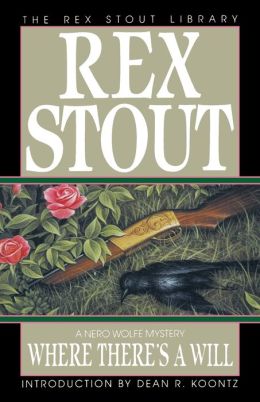
Where There's A Will (1940)
Where There's A Will. Rex Stout. (Nero Wolfe #8) 1940. Bantam. 258 pages. [Source: Bought]
I always begin Nero Wolfe mysteries wanting to love them. I do love, love, love Archie Goodwin and Nero Wolfe. And I have certainly loved plenty of them in the past. Some more than others, of course. But at the very least, the mysteries generally serve as entertainment or distraction. Where There's A Will is not one of my favorites.
Wolfe and Goodwin are in need of clients, wealthy clients preferably. That isn't exactly unexpected. They almost always are in need of clients according to Goodwin. The book opens with the two meeting a family--dysfunctional family, don't you know?! This high-status family is in mourning. Three sisters (and their lawyers) come to Wolfe upset about their brother's will. Each had been under the assumption that they'd be left a million dollars each. They'd been left nothing, or almost nothing. They were disappointed, perhaps a bit ashamed at how angry they were. But the very fact that their brother's mistress received so very, very much is infuriating. Especially since he was married. The widow is outraged. Will Nero Wolfe go about trying to persuade this mistress woman to share the inheritance? Before that case gets a proper chance to be taken up, there comes a great shock. The brother's death was no accident. Someone murdered him. Now someone else in the family comes to Wolfe and begs him to take the case and solve the murder.
Can Wolfe solve the murder? Will Goodwin reach the same conclusion as Wolfe--in the same amount of time?
© 2014 SukaYuka.com of SukaYuka's Book Reviews
I always begin Nero Wolfe mysteries wanting to love them. I do love, love, love Archie Goodwin and Nero Wolfe. And I have certainly loved plenty of them in the past. Some more than others, of course. But at the very least, the mysteries generally serve as entertainment or distraction. Where There's A Will is not one of my favorites.
Wolfe and Goodwin are in need of clients, wealthy clients preferably. That isn't exactly unexpected. They almost always are in need of clients according to Goodwin. The book opens with the two meeting a family--dysfunctional family, don't you know?! This high-status family is in mourning. Three sisters (and their lawyers) come to Wolfe upset about their brother's will. Each had been under the assumption that they'd be left a million dollars each. They'd been left nothing, or almost nothing. They were disappointed, perhaps a bit ashamed at how angry they were. But the very fact that their brother's mistress received so very, very much is infuriating. Especially since he was married. The widow is outraged. Will Nero Wolfe go about trying to persuade this mistress woman to share the inheritance? Before that case gets a proper chance to be taken up, there comes a great shock. The brother's death was no accident. Someone murdered him. Now someone else in the family comes to Wolfe and begs him to take the case and solve the murder.
Can Wolfe solve the murder? Will Goodwin reach the same conclusion as Wolfe--in the same amount of time?
© 2014 SukaYuka.com of SukaYuka's Book Reviews
Sunday, October 26, 2014
Dancers in Mourning (1937)
Dancers in Mourning. Margery Allingham. 1937. 337 pages. [Source: Bought]
Albert Campion has been invited into the inner circle of Jimmy Sutane and his friends. Sutane is in show business--the theater. Uncle William is, I believe, a mutual friend? Regardless, Uncle William is one of Campion's closest friends in the book. Anyway, Sutane invites Campion to his country house. There are many, many people there. Mostly his guests are in show business too--in the same currently running production. But a few are in his employ or in his family. By the end of the day, tragedy will strike and one of the guests will be dead.
The main reason I found this book to be a complete mess is Albert Campion. He is a horrible detective in this one. Why? Because at the party, he falls madly, deeply in LOVE with Jimmy Sutane's wife. He believes that they share a meaningful moment. In fact, he gets so swept up in the moment...he finds himself almost rushing across the room and taking her in his arms. At least he doesn't do that. But. Regardless. His inappropriate interest in Linda--Jimmy's wife--keeps him from using his brain for hundreds of pages. He doesn't want the murder to be solved just in case the murderer is someone that she cares about, just in case bringing the murderer to justice would make her feel bad. It's RIDICULOUS.
© 2014 SukaYuka.com of SukaYuka's Book Reviews
When Mr. William Faraday sat down to write his memoirs after fifty-eight years of blameless inactivity he found the work of inscribing the history of his life almost as tedious as living it had been and so, possessing a natural invention coupled with a gift for locating the easier path, he began to prevaricate a little upon the second page, working up to downright lying on the sixth and subsequent folios.I was disappointed with this vintage mystery. While I absolutely loved the opening pages, by the end I found the whole book to be a mess. I admit it could be a mood thing. As much as I wanted to like it, even love it, perhaps I didn't have the patience to remember the large cast of suspects. Or perhaps the problem is that the characters aren't well drawn enough, aren't unique enough, to distinguish between. There were three or four characters that I could remember. But for the others, it was who is she again? who is he again? how does he fit into the group again? where did she come from?
The book appeared at eighteen-and-sixpence, with frontispiece, in nineteen thirty-four and would have passed into the limbo of the remainder lists with thousands of its prototypes had not the quality of one of the wilder anecdotes in the chapters dealing with an India the author had never seen earned it a place in the news columns of a Sunday paper.
This paragraph called the memoirs to the attention of a critic who had not permitted his eminence to impair his appreciation of the absurd, and in the review which he afterwards wrote he pointed out that the work was pure fiction, not to say fantasy, and was incidentally one of the funniest books of the decade.
The public agreed with the critic and at the age of sixty-one William Faraday, author of Memoirs of an Old Buffer (republished at seven-and-six, seventy-fourth thousand), found himself a literary figure.
Albert Campion has been invited into the inner circle of Jimmy Sutane and his friends. Sutane is in show business--the theater. Uncle William is, I believe, a mutual friend? Regardless, Uncle William is one of Campion's closest friends in the book. Anyway, Sutane invites Campion to his country house. There are many, many people there. Mostly his guests are in show business too--in the same currently running production. But a few are in his employ or in his family. By the end of the day, tragedy will strike and one of the guests will be dead.
The main reason I found this book to be a complete mess is Albert Campion. He is a horrible detective in this one. Why? Because at the party, he falls madly, deeply in LOVE with Jimmy Sutane's wife. He believes that they share a meaningful moment. In fact, he gets so swept up in the moment...he finds himself almost rushing across the room and taking her in his arms. At least he doesn't do that. But. Regardless. His inappropriate interest in Linda--Jimmy's wife--keeps him from using his brain for hundreds of pages. He doesn't want the murder to be solved just in case the murderer is someone that she cares about, just in case bringing the murderer to justice would make her feel bad. It's RIDICULOUS.
© 2014 SukaYuka.com of SukaYuka's Book Reviews
Sunday, September 28, 2014
The Singing Sands (1952)
The Singing Sands. Josephine Tey. 1952. 224 pages. [Source: Bought]
It was six o'clock of a March morning, and still dark. The long train came sidling through the scattered lights of the yard, clicking gently over the points.
Inspector Alan Grant is on holiday. He's had to take a personal holiday because of his mental health condition. He's had a nervous break, I suppose. Suddenly, he's weighed down by fear and anxiety, and shame. He doesn't want everyone to know what his mind is doing to him. Little things that he's always taken for granted now are tormenting him: riding in a train, sleeping in a sleeper car, riding in a car, riding in a plane. He's become claustrophobic.
As you have probably guessed, Grant is not going to do much relaxing on his vacation. Oh. He does try. But he keeps thinking about this case. A case that others at Scotland Yard have already closed. They've identified the body and the cause of death. End of story. But it's not enough for Grant. He thinks there is more to the story...and since this is his story, his FINAL story, I might add...he's right!
I liked this one. I am not sure I loved it. But I liked spending time with Grant.
© 2014 SukaYuka.com of SukaYuka's Book Reviews
It was six o'clock of a March morning, and still dark. The long train came sidling through the scattered lights of the yard, clicking gently over the points.
Inspector Alan Grant is on holiday. He's had to take a personal holiday because of his mental health condition. He's had a nervous break, I suppose. Suddenly, he's weighed down by fear and anxiety, and shame. He doesn't want everyone to know what his mind is doing to him. Little things that he's always taken for granted now are tormenting him: riding in a train, sleeping in a sleeper car, riding in a car, riding in a plane. He's become claustrophobic.
Well, at least he had managed not to open the door last night. But the triumph had been dearly bought. He was drained and empty, a walking nothingness. "Don't fight it," the doctor had said. "If you want to be in the open, go into the open." But to have opened the door last night would have meant a defeat so mortal that he felt there would be no recovery. It would have been an unconditional surrender to the forces of Unreason. So he had lain and sweated. And the door had stayed closed. (4)The morning after his sleepless night, Grant discovers a dead body. "Number B Seven" is found dead in his sleeper. Grant, who is not on duty, gets a very good look at him, and he accidentally picks up the dead man's newspaper. He takes it with him by chance. Later, when he's arrived at his cousin's house, I believe, he realizes what he did. He notices for the first time that the paper had been written on. It contains a few lines of poetry. Grant isn't sure if the man was writing an original poem, or, if he was writing down someone else's poem. But either way, those lines and that handwriting make an impact on him. He can't stop thinking about "Number B Seven." Even though he's supposed to be on vacation, resting and relaxing, and FISHING.
As you have probably guessed, Grant is not going to do much relaxing on his vacation. Oh. He does try. But he keeps thinking about this case. A case that others at Scotland Yard have already closed. They've identified the body and the cause of death. End of story. But it's not enough for Grant. He thinks there is more to the story...and since this is his story, his FINAL story, I might add...he's right!
I liked this one. I am not sure I loved it. But I liked spending time with Grant.
© 2014 SukaYuka.com of SukaYuka's Book Reviews
Tuesday, September 23, 2014
The Late Scholar (2014)
The Late Scholar. Jill Paton Walsh. 2014. St. Martin's Press. 368 pages. [Source: Library]
I enjoyed The Late Scholar enough while reading it, for the most part, but the more I think about it, the more disappointed I am. I have liked or enjoyed Jill Paton Walsh's sequels to Dorothy Sayer's Lord Peter mysteries. The Late Scholar is set in the 1950s. (I'm not sure if it's early, mid, or late 50s. But Queen Elizabeth is on the throne, I believe.) The novel opens with the Duke of Denver (aka Lord Peter Wimsey) learning that he is a Visitor at Oxford. He is being called upon to settle a dispute among the fellows. The person--ultimately one of many suspects, I suppose--who initially requested his interference comes to regret it. Lord Peter is thorough. He doesn't want to just cast a vote on a controversial topic without any thought. He wants to study the situation, learn both sides, draw his own conclusions about what is best. The dispute is about selling a medieval book to get the money to buy land next door that has come up for sell. Is land more valuable to the college than one book in the library? Or is the ancient book more valuable to the college than a piece of real estate? It wouldn't be a mystery book if it didn't turn to violence and murder. Lord Peter, Harriet Vane, and Bunter must follow all the clues to catch a murderer or two.
There were a few things that felt a bit off, that kept this one from feeling like a genuine, authentic Lord Peter/Harriet Vane mystery. I allow some change would be natural enough. Two decades would change a person, would change a couple. But the changes in a way have a very surface feel to them. I'm not sure the characters have the depth that they need, they are very much reliant on familiarity with the original.
I have not reread the whole (original) series, but, Lord Peter seems changed and not always for the better. I could not show you a passage where Lord Peter reveals a personal faith in God. But I have a feeling I would have remembered if Lord Peter revealed a cold mockery for Christianity and/or stated openly and unashamedly that he did NOT believe in God. There were a few uncomfortable scenes in Late Scholar where Peter's atheism comes to light, I suppose. It was done in an almost ha, ha, don't be silly, of course I don't believe in God kind of way. It just struck me as wrong. I'm not saying that I consider Lord Peter evangelical. But. I always got the impression that he believed there was a God, that at the very least he was agnostic. The reason this strikes me as wrong is that Dorothy Sayers was a Christian, she wrote Christian books. I've read some of her theological essays and they are quite good. I just don't see HER Lord Peter being one to make light of or mock Christianity or the Bible or the fundamental belief that there is a God. Of course times have changed. Decades have passed since his creation, so maybe modern readers assume that naturally Lord Peter is "smart enough" to have outgrown any idea of God.
© 2014 SukaYuka.com of SukaYuka's Book Reviews
I enjoyed The Late Scholar enough while reading it, for the most part, but the more I think about it, the more disappointed I am. I have liked or enjoyed Jill Paton Walsh's sequels to Dorothy Sayer's Lord Peter mysteries. The Late Scholar is set in the 1950s. (I'm not sure if it's early, mid, or late 50s. But Queen Elizabeth is on the throne, I believe.) The novel opens with the Duke of Denver (aka Lord Peter Wimsey) learning that he is a Visitor at Oxford. He is being called upon to settle a dispute among the fellows. The person--ultimately one of many suspects, I suppose--who initially requested his interference comes to regret it. Lord Peter is thorough. He doesn't want to just cast a vote on a controversial topic without any thought. He wants to study the situation, learn both sides, draw his own conclusions about what is best. The dispute is about selling a medieval book to get the money to buy land next door that has come up for sell. Is land more valuable to the college than one book in the library? Or is the ancient book more valuable to the college than a piece of real estate? It wouldn't be a mystery book if it didn't turn to violence and murder. Lord Peter, Harriet Vane, and Bunter must follow all the clues to catch a murderer or two.
There were a few things that felt a bit off, that kept this one from feeling like a genuine, authentic Lord Peter/Harriet Vane mystery. I allow some change would be natural enough. Two decades would change a person, would change a couple. But the changes in a way have a very surface feel to them. I'm not sure the characters have the depth that they need, they are very much reliant on familiarity with the original.
I have not reread the whole (original) series, but, Lord Peter seems changed and not always for the better. I could not show you a passage where Lord Peter reveals a personal faith in God. But I have a feeling I would have remembered if Lord Peter revealed a cold mockery for Christianity and/or stated openly and unashamedly that he did NOT believe in God. There were a few uncomfortable scenes in Late Scholar where Peter's atheism comes to light, I suppose. It was done in an almost ha, ha, don't be silly, of course I don't believe in God kind of way. It just struck me as wrong. I'm not saying that I consider Lord Peter evangelical. But. I always got the impression that he believed there was a God, that at the very least he was agnostic. The reason this strikes me as wrong is that Dorothy Sayers was a Christian, she wrote Christian books. I've read some of her theological essays and they are quite good. I just don't see HER Lord Peter being one to make light of or mock Christianity or the Bible or the fundamental belief that there is a God. Of course times have changed. Decades have passed since his creation, so maybe modern readers assume that naturally Lord Peter is "smart enough" to have outgrown any idea of God.
© 2014 SukaYuka.com of SukaYuka's Book Reviews
Thursday, September 18, 2014
My Cousin Rachel (1951)
My Cousin Rachel. Daphne du Maurier. 1951. 374 pages. [Source: Library]
Years ago I read and enjoyed Rebecca by Daphne du Maurier. I've been meaning to read more of her books ever since. My Cousin Rachel is the second of hers that I've read. I enjoyed it. I'm not sure I enjoyed it more than Rebecca. But I think it is safe to say that if you enjoyed Rebecca you will also (most likely) enjoy My Cousin Rachel.
My Cousin Rachel is narrated by Philip Ashley. He is the heir to his cousin Ambrose's estate. Ambrose took him in and raised him essentially. These two are close as can be. Daphne du Maurier knows how to do foreshadowing. In both Rebecca and My Cousin Rachel, she uses it generously giving readers time to prepare for tough times ahead. In this case, the foreshadowing is about Ambrose's trip abroad and his surprise wedding to a young woman, coincidentally a distant cousin, named Rachel. Rachel is a widow he meets in Italy. Instead of returning home to England, these two settle down in Italy--Florence, I believe. Philip is angsty to say the least. How dare my cousin do this to me! How dare he marry someone he barely knows! Philip spends months imagining Rachel's character and personality. She has to have an agenda! She has to be manipulative and scheming. She has to be TROUBLE. Now Philip doesn't voice his concerns to everyone he meets. He is more guarded, almost aware that it's silly of him to have this strong a reaction to someone he's never met. But Ambrose's happily ever after is short-lived. And not just because he dies. Ambrose wrote mysterious letters to Philip over several months. In these letters, Philip sees that all is not well. That there is something to his prejudice against Rachel. It seems that Ambrose has regrets, big regrets, about Rachel. The moodiest of all these letters reaches Philip after Ambrose's death.
So. What will Philip think of Rachel once he actually meets her? What will she think of him? Will they be friends or enemies? Will they trust one another? Should they trust one another? Whose story is based in reality? Is Rachel's accounting of Ambrose's last months true? Or was Ambrose right to mistrust Rachel? Will Philip be wise enough and objective enough to know what is going on?
The author certainly gives readers plenty to think about. Readers get almost all their information filtered through Philip's perspective. But I suppose the dialogue in the book might provide more. If one can trust Philip's recollection of it.
I think My Cousin Rachel is a character-driven gothic novel. It is certainly creepy and weird.
© 2014 SukaYuka.com of SukaYuka's Book Reviews
Years ago I read and enjoyed Rebecca by Daphne du Maurier. I've been meaning to read more of her books ever since. My Cousin Rachel is the second of hers that I've read. I enjoyed it. I'm not sure I enjoyed it more than Rebecca. But I think it is safe to say that if you enjoyed Rebecca you will also (most likely) enjoy My Cousin Rachel.
My Cousin Rachel is narrated by Philip Ashley. He is the heir to his cousin Ambrose's estate. Ambrose took him in and raised him essentially. These two are close as can be. Daphne du Maurier knows how to do foreshadowing. In both Rebecca and My Cousin Rachel, she uses it generously giving readers time to prepare for tough times ahead. In this case, the foreshadowing is about Ambrose's trip abroad and his surprise wedding to a young woman, coincidentally a distant cousin, named Rachel. Rachel is a widow he meets in Italy. Instead of returning home to England, these two settle down in Italy--Florence, I believe. Philip is angsty to say the least. How dare my cousin do this to me! How dare he marry someone he barely knows! Philip spends months imagining Rachel's character and personality. She has to have an agenda! She has to be manipulative and scheming. She has to be TROUBLE. Now Philip doesn't voice his concerns to everyone he meets. He is more guarded, almost aware that it's silly of him to have this strong a reaction to someone he's never met. But Ambrose's happily ever after is short-lived. And not just because he dies. Ambrose wrote mysterious letters to Philip over several months. In these letters, Philip sees that all is not well. That there is something to his prejudice against Rachel. It seems that Ambrose has regrets, big regrets, about Rachel. The moodiest of all these letters reaches Philip after Ambrose's death.
So. What will Philip think of Rachel once he actually meets her? What will she think of him? Will they be friends or enemies? Will they trust one another? Should they trust one another? Whose story is based in reality? Is Rachel's accounting of Ambrose's last months true? Or was Ambrose right to mistrust Rachel? Will Philip be wise enough and objective enough to know what is going on?
The author certainly gives readers plenty to think about. Readers get almost all their information filtered through Philip's perspective. But I suppose the dialogue in the book might provide more. If one can trust Philip's recollection of it.
I think My Cousin Rachel is a character-driven gothic novel. It is certainly creepy and weird.
© 2014 SukaYuka.com of SukaYuka's Book Reviews
Tuesday, September 16, 2014
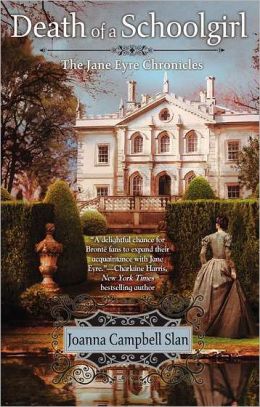
Death of a Schoolgirl (2012)
Death of a Schoolgirl (Jane Eyre Chronicles #1) Joanna Campbell Slan. 2012. Berkley Trade. 340 pages. [Source: Library]
My expectations were low, so I was quite pleasantly surprised by how enjoyable this Jane Eyre mystery was. It may not be perfectly perfect from start to finish. There might be a paragraph or two here and there that bothered me. (For example, I didn't understand why Mrs. Fairfax was pushing Jane Eyre to take the family diamonds with her on her visit to Adele's school. Here she was going to check on the child's welfare, and Mrs. Fairfax is urging her to take jewels so she can dress up for her hosts in London?! I don't know if part of me thought it was foreshadowing--for better or worse--but when she put them in her reticule, I wanted to shout WHY are you traveling with expensive jewelry?!?! Why?! And sure enough--predictably enough--Jane Eyre gets robbed on her way to London. See! I told you not to take the family jewels!) But for the most part, I found the book to be an entertaining read.
Mrs. Rochester (aka Jane Eyre) is a new mother. She loves, loves, loves her new baby boy. But. When she receives a short letter from Adele with a French message included asking--begging--for help, she decides to leave her husband and son behind to check on Adele at her boarding school. If all is well, if it is just Adele being Adele, being childish and wanting her own way, then she may leave her at the school. If the school is less than ideal, if she does not like what she sees--how she sees the children being treated, if she thinks Adele's misery is justifiable, then she may take her out of the school. Because Jane Eyre was beaten up by the thief, because she doesn't particularly look RICH and IMPORTANT, she is initially mistaken as the new German teacher who was supposed to arrive several weeks earlier. That first day Jane Eyre is a bit flabbergasted and too overwhelmed to correct anyone. She has just learned that one of Adele's classmates was murdered. Eventually, one of the teachers convinces Jane that she should continue the deception, that she should resume her teaching duties temporarily and watch over the students herself. She debates what is best. Should she take Adele immediately to safety and let others solve the crime? Or should she become an amateur detective herself and work as a team with others to help solve the case?
Is Jane Eyre the best detective ever? Not really. But to me that almost doesn't matter. I liked spending time in her company. The setting intrigued me. I had never placed Jane Eyre in the Regency time period. But here we have the sequel set during the reign of George IV, and Queen Caroline, the scandalous Queen Caroline has not died yet. This places the book within a specific time frame. The sprinkling of historical details may not speak to all readers. Little details can be easily dismissed or ignored. But to me it's the little things that help ground a book. The book does deal with prejudices and judgments: how the lower classes feel about the upper classes, how the poor feel about the rich, how the rich feel about the poor, do they see them as human, are they compassionate and kind, or, haughty or cruel. One of the characters is VERY prejudiced against French people. Again and again we see characters making judgments or being judged. Sometimes the people that are being judged in certain situations are making judgments about others just a chapter or two later.
There were places I loved this one. There were places I merely liked it. But at times it just felt RIGHT. Maybe it didn't feel RIGHT cover to cover. But I read it quickly and enjoyed it very much.
© 2014 SukaYuka.com of SukaYuka's Book Reviews
My expectations were low, so I was quite pleasantly surprised by how enjoyable this Jane Eyre mystery was. It may not be perfectly perfect from start to finish. There might be a paragraph or two here and there that bothered me. (For example, I didn't understand why Mrs. Fairfax was pushing Jane Eyre to take the family diamonds with her on her visit to Adele's school. Here she was going to check on the child's welfare, and Mrs. Fairfax is urging her to take jewels so she can dress up for her hosts in London?! I don't know if part of me thought it was foreshadowing--for better or worse--but when she put them in her reticule, I wanted to shout WHY are you traveling with expensive jewelry?!?! Why?! And sure enough--predictably enough--Jane Eyre gets robbed on her way to London. See! I told you not to take the family jewels!) But for the most part, I found the book to be an entertaining read.
Mrs. Rochester (aka Jane Eyre) is a new mother. She loves, loves, loves her new baby boy. But. When she receives a short letter from Adele with a French message included asking--begging--for help, she decides to leave her husband and son behind to check on Adele at her boarding school. If all is well, if it is just Adele being Adele, being childish and wanting her own way, then she may leave her at the school. If the school is less than ideal, if she does not like what she sees--how she sees the children being treated, if she thinks Adele's misery is justifiable, then she may take her out of the school. Because Jane Eyre was beaten up by the thief, because she doesn't particularly look RICH and IMPORTANT, she is initially mistaken as the new German teacher who was supposed to arrive several weeks earlier. That first day Jane Eyre is a bit flabbergasted and too overwhelmed to correct anyone. She has just learned that one of Adele's classmates was murdered. Eventually, one of the teachers convinces Jane that she should continue the deception, that she should resume her teaching duties temporarily and watch over the students herself. She debates what is best. Should she take Adele immediately to safety and let others solve the crime? Or should she become an amateur detective herself and work as a team with others to help solve the case?
Is Jane Eyre the best detective ever? Not really. But to me that almost doesn't matter. I liked spending time in her company. The setting intrigued me. I had never placed Jane Eyre in the Regency time period. But here we have the sequel set during the reign of George IV, and Queen Caroline, the scandalous Queen Caroline has not died yet. This places the book within a specific time frame. The sprinkling of historical details may not speak to all readers. Little details can be easily dismissed or ignored. But to me it's the little things that help ground a book. The book does deal with prejudices and judgments: how the lower classes feel about the upper classes, how the poor feel about the rich, how the rich feel about the poor, do they see them as human, are they compassionate and kind, or, haughty or cruel. One of the characters is VERY prejudiced against French people. Again and again we see characters making judgments or being judged. Sometimes the people that are being judged in certain situations are making judgments about others just a chapter or two later.
There were places I loved this one. There were places I merely liked it. But at times it just felt RIGHT. Maybe it didn't feel RIGHT cover to cover. But I read it quickly and enjoyed it very much.
© 2014 SukaYuka.com of SukaYuka's Book Reviews
Tuesday, September 9, 2014
The Attenbury Emeralds
The Attenbury Emeralds. Jill Paton Walsh. 2010/2011. St. Martin's Press. 352 pages. [Source: Library]
I enjoyed reading The Attenbury Emeralds. I love Lord Peter Wimsey. I do. I love, love, love him. And I like the romance between Harriet and Lord Peter. So it was charming to revisit Lord Peter and Harriet several decades later in 1951. This mystery novel opens with a bit of storytelling. Lord Peter and Bunter team up and take turns telling Harriet about some early detecting concerning the Attenbury family jewels. The first such story begins in 1921. At one point the first mystery was solved, and I was unsure what direction the novel would take. It was only then I realized the story was far from over. For this simple case about the Attenbury emeralds was not as simple as it seemed. It was a mystery with no clear beginning or end in fact! The novel was not merely a sharing of former detecting successes, but, a new opportunity for Lord Peter to solve the case and prove he still has it.
I enjoyed spending time with Lord Peter and Bunter. I love their relationship. I do. I also enjoy seeing Lord Peter and Harriet together. And the brief glimpses we get of their children are nice enough. I really liked knowing that Lord Peter's mother, the Dowager Duchess, was still around! I do find her delightful!!!
For so many reasons this one was just a joy to read. I do recommend it for fans of Dorothy Sayers' mysteries.
© 2014 SukaYuka.com of SukaYuka's Book Reviews
I enjoyed reading The Attenbury Emeralds. I love Lord Peter Wimsey. I do. I love, love, love him. And I like the romance between Harriet and Lord Peter. So it was charming to revisit Lord Peter and Harriet several decades later in 1951. This mystery novel opens with a bit of storytelling. Lord Peter and Bunter team up and take turns telling Harriet about some early detecting concerning the Attenbury family jewels. The first such story begins in 1921. At one point the first mystery was solved, and I was unsure what direction the novel would take. It was only then I realized the story was far from over. For this simple case about the Attenbury emeralds was not as simple as it seemed. It was a mystery with no clear beginning or end in fact! The novel was not merely a sharing of former detecting successes, but, a new opportunity for Lord Peter to solve the case and prove he still has it.
I enjoyed spending time with Lord Peter and Bunter. I love their relationship. I do. I also enjoy seeing Lord Peter and Harriet together. And the brief glimpses we get of their children are nice enough. I really liked knowing that Lord Peter's mother, the Dowager Duchess, was still around! I do find her delightful!!!
For so many reasons this one was just a joy to read. I do recommend it for fans of Dorothy Sayers' mysteries.
© 2014 SukaYuka.com of SukaYuka's Book Reviews
Friday, August 29, 2014
#35 Daughter of Time
The Daughter of Time. Josephine Tey. 1951/1995. Simon & Schuster. 208 pages. [Source: Bought]
Grant lay on his high white cot and stared at the ceiling. Stared at it with loathing. He knew by heart every last minute crack on its nice clean surface. He had made maps of the ceiling and gone exploring on them; rivers, islands, and continents. He had made guessing games of it and discovered hidden objects; faces, birds, and fishes. He had made mathematical calculations of it and rediscovered his childhood; theorems, angles, and triangles. There was practically nothing else he could do but look at it.
It's hard for me to imagine that just a little over four years ago I was not a mystery reader. While I was willing to try a new genre and a new author based on my best friend's recommendation, I didn't think I'd actually enjoy it, as in LOVE what I'm reading. In July 2010, I read two Josephine Tey books: The Man in the Queue, which I've read only once, and The Daughter of Time, which I've reread again and again. This is the fourth time I've read The Daughter of Time!
The Daughter Of Time isn't a typical mystery. The hero, Inspector Grant, is stuck in a hospital bed with a broken leg. He sees visitors. He sees doctors and nurses. He could spend his time reading. But. He isn't really satisfied with the fiction close at hand provided by his friends. What he really wants is to have a case to solve. That seems impossible until someone suggests he solve a case from the past. He seeks out a mystery from history. He chooses Richard III. The action in the novel comes from thinking, reading, researching, and brainstorming with his friends.
Since I've read it four times, you have to know that I LOVE, LOVE, LOVE this one. I love it even more each time I read it! And this SONG is a must!!!!
© 2014 SukaYuka.com of SukaYuka's Book Reviews

Grant lay on his high white cot and stared at the ceiling. Stared at it with loathing. He knew by heart every last minute crack on its nice clean surface. He had made maps of the ceiling and gone exploring on them; rivers, islands, and continents. He had made guessing games of it and discovered hidden objects; faces, birds, and fishes. He had made mathematical calculations of it and rediscovered his childhood; theorems, angles, and triangles. There was practically nothing else he could do but look at it.
It's hard for me to imagine that just a little over four years ago I was not a mystery reader. While I was willing to try a new genre and a new author based on my best friend's recommendation, I didn't think I'd actually enjoy it, as in LOVE what I'm reading. In July 2010, I read two Josephine Tey books: The Man in the Queue, which I've read only once, and The Daughter of Time, which I've reread again and again. This is the fourth time I've read The Daughter of Time!
The Daughter Of Time isn't a typical mystery. The hero, Inspector Grant, is stuck in a hospital bed with a broken leg. He sees visitors. He sees doctors and nurses. He could spend his time reading. But. He isn't really satisfied with the fiction close at hand provided by his friends. What he really wants is to have a case to solve. That seems impossible until someone suggests he solve a case from the past. He seeks out a mystery from history. He chooses Richard III. The action in the novel comes from thinking, reading, researching, and brainstorming with his friends.
Since I've read it four times, you have to know that I LOVE, LOVE, LOVE this one. I love it even more each time I read it! And this SONG is a must!!!!
It was brought home to him for the first time not only what a useless thing the murder of the boys would have been, but what a silly thing. And if there was anything that Richard of Gloucester was not, beyond a shadow of a doubt, it was silly. (137)
"Of course I'm only a policeman," Grant said. "Perhaps I never moved in the right circles. It may be that I've met only nice people. Where would one have to go to meet a woman who became matey with the murderer of her two boys?"
"Greece, I should think," Marta said. "Ancient Greece."
"I can't remember a sample even there."
"Or a lunatic asylum, perhaps. Was there any sign of idiocy about Elizabeth Woodville?"
"Not that anyone ever noticed. And she was Queen for twenty years or so."
...
"Yes of course. It's the height of absurdity. It belongs to Ruthless Rhymes, not to sober history. That is why historians surprise me. They seem to have no talent for the likeliness of any situation. They see history like a peepshow; with two-dimensional figures against a distant background."
"Perhaps when you are grubbing about with tattered records you haven't time to learn about people. I don't mean about the people in the records, but just about People. Flesh and blood. And how they react to circumstances." (151)
© 2014 SukaYuka.com of SukaYuka's Book Reviews
Sunday, August 24, 2014
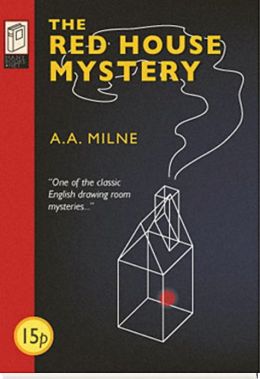
The Red House Mystery (1922)
The Red House Mystery. A.A. Milne. 1922. Dover. 156 pages. [Source: Bought]
In the drowsy heat of the summer afternoon the Red House was taking its siesta.
I loved The Red House Mystery. I did. It was so much fun! I loved meeting Antony Gillingham and his friend Bill Beverley. These two team up to solve a murder mystery. Bill Beverley is staying at the Red House estate--owned by Mark Ablett. He is one of a handful of guests. Antony Gillingham is not of the guests. Not originally. He just happens to be staying at an inn nearby. He hears from someone that Bill Beverley is down visiting. He wants to call on his friend and does so. But his visit does not go as expected. Instead of meeting Bill Beverley and having a lovely chat. He comes across Matthew Cayley--Mark's cousin he later learns--and a dead body! These two men are the first on the crime scene.
I would definitely recommend this one!
Quotes:
In the drowsy heat of the summer afternoon the Red House was taking its siesta.
I loved The Red House Mystery. I did. It was so much fun! I loved meeting Antony Gillingham and his friend Bill Beverley. These two team up to solve a murder mystery. Bill Beverley is staying at the Red House estate--owned by Mark Ablett. He is one of a handful of guests. Antony Gillingham is not of the guests. Not originally. He just happens to be staying at an inn nearby. He hears from someone that Bill Beverley is down visiting. He wants to call on his friend and does so. But his visit does not go as expected. Instead of meeting Bill Beverley and having a lovely chat. He comes across Matthew Cayley--Mark's cousin he later learns--and a dead body! These two men are the first on the crime scene.
I would definitely recommend this one!
Quotes:
"Are you prepared to be the complete Watson?" he asked. "Watson?" "Do-you-follow-me-Watson; that one. Are you prepared to have quite obvious things explained to you, to ask futile questions, to give me chances of scoring off you, to make brilliant discoveries of your own two or three days after I have made them myself all that kind of thing? Because it all helps." "My dear Tony," said Bill delightedly, "need you ask?" Antony said nothing, and Bill went on happily to himself, "I perceive from the strawberry-mark on your shirt-front that you had strawberries for dessert. Holmes, you astonish me. Tut, tut, you know my methods. Where is the tobacco? The tobacco is in the Persian slipper. Can I leave my practice for a week? I can."
"I say," he said, almost pleadingly, "don't tell me that you can see into people's pockets and all that sort of thing as well." Antony laughed and denied it cheerfully. "Then how do you know?" "You're the perfect Watson, Bill. You take to it quite naturally. Properly speaking, I oughtn't to explain till the last chapter, but I always think that that's so unfair. So here goes. Of course, I don't really know that he's got it, but I do know that he had it. I know that when I came on him this afternoon, he had just locked the door and put the key in his pocket."
"Good man," said Antony at the end of it. "You are the most perfect Watson that ever lived. Bill, my lad," he went on dramatically, rising and taking Bill's hand in both of his, "There is nothing that you and I could not accomplish together, if we gave our minds to it." "Silly old ass." "That's what you always say when I'm being serious. Well, anyway, thanks awfully. You really saved us this time."
"Of course it's very hampering being a detective, when you don't know anything about detecting, and when nobody knows that you're doing detection, and you can't have people up to cross-examine them, and you have neither the energy nor the means to make proper inquiries; and, in short, when you're doing the whole thing in a thoroughly amateur, haphazard way."© 2014 SukaYuka.com of SukaYuka's Book Reviews
Sunday, July 27, 2014
To Love And Be Wise (1951)
To Love And Be Wise. (Inspector Grant #4) Josephine Tey. 1951. Simon & Schuster. 208 pages. [Source: Bought]
I definitely liked To Love And Be Wise. It is an Inspector Grant mystery. Some of the Grant series I've loved, others, not quite so much.
Inspector Grant is at a party with a friend, Marta Hallard, the event is to celebrate the release of a new Lavinia Fitch novel. While there he happens to see an oh-so-beautiful young man. People's gaze just seems to follow him, he's that beautiful. He talks to Grant and asks him to point out Lavinia Fitch. He claims he wants an introduction to Fitch's nephew, Walter Whitmore. The young man's name is Leslie Searle. Introductions are made, and Leslie is even invited into their country home--indefinitely.
Several weeks later, Mr. Grant is called down to investigate a crime or potential crime. Mr. Searle has gone missing. He was working on a project with Walter Whitmore. (Walter Whitmore is apparently a radio celebrity and Searle is a famous photographer.) He hasn't been seen in a day or two. There is no body, though they have dragged the river repeatedly. Searle had definitely argued with several in town, including Walter. Could he have been murdered?
I liked this one. I did. I liked the community in which it was set. I liked meeting Silas Weekley and Lavinia Fitch, for example, mainly because they're referenced in my favorite, favorite, favorite book Daughter of Time.
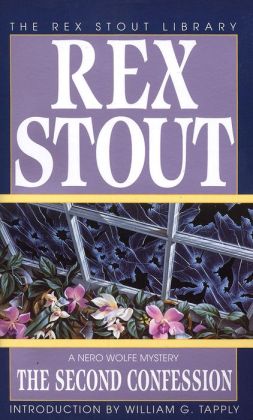
By the way, isn't this a horrible cover?!
Favorite quotes:
I definitely liked To Love And Be Wise. It is an Inspector Grant mystery. Some of the Grant series I've loved, others, not quite so much.
Inspector Grant is at a party with a friend, Marta Hallard, the event is to celebrate the release of a new Lavinia Fitch novel. While there he happens to see an oh-so-beautiful young man. People's gaze just seems to follow him, he's that beautiful. He talks to Grant and asks him to point out Lavinia Fitch. He claims he wants an introduction to Fitch's nephew, Walter Whitmore. The young man's name is Leslie Searle. Introductions are made, and Leslie is even invited into their country home--indefinitely.
Several weeks later, Mr. Grant is called down to investigate a crime or potential crime. Mr. Searle has gone missing. He was working on a project with Walter Whitmore. (Walter Whitmore is apparently a radio celebrity and Searle is a famous photographer.) He hasn't been seen in a day or two. There is no body, though they have dragged the river repeatedly. Searle had definitely argued with several in town, including Walter. Could he have been murdered?
I liked this one. I did. I liked the community in which it was set. I liked meeting Silas Weekley and Lavinia Fitch, for example, mainly because they're referenced in my favorite, favorite, favorite book Daughter of Time.
By the way, isn't this a horrible cover?!
Favorite quotes:
"Why do you listen to him?" [him = Walter Whitmore]
"Well, there's a dreadful fascination about it, you know. One thinks: Well, that's the absolute sky-limit of awfulness, than which nothing could be worse. And so next week you listen to see if it really can be worse. It's a snare. It's so awful that you can't even switch off. You wait fascinated for the next piece of awfulness, and the next. And you are still there when he signs off." (12)
"Perhaps the old saying is true and it is not possible to love and be wise." (42)
"I suppose you don't read Lavinia Fitch?"
"No, but Nora does."
Nora was Mrs. Williams, and the mother of Angela and Leonard.
"Does she like them?"
"Loves them. She says three things make her feel cosy in advance. A hot-water bottle, a quarter-pound of chocolates, and a new Lavinia Fitch."
"If Miss Fitch did not exist, it seems, it would be necessary to invent her," Grant said. (73)
"You really ought, just for once, to try those pickles, sir," Williams said. "They're wonderful."
"For the five hundred and seventh time, I do not eat pickles. I have a palate, Williams. A precious possession. And I have no intention of prostituting it to pickles." (92)
Silas has his own success, his family, the books he is going to write in the future (even if they are just the same old ones over again in different words). (136)
"I was just thinking how shocked the writers of slick detective stories would be if they could witness two police inspectors sitting on a willow tree swapping poems." (151)© 2014 SukaYuka.com of SukaYuka's Book Reviews
Sunday, June 22, 2014
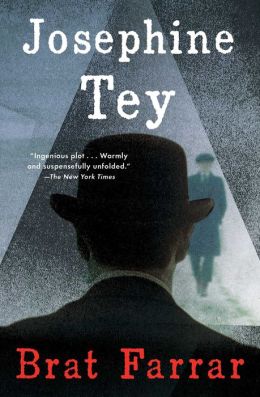
Brat Farrar (1949)
Brat Farrar. Josephine Tey. 1949/1997. 288 pages. [Source: Bought]
I definitely enjoyed reading Brat Farrar. Was it my favorite-favorite Tey novel? Probably not. But I enjoyed it so much more than Miss Pym Disposes and A Shilling for Candles.
In Brat Farrar, the reader is in on the secret. Brat Farrar is impersonating Patrick Ashby. Alec Loding "discovers" Brat Farrar's resemblance to the Ashby family. There were twin brothers Patrick and Simon. Patrick vanished when he was twelve or thirteen, and he was presumed dead. The note he conveniently left behind led everyone to believe it was suicide. Even though Patrick didn't seem the sort. Then again, Patrick would not have been the sort to run away for eight years either. Alec Loding is encouraging his new friend, Brat, to invent such a tale. BE Patrick. Inherit the family estate. He tempts him with horses. If there is one thing our hero can't resist, it's horses. His oh-so-special way with horses gives his life meaning. On the one hand, Brat is essentially a moral guy. He knows right from wrong. He is not the sort to be reckless and cruel for the fun of it. On the other hand, ALL THOSE HORSES. So he allows Loding to coach him, teach him, anything and everything he needs to know to BE PATRICK. (How does Alec know all these details? Sure, a family friend might know some stuff, but everything from the age of three or four on up?! Everything???)
So Patrick Ashby returns from the dead. He takes his place with his family. Everything seems to be off to a good start, but, Brat can't help wondering WHY Simon is so SMUG. Like Brat, readers pick up some clues...not firm, exact clues perhaps...but strong feelings that Simon is, well, the more evil twin.
I liked this one. It was a very quick read.
© 2014 SukaYuka.com of SukaYuka's Book Reviews
I definitely enjoyed reading Brat Farrar. Was it my favorite-favorite Tey novel? Probably not. But I enjoyed it so much more than Miss Pym Disposes and A Shilling for Candles.
In Brat Farrar, the reader is in on the secret. Brat Farrar is impersonating Patrick Ashby. Alec Loding "discovers" Brat Farrar's resemblance to the Ashby family. There were twin brothers Patrick and Simon. Patrick vanished when he was twelve or thirteen, and he was presumed dead. The note he conveniently left behind led everyone to believe it was suicide. Even though Patrick didn't seem the sort. Then again, Patrick would not have been the sort to run away for eight years either. Alec Loding is encouraging his new friend, Brat, to invent such a tale. BE Patrick. Inherit the family estate. He tempts him with horses. If there is one thing our hero can't resist, it's horses. His oh-so-special way with horses gives his life meaning. On the one hand, Brat is essentially a moral guy. He knows right from wrong. He is not the sort to be reckless and cruel for the fun of it. On the other hand, ALL THOSE HORSES. So he allows Loding to coach him, teach him, anything and everything he needs to know to BE PATRICK. (How does Alec know all these details? Sure, a family friend might know some stuff, but everything from the age of three or four on up?! Everything???)
So Patrick Ashby returns from the dead. He takes his place with his family. Everything seems to be off to a good start, but, Brat can't help wondering WHY Simon is so SMUG. Like Brat, readers pick up some clues...not firm, exact clues perhaps...but strong feelings that Simon is, well, the more evil twin.
I liked this one. It was a very quick read.
© 2014 SukaYuka.com of SukaYuka's Book Reviews
Sunday, June 15, 2014
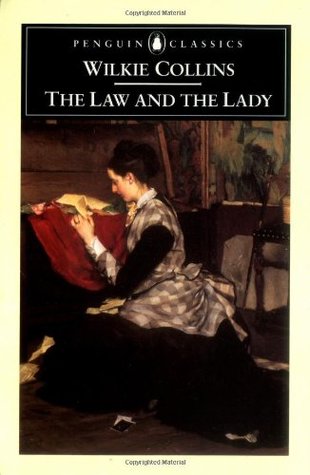
The Law and the Lady (1875)
The Law and the Lady. Wilkie Collins. 1875. 430 pages. [Source: Book I Bought]
The Law and the Lady may not be my favorite Wilkie Collins novel, but, I am glad I finally read this "first" female detective novel. Valeria is our heroine, our amateur detective. Readers meet her on her wedding day. Foreshadowing is abundant. All is not well. Things may never be well for this couple. Within days, Valeria is noticing inconsistencies and becoming super suspicious of her husband. She snoops in his things; she goes to his friends to ask questions, etc. She makes a DISCOVERY.
Her husband was married before. His first wife died. He was tried for murder--suspected of poisoning her by arsenic. The Scottish Verdict was "Not Proven" which essentially means that people, that society, could still choose to look upon him with suspicion as a murderer. He may not be "guilty" but he's not been deemed "innocent."
Once he knows that she knows his past, he leaves her. Valeria while seeming to be full of doubt and hesitation and fear BEFORE she discovered his past, is suddenly completely confident in her husband's innocence AND more in love with him than ever before. It seems her love for her husband has tripled since she read her husband's trial. She is now fiercely determined to prove that her husband is innocent, to take her proof to court.
Over half the novel is focused on Valeria's efforts to prove her husband's innocence. Valeria only has to talk to one or two people to know what's what. Getting proof that her intuition is right may prove slightly more challenging, but Valeria with a little help from others is stubborn enough to see the job through to the end.
Or is she? The Law and the Lady has a not-quite-satisfying ending. For her husband to "receive" justice, it means that someone else will be assigned blame. (That seemed obvious from the beginning.) And in the end, both husband and wife prove reluctant and hesitant to act.
The Law and the Lady is a strange novel with a strong heroine. As a romance, it was extremely weak. Valeria, readers are told, loves, loves, loves her husband. He is her EVERYTHING. But readers never see the husband at his supposed best. Readers just see Valeria in various dramatic scenes supposedly acting on her husband's behalf and with his best interests in mind. Because readers don't necessarily share faith in Valeria's husband or in Valeria's judgment, it could have easily gone the other way. Collins could have written this as a dark, dramatic piece with a less than happy ending.
© 2014 SukaYuka.com of SukaYuka's Book Reviews
The Law and the Lady may not be my favorite Wilkie Collins novel, but, I am glad I finally read this "first" female detective novel. Valeria is our heroine, our amateur detective. Readers meet her on her wedding day. Foreshadowing is abundant. All is not well. Things may never be well for this couple. Within days, Valeria is noticing inconsistencies and becoming super suspicious of her husband. She snoops in his things; she goes to his friends to ask questions, etc. She makes a DISCOVERY.
Her husband was married before. His first wife died. He was tried for murder--suspected of poisoning her by arsenic. The Scottish Verdict was "Not Proven" which essentially means that people, that society, could still choose to look upon him with suspicion as a murderer. He may not be "guilty" but he's not been deemed "innocent."
Once he knows that she knows his past, he leaves her. Valeria while seeming to be full of doubt and hesitation and fear BEFORE she discovered his past, is suddenly completely confident in her husband's innocence AND more in love with him than ever before. It seems her love for her husband has tripled since she read her husband's trial. She is now fiercely determined to prove that her husband is innocent, to take her proof to court.
Over half the novel is focused on Valeria's efforts to prove her husband's innocence. Valeria only has to talk to one or two people to know what's what. Getting proof that her intuition is right may prove slightly more challenging, but Valeria with a little help from others is stubborn enough to see the job through to the end.
Or is she? The Law and the Lady has a not-quite-satisfying ending. For her husband to "receive" justice, it means that someone else will be assigned blame. (That seemed obvious from the beginning.) And in the end, both husband and wife prove reluctant and hesitant to act.
The Law and the Lady is a strange novel with a strong heroine. As a romance, it was extremely weak. Valeria, readers are told, loves, loves, loves her husband. He is her EVERYTHING. But readers never see the husband at his supposed best. Readers just see Valeria in various dramatic scenes supposedly acting on her husband's behalf and with his best interests in mind. Because readers don't necessarily share faith in Valeria's husband or in Valeria's judgment, it could have easily gone the other way. Collins could have written this as a dark, dramatic piece with a less than happy ending.
© 2014 SukaYuka.com of SukaYuka's Book Reviews
Sunday, May 25, 2014
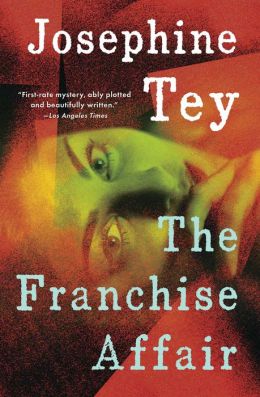
The Franchise Affair (1948)
The Franchise Affair. Josephine Tey. 1948. 304 pages. [Source: Book I bought]
Robert Blair is a lawyer. He lives a boring life; nothing terribly exciting or thrilling ever happens. And. He doesn't seem to mind that his life is mostly predictable. But then one day he receives a call from Marion Sharpe. She is in need of a lawyer; she needs one as soon as possible. Yes, she knows that his firm doesn't specialize in criminal law; yes, she knows he's never handled any case quite like hers before. Yes, she'd be willing to find another lawyer if necessary--if charges are brought against her and if the case were to go to trial. But can he come NOW! He agrees. He rushes to The Francise. He meets Marion and her mother. He meets Inspector Grant. He hears what these two ladies are being accused of. He meets the young woman, Betty Kane, accusing them. He's left a bit speechless. Kane's story: I was waiting for the bus, these two "old" ladies offered me a ride, I accepted, they took me to their home, wouldn't let me leave, locked me in the attic, denied me food unless I worked for them doing some mending, they beat me too! After four weeks I managed to escape! Grant and Blair are speechless as are the women. The story seems weird and unrealistic. Grant's instincts are telling him that the Kane girl is a crazy attention-seeker who is a liar through and through. Blair also thinks the Kane girl is a liar. He also thinks she's immoral. There HAS to be a man involved. Kane had to have met a guy over vacation and run off with him and made up this horrible story when that love affair fell apart. Both Blair and Grant are relying on instincts and making quick judgments. Grant, at the start of the novel, does not want to make a case of this. He does not believe there has been an actual crime.
But. The story will not go away. Kane will tell her story, keep her story alive in the papers. The community will turn against the Sharpe women at the Francise. Things will get uncomfortable and dangerous.
Blair is determined that the best defense is to prove that Betty Kane is a terrible, horrible mess of a girl. She's far from good and honest and respectable. He wants to expose this girl, show her that she can't go around accusing good, honest women like the Sharpes of horrible crimes. She shouldn't be allowed to get away with it.
Grant, Tey's detective, is barely in this one. He is in a few scenes, but, for the most part this is Robert Blair's story, his chance to have an exciting life, to play hero.
The Franchise Affair is not my favorite Tey novel, but, it was a pleasant read.
© 2014 SukaYuka.com of SukaYuka's Book Reviews
Robert Blair is a lawyer. He lives a boring life; nothing terribly exciting or thrilling ever happens. And. He doesn't seem to mind that his life is mostly predictable. But then one day he receives a call from Marion Sharpe. She is in need of a lawyer; she needs one as soon as possible. Yes, she knows that his firm doesn't specialize in criminal law; yes, she knows he's never handled any case quite like hers before. Yes, she'd be willing to find another lawyer if necessary--if charges are brought against her and if the case were to go to trial. But can he come NOW! He agrees. He rushes to The Francise. He meets Marion and her mother. He meets Inspector Grant. He hears what these two ladies are being accused of. He meets the young woman, Betty Kane, accusing them. He's left a bit speechless. Kane's story: I was waiting for the bus, these two "old" ladies offered me a ride, I accepted, they took me to their home, wouldn't let me leave, locked me in the attic, denied me food unless I worked for them doing some mending, they beat me too! After four weeks I managed to escape! Grant and Blair are speechless as are the women. The story seems weird and unrealistic. Grant's instincts are telling him that the Kane girl is a crazy attention-seeker who is a liar through and through. Blair also thinks the Kane girl is a liar. He also thinks she's immoral. There HAS to be a man involved. Kane had to have met a guy over vacation and run off with him and made up this horrible story when that love affair fell apart. Both Blair and Grant are relying on instincts and making quick judgments. Grant, at the start of the novel, does not want to make a case of this. He does not believe there has been an actual crime.
But. The story will not go away. Kane will tell her story, keep her story alive in the papers. The community will turn against the Sharpe women at the Francise. Things will get uncomfortable and dangerous.
Blair is determined that the best defense is to prove that Betty Kane is a terrible, horrible mess of a girl. She's far from good and honest and respectable. He wants to expose this girl, show her that she can't go around accusing good, honest women like the Sharpes of horrible crimes. She shouldn't be allowed to get away with it.
Grant, Tey's detective, is barely in this one. He is in a few scenes, but, for the most part this is Robert Blair's story, his chance to have an exciting life, to play hero.
The Franchise Affair is not my favorite Tey novel, but, it was a pleasant read.
© 2014 SukaYuka.com of SukaYuka's Book Reviews
Sunday, April 27, 2014
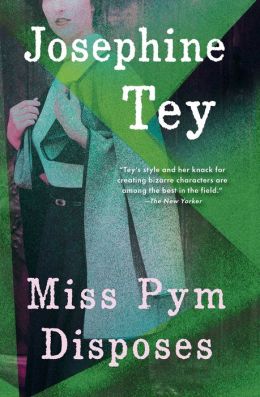
Miss Pym Disposes
Miss Pym Disposes. Josephine Tey. 1946. 238 pages. [Source: Book I Bought]
Miss Lucy Pym is visiting an 'old friend' who is now a principal at a physical training college. The occasion for her visit is her successful bestselling status as an author of a popular psychology book. Her book is the new "it" book of the moment, Miss Pym gives guest lectures. The students of this college, particularly the juniors and seniors, take a real liking to her. They beg and plead and urge her to stay. So she postpones leaving. (I'm not sure her old college friend is as enthusiastic about keeping her around for the last few weeks of the semester until graduation or not. I'm sure by the end she's thinking: why oh why did I think it would be a good idea to ask her to visit!) It's a super busy time for all. One class is preparing to graduate; there is stress and distress as they prepare for finals and critiques. Some students will be placed in a new job before graduation, others will have to make their own applications after graduation. A really ideal job opportunity arises, and, for some reason this causes great rumbles on the staff and among students. One student is chosen over another. Almost everyone disagrees with the decision. Even Miss Pym is argumentative and opinionated. As graduation approaches the inevitable happens. Inevitable ONLY because it's a mystery book and there is the expectation that at some point a crime, probably murder, but at the very least attempted murder, will occur. This happens extraordinarily late in the novel. One of the graduating seniors has an "accident" that ultimately leads to her death. Miss Pym knows the accident was no accident, and she has proof. But will her proof ever be turned over to the authorities?! Will Miss Pym play god and decided that she has no ethical obligation to turn in the murderer--the girl she's convinced is guilty?!
Miss Pym Disposes is a strange little mystery. I found the academic setting interesting, at least in the beginning. But overall, I was not impressed with this one.
© 2014 SukaYuka.com of SukaYuka's Book Reviews
Miss Lucy Pym is visiting an 'old friend' who is now a principal at a physical training college. The occasion for her visit is her successful bestselling status as an author of a popular psychology book. Her book is the new "it" book of the moment, Miss Pym gives guest lectures. The students of this college, particularly the juniors and seniors, take a real liking to her. They beg and plead and urge her to stay. So she postpones leaving. (I'm not sure her old college friend is as enthusiastic about keeping her around for the last few weeks of the semester until graduation or not. I'm sure by the end she's thinking: why oh why did I think it would be a good idea to ask her to visit!) It's a super busy time for all. One class is preparing to graduate; there is stress and distress as they prepare for finals and critiques. Some students will be placed in a new job before graduation, others will have to make their own applications after graduation. A really ideal job opportunity arises, and, for some reason this causes great rumbles on the staff and among students. One student is chosen over another. Almost everyone disagrees with the decision. Even Miss Pym is argumentative and opinionated. As graduation approaches the inevitable happens. Inevitable ONLY because it's a mystery book and there is the expectation that at some point a crime, probably murder, but at the very least attempted murder, will occur. This happens extraordinarily late in the novel. One of the graduating seniors has an "accident" that ultimately leads to her death. Miss Pym knows the accident was no accident, and she has proof. But will her proof ever be turned over to the authorities?! Will Miss Pym play god and decided that she has no ethical obligation to turn in the murderer--the girl she's convinced is guilty?!
Miss Pym Disposes is a strange little mystery. I found the academic setting interesting, at least in the beginning. But overall, I was not impressed with this one.
© 2014 SukaYuka.com of SukaYuka's Book Reviews
Tuesday, April 8, 2014
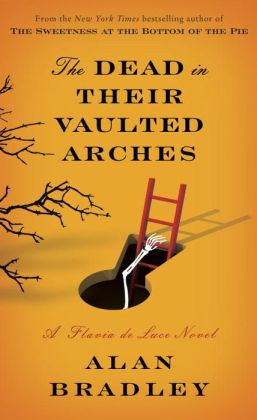
The Dead in Their Vaulted Arches (2014)
The Dead in Their Vaulted Arches. Alan Bradley. 2014. Random House. 310 pages. [Source: Library]
I haven't loved each and every Flavia de Luce book equally. I definitely enjoy Flavia as a character and narrator even though I can't always relate to her all the time. In this sixth mystery, Flavia's focus is NOT on a current murder mystery. Far from it, even though a murder occurs practically in front of her (at the train station), she can't really be bothered. Why? Well, her mother is coming home...at last. For Flavia, the one de Luce child who CANNOT remember her mother at all, this is just confusing and bittersweet. Is she glad her mother's body has been found? That the body is being returned so it can be properly buried? In a way, perhaps. But. The homecoming is just as bitter as it is sweet. It upsets the family so much, brings so many emotions out in the open where they cannot be ignored. The situation is forcing Flavia outside her comfort zone. If the novel does NOT focus on the current dead body, what does it focus on?! Well, it focuses on the past; it focuses on the years leading up to World War II. It provides context for her mother's life...and death. For Flavia solving this mystery of who her mother was, who she really was, her worth and value, means EVERYTHING. There were quite a few uncomfortable scenes in this one for me. I found the scenes where Flavia is trying to scientifically bring her mother back from the dead (after ten years) to be a bit creepy--she's trying to acquire the right chemicals to resurrect the dead.
Just like the previous book, this one closes with change on the way for Flavia.
© 2014 SukaYuka.com of SukaYuka's Book Reviews
I haven't loved each and every Flavia de Luce book equally. I definitely enjoy Flavia as a character and narrator even though I can't always relate to her all the time. In this sixth mystery, Flavia's focus is NOT on a current murder mystery. Far from it, even though a murder occurs practically in front of her (at the train station), she can't really be bothered. Why? Well, her mother is coming home...at last. For Flavia, the one de Luce child who CANNOT remember her mother at all, this is just confusing and bittersweet. Is she glad her mother's body has been found? That the body is being returned so it can be properly buried? In a way, perhaps. But. The homecoming is just as bitter as it is sweet. It upsets the family so much, brings so many emotions out in the open where they cannot be ignored. The situation is forcing Flavia outside her comfort zone. If the novel does NOT focus on the current dead body, what does it focus on?! Well, it focuses on the past; it focuses on the years leading up to World War II. It provides context for her mother's life...and death. For Flavia solving this mystery of who her mother was, who she really was, her worth and value, means EVERYTHING. There were quite a few uncomfortable scenes in this one for me. I found the scenes where Flavia is trying to scientifically bring her mother back from the dead (after ten years) to be a bit creepy--she's trying to acquire the right chemicals to resurrect the dead.
Just like the previous book, this one closes with change on the way for Flavia.
© 2014 SukaYuka.com of SukaYuka's Book Reviews
Tuesday, March 25, 2014
Death Comes To the Village
Death Comes to the Village. Catherine Lloyd. 2013. Kensington. 304 pages. [Source: Library]
Death Comes To The Village was a very enjoyable--quite pleasant--mystery set in Regency England. Major Robert Kurland, our hero, is an invalid soldier. He's recovering from his injuries, but, no one can begin to predict if he'll make a complete recovery. The mystery opens with his frustration at its highest. He is unable to sleep because the curtains have not been closed. He--for better or worse--decides to try to take care of it himself. Of course, he isn't able to walk properly. And it's amazing he even makes it all the way to the window before collapsing in a heap on the floor. But before he falls oh-so-dramatically, he witnesses something through the window. A man carrying a large-bulky-heavy-something. Is he a burglar or a murderer? Is there a reasonable explanation? He's not sure. He feels something happened, and he tells the rector's daughter, our heroine, Lucy Harrington. He shares with her his notion that a crime may have happened--not mentioning murder--and he wants her to keep her ears open. Did anyone else hear anything? see anything? Were any homes robbed? Anyone gone missing? Any strange behavior? Soon these two have teamed up and are working hard to solve a mystery...
There HAVE been thefts in the area. Many homes are missing small objects, it appears there is plenty of reason to suspect a burglar...
But two maids have also vanished...and Miss Lucy Harrington fears the worst...
© 2014 SukaYuka.com of SukaYuka's Book Reviews
Death Comes To The Village was a very enjoyable--quite pleasant--mystery set in Regency England. Major Robert Kurland, our hero, is an invalid soldier. He's recovering from his injuries, but, no one can begin to predict if he'll make a complete recovery. The mystery opens with his frustration at its highest. He is unable to sleep because the curtains have not been closed. He--for better or worse--decides to try to take care of it himself. Of course, he isn't able to walk properly. And it's amazing he even makes it all the way to the window before collapsing in a heap on the floor. But before he falls oh-so-dramatically, he witnesses something through the window. A man carrying a large-bulky-heavy-something. Is he a burglar or a murderer? Is there a reasonable explanation? He's not sure. He feels something happened, and he tells the rector's daughter, our heroine, Lucy Harrington. He shares with her his notion that a crime may have happened--not mentioning murder--and he wants her to keep her ears open. Did anyone else hear anything? see anything? Were any homes robbed? Anyone gone missing? Any strange behavior? Soon these two have teamed up and are working hard to solve a mystery...
There HAVE been thefts in the area. Many homes are missing small objects, it appears there is plenty of reason to suspect a burglar...
But two maids have also vanished...and Miss Lucy Harrington fears the worst...
© 2014 SukaYuka.com of SukaYuka's Book Reviews
Sunday, March 23, 2014
In the Best Families (1950)
In the Best Families. (Nero Wolfe). Rex Stout. 1950. 272 pages. [Source: Book I Bought]
Wow! What a book, what a mystery! I absolutely loved, loved, loved Second Confession, but, I think I loved this one just as much. Three Nero Wolfe mysteries are closely linked together: And Be A Villain, Second Confession, and In the Best Families. Second Confession and In the Best Families especially fit together well. They introduce a character, Nero Wolfe likes to call "X" because he doesn't want to casually drop this bad guy's real name too often. X made threats in And Be A Villain and Second Confession, and in Second Confession X knew just how to make Nero suffer: by destroying his orchids. But nothing compares to the danger in In The Best Families.
It starts with a client, of course, all of his mysteries start with a client! Mrs. Rackham wants her husband investigated. She doesn't want to expose him, she's not out to publish any wrong-doings, she just wants to know herself what her husband has been up to. He used to ask her for money, now, he has his own resources, and she's doubtful that he's coming by them through honest hard work. They arrange for Archie Goodwin to come to her estate disguised as himself, he'll be "investigating" the poisoning of her cousin's dog. He'll be asking questions, lots of questions. Some are naturally suspicious. Who is paying for this investigation? The poor cousin (Leeds) or Mrs. Rackham herself? Since the dog survived and ultimately no harm was done, and since this all happened over a month ago, why pay Nero Wolfe prices for the answers?!
Goodwin was to spend the night at the cousin's small home (he's just a "quick" walk away from Mrs. Rackham's quite-large estate). But does Archie get a good night's sleep?! NO!!! When Archie calls Nero Wolfe with the details--Mrs. Rackham is dead--something unexpected happens. After much aggravation with the local police, still without any sleep, Archie returns home and discovers something shocking: NERO WOLFE IS GONE! Arrangements have been made for his orchids, for his cook, Fritz, and for Archie himself.
Archie all on his own?! Archie solving his own cases? Yes this book is quite unique!!!
I would love to tell more, because it's lovely through and through, but I won't. This book has so many great, great scenes!!!
© 2014 SukaYuka.com of SukaYuka's Book Reviews
Wow! What a book, what a mystery! I absolutely loved, loved, loved Second Confession, but, I think I loved this one just as much. Three Nero Wolfe mysteries are closely linked together: And Be A Villain, Second Confession, and In the Best Families. Second Confession and In the Best Families especially fit together well. They introduce a character, Nero Wolfe likes to call "X" because he doesn't want to casually drop this bad guy's real name too often. X made threats in And Be A Villain and Second Confession, and in Second Confession X knew just how to make Nero suffer: by destroying his orchids. But nothing compares to the danger in In The Best Families.
It starts with a client, of course, all of his mysteries start with a client! Mrs. Rackham wants her husband investigated. She doesn't want to expose him, she's not out to publish any wrong-doings, she just wants to know herself what her husband has been up to. He used to ask her for money, now, he has his own resources, and she's doubtful that he's coming by them through honest hard work. They arrange for Archie Goodwin to come to her estate disguised as himself, he'll be "investigating" the poisoning of her cousin's dog. He'll be asking questions, lots of questions. Some are naturally suspicious. Who is paying for this investigation? The poor cousin (Leeds) or Mrs. Rackham herself? Since the dog survived and ultimately no harm was done, and since this all happened over a month ago, why pay Nero Wolfe prices for the answers?!
Goodwin was to spend the night at the cousin's small home (he's just a "quick" walk away from Mrs. Rackham's quite-large estate). But does Archie get a good night's sleep?! NO!!! When Archie calls Nero Wolfe with the details--Mrs. Rackham is dead--something unexpected happens. After much aggravation with the local police, still without any sleep, Archie returns home and discovers something shocking: NERO WOLFE IS GONE! Arrangements have been made for his orchids, for his cook, Fritz, and for Archie himself.
Archie all on his own?! Archie solving his own cases? Yes this book is quite unique!!!
I would love to tell more, because it's lovely through and through, but I won't. This book has so many great, great scenes!!!
© 2014 SukaYuka.com of SukaYuka's Book Reviews
Sunday, February 23, 2014
The Second Confession (1949)
The Second Confession (Nero Wolfe). Rex Stout. 1949. 256 pages. [Source: Book I Bought]
The Second Confession might just be my new favorite, favorite Nero Wolfe novel. I didn't think it was possible to love Wolfe and Goodwin more than I already did, but spending two days with this book proved that I had more love to give. I loved, loved, loved every minute of this mystery.
Mr. Sperling hires Wolfe as a private detective "to prove" that his daughter's boyfriend is a communist. Wolfe is reluctant to take on a case with those terms. He argues that what Sperling desires is not proof that this Louis Rony is a Communist, instead what he wants is his daughter to end things with him, period, Communist or not. Wolfe agrees to take the case on his own terms. He will help find proof that will convince this young woman that Rony's not the man for her; he'll even strongly encourage Archie to flirt with the daughter in question and distract her.
This case was very exciting and intense. I loved following it from beginning to end. It was a lot more exciting than most of Wolfe's cases. I love how full of personality it was. It was also very quotable!!!
© 2014 SukaYuka.com of SukaYuka's Book Reviews
The Second Confession might just be my new favorite, favorite Nero Wolfe novel. I didn't think it was possible to love Wolfe and Goodwin more than I already did, but spending two days with this book proved that I had more love to give. I loved, loved, loved every minute of this mystery.
Mr. Sperling hires Wolfe as a private detective "to prove" that his daughter's boyfriend is a communist. Wolfe is reluctant to take on a case with those terms. He argues that what Sperling desires is not proof that this Louis Rony is a Communist, instead what he wants is his daughter to end things with him, period, Communist or not. Wolfe agrees to take the case on his own terms. He will help find proof that will convince this young woman that Rony's not the man for her; he'll even strongly encourage Archie to flirt with the daughter in question and distract her.
"Get invited to his home, socially. Meet Mr. Rony and form an opinion of him. More important, form one of the daughter, as intimately and comprehensively as possible. Make appointments with her. Seize and hold her attention. You should be able to displace Mr. Rony in a week, a fortnight at the most--and that's the objective."But the case doesn't go exactly as planned. The relationship is ended. That part was a success. Then again, it's hard to have a relationship with a corpse. Yes, Rony ends up dead, apparently run over by a car in the Sperling driveway. Who murdered him? What was the motive?
"I'll be damned." I shook my head reproachfully. "You mean to make a pass at her."
"Your terms are yours, and I prefer mine. Mr. Sperling said his daughter is excessively curious. Transfer her curiosity from Mr. Rony to you."
"You mean break her heart."
"You can stop this side of tragedy."
"Yeah, and I can stop this side of starting." I looked righteous and outraged. "You've gone a little too far. I like being a detective, and I like being a man, with all that implies, but I refuse to degrade whatever glamour I may--"
"Archie!" He snapped it.
"Yes, sir."
"With how many young women whom you met originally through your association with my business have you established personal relationships?"
"Between five and six thousand. But that's not--" (9-10)
This case was very exciting and intense. I loved following it from beginning to end. It was a lot more exciting than most of Wolfe's cases. I love how full of personality it was. It was also very quotable!!!
© 2014 SukaYuka.com of SukaYuka's Book Reviews
Subscribe to:
Posts (Atom)


