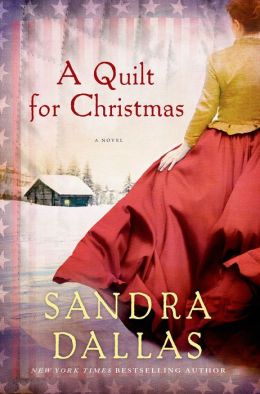
A Quilt for Christmas. Sandra Dallas. 2014. St. Martin's Press. 256 pages. [Source: Library]
For readers who love to read about quilters or quilts, this one may prove satisfying. Also, this one would be a good match for those who like to read about the Civil War. This one is set in Kansas during the last year of the Civil War. I liked Sandra Dallas' A Quilt for Christmas even though I don't consider myself fitting into the ideal audience. (I don't particularly seek out books about quilts. I don't seek out historical fiction set during the Civil War.)
Eliza Spooner is the heroine. She loves, loves, loves to quilt. She loves to get together with other women in the community. The war has had an effect on the community. Many husbands (and brothers, fathers, sons, etc.) are gone, away fighting for one side or the other. Eliza's husband, Will, is fighting for the Union. The novel opens with Eliza finishing a quilt she's made for her husband. She'll be sending the quilt along with a soldier who is returning to her husband's unit from leave. Her love for her husband is obvious, and, not just because she's spent all this time making a quilt. There are dozens of flashbacks. These flashbacks give readers a chance to get to know the couple. However, I must admit that these flashbacks are confusing at times. They are not really set apart in the text, and the transition from present-day to the past can be sloppy at times.
Readers meet Eliza and her son and daughter. Readers meet men and women of the small community as well. Mainly, readers get to know Missouri Ann and her daughter. When Missouri Ann's husband dies, she takes the opportunity to flee from her abusive in-laws. Eliza opens her home to the pair, and this isn't without some risk. Missouri Ann's in-laws are probably without a doubt the meanest and cruelest in the county--if not the state. But not everyone in the community is as immediately open to including Missouri Ann in their group. Her in-laws have tainted her, a bit, no one wants to get close to someone who would marry into that family.
At one point, at a quilting party of sorts, the discussion of slavery and runaway slaves comes up. Opinions are mixed. Prejudices are voiced. Even though most of the women are for the Union--for the Yankees--most if not all have very strong views about blacks.
Eliza's own views will be tested when she's asked to hide a runaway slave: a woman who murdered her mistress. Will she welcome her home to this slave and put her own life and the lives of her children at risk?
A Quilt for Christmas is an odd book at times. It seems to have a handful of plots and stories, any one could be the MAIN one, but really not one seems to stand out as being the one it's all about. It's definitely NOT a plot-driven book. It's mainly about the lives of women in a particular community during the fall of 1864 and throughout 1865.
© 2014 SukaYuka.com of SukaYuka's Book Reviews
Showing posts with label Historical. Show all posts
Tuesday, December 16, 2014
Wednesday, September 24, 2014
The Boleyn King
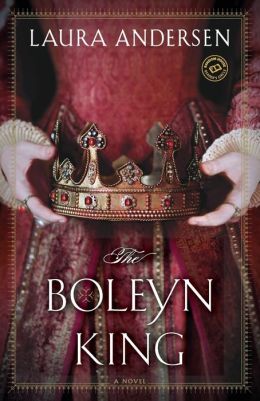
The Boleyn King. Laura Andersen. 2013. Ballantine. 358 pages. [Source: Library]
Alternate history. What if Anne Boleyn had given Henry VIII the son he so desperately wanted and needed? What if she survived her husband instead of being beheaded? What if Henry VIII had only had TWO wives? What if Elizabeth and her younger brother grew up with both parents, relatively happy? King William is that son. His father has died, and, he though under the age of 18, has been England's king. He faces challenges, every king does, and those challenges are what The Boleyn King is all about. The book has four narrators: William and Elizabeth (royal siblings) and Minuette and Dominic (close and trusted friends of both William and Elizabeth). Minuette seems to be the type of heroine that no male character can resist. Elizabeth somewhat secretly is in love with a married man, no surprises as to who that is. William is being pressured to marry well. Will his choice be a) Mary, Queen of Scots b) Jane Grey c) a French princess d) someone of his own choice that will upset his advisers and the court just as much as his father's decision to marry Anne Boleyn. This is the start of a trilogy...
The good news: It's a quick read. I read it in one day. It is also a premise-driven book. For readers who find the premise intriguing, this one is worth the read. Especially if one can get it from the library. Just in case. I liked seeing which characters avoided death and disaster. I don't know if these characters will continue to have happily ever afters, of, if they'll find themselves in troubles of a different sort. But. It was an interesting enough read.
The bad news: It's light on history. This one focuses more on fictional characters than on real people. And the characters based on real people aren't always that accurate. This makes some sense for some characters whose lives were very different in this alternate universe. But this may leave some readers disappointed that there isn't more substance and depth. If you're looking for a character-driven book, this one might disappoint. Also. It definitely is trying to appeal more to romance readers than historical readers. If that makes sense.
© 2014 SukaYuka.com of SukaYuka's Book Reviews
Alternate history. What if Anne Boleyn had given Henry VIII the son he so desperately wanted and needed? What if she survived her husband instead of being beheaded? What if Henry VIII had only had TWO wives? What if Elizabeth and her younger brother grew up with both parents, relatively happy? King William is that son. His father has died, and, he though under the age of 18, has been England's king. He faces challenges, every king does, and those challenges are what The Boleyn King is all about. The book has four narrators: William and Elizabeth (royal siblings) and Minuette and Dominic (close and trusted friends of both William and Elizabeth). Minuette seems to be the type of heroine that no male character can resist. Elizabeth somewhat secretly is in love with a married man, no surprises as to who that is. William is being pressured to marry well. Will his choice be a) Mary, Queen of Scots b) Jane Grey c) a French princess d) someone of his own choice that will upset his advisers and the court just as much as his father's decision to marry Anne Boleyn. This is the start of a trilogy...
The good news: It's a quick read. I read it in one day. It is also a premise-driven book. For readers who find the premise intriguing, this one is worth the read. Especially if one can get it from the library. Just in case. I liked seeing which characters avoided death and disaster. I don't know if these characters will continue to have happily ever afters, of, if they'll find themselves in troubles of a different sort. But. It was an interesting enough read.
The bad news: It's light on history. This one focuses more on fictional characters than on real people. And the characters based on real people aren't always that accurate. This makes some sense for some characters whose lives were very different in this alternate universe. But this may leave some readers disappointed that there isn't more substance and depth. If you're looking for a character-driven book, this one might disappoint. Also. It definitely is trying to appeal more to romance readers than historical readers. If that makes sense.
© 2014 SukaYuka.com of SukaYuka's Book Reviews
Tuesday, September 23, 2014
The Late Scholar (2014)
The Late Scholar. Jill Paton Walsh. 2014. St. Martin's Press. 368 pages. [Source: Library]
I enjoyed The Late Scholar enough while reading it, for the most part, but the more I think about it, the more disappointed I am. I have liked or enjoyed Jill Paton Walsh's sequels to Dorothy Sayer's Lord Peter mysteries. The Late Scholar is set in the 1950s. (I'm not sure if it's early, mid, or late 50s. But Queen Elizabeth is on the throne, I believe.) The novel opens with the Duke of Denver (aka Lord Peter Wimsey) learning that he is a Visitor at Oxford. He is being called upon to settle a dispute among the fellows. The person--ultimately one of many suspects, I suppose--who initially requested his interference comes to regret it. Lord Peter is thorough. He doesn't want to just cast a vote on a controversial topic without any thought. He wants to study the situation, learn both sides, draw his own conclusions about what is best. The dispute is about selling a medieval book to get the money to buy land next door that has come up for sell. Is land more valuable to the college than one book in the library? Or is the ancient book more valuable to the college than a piece of real estate? It wouldn't be a mystery book if it didn't turn to violence and murder. Lord Peter, Harriet Vane, and Bunter must follow all the clues to catch a murderer or two.
There were a few things that felt a bit off, that kept this one from feeling like a genuine, authentic Lord Peter/Harriet Vane mystery. I allow some change would be natural enough. Two decades would change a person, would change a couple. But the changes in a way have a very surface feel to them. I'm not sure the characters have the depth that they need, they are very much reliant on familiarity with the original.
I have not reread the whole (original) series, but, Lord Peter seems changed and not always for the better. I could not show you a passage where Lord Peter reveals a personal faith in God. But I have a feeling I would have remembered if Lord Peter revealed a cold mockery for Christianity and/or stated openly and unashamedly that he did NOT believe in God. There were a few uncomfortable scenes in Late Scholar where Peter's atheism comes to light, I suppose. It was done in an almost ha, ha, don't be silly, of course I don't believe in God kind of way. It just struck me as wrong. I'm not saying that I consider Lord Peter evangelical. But. I always got the impression that he believed there was a God, that at the very least he was agnostic. The reason this strikes me as wrong is that Dorothy Sayers was a Christian, she wrote Christian books. I've read some of her theological essays and they are quite good. I just don't see HER Lord Peter being one to make light of or mock Christianity or the Bible or the fundamental belief that there is a God. Of course times have changed. Decades have passed since his creation, so maybe modern readers assume that naturally Lord Peter is "smart enough" to have outgrown any idea of God.
© 2014 SukaYuka.com of SukaYuka's Book Reviews
I enjoyed The Late Scholar enough while reading it, for the most part, but the more I think about it, the more disappointed I am. I have liked or enjoyed Jill Paton Walsh's sequels to Dorothy Sayer's Lord Peter mysteries. The Late Scholar is set in the 1950s. (I'm not sure if it's early, mid, or late 50s. But Queen Elizabeth is on the throne, I believe.) The novel opens with the Duke of Denver (aka Lord Peter Wimsey) learning that he is a Visitor at Oxford. He is being called upon to settle a dispute among the fellows. The person--ultimately one of many suspects, I suppose--who initially requested his interference comes to regret it. Lord Peter is thorough. He doesn't want to just cast a vote on a controversial topic without any thought. He wants to study the situation, learn both sides, draw his own conclusions about what is best. The dispute is about selling a medieval book to get the money to buy land next door that has come up for sell. Is land more valuable to the college than one book in the library? Or is the ancient book more valuable to the college than a piece of real estate? It wouldn't be a mystery book if it didn't turn to violence and murder. Lord Peter, Harriet Vane, and Bunter must follow all the clues to catch a murderer or two.
There were a few things that felt a bit off, that kept this one from feeling like a genuine, authentic Lord Peter/Harriet Vane mystery. I allow some change would be natural enough. Two decades would change a person, would change a couple. But the changes in a way have a very surface feel to them. I'm not sure the characters have the depth that they need, they are very much reliant on familiarity with the original.
I have not reread the whole (original) series, but, Lord Peter seems changed and not always for the better. I could not show you a passage where Lord Peter reveals a personal faith in God. But I have a feeling I would have remembered if Lord Peter revealed a cold mockery for Christianity and/or stated openly and unashamedly that he did NOT believe in God. There were a few uncomfortable scenes in Late Scholar where Peter's atheism comes to light, I suppose. It was done in an almost ha, ha, don't be silly, of course I don't believe in God kind of way. It just struck me as wrong. I'm not saying that I consider Lord Peter evangelical. But. I always got the impression that he believed there was a God, that at the very least he was agnostic. The reason this strikes me as wrong is that Dorothy Sayers was a Christian, she wrote Christian books. I've read some of her theological essays and they are quite good. I just don't see HER Lord Peter being one to make light of or mock Christianity or the Bible or the fundamental belief that there is a God. Of course times have changed. Decades have passed since his creation, so maybe modern readers assume that naturally Lord Peter is "smart enough" to have outgrown any idea of God.
© 2014 SukaYuka.com of SukaYuka's Book Reviews
Tuesday, September 16, 2014
Death of a Schoolgirl (2012)
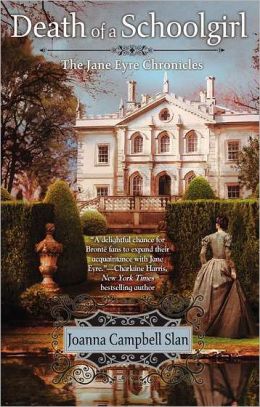
Death of a Schoolgirl (Jane Eyre Chronicles #1) Joanna Campbell Slan. 2012. Berkley Trade. 340 pages. [Source: Library]
My expectations were low, so I was quite pleasantly surprised by how enjoyable this Jane Eyre mystery was. It may not be perfectly perfect from start to finish. There might be a paragraph or two here and there that bothered me. (For example, I didn't understand why Mrs. Fairfax was pushing Jane Eyre to take the family diamonds with her on her visit to Adele's school. Here she was going to check on the child's welfare, and Mrs. Fairfax is urging her to take jewels so she can dress up for her hosts in London?! I don't know if part of me thought it was foreshadowing--for better or worse--but when she put them in her reticule, I wanted to shout WHY are you traveling with expensive jewelry?!?! Why?! And sure enough--predictably enough--Jane Eyre gets robbed on her way to London. See! I told you not to take the family jewels!) But for the most part, I found the book to be an entertaining read.
Mrs. Rochester (aka Jane Eyre) is a new mother. She loves, loves, loves her new baby boy. But. When she receives a short letter from Adele with a French message included asking--begging--for help, she decides to leave her husband and son behind to check on Adele at her boarding school. If all is well, if it is just Adele being Adele, being childish and wanting her own way, then she may leave her at the school. If the school is less than ideal, if she does not like what she sees--how she sees the children being treated, if she thinks Adele's misery is justifiable, then she may take her out of the school. Because Jane Eyre was beaten up by the thief, because she doesn't particularly look RICH and IMPORTANT, she is initially mistaken as the new German teacher who was supposed to arrive several weeks earlier. That first day Jane Eyre is a bit flabbergasted and too overwhelmed to correct anyone. She has just learned that one of Adele's classmates was murdered. Eventually, one of the teachers convinces Jane that she should continue the deception, that she should resume her teaching duties temporarily and watch over the students herself. She debates what is best. Should she take Adele immediately to safety and let others solve the crime? Or should she become an amateur detective herself and work as a team with others to help solve the case?
Is Jane Eyre the best detective ever? Not really. But to me that almost doesn't matter. I liked spending time in her company. The setting intrigued me. I had never placed Jane Eyre in the Regency time period. But here we have the sequel set during the reign of George IV, and Queen Caroline, the scandalous Queen Caroline has not died yet. This places the book within a specific time frame. The sprinkling of historical details may not speak to all readers. Little details can be easily dismissed or ignored. But to me it's the little things that help ground a book. The book does deal with prejudices and judgments: how the lower classes feel about the upper classes, how the poor feel about the rich, how the rich feel about the poor, do they see them as human, are they compassionate and kind, or, haughty or cruel. One of the characters is VERY prejudiced against French people. Again and again we see characters making judgments or being judged. Sometimes the people that are being judged in certain situations are making judgments about others just a chapter or two later.
There were places I loved this one. There were places I merely liked it. But at times it just felt RIGHT. Maybe it didn't feel RIGHT cover to cover. But I read it quickly and enjoyed it very much.
© 2014 SukaYuka.com of SukaYuka's Book Reviews
My expectations were low, so I was quite pleasantly surprised by how enjoyable this Jane Eyre mystery was. It may not be perfectly perfect from start to finish. There might be a paragraph or two here and there that bothered me. (For example, I didn't understand why Mrs. Fairfax was pushing Jane Eyre to take the family diamonds with her on her visit to Adele's school. Here she was going to check on the child's welfare, and Mrs. Fairfax is urging her to take jewels so she can dress up for her hosts in London?! I don't know if part of me thought it was foreshadowing--for better or worse--but when she put them in her reticule, I wanted to shout WHY are you traveling with expensive jewelry?!?! Why?! And sure enough--predictably enough--Jane Eyre gets robbed on her way to London. See! I told you not to take the family jewels!) But for the most part, I found the book to be an entertaining read.
Mrs. Rochester (aka Jane Eyre) is a new mother. She loves, loves, loves her new baby boy. But. When she receives a short letter from Adele with a French message included asking--begging--for help, she decides to leave her husband and son behind to check on Adele at her boarding school. If all is well, if it is just Adele being Adele, being childish and wanting her own way, then she may leave her at the school. If the school is less than ideal, if she does not like what she sees--how she sees the children being treated, if she thinks Adele's misery is justifiable, then she may take her out of the school. Because Jane Eyre was beaten up by the thief, because she doesn't particularly look RICH and IMPORTANT, she is initially mistaken as the new German teacher who was supposed to arrive several weeks earlier. That first day Jane Eyre is a bit flabbergasted and too overwhelmed to correct anyone. She has just learned that one of Adele's classmates was murdered. Eventually, one of the teachers convinces Jane that she should continue the deception, that she should resume her teaching duties temporarily and watch over the students herself. She debates what is best. Should she take Adele immediately to safety and let others solve the crime? Or should she become an amateur detective herself and work as a team with others to help solve the case?
Is Jane Eyre the best detective ever? Not really. But to me that almost doesn't matter. I liked spending time in her company. The setting intrigued me. I had never placed Jane Eyre in the Regency time period. But here we have the sequel set during the reign of George IV, and Queen Caroline, the scandalous Queen Caroline has not died yet. This places the book within a specific time frame. The sprinkling of historical details may not speak to all readers. Little details can be easily dismissed or ignored. But to me it's the little things that help ground a book. The book does deal with prejudices and judgments: how the lower classes feel about the upper classes, how the poor feel about the rich, how the rich feel about the poor, do they see them as human, are they compassionate and kind, or, haughty or cruel. One of the characters is VERY prejudiced against French people. Again and again we see characters making judgments or being judged. Sometimes the people that are being judged in certain situations are making judgments about others just a chapter or two later.
There were places I loved this one. There were places I merely liked it. But at times it just felt RIGHT. Maybe it didn't feel RIGHT cover to cover. But I read it quickly and enjoyed it very much.
© 2014 SukaYuka.com of SukaYuka's Book Reviews
Tuesday, August 5, 2014
The Auschwitz Escape (2014)
The Auschwitz Escape. Joel C. Rosenberg. 2014. Tyndale. 468 pages. [Source: Library]
The Auschwitz Escape is a compelling historical novel starring two wonderful heroes. Readers meet Jean Luc Leclerc a pastor who follows his heart and sets out to rescue as many Jews as he can. He "rescues" them by providing for the needs of refugees. He takes Jews into his home and hides them, he encourages every one in his town to do so. His rescue work continues for several years before he is arrested by the Nazis and taken to Auschwitz. Readers also meet a young Jewish man named Jacob Weisz. He is part of the Resistance, Belgium Resistance, I believe? He is doing his all to help as well. He too is captured by the Nazis and sent to Auschwitz. However they don't learn his true name for many months. Both men learn the upsetting fate of most Jews upon arrival. Both realize that it is not a work camp, but, instead a death camp. Both men are chosen by others in the camp to be part of an underground resistance. Both are chosen to be part of an escape program. They feel very strongly that several teams of two-men need to escape from the camp and seek not only immediate refuge, but, to be messengers. They feel that if the outside world had even a small clue what was happening, they would act, they would do something, they couldn't not do something, right? So Luc and Jacob are the third or maybe fourth team over a year to attempt to escape. Will their escape succeed? Will they survive? Will they be able to find help? What will happen when they speak the truth?
The Auschwitz Escape is fiction. But there were men who did manage to escape who did carry messages and horrific proof about the camp with them to share with the outside world.
I would definitely recommend this one.
© 2014 SukaYuka.com of SukaYuka's Book Reviews
The Auschwitz Escape is a compelling historical novel starring two wonderful heroes. Readers meet Jean Luc Leclerc a pastor who follows his heart and sets out to rescue as many Jews as he can. He "rescues" them by providing for the needs of refugees. He takes Jews into his home and hides them, he encourages every one in his town to do so. His rescue work continues for several years before he is arrested by the Nazis and taken to Auschwitz. Readers also meet a young Jewish man named Jacob Weisz. He is part of the Resistance, Belgium Resistance, I believe? He is doing his all to help as well. He too is captured by the Nazis and sent to Auschwitz. However they don't learn his true name for many months. Both men learn the upsetting fate of most Jews upon arrival. Both realize that it is not a work camp, but, instead a death camp. Both men are chosen by others in the camp to be part of an underground resistance. Both are chosen to be part of an escape program. They feel very strongly that several teams of two-men need to escape from the camp and seek not only immediate refuge, but, to be messengers. They feel that if the outside world had even a small clue what was happening, they would act, they would do something, they couldn't not do something, right? So Luc and Jacob are the third or maybe fourth team over a year to attempt to escape. Will their escape succeed? Will they survive? Will they be able to find help? What will happen when they speak the truth?
The Auschwitz Escape is fiction. But there were men who did manage to escape who did carry messages and horrific proof about the camp with them to share with the outside world.
I would definitely recommend this one.
© 2014 SukaYuka.com of SukaYuka's Book Reviews
Tuesday, July 29, 2014
China Dolls (2014)
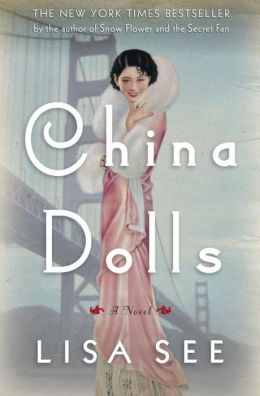
China Dolls. Lisa See. 2014. Random House. 376 pages. [Source: Library]
China Dolls is historical fiction. The novel follows three women through the latter days of the 1930s through the 1940s. Three very different women I might add. The friendship between these three women is not quite pure or ideal. Grace, one of the heroines, is running away from an abusive father. Her dream is to sing and dance and to go into show business. Ruby, another heroine, is also a dancer and performer. Helen is the third heroine. Before a chance meeting with Ruby and Grace, Helen had no big dreams of show business. In fact, Helen could not even dance! Yet, a chance meeting one day led all three women to audition for an Oriental nightclub. (For the record, Oriental is the term used throughout China Dolls.) Talent is only half of what is required, they learn. Appearance is super important. It is more important to be beautiful and amazing and be somewhat teachable than to be incredibly talented. Helen and Grace are hired to be essentially part of a chorus. (They're called Ponies.) But Ruby remains a part of their lives. For better or worse.
While each woman is given a back story and/or a sob story, I had a hard time liking any of the characters. Helen, Grace, and Ruby may spend time together, but, that doesn't mean they like each other and want each other to succeed. Helen, Ruby, and Grace could be quite mean and awful to each other.
The history is interesting. The story is certainly full of drama. The characters are incredibly flawed and remain consistently selfish.
I liked it fine, but, I definitely did not love it.
© 2014 SukaYuka.com of SukaYuka's Book Reviews
China Dolls is historical fiction. The novel follows three women through the latter days of the 1930s through the 1940s. Three very different women I might add. The friendship between these three women is not quite pure or ideal. Grace, one of the heroines, is running away from an abusive father. Her dream is to sing and dance and to go into show business. Ruby, another heroine, is also a dancer and performer. Helen is the third heroine. Before a chance meeting with Ruby and Grace, Helen had no big dreams of show business. In fact, Helen could not even dance! Yet, a chance meeting one day led all three women to audition for an Oriental nightclub. (For the record, Oriental is the term used throughout China Dolls.) Talent is only half of what is required, they learn. Appearance is super important. It is more important to be beautiful and amazing and be somewhat teachable than to be incredibly talented. Helen and Grace are hired to be essentially part of a chorus. (They're called Ponies.) But Ruby remains a part of their lives. For better or worse.
While each woman is given a back story and/or a sob story, I had a hard time liking any of the characters. Helen, Grace, and Ruby may spend time together, but, that doesn't mean they like each other and want each other to succeed. Helen, Ruby, and Grace could be quite mean and awful to each other.
The history is interesting. The story is certainly full of drama. The characters are incredibly flawed and remain consistently selfish.
I liked it fine, but, I definitely did not love it.
© 2014 SukaYuka.com of SukaYuka's Book Reviews
Tuesday, June 10, 2014
A Tree Grows In Brooklyn (1943)
A Tree Grows in Brooklyn. Betty Smith. 1943/2006. HarperCollins. 496 pages. [Source: Bought]
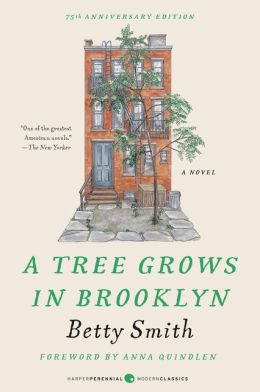
Oh how I loved Betty Smith's A Tree Grows in Brooklyn. Readers get the chance to get to know Francie, the heroine, her brother, Neeley, her mother, Katie, her father, Johnny, her aunts, Sissy and Evy, and her grandmother, Mary Rommely. A Tree Grows in Brooklyn is set circa 1910-1918 in Brooklyn, New York; it is very much a coming-of-age novel focusing on Francie, yet expanding to include several generations of her family. The book has a good number of flashbacks letting readers get to know all the members of the family before getting good and settled in Francie's life. It is a book that embraces ALL of life: the big things, the little things: no matter how ugly or beautiful. Truth does not equal beauty as Francie learns. I loved Francie's passion for living. I loved her observations.
A Tree Grows In Brooklyn is rich in detail AND rich in characterization. It is not a fast-paced action, adventure novel. It is a character-driven, family-focused historical novel. It doesn't try to make people better than they are. It is realistic and honest. The characters are very human, very fallible. One of the themes is in fact being true and honest. Francie has a confrontation with an English teacher. The teacher is trying to shame Francie into writing only about the beautiful, precious things of life. Sunsets. Stars. Flowers. She has been writing about her life, about her father, about her childhood. Her teacher tells her to go home and burn these writings and say "this is ugliness, this is ugliness, this is ugliness." Francie finally submits enough to be able to end the conversation and leave the room, but she's holding strong to who she is and where she comes from.
It is a beautifully written novel. It is very quotable.
© 2014 SukaYuka.com of SukaYuka's Book Reviews
Oh how I loved Betty Smith's A Tree Grows in Brooklyn. Readers get the chance to get to know Francie, the heroine, her brother, Neeley, her mother, Katie, her father, Johnny, her aunts, Sissy and Evy, and her grandmother, Mary Rommely. A Tree Grows in Brooklyn is set circa 1910-1918 in Brooklyn, New York; it is very much a coming-of-age novel focusing on Francie, yet expanding to include several generations of her family. The book has a good number of flashbacks letting readers get to know all the members of the family before getting good and settled in Francie's life. It is a book that embraces ALL of life: the big things, the little things: no matter how ugly or beautiful. Truth does not equal beauty as Francie learns. I loved Francie's passion for living. I loved her observations.
A Tree Grows In Brooklyn is rich in detail AND rich in characterization. It is not a fast-paced action, adventure novel. It is a character-driven, family-focused historical novel. It doesn't try to make people better than they are. It is realistic and honest. The characters are very human, very fallible. One of the themes is in fact being true and honest. Francie has a confrontation with an English teacher. The teacher is trying to shame Francie into writing only about the beautiful, precious things of life. Sunsets. Stars. Flowers. She has been writing about her life, about her father, about her childhood. Her teacher tells her to go home and burn these writings and say "this is ugliness, this is ugliness, this is ugliness." Francie finally submits enough to be able to end the conversation and leave the room, but she's holding strong to who she is and where she comes from.
It is a beautifully written novel. It is very quotable.
The one tree in Francie’s yard was neither a pine nor a hemlock. It had pointed leaves which grew along green switches which radiated from the bough and made a tree which looked like a lot of opened green umbrellas. Some people called it the Tree of Heaven. No matter where its seed fell, it made a tree which struggled to reach the sky. It grew in boarded-up lots and out of neglected rubbish heaps and it was the only tree that grew out of cement. It grew lushly, but only in the tenements districts.
An eleven-year-old girl sitting on this fire escape could imagine that she was living in a tree. That’s what Francie imagined every Saturday afternoon in summer.
THE LIBRARY WAS A LITTLE OLD SHABBY PLACE. FRANCIE THOUGHT it was beautiful. The feeling she had about it was as good as the feeling she had about church. She pushed open the door and went in. She liked the combined smell of worn leather bindings, library paste and freshly inked stamping pads better than she liked the smell of burning incense at high mass.
Francie thought that all the books in the world were in that library and she had a plan about reading all the books in the world. She was reading a book a day in alphabetical order and not skipping the dry ones.
“Mother, I am young. Mother, I am just eighteen. I am strong. I will work hard, Mother. But I do not want this child to grow up just to work hard. What must I do, Mother, what must I do to make a different world for her? How do I start?” “The secret lies in the reading and the writing. You are able to read. Every day you must read one page from some good book to your child. Every day this must be until the child learns to read. Then she must read every day, I know this is the secret.”
“I will read,” promised Katie. “What is a good book?” “There are two great books. Shakespeare is a great book. I have heard tell that all the wonder of life is in that book; all that man has learned of beauty, all that he may know of wisdom and living are on those pages. It is said that these stories are plays to be acted out on the stage. I have never spoken to anyone who has seen this great thing. But I heard the lord of our land back in Austria say that some of the pages sing themselves like songs.”
“And what is the other great book?” “It is the Bible that the Protestant people read.” “We have our own Bible, the Catholic one.” Mary looked around the room furtively. “It is not fitting for a good Catholic to say so but I believe that the Protestant Bible contains more of the loveliness of the greatest story on this earth and beyond it. A much-loved Protestant friend once read some of her Bible to me and I found it as I have said.
“That is the book, then, and the book of Shakespeare. And every day you must read a page of each to your child—even though you yourself do not understand what is written down and cannot sound the words properly. You must do this that the child will grow up knowing of what is great—knowing that these tenements of Williamsburg are not the whole world.”
Everything struggles to live. Look at that tree growing up there out of that grating. It gets no sun, and water only when it rains. It’s growing out of sour earth. And it’s strong because its hard struggle to live is making it strong. My children will be strong that way.”
Well, everybody’s something. We all got a tag of some kind.
She found to her agony, that the doctor was still there, poised needle and all. He was staring at her arm in distaste. Francie looked too. She saw a small white area on a dirty dark-brown arm. She heard the doctor talking to the nurse. “Filth, filth, filth, from morning to night. I know they’re poor but they could wash. Water is free and soap is cheap. Just look at that arm, nurse.” The nurse looked and clucked in horror. Francie stood there with the hot flamepoints of shame burning her face.
After the doctor’s outburst, Francie stood hanging her head. She was a dirty girl. That’s what the doctor meant. He was talking more quietly now asking the nurse how that kind of people could survive; that it would be a better world if they were all sterilized and couldn’t breed anymore. Did that mean he wanted her to die? Would he do something to make her die because her hands and arms were dirty from the mud pies?
“My brother is next. His arm is just as dirty as mine so don’t be surprised. And you don’t have to tell him. You told me.” They stared at this bit of humanity who had become so strangely articulate. Francie’s voice went ragged with a sob. “You don’t have to tell him. Besides it won’t do no good. He’s a boy and he don’t care if he is dirty.”
She put her arm around her and held her close to her own life warmth. “Francie, baby, you’re trembling like a leaf.” Francie had never heard that expression and it made her thoughtful. She looked at the little tree growing out of the concrete at the side of the house. There were still a few dried leaves clinging to it. One of them rustled dryly in the wind. Trembling like a leaf. She stored the phrase away in her mind.
“Forgiveness,” said Mary Rommely, “is a gift of high value. Yet its cost is nothing.”
OH, MAGIC HOUR WHEN A CHILD FIRST KNOWS IT CAN READ PRINTED WORDS!
For quite a while, Francie had been spelling out letters, sounding them and then putting the sounds together to mean a word. But one day, she looked at a page and the word “mouse” had instantaneous meaning. She looked at the word, and the picture of a gray mouse scampered through her mind. She looked further and when she saw “horse,” she heard him pawing the ground and saw the sun glint on his glossy coat. The word “running” hit her suddenly and she breathed hard as though running herself. The barrier between the individual sound of each letter and the whole meaning of the word was removed and the printed word meant a thing at one quick glance. She read a few pages rapidly and almost became ill with excitement. She wanted to shout it out. She could read! She could read! From that time on, the world was hers for the reading. She would never be lonely again, never miss the lack of intimate friends. Books became her friends and there was one for every mood. There was poetry for quiet companionship. There was adventure when she tired of quiet hours. There would be love stories when she came into adolescence and when she wanted to feel a closeness to someone she could read a biography. On that day when she first knew she could read, she made a vow to read one book a day as long as she lived.
She liked numbers and sums. She devised a game in which each number was a family member and the “answer” made a family grouping with a story to it. Naught was a babe in arms. He gave no trouble. Whenever he appeared you just “carried” him. The figure 1 was a pretty baby girl just learning to walk, and easy to handle; 2 was a baby boy who could walk and talk a little. He went into family life (into sums, etc.) with very little trouble. And 3 was an older boy in kindergarten, who had to be watched a little. Then there was 4, a girl of Francie’s age. She was almost as easy to “mind” as 2. The mother was 5, gentle and kind. In large sums, she came along and made everything easy the way a mother should. The father, 6, was harder than the others but very just. But 7 was mean. He was a crotchety old grandfather and not at all accountable for how he came out. The grandmother, 8, was hard too, but easier to understand than 7. Hardest of all was 9. He was company and what a hard time fitting him into family life! When Francie added a sum, she would fix a little story to go with the result. If the answer was 924, it meant that the little boy and girl were being minded by company while the rest of the family went out. When a number such as 1024 appeared, it meant that all the little children were playing together in the yard. The number 62 meant that papa was taking the little boy for a walk; 50 meant that mama had the baby out in the buggy for an airing and 78 meant grandfather and grandmother sitting home by the fire of a winter’s evening. Each single combination of numbers was a new set-up for the family and no two stories were ever the same.
Francie was ten years old when she first found an outlet in writing. What she wrote was of little consequence. What was important was that the attempt to write stories kept her straight on the dividing line between truth and fiction.
“TODAY, I AM A WOMAN,” WROTE FRANCIE IN HER DIARY IN THE summer when she was thirteen. She looked at the sentence and absently scratched a mosquito bite on her bare leg. She looked down on her long thin and as yet formless legs. She crossed out the sentence and started over. “Soon, I shall become a woman.” She looked down on her chest which was as flat as a washboard and ripped the page out of the book. She started fresh on a new page.
“But poverty, starvation and drunkenness are ugly subjects to choose. We all admit these things exist. But one doesn’t write about them.” “What does one write about?” Unconsciously, Francie picked up the teacher’s phraseology. “One delves into the imagination and finds beauty there. The writer, like the artist, must strive for beauty always.” “What is beauty?” asked the child. “I can think of no better definition than Keats’: ‘Beauty is truth, truth beauty.’”
Francie took her courage into her two hands and said, “Those stories are the truth.”
“Nonsense!” exploded Miss Garnder. Then, softening her tone, she continued: “By truth, we mean things like the stars always being there and the sun always rising and the true nobility of man and mother-love and love for one’s country,” she ended anti-climactically. “I see,” said Francie. As Miss Garnder continued talking, Francie answered her bitterly in her mind. “Drunkenness is neither truth nor beauty. It’s a vice. Drunkards belong in jail, not in stories. And poverty. There is no excuse for that. There’s work enough for all who want it. People are poor because they’re too lazy to work. There’s nothing beautiful about laziness. (Imagine Mama lazy!) “Hunger is not beautiful. It is also unnecessary. We have well-organized charities. No one need go hungry.” Francie ground her teeth. Her mother hated the word “charity” above any word in the language and she had brought up her children to hate it too. “Now, I’m not a snob,” stated Miss Garnder. “I do not come from a wealthy family. My father was a minister with a very small salary.” (But it was a salary, Miss Garnder.)
“And the only help my mother had was a succession of untrained maids, mostly girls from the country.” (I see. You were poor, Miss Garnder, poor with a maid.) “Many times we were without a maid and my mother had to do all the housework herself.” (And my mother, Miss Garnder, has to do all her own housework, and yes, ten times more cleaning than that.) “I wanted to go to the state university but we couldn’t afford it. My father had to send me to a small denominational college.” (But admit you had no trouble going to college.) “And believe me, you’re poor when you go to such a college. I know what hunger is, too. Time and time again my father’s salary was held up and there was no money for food. Once we had to live on tea and toast for three days.” (So you know what it is to be hungry, too.) “But I’d be a dull person if I wrote about nothing but being poor and hungry, wouldn’t I?” Francie didn’t answer. “Wouldn’t I?” repeated Miss Garnder emphatically. “Yes ma’am.”
“I’ve taken all this time with you because I honestly believe that you have promise. Now that we’ve talked things out, I’m sure you’ll stop writing those sordid little stories.” Sordid. Francie turned the word over. It was not in her vocabulary. “What does that mean—sordid?”
Sordid: Filthy. Filthy? She thought of her father wearing a fresh dicky and collar every day of his life and shining his worn shoes as often as twice a day. Dirty. Papa had his own mug at the barber shop. Base. Francie passed that up not knowing exactly what it meant. Gross. Never! Papa was a dancer. He was slender and quick. His body wasn’t gross. Also mean and low. She remembered a hundred and one little tendernesses and acts of thoughtfulness on the part of her father. She remembered how everyone had loved him so. Her face got hot. She couldn’t see the next words because the page turned red under her eyes. She turned on Miss Garnder, her face twisted with fury. “Don’t you ever dare use that word about us!” “Us?” asked Miss Garnder blankly. “We were talking about your compositions. Why, Frances!” Her voice was shocked. “I’m surprised! A well-behaved girl like you. What would your mother say if she knew you had been impertinent to your teacher?” Francie was frightened. Impertinence to a teacher was almost a reformatory offense in Brooklyn. “Please excuse me. Please excuse me,” she repeated abjectly. “I didn’t mean it.” “I understand,” said Miss Garnder gently. She put her arm around Francie and led her to the door. “Our little talk has made an impression on you, I see. Sordid is an ugly word and I’m glad you resented my using it. It shows that you understand. Probably you don’t like me any more, but please believe that I spoke for your own good.
Yes, the world was changing rapidly and this time she knew it was the world and not herself.
“Dear God,” she prayed, “let me be something every minute of every hour of my life. Let me be gay; let me be sad. Let me be cold; let me be warm. Let me be hungry…have too much to eat. Let me be ragged or well dressed. Let me be sincere—be deceitful. Let me be truthful; let me be a liar. Let me be honorable and let me sin. Only let me be something every blessed minute. And when I sleep, let me dream all the time so that not one little piece of living is ever lost.”
The last time of anything has the poignancy of death itself. This that I see now, she thought, to see no more this way. Oh, the last time how clearly you see everything; as though a magnifying light had been turned on it. And you grieve because you hadn’t held it tighter when you had it every day. What had Granma Mary Rommely said? “To look at everything always as though you were seeing it either for the first or last time: Thus is your time on earth filled with glory.”
© 2014 SukaYuka.com of SukaYuka's Book Reviews
Tuesday, June 3, 2014
Tendrils of Life (2012)
Tendrils of Life: A Story of Love, Loss, and Survival in the Turmoil of the Korean War. Owen Choi. 2012. Princeton Falcon Press. 408 pages. [Source: Review copy]
Tendrils of Life is historical fiction set in Korea. Most of the story, though not all of the story, occurs during the early years of the Korean War, 1950-1953. Flashbacks. Tendrils of Life has plenty of flashbacks. These take readers back even further, several decades further in some cases. These flashbacks do place the "main story" into context. I will say that there were times I was confused, but, by the end, I saw how the pieces of the puzzle fit together and I understood, for the most part, WHY the flashbacks were so important to the overall story. It is a complex story. I won't lie. For those unfamiliar with the Korean War--like me--this one may prove challenging: not impossible, just challenging. I believe it seeks to provide some answers, some insight, into the war itself: the history and politics. Trying to explain a war is not ever easy, and, I appreciate the complexity of this one.
The characters. I felt all the characters had strengths and weaknesses. I felt they were human which is the best compliment I can give any author. Tendrils of Life is at best bittersweet, if I'm being honest, more bitter than sweet. It felt bleak, very bleak, but its an honest bleakness and not mere manipulation.
Tendrils of Life was a bit outside my comfort zone, but, I am so glad I read it.
© 2014 SukaYuka.com of SukaYuka's Book Reviews
Tendrils of Life is historical fiction set in Korea. Most of the story, though not all of the story, occurs during the early years of the Korean War, 1950-1953. Flashbacks. Tendrils of Life has plenty of flashbacks. These take readers back even further, several decades further in some cases. These flashbacks do place the "main story" into context. I will say that there were times I was confused, but, by the end, I saw how the pieces of the puzzle fit together and I understood, for the most part, WHY the flashbacks were so important to the overall story. It is a complex story. I won't lie. For those unfamiliar with the Korean War--like me--this one may prove challenging: not impossible, just challenging. I believe it seeks to provide some answers, some insight, into the war itself: the history and politics. Trying to explain a war is not ever easy, and, I appreciate the complexity of this one.
The characters. I felt all the characters had strengths and weaknesses. I felt they were human which is the best compliment I can give any author. Tendrils of Life is at best bittersweet, if I'm being honest, more bitter than sweet. It felt bleak, very bleak, but its an honest bleakness and not mere manipulation.
Tendrils of Life was a bit outside my comfort zone, but, I am so glad I read it.
© 2014 SukaYuka.com of SukaYuka's Book Reviews
Tuesday, April 22, 2014
When Christ And His Saints Slept (1994)
When Christ and His Saints Slept by Sharon Kay Penman. 1994. Random House. 746 pages. [Source: Bought]
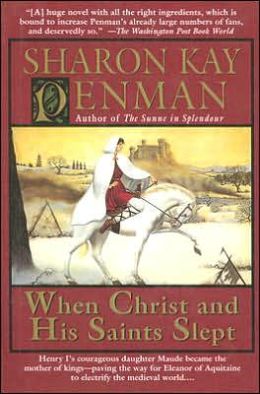
I've been meaning to read more of Sharon Kay Penman's work for years now. When Christ and His Saints Slept is set in the twelfth century. It begins with the tragic sailing of The White Ship and ends with Henry II ready to be crowned king of England. For readers who like numbers, that would be 1120-1154. It covers the later part of Henry I's reign: his grief and desperation over the loss of his son and heir, his wanting his daughter, Maude, to be his successor; it covers the war--which lasted over ten years--between Stephen and Maude for the crown of England. Readers also get a chance to see Maude's son, Henry, grow up to become "Henry II."
It is a novel with many strengths. One of its greatest strengths, perhaps, is in the wide range of characters or narrators. Stephen and Matilda, on one side, Maude and Geoffrey, on the other. Readers meet the men (and women) who supported Maude, including many of Henry I's illegitimate sons. Readers meet the men (and women) who supported Stephen's claim to the throne. If there is a point to When Christ and His Saints Slept, it is this: war is ugly and cruel and pointless. Readers see Stephen and his supporters--his army--do horribly cruel things in the name of war. Readers see Maude's army do some equally horrid things. One side is not holier than the other. While neither army was as cruel as they possibly could be all the time, without ceasing, year after year, the truth was that England suffered greatly during this tug of war. The truth was very few cared WHO ruled England, so long as England was ruled peaceably and practically. The burning. The stealing and looting. The raping. The killing. The holding of hostages. England was in a BIG BIG mess if this was the best either side could manage.
If the novel has one hero, one "main" character, it would be Ranulf. Ranulf is a fictional illegitimate son of Henry I. It is not a stretch to fit him in historically since Henry I recognized over twenty such sons! Ranulf along with Robert and Gilbert and Miles and Brien, and countless others supported Maude and her claim to the throne. While the novel does focus on the battles, the war, the political mess--it also gives a personal side to the time period. Readers see Ranulf grow up a bit, fall in love, make mistakes, find true love, and settle down to marry and raise his own family.
If the novel is allowed to have more than one hero, well, an obvious choice to me is Henry II. The book covers his teenage years: 14 to 19. The last third of the novel truly focuses on Henry, on his relationship with his parents, with his relationship with Eleanor of Aquitaine. Those last few chapters are far from clean.
I loved how many characters we get to meet and know. I loved that we get to know men AND women from the time period, most of them historical figures, though not all. I loved that readers get introduced to real history. Penman's pacing was wonderful, I felt!
For readers who ENJOY history, When Christ and His Saints Slept is easy to recommend. She gives you enough context so that you're not lost (or at least not lost past all hope!) but it never weighed the text down in my opinion. I admit that "being lost" in a history book is all a subjective matter based on what one does or doesn't know heading into a book, but, I thought she did a good balancing job.
Quotes:
I've been meaning to read more of Sharon Kay Penman's work for years now. When Christ and His Saints Slept is set in the twelfth century. It begins with the tragic sailing of The White Ship and ends with Henry II ready to be crowned king of England. For readers who like numbers, that would be 1120-1154. It covers the later part of Henry I's reign: his grief and desperation over the loss of his son and heir, his wanting his daughter, Maude, to be his successor; it covers the war--which lasted over ten years--between Stephen and Maude for the crown of England. Readers also get a chance to see Maude's son, Henry, grow up to become "Henry II."
It is a novel with many strengths. One of its greatest strengths, perhaps, is in the wide range of characters or narrators. Stephen and Matilda, on one side, Maude and Geoffrey, on the other. Readers meet the men (and women) who supported Maude, including many of Henry I's illegitimate sons. Readers meet the men (and women) who supported Stephen's claim to the throne. If there is a point to When Christ and His Saints Slept, it is this: war is ugly and cruel and pointless. Readers see Stephen and his supporters--his army--do horribly cruel things in the name of war. Readers see Maude's army do some equally horrid things. One side is not holier than the other. While neither army was as cruel as they possibly could be all the time, without ceasing, year after year, the truth was that England suffered greatly during this tug of war. The truth was very few cared WHO ruled England, so long as England was ruled peaceably and practically. The burning. The stealing and looting. The raping. The killing. The holding of hostages. England was in a BIG BIG mess if this was the best either side could manage.
If the novel has one hero, one "main" character, it would be Ranulf. Ranulf is a fictional illegitimate son of Henry I. It is not a stretch to fit him in historically since Henry I recognized over twenty such sons! Ranulf along with Robert and Gilbert and Miles and Brien, and countless others supported Maude and her claim to the throne. While the novel does focus on the battles, the war, the political mess--it also gives a personal side to the time period. Readers see Ranulf grow up a bit, fall in love, make mistakes, find true love, and settle down to marry and raise his own family.
If the novel is allowed to have more than one hero, well, an obvious choice to me is Henry II. The book covers his teenage years: 14 to 19. The last third of the novel truly focuses on Henry, on his relationship with his parents, with his relationship with Eleanor of Aquitaine. Those last few chapters are far from clean.
I loved how many characters we get to meet and know. I loved that we get to know men AND women from the time period, most of them historical figures, though not all. I loved that readers get introduced to real history. Penman's pacing was wonderful, I felt!
For readers who ENJOY history, When Christ and His Saints Slept is easy to recommend. She gives you enough context so that you're not lost (or at least not lost past all hope!) but it never weighed the text down in my opinion. I admit that "being lost" in a history book is all a subjective matter based on what one does or doesn't know heading into a book, but, I thought she did a good balancing job.
Quotes:
And so began for the wretched people of England, a time of suffering so great that they came to fear "Christ and his saints slept." (171)
If ever there was a woman unable to learn from her mistakes, it was this one for certes. No more than Stephen could. If the Lord God plucked him out of his Bristol prison on the morrow and restored him to power at Westminster, nothing would change. He'd still go on forgiving men he ought to hang, promising more than he could deliver, failing to keep the King's Peace. Maude and Stephen, a match made in Hell. What was it Geoffrey de Mandeville had once said--a lifetime ago? Ah, yes, that Maude would listen to no one and Stephen to anyone. Had there ever, he wondered, been a war like this? Was there a single soul--not related to them by blood or marriage--who truly wanted to see either one of them on England's throne? (281)
"I am truly glad to have you safe, Robert. But tonight I feel as if... as if we'd struggled and panted and clawed our way up a mountain, only to stumble just as we neared the summit and fall all the way down, landing in a bloodied, bruised heap at the bottom. What in God's Name do we do now?"© 2014 SukaYuka.com of SukaYuka's Book Reviews
"I suppose," he said, "we start climbing again."
"How many of our men will have the heart for it?" Rising, she began to pace, "To come so close and then to have it all snatched away like this...it is so unfair, Robert, so damnably unfair!"
"Life is unfair," he said, sounding so stoical, so rational, and so dispassionate that she was suddenly angry, a scalding, seething, impotent rage that spared no one--not herself, not Robert, not God.
"You think I don't know that? When has life ever been fair to women? Just think upon how easy it was for Stephen to steal my crown, and how bitter and bloody has been my struggle to win it back. Even after we'd caged Stephen at Bristol Castle, he was still a rival, still a threat...and why? Because he was so much braver or more clever or capable than me? No...because I was a woman, for it always came back to that. I'll not deny that I made mistakes, but you do not know what it is like, Robert, to be judged so unfairly, to be rejected not for what you've done but for what you are. It is a poison that seeps into the soul, that makes you half crazed with the need to prove yourself..."
She stopped to catch her breath, and only then did she see the look on Robert's face, one of disbelief and then utter and overwhelming fury, burning as hot as her own anger, hotter even, for being so long suppressed.
"I do not know what it is like?" he said incredulously. "I was our father's firstborn son, but was I his heir? No, I was just his bastard. He trusted me and relied upon me and needed me. But none of that mattered, not even after the White Ship sank and he lost his only lawfully begotten son. He was so desperate to have an heir of his body that he dragged you back--unwilling--from Germany, forced you into a marriage that he knew was doomed, and then risked rebellion by ramming you down the throats of his barons. And all the while, he had a son capable of ruling after him--he had me! But I was the son born of his sin, so I was not worthy to be king. As if I could have blundered any worse than you or Stephen!"Maude was stunned. She stared at him, too stricken for words, not knowing what to say even if she'd been capable of speech. Robert seemed equally shattered by his outburst: his face was suddenly ashen. He started to speak, then turned abruptly and walked out. (343-44).
Tuesday, March 25, 2014
Death Comes To the Village
Death Comes to the Village. Catherine Lloyd. 2013. Kensington. 304 pages. [Source: Library]
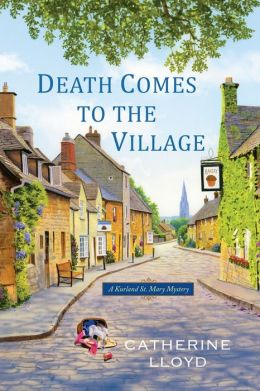
Death Comes To The Village was a very enjoyable--quite pleasant--mystery set in Regency England. Major Robert Kurland, our hero, is an invalid soldier. He's recovering from his injuries, but, no one can begin to predict if he'll make a complete recovery. The mystery opens with his frustration at its highest. He is unable to sleep because the curtains have not been closed. He--for better or worse--decides to try to take care of it himself. Of course, he isn't able to walk properly. And it's amazing he even makes it all the way to the window before collapsing in a heap on the floor. But before he falls oh-so-dramatically, he witnesses something through the window. A man carrying a large-bulky-heavy-something. Is he a burglar or a murderer? Is there a reasonable explanation? He's not sure. He feels something happened, and he tells the rector's daughter, our heroine, Lucy Harrington. He shares with her his notion that a crime may have happened--not mentioning murder--and he wants her to keep her ears open. Did anyone else hear anything? see anything? Were any homes robbed? Anyone gone missing? Any strange behavior? Soon these two have teamed up and are working hard to solve a mystery...
There HAVE been thefts in the area. Many homes are missing small objects, it appears there is plenty of reason to suspect a burglar...
But two maids have also vanished...and Miss Lucy Harrington fears the worst...
© 2014 SukaYuka.com of SukaYuka's Book Reviews
Death Comes To The Village was a very enjoyable--quite pleasant--mystery set in Regency England. Major Robert Kurland, our hero, is an invalid soldier. He's recovering from his injuries, but, no one can begin to predict if he'll make a complete recovery. The mystery opens with his frustration at its highest. He is unable to sleep because the curtains have not been closed. He--for better or worse--decides to try to take care of it himself. Of course, he isn't able to walk properly. And it's amazing he even makes it all the way to the window before collapsing in a heap on the floor. But before he falls oh-so-dramatically, he witnesses something through the window. A man carrying a large-bulky-heavy-something. Is he a burglar or a murderer? Is there a reasonable explanation? He's not sure. He feels something happened, and he tells the rector's daughter, our heroine, Lucy Harrington. He shares with her his notion that a crime may have happened--not mentioning murder--and he wants her to keep her ears open. Did anyone else hear anything? see anything? Were any homes robbed? Anyone gone missing? Any strange behavior? Soon these two have teamed up and are working hard to solve a mystery...
There HAVE been thefts in the area. Many homes are missing small objects, it appears there is plenty of reason to suspect a burglar...
But two maids have also vanished...and Miss Lucy Harrington fears the worst...
© 2014 SukaYuka.com of SukaYuka's Book Reviews
Friday, February 28, 2014
Reread #9 Guernsey Literary and Potato Peel Pie Society
The Guernsey Literary and Potato Peel Pie Society. Mary Ann Shaffer and Annie Barrows. 2008. Random House. 274 pages. [Source: Library]
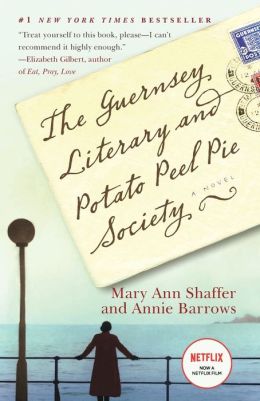
The Guernsey Literary and Potato Peel Pie Society is one of those rare, rare books where you could almost open it up to ANY page and find something to smile about. And that, of course, is something to be treasured and applauded because it makes for a completely satisfying read from start to finish. This novel is told completely through letters. Readers get to know characters in their own words, for better or worse. Readers can try to read between the lines and make connections perhaps. They might attempt to play "Miss Marple" like one of the minor characters and spy out what is really going on...
The heroine of the novel is a young author named Juliet Ashton. During the war, she wrote a regular column under the name of Izzy Bickerstaff. Now that the war is over (finally!!!), her columns have been published together in book form. She's happy. Of course she's happy. Why wouldn't she be happy. The war is over. Her book is being received positively. Sure, she feels the need to move on, to write a book under her own name, to write a very different book. And true, she's a bit in doubt as to what that next book will be and if that book will live up to the success of the first one, but...
So most of her letters are to her publisher, Sidney, or to her best friend, Sophie. But. One letter she receives changes her life. And it wasn't an obvious change-of-life letter. It was a friendly, down-to-earth letter from a complete stranger. He'd read "her" book. No, not the book she'd written. But a book that had been in her library, a book with her name and address in it. It was a book by Charles Lamb. This used book found and read during the war, really, really effected him. He connected with Charles Lamb, and he thought she might have book recommendations and such.
So. Juliet discovers almost by accident several things. First, that Guernsey was occupied during the war. (If she'd known during the war, it had slipped her mind because it didn't really impact her--not because she was selfish, but just because when your own world is a big tumbling-down uncertain mess, you don't really think of the island of Guernsey in the big-scheme-of-things.) Second, that a group had come together through desperation and lust (for a pig dinner!!!) to form the "Guernsey Literary and Potato Peel Pie Society". Though for the record, the Potato Peel Pie part came later! Of course, she HAS to know more, and she wants all the details. She NEEDS more. She wants to hear more from men and women in this "literary society." She wants their stories--about books and reading, about the Nazi occupation, about the war, about their hardships (hunger, separation from children, etc), about their joys and sorrows. Of course, all this will take time and trust...
And that is what makes this one so great, in my opinion. I loved the getting-to-know experience. I loved the relationship building. I loved seeing friendships form. I especially, especially loved the bond that formed between Juliet and Kit (a war orphan). There were so many giddy-making moments in this book!
I would definitely recommend this one! It is so wonderful, so charming, so perfect!!!!
I first reviewed this one in August 2009.
Favorite quotes:
© 2014 SukaYuka.com of SukaYuka's Book Reviews
The Guernsey Literary and Potato Peel Pie Society is one of those rare, rare books where you could almost open it up to ANY page and find something to smile about. And that, of course, is something to be treasured and applauded because it makes for a completely satisfying read from start to finish. This novel is told completely through letters. Readers get to know characters in their own words, for better or worse. Readers can try to read between the lines and make connections perhaps. They might attempt to play "Miss Marple" like one of the minor characters and spy out what is really going on...
The heroine of the novel is a young author named Juliet Ashton. During the war, she wrote a regular column under the name of Izzy Bickerstaff. Now that the war is over (finally!!!), her columns have been published together in book form. She's happy. Of course she's happy. Why wouldn't she be happy. The war is over. Her book is being received positively. Sure, she feels the need to move on, to write a book under her own name, to write a very different book. And true, she's a bit in doubt as to what that next book will be and if that book will live up to the success of the first one, but...
So most of her letters are to her publisher, Sidney, or to her best friend, Sophie. But. One letter she receives changes her life. And it wasn't an obvious change-of-life letter. It was a friendly, down-to-earth letter from a complete stranger. He'd read "her" book. No, not the book she'd written. But a book that had been in her library, a book with her name and address in it. It was a book by Charles Lamb. This used book found and read during the war, really, really effected him. He connected with Charles Lamb, and he thought she might have book recommendations and such.
So. Juliet discovers almost by accident several things. First, that Guernsey was occupied during the war. (If she'd known during the war, it had slipped her mind because it didn't really impact her--not because she was selfish, but just because when your own world is a big tumbling-down uncertain mess, you don't really think of the island of Guernsey in the big-scheme-of-things.) Second, that a group had come together through desperation and lust (for a pig dinner!!!) to form the "Guernsey Literary and Potato Peel Pie Society". Though for the record, the Potato Peel Pie part came later! Of course, she HAS to know more, and she wants all the details. She NEEDS more. She wants to hear more from men and women in this "literary society." She wants their stories--about books and reading, about the Nazi occupation, about the war, about their hardships (hunger, separation from children, etc), about their joys and sorrows. Of course, all this will take time and trust...
And that is what makes this one so great, in my opinion. I loved the getting-to-know experience. I loved the relationship building. I loved seeing friendships form. I especially, especially loved the bond that formed between Juliet and Kit (a war orphan). There were so many giddy-making moments in this book!
I would definitely recommend this one! It is so wonderful, so charming, so perfect!!!!
I first reviewed this one in August 2009.
Favorite quotes:
I don't want to be married just to be married. I can't think of anything lonelier than spending the rest of my life with someone I can't talk to, or worse, someone I can't be silent with.
That's what I love about reading: one tiny thing will interest you in a book, and that tiny thing will lead you to another book, and another bit there will lead you onto a third book. It's geometrically progressive - all with no end in sight, and for no other reason than sheer enjoyment.
Reading good books ruins you for enjoying bad books.
Perhaps there is some secret sort of homing instinct in books that brings them to their perfect readers. How delightful if that were true.
I love seeing the bookshops and meeting the booksellers-- booksellers really are a special breed. No one in their right mind would take up clerking in a bookstore for the salary, and no one in his right mind would want to own one-- the margin of profit is too small. So, it has to be a love of readers and reading that makes them do it-- along with first dibs on the new books.
Isola doesn't approve of small talk and believes in breaking the ice by stomping on it.
It was amazing to me then, and still is, that so many people who wander into bookshops don't really know what they're after--they only want to look around and hope to see a book that will strike their fancy. And then, being bright enough not to trust the publisher's blurb, they will ask the book clerk the three questions: (1) What is it about? (2) Have you read it? (3) Was it any good?
Will Thisbee gave me The Beginner's Cook-Book for Girl Guides. It was just the thing; the writer assumes you know nothing about cookery and writes useful hints - "When adding eggs, break the shells first.”
“What on earth did you say to Isola? She stopped in on her way to pick up Pride and Prejudice and to berate me for never telling her about Elizabeth Bennet and Mr. Darcy. Why hadn't she known there were better love stories around? Stories not riddled with ill-adjusted men, anguish, death and graveyards!”
The first rule of snooping is to come at it sideways--when you began writing me dizzy letters about Alexander, I didn't ask if you were in love with him, I asked what his favorite animal was. And your answer told me everything I needed to know about him--how many men would admit that they loved ducks?
© 2014 SukaYuka.com of SukaYuka's Book Reviews
Subscribe to:
Posts (Atom)
