It's The End of the World As We Know It. Saci Lloyd. 2015. Hachette Books. 288 pages. [Source: Review copy]
Did I like Saci Lloyd's It's The End of the World As We Know It? Not really. The book is described as surreal and hilarious. And. For some readers, I suppose it might read enough like Douglas Adams to pass as a good read. But overall, I was irritated and frustrated.
The book is science fiction and deals with alternate universes and wormholes. The particular alternate universe readers will experience in the book was created mostly by accident. The mad scientist, Xenron Deva, meant to do something, no doubt, but a strand of hair, leads to complete nonsense in the world he did create. The Deva Corporation did not even remain in power long, for at the time, our hero gets sent there by accident, the world is being managed or mismanaged by KAT. The world is strange and bizarre, which readers might expect and actually prefer. But the differences in spelling, in particular, drove me crazy.
Mikey Malone is the hero of It's the End of the World As We Know It. While trying to impress a girl, Caitlyn, he fakes interest in internet celebrity-hacker-spy GERILLR. Ultimately, he regrets this I think. Since it is during their time together waiting for GERILLR's program/broadcast that he is sucked into this alternate reality. (So is the parrot, Ubu).
Mikey soon finds himself in a strange, strange place: Silikon Valle. And it takes him a bit to adapt and make friends. (Only a few of his friends have names that are easy to type.) Conflict, the book has plenty of it. Mikey, of course, wants to find out a way to get back to his own reality, his own home. And that won't be easy. For not only is he clueless, he's also being hunted/attacked by bad guys. Teamwork can accomplish plenty, but, no matter how hard one tries, sometimes endings are imperfect.
I found the book annoying and unsatisfying. But you might find it entertaining. Especially if you don't mind endings that aren't proper endings.
© 2015 SukaYuka.com of SukaYuka's Book Reviews
Showing posts with label YA Fiction. Show all posts
Tuesday, January 6, 2015
Tuesday, December 9, 2014
Palace of Spies (2013)
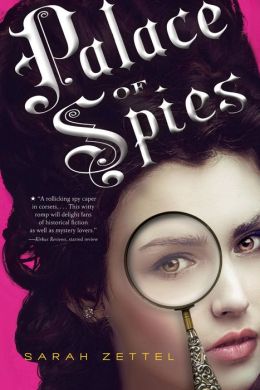
Palace of Spies. Sarah Zettel. 2013. Houghton Mifflin Harcourt. 368 pages. [Source: Library]
Peggy Fitzroy lives with her aunt, uncle, and cousin. She knows she's not wanted, her aunt and uncle have made that clear. But she gets along quite well with her cousin, Olivia. The novel opens with Peggy in a difficult position. Her uncle has arranged a marriage for her. She's not thrilled instead more than a little hesitant. Her hesitation only increases AFTER she meets him at a ball. Her intended isn't the only person she meets there, however. One other mystery man makes her acquaintance. He offers her a way out. He tells her that he knew her mother. He wants to make a deal with her, of sorts. He wants her to spy for him, to impersonate one of the Queen's maids. (Ladies-in-waiting?) He leaves her with his card. She's curious but just as hesitant about that option as well. If only she could have some control over her own future...
With a title like Palace of Spies, it's obvious what her choice was. She will become Lady Francesca Wallingham. Can she learn enough from Mr. Tinderflint and Mr. Peele? Do they know enough about her to tell her everything she needs to know to pass as this lady? Is either man trustworthy? What are their intentions? What will they do with the information she provides? Who can she trust at court? Did Lady Francesca have enemies? How will she be able to discern who her friends were and who her enemies were? Will she fool anyone? Will she fool everyone? Will she ever get a minute to call her own? How long will this deception last?
I enjoyed this one. I think I enjoyed it even more having read Lucy Worsley's The Courtiers: Splendor and Intrigue in the Georgian Court at Kensington Palace earlier this year. I was familiar with several of the characters. It was quite entertaining with a nice balance of danger and romance.
© 2014 SukaYuka.com of SukaYuka's Book Reviews
Peggy Fitzroy lives with her aunt, uncle, and cousin. She knows she's not wanted, her aunt and uncle have made that clear. But she gets along quite well with her cousin, Olivia. The novel opens with Peggy in a difficult position. Her uncle has arranged a marriage for her. She's not thrilled instead more than a little hesitant. Her hesitation only increases AFTER she meets him at a ball. Her intended isn't the only person she meets there, however. One other mystery man makes her acquaintance. He offers her a way out. He tells her that he knew her mother. He wants to make a deal with her, of sorts. He wants her to spy for him, to impersonate one of the Queen's maids. (Ladies-in-waiting?) He leaves her with his card. She's curious but just as hesitant about that option as well. If only she could have some control over her own future...
With a title like Palace of Spies, it's obvious what her choice was. She will become Lady Francesca Wallingham. Can she learn enough from Mr. Tinderflint and Mr. Peele? Do they know enough about her to tell her everything she needs to know to pass as this lady? Is either man trustworthy? What are their intentions? What will they do with the information she provides? Who can she trust at court? Did Lady Francesca have enemies? How will she be able to discern who her friends were and who her enemies were? Will she fool anyone? Will she fool everyone? Will she ever get a minute to call her own? How long will this deception last?
I enjoyed this one. I think I enjoyed it even more having read Lucy Worsley's The Courtiers: Splendor and Intrigue in the Georgian Court at Kensington Palace earlier this year. I was familiar with several of the characters. It was quite entertaining with a nice balance of danger and romance.
© 2014 SukaYuka.com of SukaYuka's Book Reviews
Tuesday, November 25, 2014
Mortal Heart (2014)
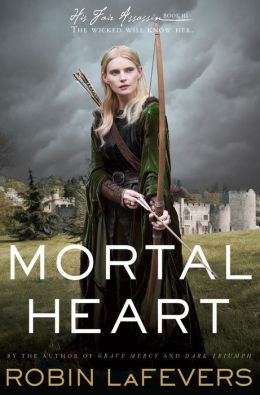
Mortal Heart. Robin LaFevers. 2014. Houghton Mifflin Harcourt. 464 pages. [Source: Review copy]
I liked it. I did. I really did. But I'm not sure I LOVED it. I do think it met my expectations, however. I expected it to focus on Annith. I expected it to uniquely tell her story, reveal more of who she is, and what makes her strong. And readers definitely get that. How did Annith come to the convict? What was it like for her to spend her entire life at the convent, to not know what life outside was like? What was it like for her to train all those years, to see others come and go? Has she had an easier time of it than Ismae and Sybella? Why is Annith never the one chosen to go on assignment, long-term or short-term assignment? Does not being chosen mean she's too weak or not trustworthy enough in the Abbess' mind? How does she cope with waiting? These questions are all answered in the third book of the trilogy. If you've dared to find Annith boring or obedient in previous books, you'll be challenged.
I did come to like Annith, to appreciate her story. (Sybella's story, I believe, remains my favorite.) And I did like the romance. I don't think I can say one word about the romance. If you haven't read it, then that might make no sense since usually, I don't consider naming a potential love interest a spoiler. But if you have read it, you probably can guess why I'm afraid of spoiling things. I will say I thought it was well done. I wasn't disappointed by it. (I think Sybella and Beast remain my favorite couple, however.)
I also really liked that half the book brings us back into company with Ismae and Duval and Sybella and the Beast. The first half of the book covers almost the same time period as Grave Mercy and Dark Triumph. The last half is more of a sequel, the plot progresses forward. Readers spend time with Duchess Anne and those close to her. What does Brittany's future look like? Will Anne ever have enough military support to hold onto Brittany's independence? Will the French be successful? How many will lose their lives in war to fight for the country they love?
While all three books have teased readers with mythology, with world-building, this one I think does so even more. I solidly like it. I do. I would definitely recommend people finish the series if they've enjoyed the previous books.
© 2014 SukaYuka.com of SukaYuka's Book Reviews
I liked it. I did. I really did. But I'm not sure I LOVED it. I do think it met my expectations, however. I expected it to focus on Annith. I expected it to uniquely tell her story, reveal more of who she is, and what makes her strong. And readers definitely get that. How did Annith come to the convict? What was it like for her to spend her entire life at the convent, to not know what life outside was like? What was it like for her to train all those years, to see others come and go? Has she had an easier time of it than Ismae and Sybella? Why is Annith never the one chosen to go on assignment, long-term or short-term assignment? Does not being chosen mean she's too weak or not trustworthy enough in the Abbess' mind? How does she cope with waiting? These questions are all answered in the third book of the trilogy. If you've dared to find Annith boring or obedient in previous books, you'll be challenged.
I did come to like Annith, to appreciate her story. (Sybella's story, I believe, remains my favorite.) And I did like the romance. I don't think I can say one word about the romance. If you haven't read it, then that might make no sense since usually, I don't consider naming a potential love interest a spoiler. But if you have read it, you probably can guess why I'm afraid of spoiling things. I will say I thought it was well done. I wasn't disappointed by it. (I think Sybella and Beast remain my favorite couple, however.)
I also really liked that half the book brings us back into company with Ismae and Duval and Sybella and the Beast. The first half of the book covers almost the same time period as Grave Mercy and Dark Triumph. The last half is more of a sequel, the plot progresses forward. Readers spend time with Duchess Anne and those close to her. What does Brittany's future look like? Will Anne ever have enough military support to hold onto Brittany's independence? Will the French be successful? How many will lose their lives in war to fight for the country they love?
While all three books have teased readers with mythology, with world-building, this one I think does so even more. I solidly like it. I do. I would definitely recommend people finish the series if they've enjoyed the previous books.
© 2014 SukaYuka.com of SukaYuka's Book Reviews
Wednesday, November 19, 2014
A Time to Dance (2014)
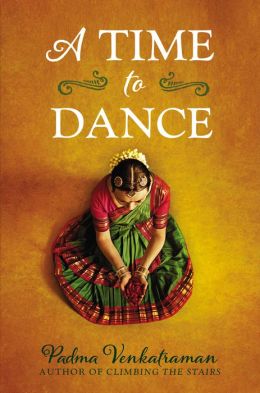
A Time to Dance. Padma Venkatraman. 2014. Nancy Paulsen Books. 320 pages. [Source: Library]
I wanted to love A Time To Dance. I wanted to love it as much as I loved Climbing the Stairs, also by Padma Venkatraman. But I didn't. I didn't love it. I'm not sure if it was because it was a verse novel. Or if it was because of the focus on dance. That being said, I liked it well enough. For readers curious about India, Hinduism, or dance, this one may have plenty of appeal, or extra appeal. I suppose this one will also appeal to those that like inspirational or feel-good stories.
What I liked best about it was the characterization. I liked Veda, the heroine. I liked getting to know her and her family. I particularly enjoyed Veda's relationship with her grandmother. I liked getting to know Veda's friends. There is a bit of romance.
Veda is a dancer. She loves, loves, loves to dance. She's always loved to dance. It is her EVERYTHING. So when she's in a car accident and one of her legs must be amputated below the knee, she's devastated. Who is she if she's not a dancer? Dance is what makes her, her. So giving up dancing isn't an option for her. Though plenty expect just that, for her to find a new dream. She will dance again. Someway. Somehow. An American doctor offers her a second chance. His specialty is making artificial limbs. He wants to make her a prosthetic leg that she can dance on...
But it won't be an easy journey for Veda, to dance again, to live again. The book is just as much about finding inner peace and accepting yourself as it is about actual dance. It is a book with a lot of spirituality packed in.
© 2014 SukaYuka.com of SukaYuka's Book Reviews

I wanted to love A Time To Dance. I wanted to love it as much as I loved Climbing the Stairs, also by Padma Venkatraman. But I didn't. I didn't love it. I'm not sure if it was because it was a verse novel. Or if it was because of the focus on dance. That being said, I liked it well enough. For readers curious about India, Hinduism, or dance, this one may have plenty of appeal, or extra appeal. I suppose this one will also appeal to those that like inspirational or feel-good stories.
What I liked best about it was the characterization. I liked Veda, the heroine. I liked getting to know her and her family. I particularly enjoyed Veda's relationship with her grandmother. I liked getting to know Veda's friends. There is a bit of romance.
Veda is a dancer. She loves, loves, loves to dance. She's always loved to dance. It is her EVERYTHING. So when she's in a car accident and one of her legs must be amputated below the knee, she's devastated. Who is she if she's not a dancer? Dance is what makes her, her. So giving up dancing isn't an option for her. Though plenty expect just that, for her to find a new dream. She will dance again. Someway. Somehow. An American doctor offers her a second chance. His specialty is making artificial limbs. He wants to make her a prosthetic leg that she can dance on...
But it won't be an easy journey for Veda, to dance again, to live again. The book is just as much about finding inner peace and accepting yourself as it is about actual dance. It is a book with a lot of spirituality packed in.
© 2014 SukaYuka.com of SukaYuka's Book Reviews
Friday, November 14, 2014
Reread #46 Dark Triumph
Dark Triumph (His Fair Assassin #2) Robin LaFevers. 2013. Houghton Mifflin Harcourt. 387 pages. [Source: Review copy]
I first read and reviewed Dark Triumph in March 2013. Dark Triumph isn't a book that one necessarily ENJOYS. It's a dark, exposing-ugly-sins historical novel in Robin LaFevers' His Fair Assassin series. (Grave Mercy, which I also recently reread, is the first in the series.)
Both books are dark. Though reading Dark Triumph makes Grave Mercy appear to be light and fluffy. Both books star assassin nuns. Young women trained at a convent who serve Death as a master, who carry out their master's orders, who kill in other words.
Sybella is the heroine in Dark Triumph. Her story is dark, ugly, desperate. She's a strong heroine. She doesn't hold onto hope so much as vengeance. Her will to live comes from a desire--a need--to kill those that have harmed her. The people that have hurt her most are her very own family: her father and brothers. (Readers learn of the events that led her to the convent.) Her father is Lord D'Albret. (A few details are historically accurate--the names of two of his daughters, Charlotte and Louise, for example, but almost everything is fictional. One should not take LaFevers' depiction as fact.)
Dark as it was, as ugly as it was, I enjoyed Sybella as a character. Her story was beautifully told. I especially loved the romance. I loved, loved, loved "The Beast" of Waroch. Their romance was not typical, it was unique and strong and tender and oh-so-right.
© 2014 SukaYuka.com of SukaYuka's Book Reviews
Tuesday, November 4, 2014
Dead in the Water (2014)
Dead in the Water. (World War II #2) Chris Lynch. 2014. Scholastic. 188 pages. [Source: Review copy]
Dead in the Water is a companion book to the Right Fight. Both books are new 2014 releases. Both books feature baseball-loving heroes. In The Right Fight, readers meet oh-so-briefly two brothers: Hank and Theo.
The book opens with both brothers ready to join the Navy. However, only Hank ends up serving in the Navy. Their parents feel strongly that Theo should serve his country elsewhere. If both sons were stationed on the same ship, and it went down, they'd be devastated. That is their reasoning, for better or worse. So Theo enlists in the Army Air Service. This book barely mentions Theo again after the boys ship out. (We do get one letter from Theo, I believe.) This is Hank's story. (Will Theo get his own story later?)
Hank is assigned to the USS Yorktown, an aircraft carrier sailing in the Pacific. He is an airedale. The book chronicles his time on ship and off. He makes a few friends among the pilots. He makes one good friend among the mess attendants. He becomes close to a mess attendant named Bradford who played in the Negro League. He is a much better ball player than Hank, this is very hard for Hank to admit, and I'm not sure he ever does. But Bradford teaches or coaches him, and the two bond over the love of the game. Readers can also discern that life isn't easy for Bradford, that prejudice is a problem.
There is plenty of action in this one. If you know what happened to the real USS Yorktown, you can guess how this ends.
I liked this one. I think both books do a good job of balancing characterization with action. I feel Hank was fully developed. It was easy for me to care not only for Hank but for his whole family. I especially liked his sister, Susie.
© 2014 SukaYuka.com of SukaYuka's Book Reviews
Dead in the Water is a companion book to the Right Fight. Both books are new 2014 releases. Both books feature baseball-loving heroes. In The Right Fight, readers meet oh-so-briefly two brothers: Hank and Theo.
The book opens with both brothers ready to join the Navy. However, only Hank ends up serving in the Navy. Their parents feel strongly that Theo should serve his country elsewhere. If both sons were stationed on the same ship, and it went down, they'd be devastated. That is their reasoning, for better or worse. So Theo enlists in the Army Air Service. This book barely mentions Theo again after the boys ship out. (We do get one letter from Theo, I believe.) This is Hank's story. (Will Theo get his own story later?)
Hank is assigned to the USS Yorktown, an aircraft carrier sailing in the Pacific. He is an airedale. The book chronicles his time on ship and off. He makes a few friends among the pilots. He makes one good friend among the mess attendants. He becomes close to a mess attendant named Bradford who played in the Negro League. He is a much better ball player than Hank, this is very hard for Hank to admit, and I'm not sure he ever does. But Bradford teaches or coaches him, and the two bond over the love of the game. Readers can also discern that life isn't easy for Bradford, that prejudice is a problem.
There is plenty of action in this one. If you know what happened to the real USS Yorktown, you can guess how this ends.
I liked this one. I think both books do a good job of balancing characterization with action. I feel Hank was fully developed. It was easy for me to care not only for Hank but for his whole family. I especially liked his sister, Susie.
© 2014 SukaYuka.com of SukaYuka's Book Reviews
Thursday, October 30, 2014
West of the Moon (2014)
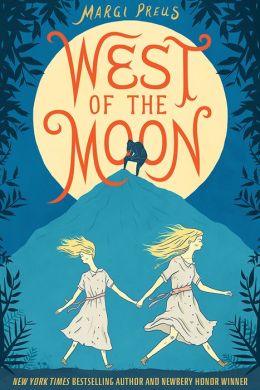
West of the Moon. Margi Preus. 2014. Abrams. 224 pages. [Source: Library]
I enjoyed reading Margi Preus' West of the Moon. Astri and her younger sister, Greta, have been left in the care of their aunt and uncle. Their father has gone to America. If all goes well, he will send for them. But their aunt and uncle aren't thrilled to have two additional mouths to feed, to put it kindly. The novel opens with the aunt selling Astri to a stranger, a goat farmer. Her time as his servant is unpleasant, horrible in fact. But she's planning an escape. Not just an escape, but a rescue mission too. She is planning on escaping, rescuing her sister, and somehow, someway, making it to America to find their father. Ambitious, yes, very much so. But Astri is resilient, strong, and determined.
The novel is titled West of the Moon. Throughout the book, Astri makes comparisons between her own life--her own miserable life--and fairy tales or folk tales. The one she uses most often is East of the Sun and West of the Moon. But there are other references as well.
West of the Moon is a historical coming of age story. It is a tale of survival. Astri is many things, as I've mentioned, but she's not perfect. Throughout the entire book, Astri is put into difficult situations, and sometimes a choice is required of her. Choices that will ultimately have consequences. Astri's decisions give readers something to think about perhaps.
© 2014 SukaYuka.com of SukaYuka's Book Reviews
I enjoyed reading Margi Preus' West of the Moon. Astri and her younger sister, Greta, have been left in the care of their aunt and uncle. Their father has gone to America. If all goes well, he will send for them. But their aunt and uncle aren't thrilled to have two additional mouths to feed, to put it kindly. The novel opens with the aunt selling Astri to a stranger, a goat farmer. Her time as his servant is unpleasant, horrible in fact. But she's planning an escape. Not just an escape, but a rescue mission too. She is planning on escaping, rescuing her sister, and somehow, someway, making it to America to find their father. Ambitious, yes, very much so. But Astri is resilient, strong, and determined.
The novel is titled West of the Moon. Throughout the book, Astri makes comparisons between her own life--her own miserable life--and fairy tales or folk tales. The one she uses most often is East of the Sun and West of the Moon. But there are other references as well.
West of the Moon is a historical coming of age story. It is a tale of survival. Astri is many things, as I've mentioned, but she's not perfect. Throughout the entire book, Astri is put into difficult situations, and sometimes a choice is required of her. Choices that will ultimately have consequences. Astri's decisions give readers something to think about perhaps.
© 2014 SukaYuka.com of SukaYuka's Book Reviews
Wednesday, October 29, 2014
Gabriel Finley & The Raven's Riddle (2014)
Gabriel Finley and the Raven's Riddle. George Hagen. 2014. Random House. 384 pages. [Source: Review Copy]
I would say I enjoyed Gabriel Finley and the Raven's Riddle, but, I'm not sure enjoyed is the right word. It kept me reading. I found it hard to put down. I wanted to know what happened next. Even if part of me didn't want to know. The book is creepy, or middle grade creepy which may or may not be satisfying enough for adult readers. There are ravens and valravens (vampire ravens), owls, robins, and perhaps a handful of other birds. Some working for good, some working for evil. There is some mythology and world-building. Gabriel Finley is the hero. This is his coming-of-age story. He's being raised by an aunt. She's strange and secretive and NEVER talks about his parents--well, in particular his father. As his birthday approaches, he begins to find out a bit about his family's past for better or worse. Turns out his father and uncle are a bit different or unique. Turns out he is different too. He can understand birds--ravens. He can hear them talking in his mind. Their is one in particular that is apparently destined to be his best friend, his other half.
Gabriel Finley and the Raven's Riddle is part coming of age novel and part adventure-quest-fantasy. The quest is both to save his father AND to save the world. All adventure quest stories have friends who help. Gabriel has several that he lets in on the secret. Abby and Pamela. And then there is Somes, a sometimes bully that just happens to come along at the right time to fall into this adventure.
I wanted to know what happened next. But at the same time, this one irritated and annoyed me. The hero didn't always seem so bright and clever.
© 2014 SukaYuka.com of SukaYuka's Book Reviews
I would say I enjoyed Gabriel Finley and the Raven's Riddle, but, I'm not sure enjoyed is the right word. It kept me reading. I found it hard to put down. I wanted to know what happened next. Even if part of me didn't want to know. The book is creepy, or middle grade creepy which may or may not be satisfying enough for adult readers. There are ravens and valravens (vampire ravens), owls, robins, and perhaps a handful of other birds. Some working for good, some working for evil. There is some mythology and world-building. Gabriel Finley is the hero. This is his coming-of-age story. He's being raised by an aunt. She's strange and secretive and NEVER talks about his parents--well, in particular his father. As his birthday approaches, he begins to find out a bit about his family's past for better or worse. Turns out his father and uncle are a bit different or unique. Turns out he is different too. He can understand birds--ravens. He can hear them talking in his mind. Their is one in particular that is apparently destined to be his best friend, his other half.
Gabriel Finley and the Raven's Riddle is part coming of age novel and part adventure-quest-fantasy. The quest is both to save his father AND to save the world. All adventure quest stories have friends who help. Gabriel has several that he lets in on the secret. Abby and Pamela. And then there is Somes, a sometimes bully that just happens to come along at the right time to fall into this adventure.
I wanted to know what happened next. But at the same time, this one irritated and annoyed me. The hero didn't always seem so bright and clever.
© 2014 SukaYuka.com of SukaYuka's Book Reviews
Tuesday, October 28, 2014
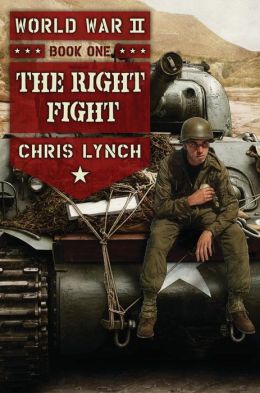
The Right Fight (2014)
The Right Fight. Chris Lynch. 2014. Scholastic. 192 pages. [Source: Library]
I enjoyed Chris Lynch's The Right Fight. Roman, the protagonist, loves, loves, LOVES baseball. But he loves his country even more. That is why he enlisted even before America entered the war--the second world war. The book chronicles his early experiences in the war as a tank driver. Readers see him through training, war games, and going overseas, his various assignments and missions. (Most of the book sees him in North Africa). Readers experience it from his point of view and from a few letters as well. One sees how his fellow soldiers--the men in his tank specifically--form a family. One also sees the many (often-ugly) sides of war.
I enjoyed this one. I thought there was a good balance of action (war) and characterization. I liked getting to know Roman, his fiancee, his war buddies.
© 2014 SukaYuka.com of SukaYuka's Book Reviews
I enjoyed Chris Lynch's The Right Fight. Roman, the protagonist, loves, loves, LOVES baseball. But he loves his country even more. That is why he enlisted even before America entered the war--the second world war. The book chronicles his early experiences in the war as a tank driver. Readers see him through training, war games, and going overseas, his various assignments and missions. (Most of the book sees him in North Africa). Readers experience it from his point of view and from a few letters as well. One sees how his fellow soldiers--the men in his tank specifically--form a family. One also sees the many (often-ugly) sides of war.
I enjoyed this one. I thought there was a good balance of action (war) and characterization. I liked getting to know Roman, his fiancee, his war buddies.
© 2014 SukaYuka.com of SukaYuka's Book Reviews
Tuesday, October 21, 2014
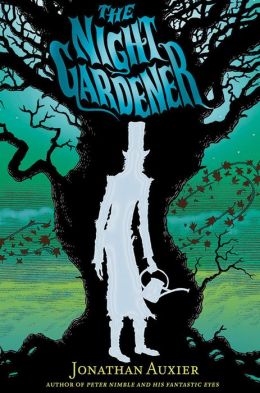
The Night Gardener (2014)
The Night Gardener. Jonathan Auxier. 2014. Abrams. 350 pages. [Source: Library]
I loved, loved, LOVED Jonathan Auxier's The Night Gardener. It may just be my favorite new book published in 2014. I loved so many things about it: the atmospheric setting, the creepy world-building, the storytelling, the writing, and the characterization. (Yes, those overlap, I imagine.) I could just say that I loved all the elements of this one; that I loved it absolutely from cover to cover. (Which does more justice for the book?)
Here's how the story opens. I'm curious if it will grab you like it did me!
I also loved Hester Kettle. She is the old woman--Kip thought she was a witch at first glance--who tells them the directions to the estate. She also proves to be a friend and kindred spirit. She is, like Molly, a story-teller.
© 2014 SukaYuka.com of SukaYuka's Book Reviews
I loved, loved, LOVED Jonathan Auxier's The Night Gardener. It may just be my favorite new book published in 2014. I loved so many things about it: the atmospheric setting, the creepy world-building, the storytelling, the writing, and the characterization. (Yes, those overlap, I imagine.) I could just say that I loved all the elements of this one; that I loved it absolutely from cover to cover. (Which does more justice for the book?)
Here's how the story opens. I'm curious if it will grab you like it did me!
The calendar said early March, but the smell in the air said late October. A crisp sun shone over Cellar Hollow, melting the final bits of ice from the bare trees. Steam rose from the soil like a phantom, carrying with it a whisper of autumn smoke that had been lying dormant in the frosty underground. Squinting through the trees, you could just make out the winding path that ran from the village all the way to the woods in the south. People seldom traveled in that direction, but on this March-morning-that-felt-like-October, a horse and cart rattled down the road. It was a fish cart with a broken back wheel and no fish. Riding atop the bench were two children, a girl and a boy, both with striking red hair. The girl was named Molly, and the boy, her brother, was Kip. And they were riding to their deaths. This, at least, was what Molly had been told by no fewer than a dozen people as they traveled from farm to farm in search of the Windsor estate.I loved Molly and Kip. It wasn't that either protagonist was perfect. It was that I felt both were oh-so-human. These two do find the Windsor estate. And they do manage to stay on as help. Even though they don't necessarily receive wages--just room and board. This country estate is...well, I don't want to spoil it. But the people who warned them to stay away from the estate, from the sour woods, well they had good intentions. The book is creepy in all the right ways. It is a WONDERFUL read if you love rich, detailed storytelling.
I also loved Hester Kettle. She is the old woman--Kip thought she was a witch at first glance--who tells them the directions to the estate. She also proves to be a friend and kindred spirit. She is, like Molly, a story-teller.
Hester touched the button, "Funny things, wishes. You can't hold'em in your hand, and yet just one could unmake the world." She looked up at Molly. (214)
"You asked me for a story; now you call it a lie." She folded her arms. "So tell me, then: What marks the difference between the two?"I loved the story. I loved the pacing. It was a great read!!! Definitely recommended!
Agitated as she was, Molly couldn't help but consider the question. It was something she had asked herself in one form or another many times in her life. Still, Molly could tell the difference between the two as easily as she could tell hot from cold--a lie put a sting in her throat that made the words catch. It had been some time, however, since she had felt that sting. "A lie hurts people," she finally answered. "A story helps 'em."
"True enough! But helps them do what?" She wagged a finger. "That's the real question..." (214)
© 2014 SukaYuka.com of SukaYuka's Book Reviews
Thursday, October 16, 2014
A Creature of Moonlight (2014)
A Creature of Moonlight. Rebecca Hahn. 2014. Houghton Mifflin Harcourt. 313 pages. [Source: Review copy]
A Creature of Moonlight is an enjoyable fantasy novel for young adults. Marni, the heroine, is being raised by her grandfather (Gramps). The two live an isolated life, in a way. They don't mingle with the villagers as often as one might expect. Marni, for the most part, is too interested in her garden and the woods. And Gramps, well, he's a lot older than he used to be. Still people come. Some important people. Nobles and such. Some villagers. Now that Marni is nearly grown up, men of all classes are beginning to see her as more than a flower girl, more than "Tulip." Does this make Gramps happy or worried? And how does Marni feel about it herself?
A Creature of Moonlight is fantasy. In the world Hahn has created, the woods are magical and mysterious and more than a little dangerous. There are stories--new stories, old stories, long-handed-down stories--of young women who entered the woods and were never seen again. Marni herself knows one such case. One of her friends disappeared in the woods. But Marni knows the woods. I wouldn't say she feels absolutely at home in the woods. There is a part of her that loves the woods, loves the danger and mystery. There is a hesitant part of her as well, that part keeps her coming home again. As she says so well later in the novel, "You can want a whole slew of things. It's what you choose that ought to matter."
Choices. Marni has difficult choices to make. Does she belong in the woods? Does she belong at the palace? For you see, Marni is no ordinary village girl. Her grandfather was the king. Her uncle IS the king. She is the daughter of a princess--a murdered princess. Neither choice appeals completely to Marni. The novel introduces readers to both settings. Readers see Marni reclaim her place in the royal family. They see her being courted by one of the lords. Readers also see her come into her own in the woods. These chapters in the woods are fascinating in a dark way. Marni learns what happens to young women who WANT to be taken by the dragon of the woods. But is either place right for her?
I liked this one very much. I thought it was beautifully written. There are sentences that are just WOW. The storytelling was nicely done. I liked quite a few of the characters. The characters all seemed appropriately flawed. That being said, not all the characters were given equal depth and substance. Even more characterization might have made this one great. But as it is, it is an enjoyable read.
Quotes:
"But she always kept on until the end. She knew, as I knew, that you don't stop a story half done. You keep on going, through heartbreak and pain and fear, and times there is a happy ending, and times there isn't. Don't matter. You don't cut a flower half through and then wait and watch as it slowly shrivels to death. And you don't stop a story before you reach the end" (11).
"My breath catches. Not just because I thought we'd gone over this, but because as he says it, for one crazy instant I think about saying yes. I think about living with this man, who's always taken my side, who melts me right away with his kisses, who believes in me and my innocence even when he really shouldn't. He really shouldn't. Before I can stop myself, I throw my sewing back on the floor and push myself out of my chair. Edgar rises to his feet as well, wary. "How many times is this?" I say, my voice shriller than I mean it to be, but I push my anger on, fall gladly into it. "What is it with you, my Lord of Ontrei, that makes you think that when I'm telling you no, and no, and no again, what I really must be meaning is ask me again? Could be I'm crazy, but I've no wish to be the stone you step on to reach the throne..." (181)© 2014 SukaYuka.com of SukaYuka's Book Reviews
Tuesday, October 14, 2014
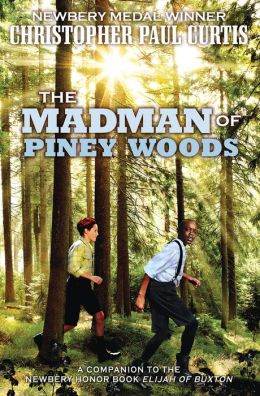
Madman of Piney Woods (2014)
The Madman of Piney Woods. Christopher Paul Curtis. 2014. Scholastic. 384 pages. [Source: Review copy]
In Christopher Paul Curtis' latest novel, readers meet two young boys, one white (Irish), one black. One boy, Benji Alston dreams of being a reporter. He wants to be a great reporter, to write compelling stories. All of his chapters contain one or more of his imagined headlines. The other boy, Alvin "Red" Stockard, dreams of a better home life. You see, Red lives with his father and grandmother, his maternal grandmother. And she can be a bit too much to take. He doesn't even know if it is possible to be on her good side! She seems to always, always be after him about something. And it gets physical. His father is sympathetic, but, kind-hearted. How can he throw his mother-in-law out of his house? Even if she does get her cane after his son? Even if he disagrees with her on most things most of the time? These two boys live in different towns. But Benji's new apprentice-type job as a reporter for a newspaper brings him to Chatham regularly. And once these two boys meet, well, they become close friends.
For better or worse, this book isn't so much about WHAT happens as it is about characters and setting and atmosphere. If you happen to like or love Red and Benji, then you're in for a treat. The two alternate chapters. It isn't easy to summarize what happens and what the book is about. You can summarize a chapter here and there, but, it doesn't really do the book justice.
The Madman of Piney Woods is set in Buxton, Canada--the same locale as his earlier novel Elijah of Buxton. The Madman of Piney Woods, however, is set forty years after the events of Elijah of Buxton. It introduces readers to a new generation of residents. (I do not believe it is essential to have read Elijah of Buxton in order to enjoy The Madman of Piney Woods. I don't. I think Elijah of Buxton is a wonderful novel, and, personally I enjoyed it more than The Madman of Piney Woods. But The Madman of Piney Woods is great all on its own.)
© 2014 SukaYuka.com of SukaYuka's Book Reviews
Friday, October 10, 2014
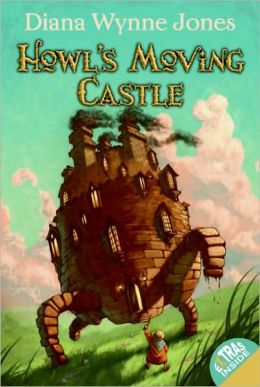
Reread #41 Howl's Moving Castle
Howl's Moving Castle. Diana Wynne Jones. 1986. 336 pages. [Source: Bought]
I first read and reviewed Howl's Moving Castle in 2009.
After Sophie's father dies, her step-mother sends away two of her sisters. Sophie she keeps on as an apprentice in the family's hat business. Sophie trims hats. While she's trimming hats and arranging them, she finds herself very often talking to the hats, supposing what kind of person will buy the hat, etc. The shop begins to do well--really well. One person--one witch--notices and decides to act. Poor Sophie finds herself under the witch's spell! Sophie leaves her old life behind, without a word, and goes on an adventure of sorts. Life certainly becomes more challenging for Sophie! But she soon finds a new place to belong, a strange place, an odd place, but a place that begins to feel oddly enough like home. Sophie makes friends in unexpected places.
I loved rereading Howl's Moving Castle. From start to finish, this fantasy novel proves delightfully charming. I loved the characters. I especially loved Sophie and Wizard Howl. I loved the world-building. I love the storytelling. I loved Jones' descriptions. It's just a fun, fun adventure story with heart.
Here's how it begins: "In the land of Ingary, where such things as seven-league boots and cloaks of invisibility really exist, it is quite a misfortune to be born the eldest of three. Everyone knows you are the one who will fail first, and worst, if the three of you set out to seek your fortunes. Sophie Hatter was the eldest of three sisters. She was not even the child of a poor woodcutter, which might have given her some chance of success!" It hooks readers from the very beginning. It certainly hooked me!
I would definitely recommend this one! I just love it!
© 2014 SukaYuka.com of SukaYuka's Book Reviews
Wednesday, October 8, 2014
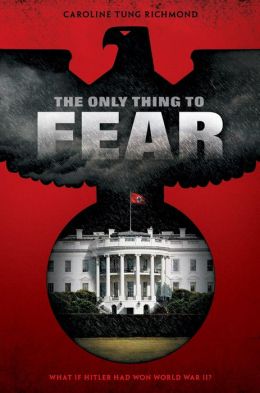
The Only Thing To Fear (2014)
The Only Thing To Fear. Caroline Tung Richmond. 2014. Scholastic. 288 pages. [Source: Review copy]
What if the Nazis had won the war? The Only Thing To Fear by Caroline Tung Richmond is set in an alternate universe where this is so. It is set in the future, eighty years after the Nazis win the war. Zara St. James is our sixteen year old heroine. She is a bit unusual. And not just because the Nazis are so strict as to what is normal and abnormal. There are a couple of premises in the book: 1) Germany and Japan were successful in creating super-soldiers, genetically enhanced superior soldiers giving them the military advantage. 2) Russia, or the Soviets, never joined the war against the Nazis. I share these details because it is important to be grounded in this imagined reality or future. Both facts are important not only in understanding the past--as created by the author--but the future as well.
Though the eastern states have been under Nazi rule for almost eight decades, there are plenty of Americans still angry enough to fight and rebel. Zara's uncle Redmond leads the local Alliance. Zara whines for almost the entire book on how it is so completely unfair that she's not allowed to join yet. Zara is the only family Uncle Red has left. He's lost almost everyone he's ever cared about. Plenty of people have lost loved ones to the Nazis. Zara refuses to accept that that is just the way things are. She demands justice. Not clinging to future justice when the Alliance gains strength and numbers, but a RIGHT NOW justice even though all the odds are against them.
So Zara's rebellion is strengthened by her odd gifts. To say more would be to spoil the book. To say less would give you the wrong impression of the book. This book is DEFINITELY speculative fiction and not just because it's set in an alternate future. Zara has a unique advantage over most people--an unnatural advantage. I almost wish that it hadn't gone that direction. I wasn't looking for that kind of read.
Romance. What would a YA read be without a little romance?!
The Only Thing To Fear was a quick read. I liked it just fine. I didn't love it.
© 2014 SukaYuka.com of SukaYuka's Book Reviews
Thursday, October 2, 2014
Thursdays with the Crown (2014)
Thursdays with the Crown. (Castle Glower #3) Jessica Day George. 2014. Bloomsbury. 224 pages. [Source: Review copy]
I enjoyed reading Thursdays with the Crown. I'm glad I read it so soon after finishing Wednesdays in the Tower. I only wish I'd had the time to reread the first novel in this fantasy series, Tuesdays at the Castle. I'm sure I would have appreciated the whole series even more if I'd had the chance to reconnect with the characters and have an attachment. That being said, I ended up enjoying so many of the characters anyway. Thursdays with the Crown picks up right where Wednesdays in the Tower left off. I was prepared to love it from the start.
The novel opens with Celie, Lilah, Pogue, Rolf, Lulath, and Rufus (Celie's griffin) finding themselves in a strange, foreign place. They have been transported to the Glorious Arkower, a land they believe the Castle originated from. They come into this adventure with a few assumptions for better or worse. When they come across two different men with two very different stories--contradictory stories--everything becomes a bit confusing. Who is telling the truth? Is either man telling the whole truth? What is true and what is only half-true? If a man lies about one thing, does that mean he's lying about everything? Celie and her friends will have to puzzle things out.
It is definitely an adventure fantasy. It is a quick read, a delightful read in many ways. I think I love Lulath best of all.
© 2014 SukaYuka.com of SukaYuka's Book Reviews
Thursday, September 11, 2014
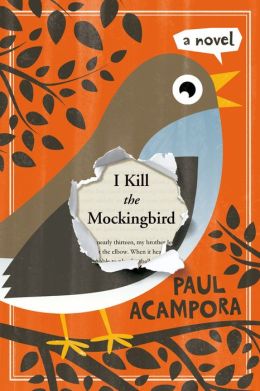
I Kill the Mockingbird (2014)
I Kill the Mockingbird. Paul Acampora. 2014. Roaring Book Press. 176 pages. [Source: Library]
Lucy, Michael, and Elena are best friends. They have almost always been best friends. I Kill The Mockingbird is about a secret summer project these three think up and orchestrate.
It starts with the announcement of Miss Caridas' summer reading list:
I Kill the Mockingbird is about that project, about their misshelving books at bookstores and libraries across the state of Connecticut, about their online campaign "I Kill the Mockingbird."
It's a quick read. It has some depth to it. Lucy is worried that her mom's cancer might come back someday. Lucy is still missing the teacher who died. Lucy and her friends are thinking about life and death and legacies. But it is in many ways a light novel about three best friends who love to read and who want others to love to read too. It would almost be impossible for me not to like--really, really like this novel about reading. I still haven't decided if I LOVED it or just really, really, really LIKED it.
© 2014 SukaYuka.com of SukaYuka's Book Reviews
Lucy, Michael, and Elena are best friends. They have almost always been best friends. I Kill The Mockingbird is about a secret summer project these three think up and orchestrate.
It starts with the announcement of Miss Caridas' summer reading list:
- David Copperfield
- Ender's Game
- Fahrenheit 451
- War Horse
- War of the Worlds
- The Giver
- To Kill A Mockingbird
I Kill the Mockingbird is about that project, about their misshelving books at bookstores and libraries across the state of Connecticut, about their online campaign "I Kill the Mockingbird."
It's a quick read. It has some depth to it. Lucy is worried that her mom's cancer might come back someday. Lucy is still missing the teacher who died. Lucy and her friends are thinking about life and death and legacies. But it is in many ways a light novel about three best friends who love to read and who want others to love to read too. It would almost be impossible for me not to like--really, really like this novel about reading. I still haven't decided if I LOVED it or just really, really, really LIKED it.
© 2014 SukaYuka.com of SukaYuka's Book Reviews
Friday, September 5, 2014
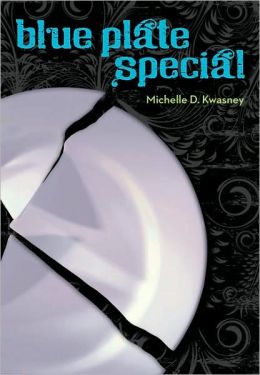
Reread #36 Blue Plate Special
Blue Plate Special by Michelle D. Kwasney. 2009. Chronicle Books. 366 pages. [Source: Library]
I originally reviewed Blue Plate Special in February of 2010. I loved it. I loved it the same way that I love Speak by Laurie Halse Anderson.
Blue Plate Special is a compelling, dramatic story about three daughters. (John Mayer's "Daughters" kept coming to mind. For better or worse. Also Atticus' advice to Scout: "if you can learn a simple trick, Scout, you'll get along a lot better with all kinds of folks. You never really understand a person until you consider things from his point of view--until you climb into his skin and walk around in it.") The book is very much character-driven. I don't know that I'd go so far to say that it is one of those "what it means to be human" books, but, if not it comes very close.
All of the characters are flawed; not one person within the pages of this book is perfect or flawless. Relationships in Blue Plate Special are messy. Readers meet three heroines. Madeline (1977-78). Desiree (1993-1994). Ariel (2009). Their stories are told in alternating chapters. I believe all the heroines are around fifteen to sixteen. As you'd expect, in some ways their stories are the same, yet, in other ways all three are different. All, for example, are coming-of-age stories. All focus on first love, or first significant romantic relationships. All are bittersweet, but in different ways. But each heroine is unique. The book is great at complexities. Of seeing the whole person from different angles, which made it easier perhaps to take Atticus' advice. I cared about all three.
I definitely would recommend this one.
© 2014 SukaYuka.com of SukaYuka's Book Reviews
Tuesday, September 2, 2014
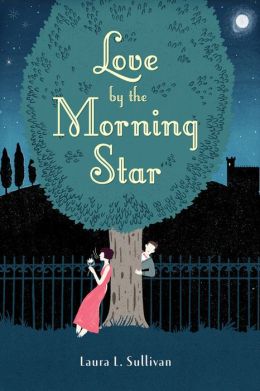
Love by the Morning Star (2014)
Love by the Morning Star. Laura L. Sullivan. 2014. Houghton Mifflin Harcourt. 320 pages. [Source: Review copy]
I was disappointed by Laura Sullivan's Love by the Morning Star. I wanted to love it. I did. It is a novel set in English countryside in 1938-1939. It offers an upstairs/downstairs view of life. Or supposedly so. Two young women come to Starkers. One is a gold digger spy. Her father is a Nazi-sympathizer to say the least and his gang (for lack of a better word) wants her in position at this estate. She's told she'll be a maid. The other young woman is a Jewish refugee. She is actually a relation of the family who owns the estate. She's coming to Starkers to stay with her aunt and uncle. One girl is Hannah. The other girl is Anna. One will be treated well. The other won't.
In case you haven't guessed it, mistaken identity is the name of the game. These two women also happen to fall in love with the same man.
Why was I disappointed? Well. I'm not sure if it's because of the setting or the tone. I think I might have tolerated the tone--the silliness, the lightness, the double entendres, etc. if it wasn't set during such a dark time. It's hard to make light of the Nazis gaining power and destroying the lives of the Jewish people. The subject is serious and it deserves better. If it had been set twenty-five or thirty years earlier, then, perhaps it would have worked for me.
The romance. I liked the secret meetings between the hero and the heroine. There were only a handful of these scenes, but, they kept me reading.
I just have to add that I HATED one of the characters. I disliked a few more as well. But there was one that stood out above the rest as being AWFUL.
© 2014 SukaYuka.com of SukaYuka's Book Reviews
Wednesday, August 27, 2014
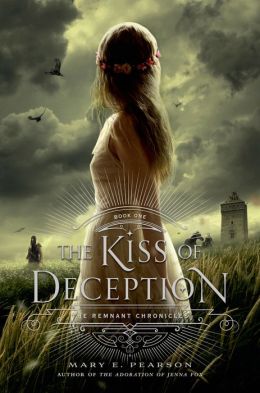
The Kiss of Deception (2014)
Kiss of Deception. (The Remnant Chronicles #1) Mary E. Pearson. 2014. Henry Holt. 489 pages. [Source: Library]
Kiss of Deception was an excellent fantasy. It is probably one of the best fantasies I've read all year. From start to finish, it held my attention. I really enjoyed the mystery aspect of it that held up for three-quarters of the book. The mystery being who is who.
Kiss of Deception has multiple narrators. Princess Lia is our heroine, our runaway bride. Some chapters are narrated by "The Prince," and other chapters are narrated by "The Assassin." To add to the delight OR possibly add to the confusion, there are chapters narrated by Rafe and Kaden. Readers know that Rafe could be the Prince OR the Assassin. Likewise, readers know that Kaden could be either the Prince or the Assassin. The first third of the novel focuses more on all three being on the go. The Princess has runaway, taking her maid Pauline with her. The Prince is chasing after her. The Assassin is chasing after her too. Of course, he has been hired by someone to kill her. And the Prince's motivations are vague. What happens when these two men find her hiding in a small country town? What happens when she begins to get to know these two men, Rafe and Kaden, over the course of a week or two?
Kiss of Deception was definitely suspenseful in places. There's a bit of an intrigue mixed dangerously OR delightfully with romance. Readers learn that there is so much to learn about the world in which this novel is set. There is a hint of depth to it. I wanted more--in a good way. It wasn't that this novel was inadequate, it was that what we know is so small in comparison to what we don't know. And there's this wanting to see more, know more. If fantasy worlds feel fake, then, the wanting is completely different. It isn't curiosity but frustration.
I felt this novel was well-written. I enjoyed the world-building. I enjoyed the characterization.
© 2014 SukaYuka.com of SukaYuka's Book Reviews
Thursday, August 14, 2014
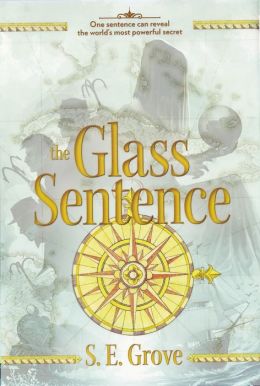
The Glass Sentence (2014)
The Glass Sentence. S.E. Grove. 2014. Penguin. 512 pages. [Source: Library]
The Glass Sentence has an intriguing premise with incredible potential. As soon as I heard the premise, I knew I had to read it. And, in many ways, it is a premise-driven novel. And there's nothing at all wrong with that, not when the premise is so unique. What is the premise? A Great Disruption occurs (roughly 1799) which fragments time itself. Continents and countries are displaced in time, if you will. So explorers are not just traveling from place to place, but also time to time. It makes exploring even more dangerous and unpredictable. Some societies want to forbid travel between Ages, want to stop foreigners from coming to their land, want to forbid travelers from leaving.
In The Glass Sentence, readers meet Sophia Tims. Her parents are explorers that have been missing most of her life. She has been raised by her uncle Shadrack, a cartologer. He insisted that her parents leave her behind. She was just three. She loves him, she does, but she misses her parents. She holds onto the hope that they'll come back OR that she'll go off adventuring and find them. Shortly after the novel opens, he begins to teach Sophia what he knows. He begins to share his secrets with her; he tells her that there are many different types of maps. That maps can be written on things besides paper. They can be written on glass, for instance, or even water. She's looking forward to learning...
But. Just when it is getting started, Sophia returns home to learn that her uncle has been kidnapped and that his study has been destroyed. Sophia and a new friend, Theo, a former zoo exhibit, team up to save the day. Can they find her uncle? Can they rescue him? Can the bad guys be defeated?
The world building works. It's an interesting and complex world. And, as I said, the premise has great potential. It's just an exciting sounding premise with plenty of appeal.
I liked it. I did. I didn't quite love it as I was hoping. But it was well worth a read.
© 2014 SukaYuka.com of SukaYuka's Book Reviews
Subscribe to:
Posts (Atom)