Is He Popenjoy? Anthony Trollope. 1878/1993. Penguin. 632 pages. [Source: Bought]
Like so many of Anthony Trollope's novels, Is He Popenjoy? is a novel essentially about marriage and relationships. Just because it's about marriage and relationships doesn't mean it is about love and romance and happily ever after.
Lord George and Mary Germain are newly married. Mary Lovelace was not exactly his first choice for a bride. (His first choice was in fact a woman named Adelaide. She too is recently married. She is Mrs. Houghton now.) The two are in the getting-to-know each other stage. Yes, they are married. But they weren't madly in love with each other before they married. Only time will tell if they will fall in love with each other afterwards. She is thoughtfully examining herself for signs of love, and she's looking closely at her husband as well. Do I love him yet? How about now?
The couple lives with his family, with his mother, with two of his older sisters. George is content with the arrangement. After all, most of the adjustment falls to Mary as it now stands. Mary is the one who has to come into a house with three older, opinionated, slightly critical women. Mary is the one under examination, under trial, not George.
But. One of the conditions for marrying Mary was arranged by her father. George must be willing to get a house in London and they must reside there several months each year. This puts George very much out of his comfort zone. It thrills Mary, of course, as her father knew it would. In London, Mary has the freedom to relax and be herself.
Complications. Mary is introduced to Adelaide Houghton's cousin, Jack de Baron. Adelaide is hoping that Jack will flirt with Mary. That Mary will flirt right back. Mary and Jack do become friends, good friends. But it is friendship, nothing more, nothing less. Adelaide. What can I really say about her?! She infuriated me. She throws herself at Lord George time and time and time and time again. She is desperately in love with him now and not a bit discreet about it. She must tell him explicitly how much she NEEDS him and how he was always, always the one she wanted most of all. It's a pitiful sight when all is said and done. George. Well. George listens again and again and again and again. He's always open to hearing her declarations. Even if he's embarrassed and ashamed afterwards. As he walks away from and her and heads back to his wife, he's left feeling icky. Yet. For some reason, he sees it as his job as a gentlemen to remain friends with Mrs. Houghton, that he is being kind when he visits her at her request. He doesn't want to be RUDE to her after all.
More complications. George's family is completely dysfunctional. His older brother is a twisted mess. He's got no manners, no heart, no conscience. He's spent almost all his adult life living abroad in Italy. After learning of his younger brother's marriage, he writes to let his family know that they have to leave HIS house, and that under no terms are they to remain in the neighborhood or community because he doesn't want to see them. He has decided to come back. He is bringing a wife. A wife and a son, an heir. Never mind that he never communicated to his family or his lawyers that he married or had a son. True, he is the heir and the house is technically his to do with as he sees fit. But who throws their own family out without at least making some assistance towards finding them another place? The family manage to stay in the neighborhood against his wishes. And their brief encounters together are super awkward and humiliating. He wants nothing to do with anybody. Not his family. Not his former friends. Not his neighbors. Not the clergy in the area. NO person is welcome in his house. Mary's father advocates that something is obviously wrong here. Perhaps his brother has some secrets he wants to keep hidden. Perhaps his brother's son is not legitimate? Perhaps his wife is not really his wife?
Taking sides. Relationships get ugly and messy and twisted in this one. Accusations for just about everything abound. Ultimatums are given. All relationships will be tested. Can love bloom between two stressed individuals in these horrible conditions?
I didn't love this one. I didn't hate it, mind you. I didn't even dislike it exactly. It's just that there were more characters that I hated than characters that I liked in this one.
© 2014 SukaYuka.com of SukaYuka's Book Reviews
Showing posts with label Anthony Trollope. Show all posts
Sunday, November 16, 2014
Sunday, August 17, 2014
The Belton Estate
The Belton Estate. Anthony Trollope. 1866/1993. Penguin. 432 pages. [Source: Bought]
To state it simply: it was LOVE. I have loved quite a few Anthony Trollope novels in the past. So it wasn't a big, big surprise that I loved Belton Estate. Perhaps I was surprised by just how MUCH I loved, loved, loved it! It was completely satisfying and practically perfect.
Clara Amedroz is the heroine of The Belton Estate. When her brother dies--he committed suicide--Clara's future becomes uncertain. Her father's property is entailed. She's unable to inherit from her father despite his wishes. There was a slim possibility that an aunt-like figure--a wealthy woman, of course--could leave her something. But she's left out of that will as well.
There are two men who could potentially "save" Clara. Captain Frederic Aylmer is a young (and I'm assuming relatively handsome) relation of Mrs. Winterfield (the aunt-like figure to Clara). He is the one who inherits her estate. She really wanted Clara and Frederic to marry one another. She spoke often about how much she wanted these two to marry. Days after her death, Clara receives a proposal of sorts from Frederic. The other potential "savior" is Will Belton. He is a distant cousin. He is the one who will be inheriting Clara's father's estate. He visits. Unlike Mr. Collins (from Pride and Prejudice) he is charming and likable and within weeks--if not days--Clara and her father LOVE him. He loves, loves, loves Clara. He does. He seeks permission to marry her. Clara's father thinks that would be lovely. What a good son he'd be! He also proposes to Clara.
Which man is right for Clara? Which proposal will she accept? Will she have a happily ever after?
It was oh-so-easy for me to have a favorite! I adore Will Belton. I do. I just LOVE him. I enjoyed the characters in this one so very much. I loved getting to spend so much time with Clara. This is one of Trollope's "simple" novels. Instead of having three or more couples to keep up with, or, three or more stories to follow since not all stories may end up in romance, readers just get treated to one fully developed story. There are more characters, of course. We meet Clara's closest friend and her husband. We meet Frederic's family. His mother is SOMETHING. I thought the characterization was great. I also thought it was a very thoughtful novel.
I would recommend Belton Estate to anyone who loves classic romances or historical romances. It is a GREAT love story.
Quotes:
And what did Will Belton think about his cousin, insured as he was thus supposed to be against the dangers of love? He, also, lay awake for awhile that night, thinking over this new friendship. Or rather he thought of it walking about his room, and looking out at the bright harvest moon;—for with him to be in bed was to be asleep. He sat himself down, and he walked about, and he leaned out of the window into the cool night air; and he made some comparisons in his mind, and certain calculations; and he thought of his present home, and of his sister, and of his future prospects as they were concerned with the old place at which he was now staying; and he portrayed to himself, in his mind, Clara's head and face and figure and feet;—and he resolved that she should be his wife. He had never seen a girl who seemed to suit him so well. Though he had only been with her for a day, he swore to himself that he knew he could love her. Nay;—he swore to himself that he did love her. Then,—when he had quite made up his mind, he tumbled into his bed and was asleep in five minutes.
"But, my dear, why should not he fall in love with you? It would be the most proper, and also the most convenient thing in the world."© 2014 SukaYuka.com of SukaYuka's Book Reviews
"I hate talking of falling in love;—as though a woman has nothing else to think of whenever she sees a man."
"A woman has nothing else to think of."
"I have,—a great deal else. And so has he."
"It's quite out of the question on his part, then?" "Quite out of the question. I'm sure he likes me. I can see it in his face, and hear it in his voice, and am so happy that it is so. But it isn't in the way that you mean. Heaven knows that I may want a friend some of these days, and I feel that I may trust to him. His feelings to me will be always those of a brother." "Perhaps so. I have seen that fraternal love before under similar circumstances, and it has always ended in the same way."
"I hope it won't end in any way between us."
"But the joke is that this suspicion, as you call it,—which makes you so indignant,—is simply a suggestion that a thing should happen which, of all things in the world, would be the best for both of you."
Sunday, July 20, 2014
Duke's Children (1880)
The Duke's Children. Anthony Trollope. 1880. 560 pages. [Source: Book I Bought]
It is always bittersweet for me as a reader to come to the end of a series. There is always a sense of satisfaction, but, also usually some sadness to say goodbye as well. The Palliser series by Anthony Trollope has been interesting. I've loved some books very much, others not quite as much. But overall, it's just been a joy to spend so much of this year with Trollope. Previous titles include Can You Forgive Her?, Phineas Finn, The Eustace Diamonds, Phineas Redux, and The Prime Minister.
The Duke's Children is essentially a novel about relationships, about falling in and out of love, about accepting loved one's choices.
Plantagenet Palliser, current Duke of Omnium, has three grown--or nearly grown--children. His oldest son (Lord Silverbridge) and his oldest daughter (Lady Mary) are proving to be difficult to handle.
Lady Mary has fallen madly in love with a man whom her father judges to be unworthy or unacceptable. His name is Frank Tregear. He happens, of course, to be good, good friends with Lord Silverbridge.
Lord Silverbridge was courting a cousin of Tregear's, a young woman, Lady Mabel Grex. He told his father that he was planning on proposing to her very soon. She was expecting his proposal, and she was going to say yes. But that was before Lord Silverbridge met the American heiress, Isabel Boncassen, of course, she was oh-so-beautiful. After that, it was Mabel, who? Does the reader pity Mabel? Should the reader pity Mabel? I haven't decided WHAT Trollope really intended us all to think...if anything.
Mabel's heart belongs not to Lord Silverbridge, though, she knows they'd be pleasant enough companions and suit together well. No, Mabel's heart belongs to Frank Tregear. She loved him; he loved her. They both knew that being together was insensible. Both being poor and all. But she NEVER expected him to turn around and fall madly in love with someone else so very, very soon. She was so sure that he felt just as strongly about her. How could he stop loving her and start loving someone else so quickly?! And when Lord Silverbridge seems to do the exact same, well, let's just say that Mabel gets VERY VERY angry.
Will the Duke give his approval to his daughter, Lady Mary? Will he try to make her marry someone more suitable? Who has the stronger will? Will he persuade her that Frank is not the one and that, of course, she should marry someone with a title and lots of money? Or will she persuade him that Frank is the ONLY one who could ever make her happy?
Will the Duke give his approval to his son, Lord Silverbridge? Will he cover all his son's debts and forgive him all his foolish mistakes? Will he accept his son's choice of bride? Or will he argue the case for Mabel?
I definitely loved this one. I never find Trollope boring. Sometimes I find him more interesting than other times. But I care about the characters and always want to know how things will turn out.
© 2014 SukaYuka.com of SukaYuka's Book Reviews
Sunday, May 18, 2014
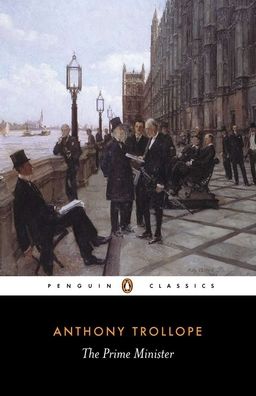
The Prime Minister (1876)
The Prime Minister. Anthony Trollope. 1876. 864 pages. [Source: Book I Bought]
The Prime Minister is the fifth book in the Palliser series by Anthony Trollope. Previous titles include Can You Forgive Her?, Phineas Finn, The Eustace Diamonds, and Phineas Redux.
I liked this one. I definitely liked it. The Prime Minister shares some themes with other Trollope novels which I've enjoyed. Trollope often wrote about marriages: happy marriages AND unhappy marriages. While some of Trollope's heroines have had their happily ever after endings, just as many have not.
The Prime Minister introduces the Wharton family into the series. Readers meet Everett and Emily and their father, Mr. Wharton. Everett is chummy with a Mr. Ferdinand Lopez. Emily's aunt also welcomes Mr. Lopez into her home. Emily and Ferdinand have had some meetings which lead him to hope that he has a good chance of marrying her. When he goes to her father, he is rejected. Mr. Wharton is quite upset at the very idea of it. He can't imagine ever saying yes and blessing that union. Emily is a dutiful daughter, but, stubborn and ultimately persuasive. She will not disobey her father, but, she will not move on and forget Mr. Lopez either. Her heart has decided that he is the one. Eventually Mr. Wharton softens his resolve and allows the marriage to take place. He is still not happy about it. He still would have preferred Arthur Fletcher, a man who has been in love with Emily for half his life. But he accepts that his daughter has a right to make her own decisions and be with the man she loves.
Plantagenet Palliser, now the Duke of Omnium, becomes Prime Minister. He sets up his coalition government. His wife, formerly Lady Glencora--now officially a Duchess, is so enthusiastic that she goes above and beyond her duty. She's determined that her husband will be a SUCCESS and that everyone will LOVE and ADORE him. Her hostessing plans are almost endless. She plans and spends, plans and spends. Her husband who has always been more than a little reserved is not happy exactly. He loves, loves, loves his wife. And he doesn't want to hurt her feelings and offend her. But her tastes aren't his. What she thinks is best for him, isn't what is truly best for him. She may be very social and thrive on society, he doesn't. The more she pushes him to be social, the less civil he becomes about it! One of the young men that the Duchess takes an interest in is Mr. Lopez. She'd like to see him elected to parliament. She says she'll help him win a seat in an election. At the very time she's promising him a seat, her husband is emphatically declaring that he will not support or endorse ANY candidate. He does not want there to be even a slight hint that he has an interest in the district. Such things might have been done in the past, might still be done by others in the present, but to him, the election would be tainted if he got involved and told everyone I want you to vote for him.
By this point, readers know and Emily knows that Mr. Lopez is a great disappointment. He is far from the husband of her dreams. It's not that she loses love and respect for him, though she does, she comes to despise him because of the way he treats her, the way he talks to her, the way he manipulates her, the way he controls her and tells her not only what to do but what to think. She realizes too late that Arthur Fletcher is the better man. One of the first things Mr. Lozez does after the wedding is making the attempt to train her. Part of this training involves manipulating money out of her father. She is NOT happy now that she sees Mr. Lopez only wants money, money, and more money.
In terms of plot:
© 2014 SukaYuka.com of SukaYuka's Book Reviews
The Prime Minister is the fifth book in the Palliser series by Anthony Trollope. Previous titles include Can You Forgive Her?, Phineas Finn, The Eustace Diamonds, and Phineas Redux.
I liked this one. I definitely liked it. The Prime Minister shares some themes with other Trollope novels which I've enjoyed. Trollope often wrote about marriages: happy marriages AND unhappy marriages. While some of Trollope's heroines have had their happily ever after endings, just as many have not.
The Prime Minister introduces the Wharton family into the series. Readers meet Everett and Emily and their father, Mr. Wharton. Everett is chummy with a Mr. Ferdinand Lopez. Emily's aunt also welcomes Mr. Lopez into her home. Emily and Ferdinand have had some meetings which lead him to hope that he has a good chance of marrying her. When he goes to her father, he is rejected. Mr. Wharton is quite upset at the very idea of it. He can't imagine ever saying yes and blessing that union. Emily is a dutiful daughter, but, stubborn and ultimately persuasive. She will not disobey her father, but, she will not move on and forget Mr. Lopez either. Her heart has decided that he is the one. Eventually Mr. Wharton softens his resolve and allows the marriage to take place. He is still not happy about it. He still would have preferred Arthur Fletcher, a man who has been in love with Emily for half his life. But he accepts that his daughter has a right to make her own decisions and be with the man she loves.
Plantagenet Palliser, now the Duke of Omnium, becomes Prime Minister. He sets up his coalition government. His wife, formerly Lady Glencora--now officially a Duchess, is so enthusiastic that she goes above and beyond her duty. She's determined that her husband will be a SUCCESS and that everyone will LOVE and ADORE him. Her hostessing plans are almost endless. She plans and spends, plans and spends. Her husband who has always been more than a little reserved is not happy exactly. He loves, loves, loves his wife. And he doesn't want to hurt her feelings and offend her. But her tastes aren't his. What she thinks is best for him, isn't what is truly best for him. She may be very social and thrive on society, he doesn't. The more she pushes him to be social, the less civil he becomes about it! One of the young men that the Duchess takes an interest in is Mr. Lopez. She'd like to see him elected to parliament. She says she'll help him win a seat in an election. At the very time she's promising him a seat, her husband is emphatically declaring that he will not support or endorse ANY candidate. He does not want there to be even a slight hint that he has an interest in the district. Such things might have been done in the past, might still be done by others in the present, but to him, the election would be tainted if he got involved and told everyone I want you to vote for him.
By this point, readers know and Emily knows that Mr. Lopez is a great disappointment. He is far from the husband of her dreams. It's not that she loses love and respect for him, though she does, she comes to despise him because of the way he treats her, the way he talks to her, the way he manipulates her, the way he controls her and tells her not only what to do but what to think. She realizes too late that Arthur Fletcher is the better man. One of the first things Mr. Lozez does after the wedding is making the attempt to train her. Part of this training involves manipulating money out of her father. She is NOT happy now that she sees Mr. Lopez only wants money, money, and more money.
In terms of plot:
- Will Palliser's coalition government be a success?
- Will his wife ever stop throwing parties and spending money?
- Will Lozez win his election? Or will his rival Arthur Fletcher win?
- Will Emily find a way to escape her horrid husband?
- Will Mr. Wharton and Everett reconcile?
© 2014 SukaYuka.com of SukaYuka's Book Reviews
Sunday, April 20, 2014
Phineas Redux (1874)
Phineas Redux. Anthony Trollope. 1874. 768 pages. [Source: Book I bought]
Phineas Redux is the fourth in the Palliser series by Anthony Trollope. Previous titles include Can You Forgive Her?, Phineas Finn, and The Eustace Diamonds.
It has been a few years since Phineas Finn left the joys and sorrows of political life to settle down and marry. (For the record, he didn't really have much of a choice in giving up the politics). But now his luck, for better or worse, is changing. His wife has conveniently died, and there is a new opportunity for him to run for a seat in parliament. He's hesitant but as always ambitious. He leaps for it knowing that he could easily regret it.
It has also been a few years since Lady Laura has left her husband, Robert Kennedy, whom she detests. She is still very obsessed with Phineas Finn. She loves him dearly, she makes him--in her own mind--her everything. Phineas Finn, on the other hand, remembers her kindly but rarely. She is NOT his everything: she hasn't been since she turned down his proposal all those years again. He would never--could never--think of her like that again. He respects her, but, he's content to keep his distance. Her confessions to him are improper, in a way, and prove embarrassing to him.
Lady Laura is not the only woman who has given away her heart to Phineas. Madame Max Goesler still loves him though she's at least discreet or more discreet. At the very least, she has a life outside her daydreams; her social life is active and she has many good friends. She's not as isolated, so, her love for Phineas perhaps does not come across as obsession.
While I was indifferent to Madame Max in Phineas Finn, I grew to really like her in Phineas Redux. Other female characters I enjoyed were Lady Chiltern (whom we first met in Phineas Finn as Violet Effingham), Lady Glencora (whom we first met in Can We Forgive Her?), and Lizzie Eustace (whom we first met in Eustace Diamonds). It was interesting to me to see which heroines Trollope allowed a happily ever after. I was so very pleased to see Lord and Lady Chiltern settling down quite happily. It was LOVELY to spend time with both of them. I still adore Lady Glenora and Plantagenet Palliser together. Lizzie reaps what she sows, but is fortunate in many ways!
There was a new romance introduced in Phineas Redux. Two men are in love with Adelaide Palliser: Gerard Maule and Thomas Platter Spooner. Adelaide, of course, has her favorite. But the other is very persistent.
In terms of plot: A MURDER. A politician is murdered. There are two suspects. One suspect is Phineas Finn. He is put on trial for the crime...but the evidence is all circumstantial. Will he be convicted? Will doubt and uncertainty of his guilt prevent him from politics in the future?
© 2014 SukaYuka.com of SukaYuka's Book Reviews
Sunday, February 16, 2014
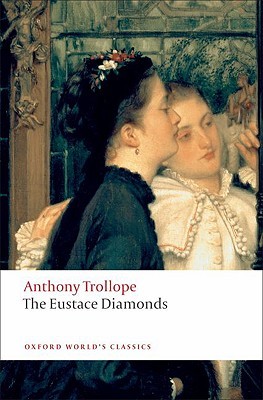
Eustace Diamonds (1873)
The Eustace Diamonds. Anthony Trollope. 1873. 794 pages. [Source: Book I Bought]
It was admitted by all her friends, and also by her enemies,—who were in truth the more numerous and active body of the two,—that Lizzie Greystock had done very well with herself. We will tell the story of Lizzie Greystock from the beginning, but we will not dwell over it at great length, as we might do if we loved her.
The Eustace Diamonds is the third novel in Anthony Trollope's Pallisers series. The first two being Can You Forgive Her? and Phineas Finn. (The series is, in my opinion, only loosely connected to one another.)
Lizzie Greystock (Eustace), our "heroine," is selfish and conniving and lacking self-awareness. One of her more annoying habits is her tendency to start believing her own lies. Since she tells a lot of lies, you can see how this could get annoying. What else do you need to know about Lizzie? Well. She's a widow. She sought out to marry a wealthy man whom she knew was dying, and she did. Her husband suspected his wife to be heartless by then, but, it was too late. She had his child, and that was, I suppose, her good deed in that regard. Is she a tender, loving mother? Not really. Out of sight, out of mind. The big thing you should know, of course, is that she inherited some of her husband's money, his Scottish estate during her life, and supposedly a diamond necklace. The Eustace family is not convinced on that last one. Those diamonds belong to the family, they should be kept in the family; physically, they should be kept secure in the bank. Threat of prosecution, threat of a trial might be persuasive to other women, "weaker women" but Lizzie is one stubborn woman.
Frank Greystock, our "hero," is smarter when he's away from his cousin, Lizzie. The closer he gets to Lizzie, the weaker he becomes: morally and mentally. What is it about his cousin that makes him forget his moral and ethical duties? What is it about his oh-so-beautiful cousin that makes him leave his common sense behind? Supposedly, he's her closest relation, he's all she has in this world to hold onto. The whole world is after her, he's her only hope, don't you know?! She trusts his legal advice, it's true, but the lies seem to come more quickly when they're together.
Lucy Morris is a "childhood friend" of Lizzie. (I doubt Lizzie ever actually had any genuine friends. She sees people only in terms of their usefulness to her.) She falls in love with Frank. And Frank despite his better judgment--after all Lucy is dreadfully poor, she's a governess after all--falls in love with her. His confession was a bit unplanned. But his letter a few days later did the job nicely, he's decided that he wants to marry her anyway. Lucy perhaps chooses to not notice that Frank is a plaything for Lizzie.
The Fawn family. Lucy is a governess in the Fawn household. Lord Fawn, the son and heir, is engaged to be married to Lizzie. But this would-be second husband wises up faster than the first. He decides that the relationship though financially beneficial to him would cost him much too much. Lizzie is TROUBLE. And Lord Fawn doesn't want to have anything to do with anything that even hints of trouble. Some might say he lacks spirit or gumption. In this case, I think he shows a bit of common sense. He is firm: if Lizzie will give up her diamonds quietly and avoid a scandal, he'll stay true to his word. If she persists in trying to rule the whole world and making a fuss, then he won't. He has a lovely mother who is a good friend to Lucy, though Lucy doesn't always appreciate the advice.
In terms of plot:
Will Lizzie give up her diamonds? Will they be safe in her possession? How big will the scandal be?
Will Frank marry Lucy or will he be weak and marry Lizzie for her money? Will Lord Fawn successfully escape from his promise? Will Lucy's heart break?
© 2014 SukaYuka.com of SukaYuka's Book Reviews
Subscribe to:
Posts (Atom)


