Showing posts with label 2008. Show all posts

Wednesday, December 3, 2014

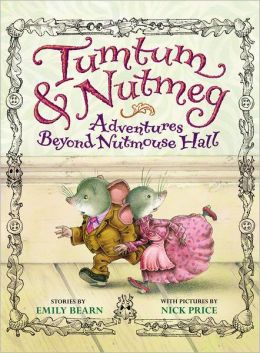
Tumtum and Nutmeg (2009)

Tumtum and Nutmeg: Adventures Beyond Nutmouse Hall. Emily Bearn. Illustrated by Nick Price. 2009. Little, Brown. 512 pages. [Source: Library]

I definitely enjoyed Tumtum and Nutmeg: Adventures Beyond Nutmouse Hall. Did I enjoy all three adventures equally? I'm not sure I can say that I did. The book contains three adventures--perhaps the first three adventures--of Mr. and Mrs. Nutmouse: Tumtum & Nutmeg, The Great Escape, and The Pirates' Treasure. Tumtum and Nutmeg are the nicknames this husband and wife have for one another. He is Tumtum. She is Nutmeg. The mice live in Nutmouse Hall, and Nutmouse Hall itself is in a closet (of sorts) in Rose Cottage. The mice are more well-to-do than the humans that reside there. Mr. Mildew lives at Rose Cottage with his daughter, Lucy, and son, Arthur. Tumtum and Nutmeg feel sorry for them all, but, especially for the two children who live in the attic. They decide to be good Samaritans. They will fix what needs fixing or mending. They will do what they can, when they can, to make things better. The children definitely notice. They believe it is the work of a fairy. That's enough of a background to appreciate the three stories in this one.

In Tumtum and Nutmeg, readers meet the mice, the family, the children. It focuses on what happens when Aunt Ivy comes to stay. The dangers that come about from her visit. And what the mice do about it. How they handle the situation. Readers also meet General Marchmouse.

In The Great Escape, the focus is on General Marchmouse. He was captured by the children in the attic. This visiting mouse against the good advice of Mr. and Mrs. Nutmouse became too fond of playing with the children's toys. He was NOT a careful mouse. The children take him to school and he's put into a cage with a dozen or so gerbils. I can't remember if it was a dozen gerbils or twenty-four gerbils. But A LOT. When Mr. and Mrs. Nutmouse learn of the situation, what will they do, how will they make it right?!

In The Pirates Treasure, the focus is on a camping trip gone wrong. Mr. and Mrs. Nutmouse, for better or worse, feel certain that the children NEED them so much that they just have to go along with the children on an overnight camping trip. All might have been well if it hadn't been for that bothersome General Marchmouse. Quite accidentally on Tumtum and Nutmeg's part, they find themselves at sea, or, at pond. They are on board the toy boat that the children float on the pond. They end up--with General Marchmosue, of course--shipwrecked on an island. What will they do? How can they get back to their home? Is the island dangerous?

I like the premise behind this series. I like the characters of Tumtum and Nutmeg. General Marchmouse is infuriating. But. I can also see that he is what makes these into adventure books. He brings the action, and, perhaps also the laughs.
© 2014 SukaYuka.com of SukaYuka's Book Reviews

Monday, November 24, 2014

The Man Who Invented Christmas (2008)

The Man Who Invented Christmas. Les Standiford. 2008. Crown. 241 pages. [Source: Library]

Different readers will have different expectations when they see the full title of this one: The Man Who Invented Christmas: How Charles Dickens's A Christmas Carol Rescued His Career and Revived Our Holiday Spirits.

The focus is not so much on Christmas, as it is on Charles Dickens: his private and public life, his writing career, his inspirations, his fears and worries, his relationship with his publishers. The focus isn't solely on A Christmas Carol. Yes, this work gets discussed in detail. But the same can be said of many of Dickens' novels. The book, despite the title, focuses on Dickens' career as a writer or novelist. This book mentions and in some cases discusses most of Dickens' published works. Not just his books published BEFORE A Christmas Carol, but his whole career.

A Christmas Carol gets special treatment in this one, perhaps, not because it has a Christmas theme, but, because it is a significant to his career. Before A Christmas Carol, he'd had a few really big bestsellers. But. He'd also experienced some failures. His last three books were disappointing to his fans. They didn't sell as well. The critics didn't like them. His publishers were discouraged and worried. Dickens needed his next book to be something wonderful, something that would sell, something that would be loved by one and all. He needed a success: a feel-good success, something to give him confidence and something to give his publishers confidence in him again, and a financial success, something to get him out of debt, something to pay his bills.

The secondary focus of this one is not Christmas. Readers might expect it to be related to Christmas, the history of Christmas, its invention, or reinvention. But. Something gets more time and attention than Christmas. And that is the writing and/or publishing industry. The book gives readers a history lesson in publishing. How books were written, illustrated, printed, published, sold. Not just what went on BEFORE it was published, but also what typically happened next. How novels were adapted to the stage by others, by many others. How little control--if any--that the publisher and author had over their books, their stories, their characters and plots. Plays could do justice, at times, to the books they were based upon. But they could also be absolutely dreadful. The lack of copyright laws or international copyright laws. How publishers in other countries could steal entire books, republish them, not paying the author anything at all. The book even has a chapter or two on fan fiction. Not that he calls it fan fiction. But he writes of how other writers could "borrow" characters and give them further adventures and publish them.

Does the book talk about Christmas at all? Yes. It does. It tells of two extremes: those in the past who celebrated Christmas too wildly, too wantonly, and those in the past who refused to celebrate it all, who would have it be illegal. Either extreme seems a bit hard to believe, perhaps, for modern readers. The book tells of traditions. Some traditions being somewhat established before A Christmas Carol, and other traditions becoming more established by being described in A Christmas Carol. What I probably found most interesting was his mention of how traditionally it was goose served for the Christmas feast UNTIL the publishing of A Christmas Carol. When Scrooge buys a turkey to give to Bob Cratchit and his family, it seems he inspired his readers to change their traditions. Turkeys becoming more and more popular.

For readers interested in the life and death of Charles Dickens, his whole career, this one has some appeal. It provides plenty of details about his books and the publishing industry, how he was received by the public.

For readers looking for a quick, feel-good holiday read, this one may prove to be a chore to get through.

I liked it well enough. I've read a good many of his novels. I have some interest in his life. It worked for me. It was packed with plenty of information.

© 2014 SukaYuka.com of SukaYuka's Book Reviews

Monday, September 22, 2014

Emperors of the Ice

Emperors of the Ice. Richard Farr. 2008. FSG. [Source: Review copy]

I have mixed feelings on Emperors of the Ice: A True Story of Disaster and Survival in the Antarctic, 1910-13. On the one hand, it is a fictional memoir based on an actual memoir. Much research was done to write this one. Perhaps just as much research as if it was a traditional nonfiction book. The author's love of the subject was evident throughout. The book is told primarily if not exclusively through the eyes of one of the men on the expedition, Apsley Cherry-Garrard. The exception being the few places where readers learn what happened to other members of the expedition. On the other hand, was it absolutely necessary to fictionalize a memoir in order to tell the story? I think there were things to be gained by such a decision, and, perhaps a few things lost.

Aside from the fact that this one doesn't really quite fit in as fiction or nonfiction, Emperors of the Ice was an interesting read. It was not quite as depressing as you might expect. I've read more depressing books on this subject certainly. The focus of this book is more on science and exploration than on the race to be first to the South Pole. This book argues that it was never about being first or being best. This book tells the basic story, but, it includes plenty of details. For example, I learned that one of the teams--science teams--went to the Antarctic to study emperor penguins. Their goal was to learn about the penguins and their eggs. It wasn't exactly learning by observation. Cherry was part of that team. I learned quite a few things.

© 2014 SukaYuka.com of SukaYuka's Book Reviews
Wednesday, September 10, 2014

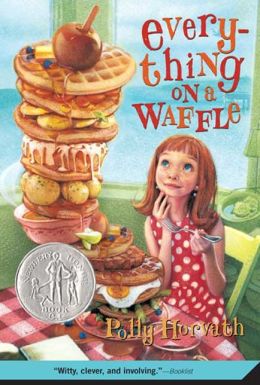
Everything on a Waffle (2001)

Everything on a Waffle. Polly Horvath. 2001/2008. Square Fish. 176 pages. [Source: Review copy]

There were things about Polly Horvath's Everything On a Waffle that I liked. I liked the heroine, Primrose Squarp. I liked how unique she was. She had a unique way of seeing the world around her, a unique perspective on just about everyone in town. The novel opens with tragedy, what most people would call tragedy. Primrose loses her mom and dad to a storm. Her dad was out sailing, her mom saw how horrible the storm was, got worried and left in another boat to go find him. Every single person in town, and, most every person from out of town who hears the story, concludes that Primrose's parents are dead. Their bodies have not been recovered, but, they are most certainly dead. Primrose arrives at the opposite conclusion. Her parents are not dead. They are not. They may be marooned on an island. They may be missing for a time. But her parents are most definitely alive. Many well intentioned folks in town encourage Primrose to come to terms with what has happened, to grieve her parents, to react and feel. But instead of Primrose coming to terms with her loss, it is the town who ends up coming to terms with Primrose and her unending optimism. No one is quite sure what to make of Primrose, she's just Primrose.

After a few weeks, Uncle Jack comes to stay with Primrose. Uncle Jack doesn't demand much from Primrose. He doesn't demand that she get in touch with her emotions and talk it all out. He lets Primrose be herself. And he accepts Primrose pretty much as is. And she does the same. Both are flawed beings, if you will. They seem to fit together well enough.

Miss Honeycut watches Primrose closely. She does not think Primrose is doing well at all. She thinks Primrose needs something that Uncle Jack could never give her.

One of the things that sets the book apart are the recipes at the end of every chapter. Also the small town quirky charm. I absolutely loved the idea of THE GIRL IN THE SWING restaurant. I loved the owner. I loved the idea that EVERYTHING on the menu came with waffles. Very unique.

As I said, I liked this one. I didn't love it.

© 2014 SukaYuka.com of SukaYuka's Book Reviews
Tuesday, July 15, 2014

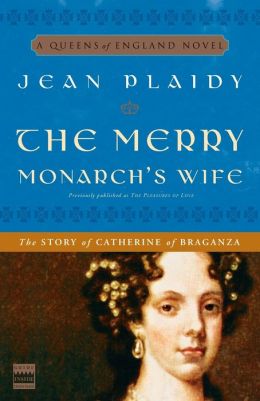
Merry Monarch's Wife (1991)

The Merry Monarch's Wife. (A Queens of England Novel). Jean Plaidy. 1991/2008. Crown. 352 pages. [Source: Bought]

MY LIFE WILL END WHERE IT BEGAN, FOR IN THE YEAR 1692 I left England where I had gone some thirty years before as a bride to the most romantic prince in Europe. I smile now to consider how ill-equipped I was for such a position, and when I look back I say to myself, “If I had done this…,” “If I had not done that…how much happier my life would have been.” But then, although I was not very young—I was twenty-four, which is a mature age for a princess to embark on marriage—I was quite innocent of the world and had hardly ever strayed from the walls of the convent where I had received my education, or the precincts of the royal palace. 
 
I enjoyed reading Jean Plaidy's The Merry Monarch's Wife. Catherine of Braganza was the queen of Charles II. For those familiar with the reign of Charles II, you can imagine what a life she led for better or worse. The book seeks to capture her personal perspective of her husband, of her marriage, of her adopted country. (She's coming from Portugal to England.)

Plaidy's depiction has Catherine truly in love with the King, and oh-so-aware of his shortcomings. In her reckoning, Charles II could not help himself at all, he was completely incapable of fidelity. Readers catch glimpses here and there of Charles' many, many mistresses. But not as much as you might imagine. That is, the focus is on HER and not truly on him and his activities. She is aware of his favorites at any given time, and at times she's sought out in conversation by mistresses in and out of favor.

There is definitely a lot of POLITICS in Merry Monarch's Wife. Readers learn about various plots and threats and conspiracies. Readers meet men and women who are ambitious and manipulative and power-hungry.

I was familiar, in a way, with some of the details of his reign. But not of what life was like for her before and after. Before her arrival in England and after Charles II's death. This book tells a fairly complete story.

Quotes:
We do not know what the future holds, but I believe that one day you are going to be Queen of England, and when you are, you will do your duty to God and your country.” “Oh yes,” I said fervently, “I will.” I had a mission now. Not only was I going to marry Prince Charles, but I was going to save his soul.
He always called himself an ugly fellow, and when one considered his features that could be true, but his charm was overwhelming. There could never have been a more attractive man. I know that I loved him and one is apt to be unaware of the faults of the object of one’s devotion, but I can vouch for it that I was not alone in my opinion. He used to talk of the ringing of bells, the flowers strewn in his path, the women who threw kisses at him, the shouts of loyalty. “Odds fish!” he said. It was a favorite oath of his. “They gave me such a welcome home that I thought it must have been my own fault that I had stayed away so long.”
He laughed. “You remind me of my mother. You and she will be good friends when you meet, I’ll swear. As for this Catholic ceremony…you see, my dear, you are Queen of this country and you must be married according to the religious observances of the place. But you say you will not be happy…and I cannot allow you to be unhappy. I will tell you how we will resolve this matter. There shall be a ceremony here in this bedchamber. It shall be as you wish, and the other one will take place as arranged on the same day. It means you will have to marry me twice. Could you bear that?” I felt my lips tremble. I was going to weep because I was so touched, so happy. “You are all that I hoped for…and all that I dreamed,” I said emotionally. He looked at me in mock dismay. “Do not have too good an opinion of me, I beg you. I fear you will find me a somewhat sinful fellow.” “Oh no. You are the kindest and best man in the world.” He leaned toward me and kissed my cheek. He was sober suddenly. He said: “You shame me.” Then he was merry again. His gravity seemed always to be fleeting, as though his gaiety was waiting impatiently to break in on it.
Charles is fond of you. He likes you very much…but he will never be faithful to you. It is not in him to be faithful…not to any woman. My father was like him. I saw how my mother lived. So I understand. Accept this weakness in him and he will be grateful to you, he will be kind.
We would drink tea, for I had brought this custom with me from Portugal. For a short time people had thought the beverage very strange, but they were soon aware of the pleasure of taking that soothing drink, and my ladies quickly became as ardent tea drinkers as I myself. Indeed the custom was spreading all over the country.

© 2014 SukaYuka.com of SukaYuka's Book Reviews
Friday, June 20, 2014

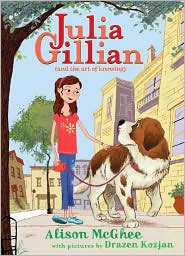
Reread #25 Julia Gillian And the Art of Knowing

Julia Gillian (And the Art of Knowing) by Alison McGhee. 2008. Scholastic. 290 pages. [Source: Review copy]

Several years ago, I read the Julia Gillian series. The first book in the series is Julia Gillian And the Art of Knowing. The book introduces us to a lovely little heroine, Julia Gillian, who is something. She is not really like other children her age (she's about 10) and she's not really like other adults either. She is individual, unique, special. While I did not see myself in each and every bit of Julia Gillian, there was one thing in particular we share. (Or should I say shared.) Julia Gillian is afraid of books with sad endings. Julia Gillian has recently bought a book, a green book, I believe, with a dog on the cover. (As a child, I would have known to avoid it.) When she started the book, all was well. A few chapters in, and Julia has become WORRIED, very WORRIED about the dog in the story. She's afraid that the dog might...dare she say it...DIE in the end. The second she begins to worry, she stops reading. She puts the book aside. But. Julia Gillian can't stop thinking about the book, about the characters. Though she's not spending time with the book anymore, it's still haunting her. Her parents guess this, as do some of her older friends, and for some reason they make her finish the book. (The reason why sounded a bit unbelievable to me.) Can Julia Gillian survive reading a sad book, a sad dog-dying book?

Julia Gillian lives life. She is very, very, very close to her dog, Bigfoot. Her dog is her best, best friend. So it's understandable why she has such a hard time reading the book. Her fear is, in a way, not so much that the fictional dog will die as it is that HER beloved dog will die.

There are several little stories going on in Julia Gillian and the Art of Knowing. I liked how Julia reaches out to a neighborhood girl who is about to start kindergarten. They have two conversations, I believe, but in them we see Julia Gillian at her best.

I definitely enjoyed rereading this one.

© 2014 SukaYuka.com of SukaYuka's Book Reviews

Friday, May 30, 2014

Reread #22 Greetings From Nowhere

Greetings from Nowhere. Barbara O'Connor. 2008. FSG. 208 pages. [Source: Library]

Greetings From Nowhere is a charming book that I just love! It centers around Sleepy Time Motel in the Great Smoky Mountains. Aggie, the owner, is a widow. She is finding it difficult--really difficult--to keep the motel going. Sometimes months go by between guests. And the last time a guest came, it was by chance they stayed even one night. Financially, it makes sense for Aggie to consider selling. It is what she "needs" to do practically. But is her heart ready to let go of her dream? But this isn't Aggie's story. She is not the protagonist. This book has multiple young narrators. All end up at the Sleepy Time Motel. There is Kirby, the "troubled" boy, who is on his way to reform school; Loretta who is traveling in the Smoky Mountains with her parents; and Willow who has come with her Dad to inspect the motel before buying it. None of the guests are particularly happy-happy-cheerful. Not everyone is equally gloomy either. Every single person in the novel has recently undergone change or is about to undergo change.

Loretta, for example, perhaps the most "happy" of the bunch, has learned that her birth mother has died. She received a charm bracelet in the mail. She still knows so very little about her birth mother. Just the mystery of a bracelet, she's trying to puzzle together who her mother was, what she was like, what she liked, what she did, based on these charms. That is what has fueled this family vacation. They are following the trail of her birth mother.

Willow is perhaps the saddest. Her mother left her and her Dad. Nothing has been the same since she left. Her mother's name isn't allowed to be mentioned. There is something broken about her family. The Dad decides the family needs a HUGE change. Willow doesn't want a huge change; she doesn't even want a tiny change.

Kirby is perhaps the angriest or most hurt depending on your perspective. Does Kirby do bad things for attention? Yes. His mother. His father. His stepfather all seem to reject him, to want to be rid of him, to think that he's a big hopeless mess instead of a growing boy.

I liked this community-focused novel. I definitely recommend it!


I first reviewed Greetings From Nowhere in May 2008.

© 2014 SukaYuka.com of SukaYuka's Book Reviews
Friday, April 25, 2014

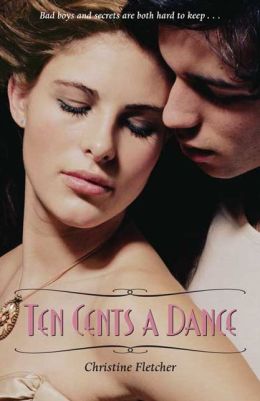
Reread #17 Ten Cents A Dance

Ten Cents A Dance. Christine Fletcher. 2008/2010. Bloomsbury USA. 368 pages. [Source: Review copy]

I first read and reviewed Ten Cents A Dance in November 2008. It was almost love. I loved the idea of loving it. I loved the setting: Chicago 1941-1942, both BEFORE and AFTER Pearl Harbor. It is narrated by Ruby Jacinski, our heroine. Ruby may not always make the best choices, the wisest in the long-term choices, but she's got gumption and fight in her.

Ruby is exhausted and frustrated by poverty. Even if she were to get a "nice" job in the meat-packing factory, she would still stink at the end of the day. And Ruby, though pretty, is feisty. (Her "nice" job in bacon didn't last long.) She IS the earner in her family; after her mother lost her job, Ruby dropped out of school and got a job.

In the opening chapters, readers see just how feisty Ruby is. Fights just seem to find her. And the opening fight, well, it just happens to bring her to the attention of a gangster-wanna-be, Paulie Suelze. He just happens to mention HOW she can earn some real money doing something she loves: dancing. He tells her of how she could be bringing home fifty dollars a week instead of ten. He tells her exactly where to go.

Ruby goes for it. It opens up a whole new world for her: for better or worse...nothing is the same after she starts working...

Ruth Etting singing "Ten Cents A Dance." Doris Day singing "Ten Cents A Dance." There is also a movie with this name from 1931.

© 2014 SukaYuka.com of SukaYuka's Book Reviews
Friday, February 28, 2014

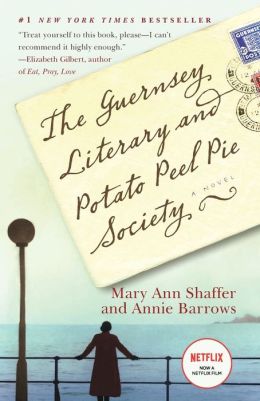
Reread #9 Guernsey Literary and Potato Peel Pie Society

The Guernsey Literary and Potato Peel Pie Society. Mary Ann Shaffer and Annie Barrows. 2008. Random House. 274 pages. [Source: Library]

The Guernsey Literary and Potato Peel Pie Society is one of those rare, rare books where you could almost open it up to ANY page and find something to smile about. And that, of course, is something to be treasured and applauded because it makes for a completely satisfying read from start to finish. This novel is told completely through letters. Readers get to know characters in their own words, for better or worse. Readers can try to read between the lines and make connections perhaps. They might attempt to play "Miss Marple" like one of the minor characters and spy out what is really going on...

The heroine of the novel is a young author named Juliet Ashton. During the war, she wrote a regular column under the name of Izzy Bickerstaff. Now that the war is over (finally!!!), her columns have been published together in book form. She's happy. Of course she's happy. Why wouldn't she be happy. The war is over. Her book is being received positively. Sure, she feels the need to move on, to write a book under her own name, to write a very different book. And true, she's a bit in doubt as to what that next book will be and if that book will live up to the success of the first one, but...

So most of her letters are to her publisher, Sidney, or to her best friend, Sophie. But. One letter she receives changes her life. And it wasn't an obvious change-of-life letter. It was a friendly, down-to-earth letter from a complete stranger. He'd read "her" book. No, not the book she'd written. But a book that had been in her library, a book with her name and address in it. It was a book by Charles Lamb. This used book found and read during the war, really, really effected him. He connected with Charles Lamb, and he thought she might have book recommendations and such.

So. Juliet discovers almost by accident several things. First, that Guernsey was occupied during the war. (If she'd known during the war, it had slipped her mind because it didn't really impact her--not because she was selfish, but just because when your own world is a big tumbling-down uncertain mess, you don't really think of the island of Guernsey in the big-scheme-of-things.) Second, that a group had come together through desperation and lust (for a pig dinner!!!) to form the "Guernsey Literary and Potato Peel Pie Society". Though for the record, the Potato Peel Pie part came later! Of course, she HAS to know more, and she wants all the details. She NEEDS more. She wants to hear more from men and women in this "literary society." She wants their stories--about books and reading, about the Nazi occupation, about the war, about their hardships (hunger, separation from children, etc), about their joys and sorrows. Of course, all this will take time and trust...

And that is what makes this one so great, in my opinion. I loved the getting-to-know experience. I loved the relationship building. I loved seeing friendships form. I especially, especially loved the bond that formed between Juliet and Kit (a war orphan). There were so many giddy-making moments in this book!

I would definitely recommend this one! It is so wonderful, so charming, so perfect!!!!  


I first reviewed this one in August 2009.  

Favorite quotes:
I don't want to be married just to be married. I can't think of anything lonelier than spending the rest of my life with someone I can't talk to, or worse, someone I can't be silent with.
That's what I love about reading: one tiny thing will interest you in a book, and that tiny thing will lead you to another book, and another bit there will lead you onto a third book. It's geometrically progressive - all with no end in sight, and for no other reason than sheer enjoyment.
Reading good books ruins you for enjoying bad books.
Perhaps there is some secret sort of homing instinct in books that brings them to their perfect readers. How delightful if that were true.
I love seeing the bookshops and meeting the booksellers-- booksellers really are a special breed. No one in their right mind would take up clerking in a bookstore for the salary, and no one in his right mind would want to own one-- the margin of profit is too small. So, it has to be a love of readers and reading that makes them do it-- along with first dibs on the new books.
Isola doesn't approve of small talk and believes in breaking the ice by stomping on it.

It was amazing to me then, and still is, that so many people who wander into bookshops don't really know what they're after--they only want to look around and hope to see a book that will strike their fancy. And then, being bright enough not to trust the publisher's blurb, they will ask the book clerk the three questions: (1) What is it about? (2) Have you read it? (3) Was it any good?
Will Thisbee gave me The Beginner's Cook-Book for Girl Guides. It was just the thing; the writer assumes you know nothing about cookery and writes useful hints - "When adding eggs, break the shells first.”
“What on earth did you say to Isola? She stopped in on her way to pick up Pride and Prejudice and to berate me for never telling her about Elizabeth Bennet and Mr. Darcy. Why hadn't she known there were better love stories around? Stories not riddled with ill-adjusted men, anguish, death and graveyards!”
The first rule of snooping is to come at it sideways--when you began writing me dizzy letters about Alexander, I didn't ask if you were in love with him, I asked what his favorite animal was. And your answer told me everything I needed to know about him--how many men would admit that they loved ducks?

© 2014 SukaYuka.com of SukaYuka's Book Reviews